Editor’s note: Welcome to the 61st installment of Brownstone Boys Reno, a reader renovation diary about renovating a brownstone in Bed Stuy. See the first one here. They also blog at www.thebrownstoneboys.com.
Mastering Climate Control: Crafting the Perfect Heating and Cooling Systems for Your Brownstone Renovation
Embarking on a brownstone renovation in a vibrant neighborhood like Bed Stuy, Brooklyn, presents a unique set of challenges and opportunities, particularly when it comes to modernizing essential systems like heating and cooling. These historic homes, with their charming character and robust construction, were designed for a different era, one where climate control primarily revolved around keeping warm during the chilly New York winters. Today, however, homeowners expect year-round comfort, meaning the integration of efficient cooling solutions is just as crucial as a reliable heating system. This installment of Brownstone Boys Reno delves into the intricate decisions involved in selecting and installing contemporary HVAC systems while respecting the architectural integrity of these magnificent structures. We explore how the addition of cooling technology inevitably reshapes the entire approach to home climate management, offering insights from our own renovation journey.
From Desert Heat to Brooklyn Frost: A Personal Journey in Climate Control Adaptation
Our personal experiences with climate control systems are rooted in stark contrasts to Brooklyn’s climate. Growing up in the sun-drenched landscapes of Las Vegas and the humid warmth of New Orleans (Happy Mardi Gras!), our understanding of home comfort was predominantly shaped by the necessity of effective cooling. Systems there were engineered to combat intense heat and humidity, with heating often being a secondary, less robust consideration. Decades later, as proud Brooklyn residents, we’ve come to appreciate the inverse reality: New York’s climate demands potent heating solutions for its famously cold winters, even as summers grow increasingly warm, making cooling an absolute must-have rather than a luxury. This fundamental shift in priority prompted a crucial question for our brownstone renovation: does integrating a modern cooling system fundamentally alter how we approach heating our home, requiring a more holistic and integrated strategy?
Traditional brownstones inherently offered passive cooling through their thick masonry walls, the shade provided by tree-lined streets, and the ventilation from tall windows. However, these architectural features, while beautiful, are no longer sufficient to meet contemporary comfort standards. It’s nearly impossible to find a brownstone renovation today that doesn’t include some form of air conditioning. This widespread adoption necessitates a thoughtful reevaluation of the entire HVAC setup, moving beyond simply adding an AC unit to an existing heating system. Instead, it calls for a cohesive, energy-efficient approach that addresses both extremes of the New York weather cycle, ensuring our historic home is comfortable and sustainable for decades to come.
The Evolution of Heating in Historic Homes: A Deep Dive into Classic Systems
For those living in brownstones or older buildings that haven’t undergone recent extensive renovations, the heating landscape is likely familiar: steam or hot water radiators, or perhaps a forced-air furnace. Each of these systems has a long history of effectiveness, proven capable of delivering reliable warmth even during the coldest New York winters. Understanding their characteristics is key to making informed decisions during a renovation, especially when considering how to integrate modern cooling.
Steam Radiators: Enduring Charm and Robust Heat
Steam radiators are arguably the most iconic heating system found in older New York City buildings. Characterized by their distinct hissing sounds and charming aesthetic, they operate by heating water in a central boiler until it turns to steam. This steam then travels through pipes to individual cast-iron radiators, where it condenses back into water, releasing significant heat into the room. The returning water flows back to the boiler to be reheated. While incredibly effective and durable, steam systems can be somewhat uneven in their heat distribution and require specific maintenance. Their visual presence, however, is often a desired aesthetic for those aiming to preserve a historic feel.
Hydronic Systems: The Warm Embrace of Hot Water
Hydronic heating, often delivered through hot water radiators or baseboard units, represents a more refined evolution of radiant heat. In these systems, a boiler heats water that is then circulated through a network of pipes to radiators or baseboard heaters throughout the home. Unlike steam, the water remains in liquid form, providing a more consistent and quieter heat. The heat output can be more easily controlled and zoned compared to steam systems, offering enhanced comfort and efficiency. Our brownstone, prior to our renovation, utilized a hydronic system with baseboard radiators. While functional, the aesthetics of the baseboards didn’t align with our vision for a more traditional, exposed radiator look, prompting us to make a change that would enhance both visual appeal and thermal performance.
Forced Air: A Modern Approach to Warmth
Forced-air systems represent a different philosophy of heat distribution. Here, a furnace heats air, which is then propelled by a fan through a network of ducts to vents located in each room. This method provides quick, even heating and, importantly, can be readily adapted to include central air conditioning by simply adding a cooling coil to the same ductwork. New-construction homes and older buildings that have undergone a comprehensive “gut renovation” often feature central HVAC systems that deliver both heating and cooling via these ducts. While offering convenience and potentially seamless integration of heating and cooling, installing extensive ductwork in an existing brownstone can be a significant undertaking, impacting ceiling heights and requiring careful planning to avoid disrupting historic elements.
Embracing the Chill: The Rise of Modern Cooling Systems in Historic Contexts
The imperative for effective cooling in brownstones has grown exponentially. As summers become hotter and expectations for indoor comfort rise, simply relying on open windows is no longer a viable strategy. The question then shifts from “if” to “how” to best integrate air conditioning into a historic home without compromising its character or efficiency. Modern technology offers several sophisticated cooling solutions, each with its own set of advantages and challenges when applied to the unique structure of a brownstone.
Central Air Conditioning: The Ducted Solution
Traditional central air conditioning systems utilize a single outdoor compressor unit and an indoor air handler, which distributes cooled air through a network of ducts to various rooms. When combined with a forced-air heating system, this can create a single, unified HVAC solution controlled by a central thermostat. The primary advantage is comprehensive, invisible cooling that maintains a consistent temperature throughout the entire home. However, for an existing brownstone, the installation of extensive ductwork can be a formidable challenge. It often requires sacrificing significant space, such as closet interiors or portions of ceiling height, and can be particularly disruptive to the original plasterwork and architectural details that define these homes. The cost and complexity of such an installation are considerable, making it a less favored option for many brownstone renovators unless a complete gut renovation is already underway.
Mini-Split Systems: Flexibility and Efficiency for Historic Spaces
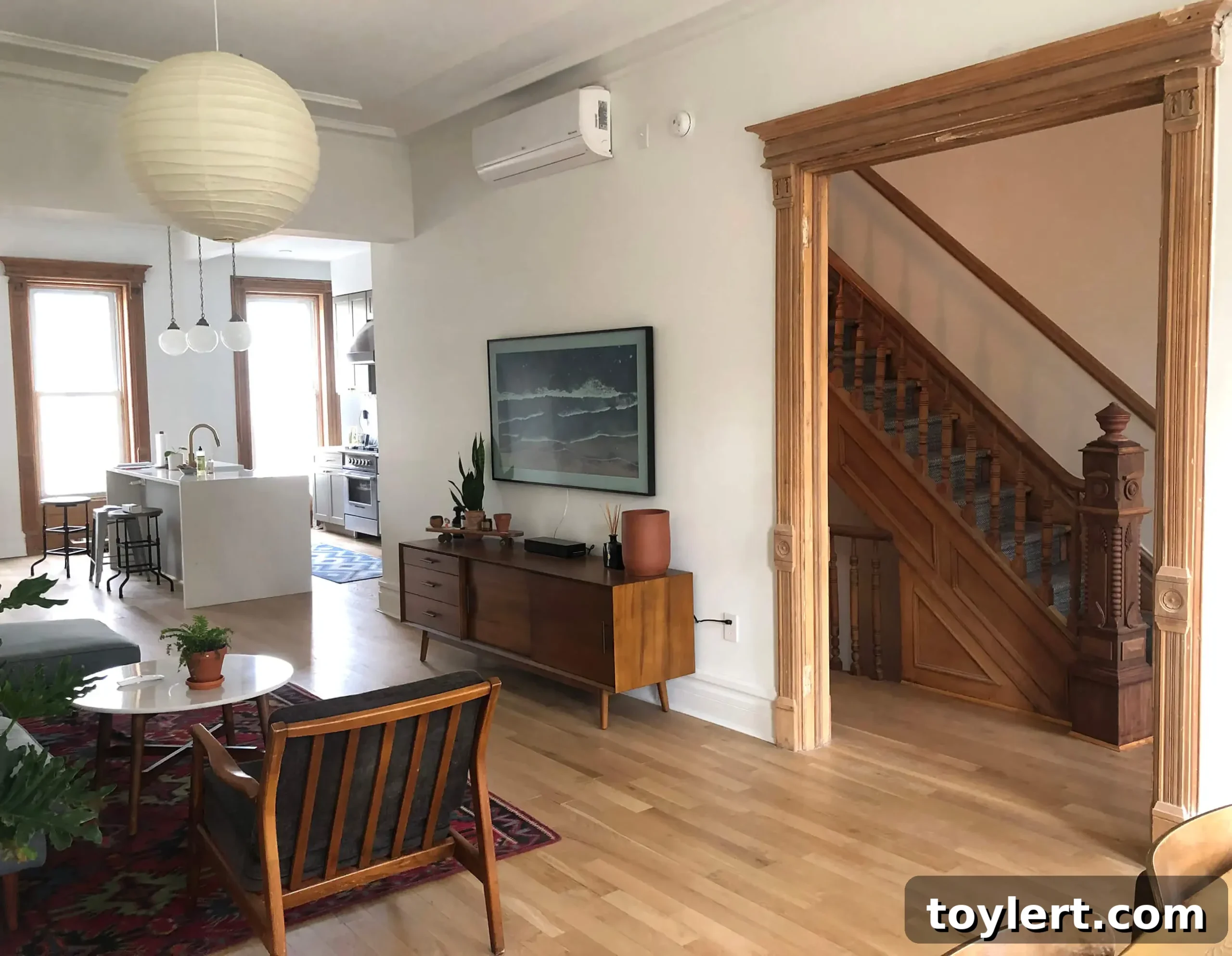
Our personal solution for cooling our brownstone, and an increasingly popular choice for historic home renovations, is the mini-split system, also known as a ductless mini-split. This innovative technology consists of an outdoor compressor unit connected to multiple indoor air-handling units via small conduits that carry refrigerant lines, power cables, and a condensate drain. Each indoor unit, often mounted high on a wall or discreetly recessed, can be controlled independently, offering unparalleled zone-specific cooling. The advantages for a brownstone are clear: minimal structural intrusion (only small holes for the conduit are needed), no bulky ductwork, and superior energy efficiency through targeted cooling. This flexibility allowed us to cool individual rooms or floors as needed, rather than the entire house, leading to significant energy savings and customized comfort. While the indoor units are visible, their sleek design is generally unobtrusive, and many homeowners find the benefits far outweigh this minor aesthetic consideration.
Unico Systems: High-Velocity, Low-Impact Cooling
Another specialized cooling option, often considered for brownstones, is the Unico system (or similar high-velocity small-duct systems). These systems utilize smaller, flexible ducts that are easier to snake through existing walls, ceilings, and floors with minimal disruption compared to conventional central AC ducts. Air is delivered at a higher velocity through small, inconspicuous outlets, creating a comfortable, draft-free environment. While more discreet than mini-splits in terms of visible components, Unico systems still require some duct installation, albeit smaller, and the upfront cost can be higher. They are an excellent compromise for those who desire central cooling without the major structural alterations demanded by traditional ducted systems, offering a “hidden” solution for historic interiors.
The HVAC Conundrum: Integrating Heating and Cooling Strategies for Optimal Performance
The core question that emerged during our renovation was profound: does putting in a cooling system change the thought process on how to heat your home? The answer is a resounding yes. Modernizing a brownstone’s climate control isn’t about adding two separate, independent systems. It’s about creating an integrated, synergistic environment where heating and cooling work together efficiently. This holistic approach impacts everything from insulation choices to zoning strategies and overall energy consumption.
Insulation and Air Sealing: The Foundation of Efficiency
Regardless of the HVAC systems chosen, proper insulation and air sealing are paramount. In a brownstone, this means meticulously addressing drafts around windows and doors, upgrading wall and attic insulation where feasible, and sealing any unintended gaps or penetrations in the building envelope. Effective insulation reduces the load on both your heating and cooling systems, preventing heat loss in winter and heat gain in summer. This foundational work ensures that the expensive conditioned air you’re producing stays inside, maximizing the efficiency and comfort delivered by your chosen HVAC units.
Zoning for Optimal Comfort and Savings
The integration of cooling, especially with systems like mini-splits, strongly encourages a zoned approach to climate control. Zoning allows you to heat or cool different areas of your home independently, based on occupancy and preference. For example, bedrooms might be cooled at night while living spaces are less active, or vice-versa. With traditional single-zone heating, this level of customization is challenging. However, by combining a flexible heating system (like our hydronic radiators, which can be zoned to some extent) with a multi-zone mini-split cooling system, you achieve unparalleled control, comfort, and energy savings. This prevents wasting energy on heating or cooling unoccupied areas, significantly reducing utility bills over time.
Smart Thermostats and Integrated Control
Modern HVAC systems, particularly those designed for integration, offer the opportunity to implement smart home technology. Smart thermostats can learn your habits, adjust temperatures based on occupancy, and be controlled remotely, optimizing energy usage and convenience. While integrating a traditional heating system (like radiators) with a separate cooling system (like mini-splits) might mean managing two distinct control interfaces, advancements in smart home platforms are increasingly allowing for a more unified management experience. The goal is to make the entire climate control system intuitive and responsive to your lifestyle, ensuring seamless transitions between heating and cooling needs throughout the year.
Our Brownstone Journey: A Case Study in Thoughtful HVAC Design
Our brownstone renovation in Bed Stuy became a practical laboratory for these very considerations. Given our desire for both aesthetic preservation and modern comfort, our choices for heating and cooling were deliberate, balancing tradition with innovation. We sought to create an environment that felt authentically part of the brownstone’s history while offering the efficiency and comfort of a newly constructed home.
Heating: A Nod to Tradition with Modern Efficiency
Our brownstone originally featured a boiler delivering hydronic heat through aesthetically unappealing baseboard radiators. While functional, they lacked the classic charm we envisioned. Our decision was to replace all the baseboard radiators and the associated piping with beautiful, traditional exposed cast-iron radiators. This change was purely aesthetic but also represented a commitment to the timeless elegance of brownstone architecture. We kept the existing boiler, which was still in good working order, ensuring that our heating system remained robust and reliable for the cold New York winters. This approach allowed us to maintain the comforting, radiant heat we appreciated, now delivered through fixtures that enhanced the home’s historical character.
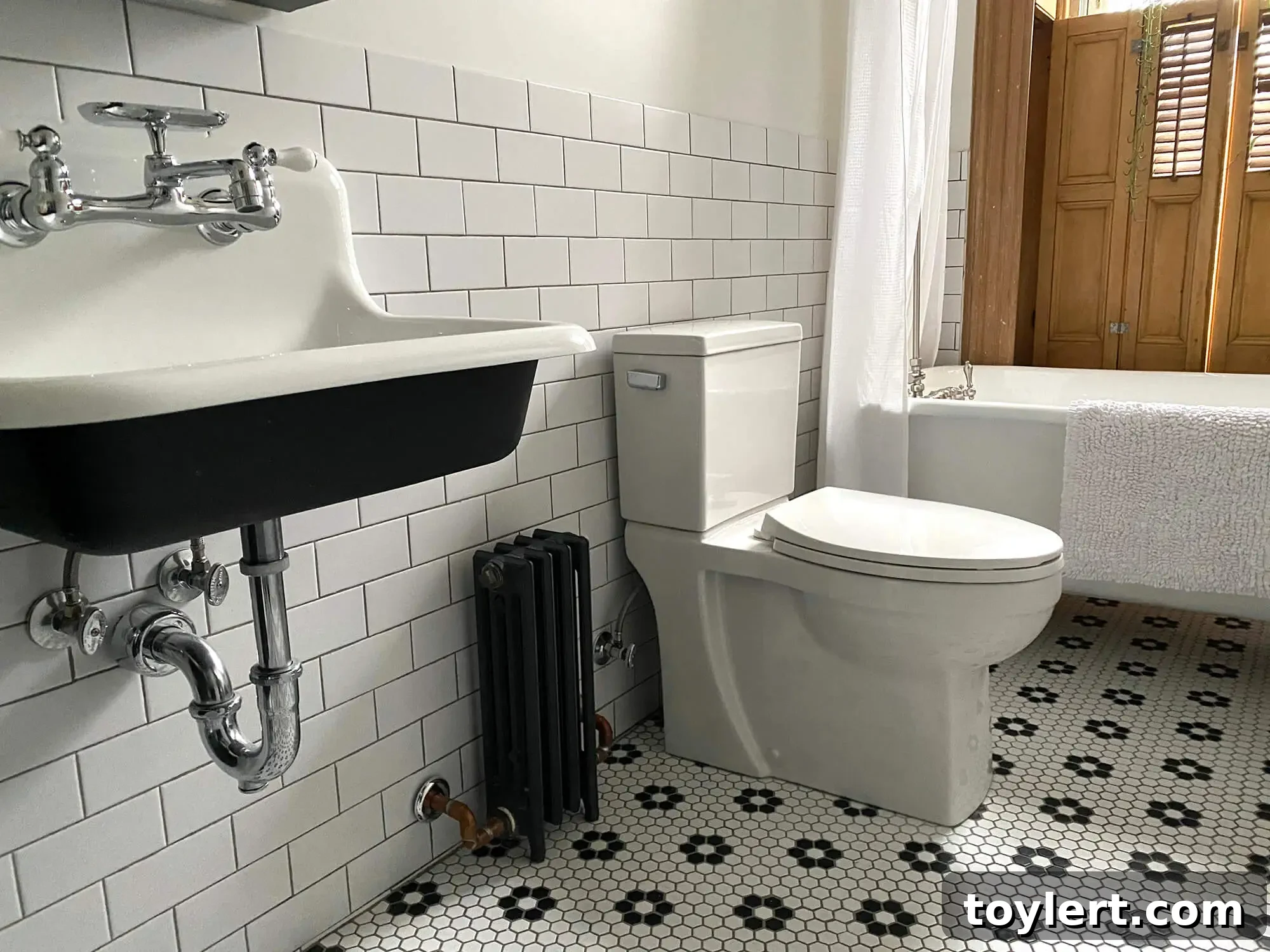
A particularly delightful detail of our heating renovation was the installation of a small, custom-sized “baby radiator” in our guest bathroom. While the room might have managed with ambient heat from other areas, adding this miniature unit was both a functional upgrade and a charming design choice. It not only ensures a cozy bathroom environment but also serves as a whimsical conversation starter, demonstrating how even the most practical elements can contribute to the overall warmth and personality of a renovated home. It truly felt like one of the cutest and most thoughtful additions in the entire project.
Cooling: The Discreet Power of Mini-Splits
For cooling, our primary objective was to achieve comprehensive comfort without the invasive process of installing extensive ductwork throughout the brownstone. We weighed the options carefully: ducted central AC and Unico systems, both of which presented significant challenges regarding space and structural impact. Ultimately, the flexibility, efficiency, and relatively minimal invasiveness of a mini-split system made it the ideal choice for us. We installed multiple indoor units strategically throughout the house, each connected to an outdoor compressor unit through discreet conduits. This allowed us to achieve highly efficient, zoned cooling, ensuring that individual areas could be cooled as needed without impacting the home’s historic fabric. The mini-splits provided modern comfort without forcing us to compromise on the aesthetic integrity or structural elements of our beloved brownstone.
Beyond Installation: Energy Efficiency and Long-Term Considerations
The journey of renovating a brownstone’s HVAC systems extends far beyond the initial installation. Long-term energy efficiency, operational costs, and ongoing maintenance are critical factors that influence the true value and sustainability of your choices. Investing in high-efficiency systems, even if they have a higher upfront cost, often results in significant savings on utility bills over the lifespan of the equipment. Furthermore, considering smart home integration for your thermostats and controls can provide granular data on energy usage, empowering you to make adjustments for even greater efficiency.
Regular maintenance is also paramount for both heating and cooling systems. For radiators, this might involve bleeding air from the system or ensuring proper boiler function. For mini-splits, routine cleaning of filters and professional servicing of the outdoor units will ensure optimal performance and longevity. A well-maintained system not only runs more efficiently but also reduces the likelihood of costly breakdowns. Ultimately, thoughtful planning and proactive care ensure that your brownstone’s climate control systems provide reliable comfort for many years, harmoniously blending historic charm with modern convenience and environmental responsibility.
Making Your Own HVAC Decisions: Key Takeaways for Renovators
For fellow brownstone renovators, our journey offers several key takeaways. First, understand that integrating modern cooling into a historic home necessitates a re-evaluation of your entire climate control strategy. It’s no longer just about heating; it’s about creating a balanced, year-round comfort system. Second, thoroughly research all available options for both heating and cooling, weighing their impact on aesthetics, budget, and structural integrity. Systems like mini-splits offer excellent solutions for historic homes seeking efficient cooling without extensive demolition. Third, prioritize energy efficiency from the outset by investing in good insulation and considering zoned systems. This not only enhances comfort but also leads to significant long-term savings.
Finally, remember that renovation is an opportunity to imbue your home with both functionality and personality. Whether it’s choosing traditional radiators for their timeless appeal or adding a charming “baby radiator” in a small space, every decision contributes to the unique character of your brownstone. The goal is to marry the best of modern technology with the enduring elegance of historic architecture, creating a home that is as comfortable and efficient as it is beautiful. By thoughtfully planning your heating and cooling solutions, you can transform your brownstone into a sanctuary of perfect climate control, ready for whatever the Brooklyn weather brings.