Gowanus Community Confronts Migrant Shelter Proposal in Packed, Passionate Meeting
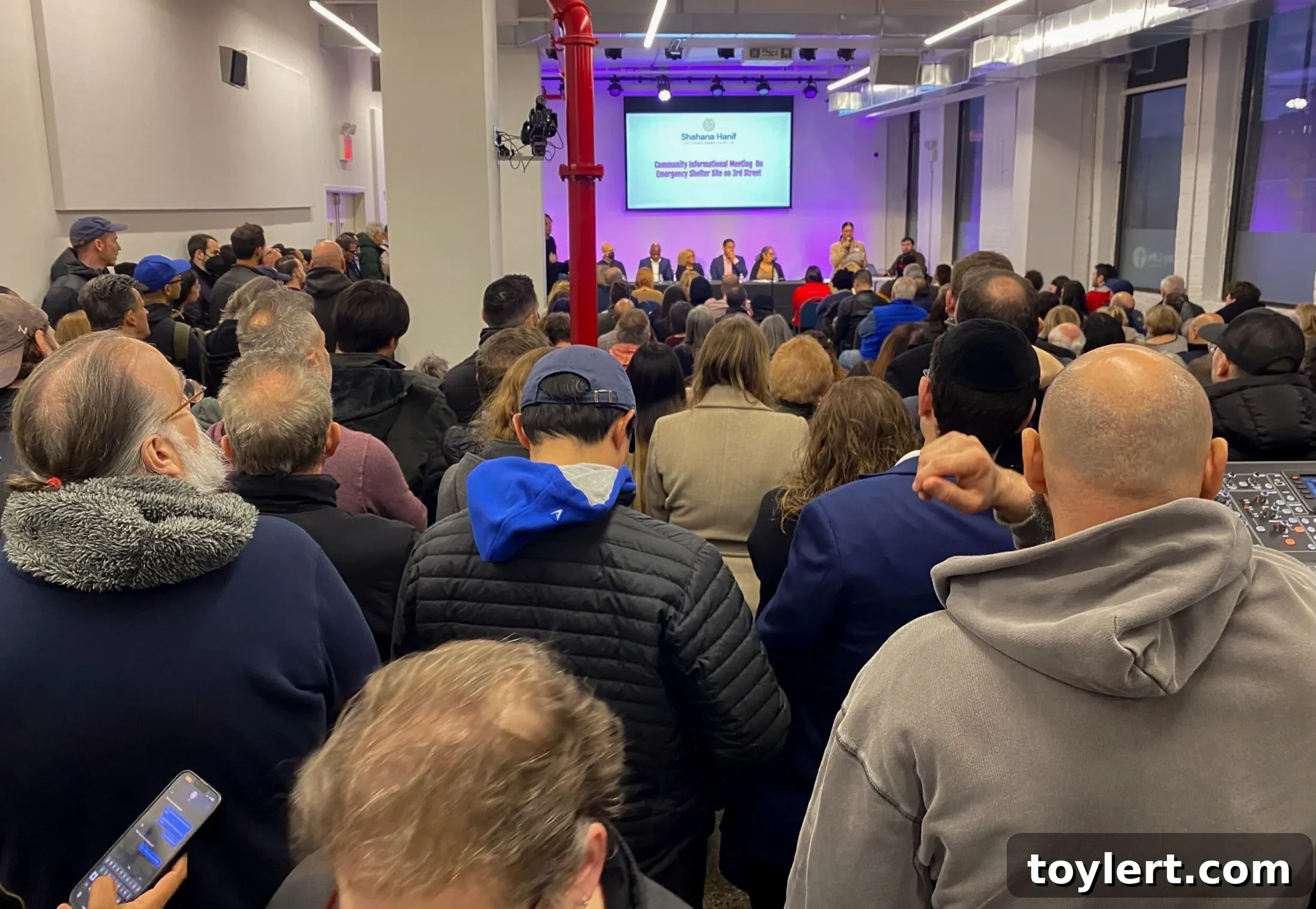
A palpable tension filled the air at Hoyt Street’s City Life Church on a recent Monday evening, as Gowanus residents gathered en masse for a highly anticipated community meeting. The subject drawing the overflow crowd was the imminent opening of a new migrant shelter, designated to house 400 adult men in a former factory building on 3rd Street. From the moment the doors opened, the church quickly reached capacity, with locals standing shoulder-to-shoulder, eager to voice their deep-seated concerns and frustrations regarding the city’s plans for their neighborhood.
Gowanus: A Neighborhood Navigating Change
Gowanus, a Brooklyn neighborhood known for its unique blend of industrial heritage, burgeoning artistic community, and ongoing gentrification, finds itself at a pivotal moment. Bordered by the infamously polluted Gowanus Canal, which is currently undergoing a massive federal Superfund cleanup, the area has seen a rapid transformation from its gritty manufacturing roots to a vibrant, albeit still evolving, residential and commercial hub. New developments, boutique shops, and trendy eateries have sprung up alongside long-standing auto repair shops and industrial spaces, creating a diverse demographic of long-time residents, new families, and creative professionals.
This dynamic backdrop shapes how the community views any significant new development, particularly one of this scale and nature. Residents are deeply invested in the character and future of Gowanus, often expressing strong opinions on issues ranging from zoning changes to public safety. The proposal for a large-scale migrant shelter, therefore, touches upon multiple facets of community life, stirring anxieties and sparking a robust debate about resource allocation, public safety, and the very identity of their evolving neighborhood.
New York City’s Migrant Crisis: A Broader Context
The situation in Gowanus is not isolated but rather a microcosm of a larger challenge facing New York City. Over the past year and a half, the city has grappled with an unprecedented influx of asylum seekers, arriving mostly from the southern border of the United States. This humanitarian crisis has placed immense strain on municipal resources, leading to a scramble for suitable housing, social services, and educational facilities. With tens of thousands of migrants requiring shelter, the city has opened more than 200 emergency sites, including repurposed hotels, former office buildings, and even tent cities, stretching its budget and infrastructure to their limits.
Mayor Eric Adams has repeatedly called for more federal and state aid, highlighting the unsustainable financial burden on the city. While acknowledging the city’s legal and moral obligation to provide shelter, the rapid establishment of these facilities has often occurred with limited advance notice to local communities, leading to feelings of being blindsided and ignored by residents across the five boroughs. This lack of transparent communication and perceived absence of community input has fueled much of the resentment and apprehension seen in meetings like the one in Gowanus.
The Proposed 3rd Street Shelter: A Detailed Look
The facility slated to become the new migrant shelter is located at 130 3rd Street, a former industrial building that once housed various manufacturing operations. Its transformation into a shelter for 400 adult men raises a multitude of questions regarding its suitability and operational logistics. Historically, factory buildings are designed for industrial use, not residential living, prompting concerns about ventilation, sanitation, and overall living conditions for the prospective residents.
Details about the shelter’s operator, staffing levels, and the specific services that will be provided remain critical points of interest for the community. Residents want assurances about on-site security, medical services, and programs aimed at helping the asylum seekers integrate or move towards self-sufficiency. The sheer number of individuals—400 men—concentrated in a single location in a mixed-use neighborhood is a significant factor in community apprehension, especially given its proximity to residential blocks, schools, and local businesses. The success and acceptance of such a facility hinge not only on the humanitarian aspect but also on meticulous planning, robust management, and a clear commitment to community safety and collaboration.
A Community’s Outcry: Concerns Voiced at City Life Church
The atmosphere at City Life Church was charged with emotion as residents took turns at the microphone, each statement underscoring a deep sense of unease and, for some, outright opposition. The concerns articulated by Gowanus locals touched upon a broad spectrum of issues, reflecting both immediate worries and long-term anxieties about the impact of the shelter on their neighborhood.
Safety and Security Implications
Foremost among the worries was the potential impact on public safety. The prospect of 400 unvetted men, many of whom have endured traumatic journeys and arrive with little to no resources, being housed in a single facility stirred fears among some residents, particularly parents. Questions were raised about the background checks for shelter residents, the security protocols within and around the facility, and the potential for an increase in crime rates or disruptive behavior. While city officials typically emphasize security measures, the community sought concrete assurances and detailed plans to mitigate these perceived risks, especially concerning the safety of children and vulnerable populations.
Strain on Local Resources
Another significant point of contention was the anticipated strain on local infrastructure and services. Gowanus, while developing, still relies on a finite set of public resources. Residents worried about overcrowded public transportation, increased demands on local sanitation services, and the availability of healthcare and emergency services. The concern was that existing resources, already stretched thin, would be further burdened by an additional 400 individuals, potentially degrading the quality of life for everyone in the neighborhood. This apprehension extended to the practical logistics of integrating such a large group into the daily rhythm of Gowanus.
Transparency and Process Deficits
A recurring theme throughout the meeting was the community’s frustration over what they perceived as a lack of transparency and an inadequate decision-making process. Many residents felt that the plan for the shelter was presented as a fait accompli, with little to no prior consultation or opportunity for community input. This top-down approach left many feeling disrespected and powerless, fueling a sense of resentment towards city officials. The demand for more open dialogue, clearer communication, and genuine community engagement was a consistent plea, highlighting a desire for collaborative problem-solving rather than unilateral mandates.
Economic and Quality of Life Worries
The economic impact of the shelter also emerged as a significant concern. Some residents worried about potential declines in property values, particularly for homes in close proximity to the 3rd Street location. Local business owners expressed apprehension about changes in pedestrian traffic, consumer behavior, and the overall perception of the neighborhood, fearing a negative impact on their livelihoods. Beyond economics, broader quality of life issues, such as increased noise, congestion, and changes to the neighborhood’s residential character, were brought to the forefront, underscoring the multifaceted nature of the community’s objections.
Navigating the Crisis: The City’s Stance and Humanitarian Imperative
While the community voiced strong concerns, city officials and advocates for the asylum seekers often present a different perspective, rooted in humanitarian principles and legal obligations. New York City has a unique “right to shelter” mandate, meaning it is legally required to provide housing for anyone who needs it. This mandate, while a cornerstone of the city’s social safety net, has been tested like never before by the migrant crisis. Officials often emphasize the temporary nature of the shelters, the robust security measures being implemented, and the essential services provided to help asylum seekers get back on their feet.
Proponents also highlight the humanitarian aspect, reminding residents that the asylum seekers are individuals fleeing persecution, violence, or economic hardship, seeking a safer life. They argue that providing shelter is not just a legal requirement but a moral imperative. Efforts are typically made to connect migrants with legal aid, job training, and other support systems to facilitate their transition and eventual self-sufficiency. The city’s narrative often underscores that these are temporary solutions to an urgent crisis, with the ultimate goal being to help individuals move into more permanent housing and integrate into society.
The Meeting Unfolds: Passion, Protest, and Dialogue
The community meeting at City Life Church was undoubtedly a “rowdy” affair, characterized by moments of passionate speeches, occasional shouts, and both applause and boos from the engaged audience. Local elected officials were present, attempting to bridge the gap between their constituents’ concerns and the city’s broader policy. They often found themselves in a difficult position, caught between advocating for their district and acknowledging the city’s legal and humanitarian obligations.
Speakers ranged from long-time residents expressing nostalgic sorrow for their changing neighborhood to young families worried about their children’s safety. Some brought forward specific data points or previous experiences with shelters, while others spoke from the heart, conveying their anxieties directly. The intensity of the discussions underscored the profound impact such a proposal has on the fabric of a community, transforming what might seem like a policy decision into a deeply personal issue for many. Despite the disagreements and strong emotions, the meeting served as a vital forum for residents to articulate their positions and demand accountability from those in power.
Looking Ahead: The Path Forward for Gowanus and NYC
The meeting at City Life Church was not an endpoint but rather a significant chapter in an ongoing saga. For the Gowanus community, the path forward involves continued vigilance and advocacy. Residents are likely to maintain pressure on their elected officials, demanding more comprehensive plans, greater transparency, and a genuine commitment to addressing their concerns. This could manifest in further community gatherings, organized protests, or even legal challenges, as residents seek to influence the implementation and operation of the shelter.
For New York City, the challenge remains multifaceted: balancing its legal and moral obligations to shelter asylum seekers with the legitimate concerns of its established communities. Finding suitable locations, ensuring adequate funding, and fostering better communication with neighborhoods will be critical for managing this ongoing crisis sustainably. The situation in Gowanus serves as a powerful reminder of the complexities involved when city-wide humanitarian efforts intersect with localized community impacts, necessitating thoughtful dialogue, adaptive strategies, and a sustained commitment to finding equitable solutions for all.