Royal Palms Shuffleboard Club: A Gowanus Icon Navigates Rapid Urban Development
In the vibrant, ever-evolving landscape of Brooklyn, few neighborhoods encapsulate the dynamic tension between industrial heritage and modern development quite like Gowanus. Amidst this rapid transformation, one beloved establishment, the Royal Palms Shuffleboard Club, has firmly declared its intention to stay put, offering a beacon of stability and unique entertainment. This announcement comes despite a significant mixed-use development planned for 473 President Street, a project poised to reshape a crucial part of the neighborhood. The club’s steadfast commitment to its Gowanus home highlights a broader narrative unfolding across New York City: how cherished local institutions adapt and thrive in the face of relentless urban growth and extensive real estate pressures, proving that community spirit can indeed coexist with progress.
The New Blueprint for 473 President Street: A Catalyst for Change
The catalyst for much discussion revolves around a substantial ground-up mixed-use development slated for 473 President Street. This ambitious project is a collaborative effort involving several prominent players in the real estate and architectural sectors, signaling a major investment in the future of Gowanus. Flexible office space provider Knotel, known for its adaptive and modern workspace solutions, is not only a future tenant but also a part-owner, indicating a deep, vested interest in the long-term success of the venture. They are joined by esteemed developers Cogswell Lee, the innovative architecture firm GLUCK+, and MCP President Street LLC, forming a formidable team behind this transformative undertaking.
The specifics of the mixed-use development suggest a multifaceted structure designed to cater to a diverse array of needs within Gowanus. While precise details about extensive residential or ground-floor retail components are often kept under wraps during initial announcements, the involvement of Knotel strongly implies a significant allocation for contemporary office spaces. This integration of flexible workspaces aims to attract businesses and creative professionals to the area, further diversifying Gowanus’s economic fabric and complementing its existing artistic community. Such developments are typical of Brooklyn’s ongoing evolution, where former industrial zones are reimagined as dynamic hubs blending commerce, culture, and community. The project, as announced, was originally projected for completion in 2019, signifying a swift turnaround that would dramatically alter the streetscape and bring a new wave of activity to the area.
This development is more than just a building; it represents a significant shift in the urban landscape of Gowanus. It brings modern architecture and state-of-the-art facilities to an area historically known for its grit and industrial character. The scale of such projects often raises questions about neighborhood identity, economic impact, and the delicate balance between revitalization and preservation. Understanding the nature of this development is crucial to appreciating the significance of Royal Palms’ decision to remain a fixture in this rapidly changing environment.
Royal Palms’ Resolute Stand Amidst Flux: A Testament to Community
For many residents and visitors, the Royal Palms Shuffleboard Club is more than just a venue; it’s a social anchor and a vibrant testament to Gowanus’s unique character. Its announcement that it intends to remain in its current location, despite the looming construction and surrounding changes, sent a wave of relief and enthusiasm through its dedicated patron base. This decision wasn’t made lightly and likely involved complex negotiations or assurances regarding the club’s future operations and lease agreements, underscoring a strategic commitment to its Brooklyn home.
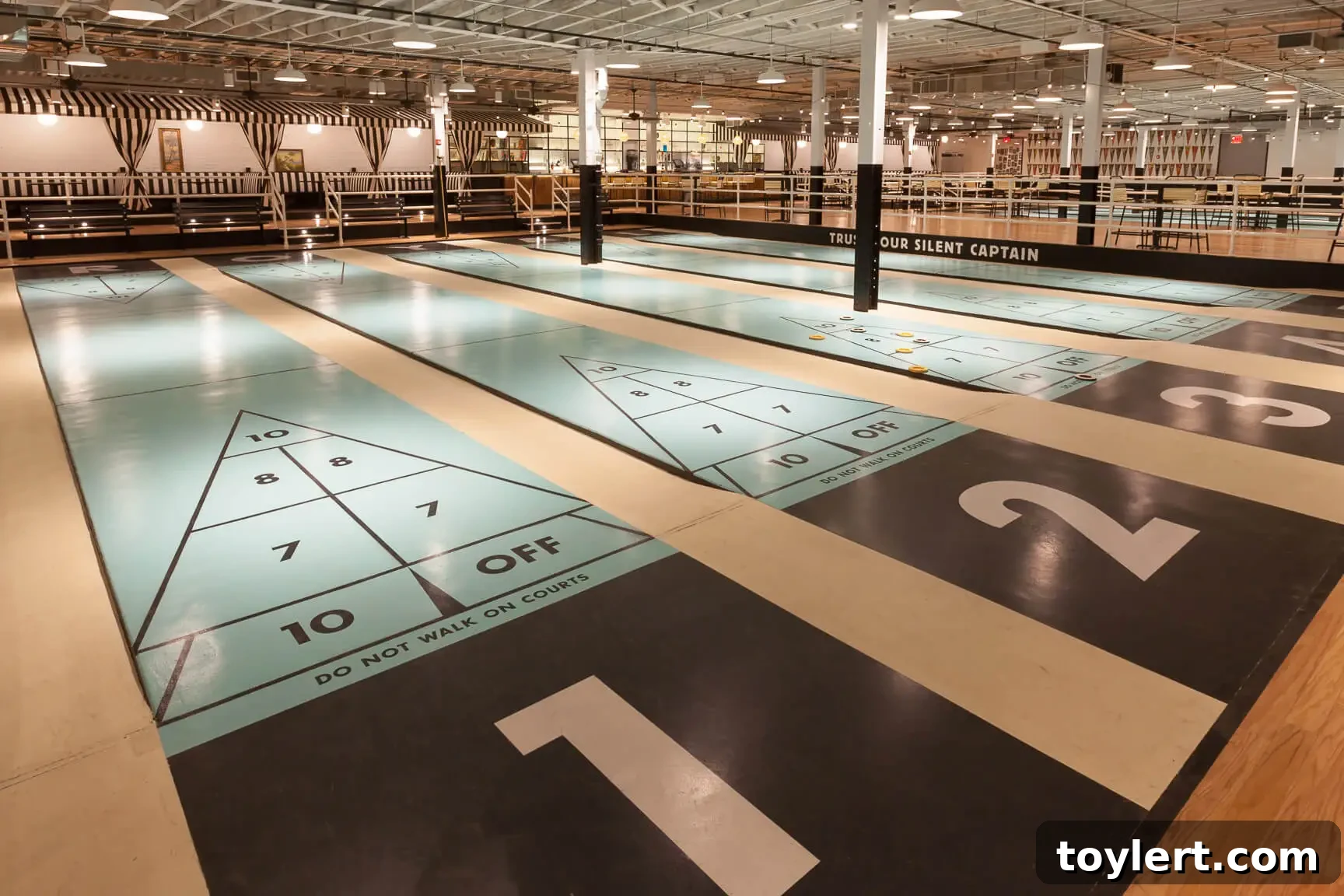
The club’s management has publicly affirmed its commitment, reassuring its community that the shuffleboard courts, tropical-themed cocktails, rotating food vendors, and lively atmosphere will continue to be a staple of Brooklyn nightlife. This resilience underscores the club’s deep roots in Gowanus, having established itself as a beloved entertainment destination since its inception in 2014. In an era where rising rents and rampant development frequently displace small businesses, cultural institutions, and independent ventures, Royal Palms’ ability to secure its future serves as a powerful symbol of endurance and community value. It demonstrates that with strategic planning, strong local support, and a unique value proposition, cherished establishments can indeed weather the storm of urban revitalization and continue to contribute to the neighborhood’s soul.
The club’s presence acts as a counterpoint to the rapid modernization, reminding stakeholders that neighborhood identity is often built on the unique contributions of its local businesses and community spaces. This resolute stand by Royal Palms not only preserves a popular venue but also reinforces the idea that economic development can and should coexist with the cultural fabric that defines an urban area. It sends a clear message about the importance of retaining authentic local character amidst widespread change.
Gowanus: A Neighborhood in Flux and the Challenge of Growth
The story of Royal Palms unfolds against the backdrop of Gowanus’s broader and often contentious transformation. Once a predominantly industrial canal-side district, characterized by warehouses, manufacturing plants, and a rich, albeit often polluted, history, Gowanus is undergoing an intensive period of rezoning and redevelopment. The neighborhood’s strategic proximity to Manhattan and other desirable Brooklyn areas like Park Slope and Carroll Gardens, coupled with its unique blend of artistic spaces and gritty charm, has made it a prime target for real estate investors and developers looking for the next frontier in urban expansion.
The controversial Gowanus rezoning plan, ultimately approved in late 2021, paved the way for significant residential and commercial growth, aiming to create a mixed-income community with thousands of new housing units. While proponents argue that such development brings much-needed housing, infrastructure improvements, and economic opportunities to New York City, critics raise concerns about displacement, affordability, the overwhelming scale of new construction, and the potential loss of the neighborhood’s distinctive identity. The influx of new residents and businesses inevitably brings increased demand for services, changes in traffic patterns, and a fundamental shift in the social fabric. The inherent challenge lies in balancing progress with preservation, ensuring that the essence of what makes Gowanus special isn’t lost in the relentless march of modernity.
Projects like the one at 473 President Street are emblematic of this shift, bringing modern infrastructure and commercial vitality to areas previously underutilized or ripe for repurposing. However, the environmental legacy of the Gowanus Canal, a federal Superfund site, also casts a long shadow over these developments, requiring extensive cleanup efforts and careful planning to ensure sustainable and responsible growth. This complex interplay of environmental remediation, urban planning, community interests, and economic imperatives defines the current trajectory of Gowanus, making every decision, particularly those concerning long-standing establishments, deeply significant.
The Enduring Charm and Community Role of Royal Palms
What makes the Royal Palms Shuffleboard Club so indispensable to the Gowanus community and Brooklyn at large? Beyond its unique offering of full-size shuffleboard courts, which provide a nostalgic yet surprisingly engaging activity for all skill levels, the club cultivates an atmosphere of relaxed fun and inclusive social interaction. It defies the typical Brooklyn nightlife scene, offering a refreshingly accessible and unpretentious alternative to crowded bars and exclusive clubs. With its vibrant, retro-inspired decor, often featuring live music, a rotation of popular local food vendors, and a general air of playful camaraderie, Royal Palms has successfully carved out a niche as a genuine community hub and a beloved entertainment venue.
It serves as a gathering place for diverse groups, from friends seeking a casual night out to corporate teams looking for an unconventional team-building activity, to families enjoying an afternoon. The club frequently hosts charity events, local markets, and various themed parties, further cementing its role as a vital part of Gowanus’s social infrastructure. In a rapidly gentrifying area, where many long-standing establishments have succumbed to economic pressures or redevelopment, Royal Palms’ ability to maintain its unique identity, broad appeal, and commitment to fun makes its continued presence all the more significant. It offers a tangible link to the “old Brooklyn” while seamlessly integrating into the new, proving that economic growth and cultural preservation can not only coexist but thrive together, enriching the urban experience for everyone.
Looking Ahead: A Model for Urban Coexistence and Sustainable Growth
The announcement from Royal Palms Shuffleboard Club is more than just a business update; it’s a profound testament to the club’s resilience and a potential blueprint for other beloved establishments facing similar development pressures across urban centers. Its continued operation alongside new, large-scale projects like the one at 473 President Street represents a hopeful vision for urban coexistence. It suggests that rapid development doesn’t inherently necessitate the obliteration of local character or the displacement of popular institutions. Instead, through careful planning, transparent communication, genuine community engagement, and perhaps mutually beneficial agreements, a dynamic balance can be achieved where new growth complements existing cultural assets.
As Gowanus continues its remarkable transformation, the Royal Palms Shuffleboard Club will likely stand as a vibrant symbol of continuity amidst change. Its success in navigating the complexities of urban development will be closely watched, offering valuable lessons for how cities can evolve without losing their soul and unique charm. For now, Brooklynites and visitors alike can rest assured that the distinctive clatter of shuffleboard discs, the warmth of its tropical ambiance, and the lively spirit of Royal Palms will remain an integral part of the Gowanus experience for years to come, affirming its status as a resilient and cherished institution in the heart of a changing borough.