The Enduring Grandeur of Clinton Avenue: A Journey Through Brooklyn’s Architectural Masterpieces
Every great city holds secrets to its past, etched into the very foundations of its architecture. In the heart of Brooklyn, Clinton Avenue stands as a majestic testament to a bygone era of unparalleled opulence and ambition. Once the undisputed “Gold Coast” of Clinton Hill, this historic thoroughfare was where Brooklyn’s wealthiest industrialists, merchants, and prominent citizens chose to build their magnificent homes in the 19th century. Far more than just a street, Clinton Avenue today is an architectural timeline, a living museum showcasing a stunning array of American architectural styles that flourished during a period of immense growth and prosperity. A stroll down this tree-lined avenue is an invitation to step back in time, offering a captivating glimpse into the lives and aspirations of Brooklyn’s elite.
The Dawn of Brooklyn’s Gold Coast: Clinton Avenue’s Rise
The mid-19th century saw Brooklyn transform from a collection of rural towns into a thriving urban center, often dubbed “the City of Churches.” This period of rapid industrialization and commercial expansion generated immense wealth, and with it came a desire for grand residences that reflected the newfound status of its successful citizens. While Manhattan had its Fifth Avenue, Brooklyn boasted its own prestigious enclaves, with Clinton Hill emerging as the crown jewel. Its elevated position offered commanding views, while its proximity to the Brooklyn Bridge (completed in 1883) and convenient ferry access to Manhattan made it an ideal location for those who sought both urban convenience and suburban tranquility.
Clinton Avenue, in particular, was meticulously planned to accommodate generously sized lots, allowing for the construction of sprawling mansions surrounded by lush gardens. The spaciousness was a luxury not easily found in more densely populated areas. As prominent families like the Pratts (of the Pratt Institute fame), the Vanderbilts, and others began to establish their homes here, the avenue quickly became synonymous with wealth, influence, and impeccable taste. These early residents set a precedent for architectural grandeur, attracting a cascade of similar developments that collectively forged one of America’s most impressive residential boulevards.
A Living Museum of American Architectural Styles
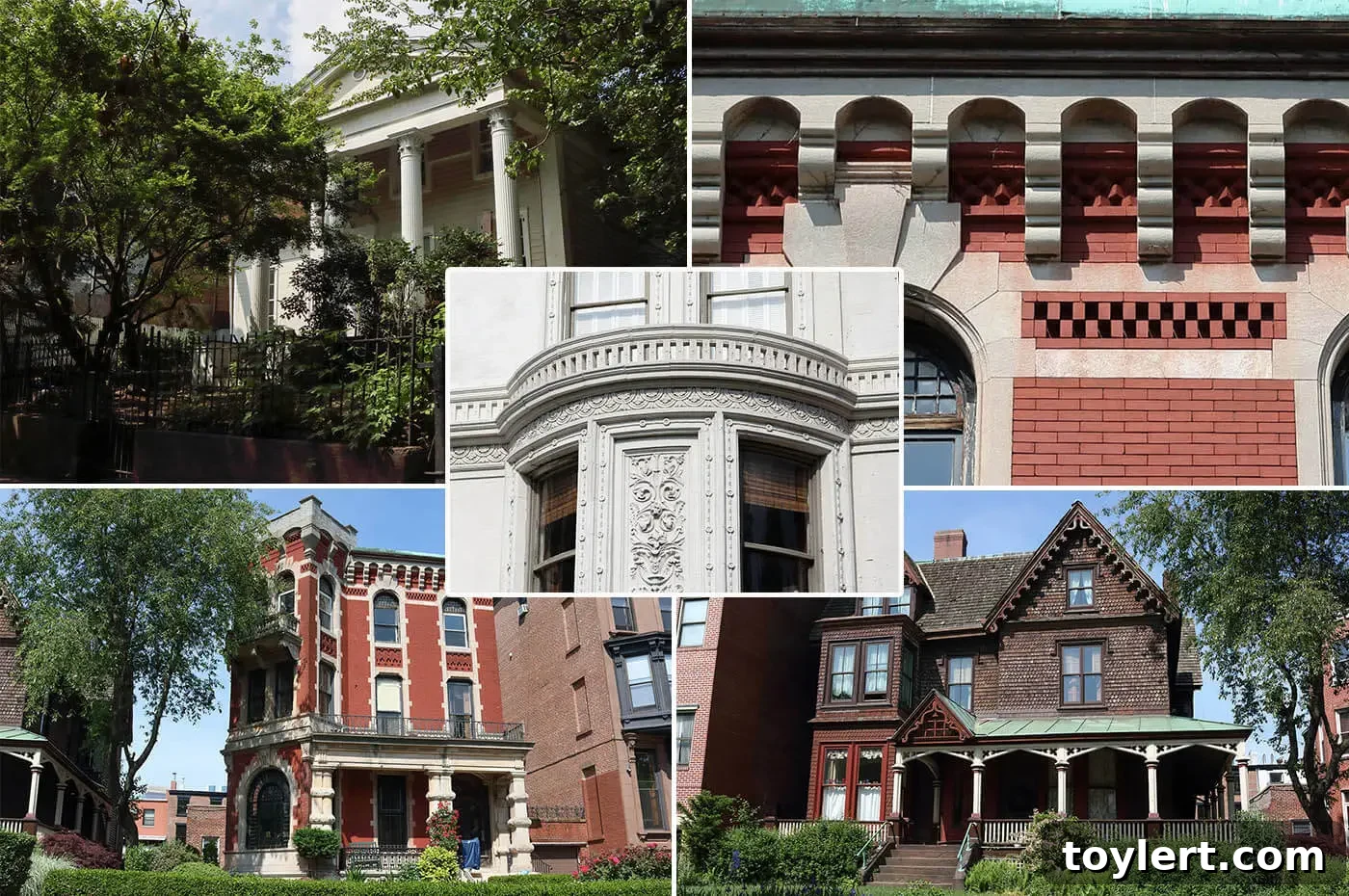
What makes Clinton Avenue truly extraordinary is its unparalleled collection of architectural styles, each mansion narrating a distinct chapter in America’s design history. From the romanticism of the Victorian era to the stately elegance of classical revivals, the avenue presents a diverse and cohesive display of artistic expression. It’s a place where architects were given free rein to interpret prevailing trends, resulting in a rich tapestry of forms, textures, and ornamentation. This open-air museum invites visitors to discern the subtle nuances and bold statements of late 19th and early 20th-century design.
Victorian Elegance: Queen Anne and Romanesque Revival
The Victorian era, extending through much of the 19th century, profoundly influenced the initial character of Clinton Avenue. Among its most celebrated manifestations here are the Queen Anne and Romanesque Revival styles, each contributing to the avenue’s dramatic and picturesque streetscape. Queen Anne architecture, popular in the latter half of the century, is characterized by its whimsical charm and elaborate detailing. These homes often feature asymmetrical facades, prominent turrets and towers, complex rooflines, bay windows, and a rich interplay of textures, utilizing materials like brick, terra cotta, wood shingles, and decorative half-timbering. Every angle reveals a new design element, creating a sense of dynamic beauty that captivates the eye.
In contrast, the Romanesque Revival style, championed by architects like H.H. Richardson, exudes a powerful sense of solidity and grandeur. Buildings in this style are recognized by their heavy masonry, often in rough-faced stone, monumental arched entryways, deep-set windows, and cylindrical towers. They convey an impression of enduring strength and stability, reflecting a desire for gravitas and permanence. On Clinton Avenue, these Romanesque Revival mansions stand as robust counterpoints to their more decorative Queen Anne neighbors, showcasing the diverse architectural philosophies of the era. These homes were not just residences; they were statements of power and refined taste.
Classical Revival and Beaux-Arts Magnificence
As the 19th century drew to a close and the 20th began, architectural tastes gradually shifted towards more classical and formal expressions, influenced by European academic traditions. This transition is beautifully evident on Clinton Avenue with the emergence of Beaux-Arts and Renaissance Revival mansions. The Beaux-Arts style, inspired by the French École des Beaux-Arts, brought a new level of sophistication and monumental scale. Characterized by strict symmetry, grand classical motifs, elaborate ornamentation, and the use of opulent materials like marble and limestone, these homes were designed to impress with their formal dignity and scholarly references to ancient Greek and Roman architecture. Their imposing facades, often featuring columns, pilasters, and intricate cornices, reflect a desire for European-inspired elegance and order.
Similarly, the Renaissance Revival style, drawing inspiration from Italian Renaissance palazzi, offered another elegant interpretation of classical aesthetics. These mansions typically feature balanced proportions, rusticated stone bases, multi-story facades with distinct horizontal divisions, and meticulously detailed windows and cornices. They project an aura of refined stateliness and timeless beauty, often less overtly ornate than Beaux-Arts but equally grand in their conception. Together, these classical styles represent a move towards a more controlled, symmetrical, and academically informed architectural language, signaling a new era of American sophistication.
Beyond the Dominant Styles: Eclectic and Transitional Designs
While Queen Anne, Romanesque Revival, Beaux-Arts, and Renaissance Revival are prominent, Clinton Avenue also showcases an intriguing array of eclectic and transitional designs. Many architects of the period were not strictly bound by singular styles, often blending elements from different traditions to create unique, bespoke residences. One might encounter houses with subtle Italianate influences, characterized by low-pitched roofs, wide overhanging eaves, and decorative brackets, or hints of the more restrained Neo-Georgian style that gained popularity in the early 20th century. These less rigidly categorized mansions speak to the individual tastes of their owners and the innovative spirit of their designers, adding further depth and variety to the avenue’s architectural narrative. They highlight a period of experimentation, where personal expression was valued within the broader architectural movements, ensuring that each home contributes a distinct voice to Clinton Avenue’s grand chorus of design.
The Visionaries Behind the Grandeur: Clinton Avenue’s Notable Residents
The impressive architecture of Clinton Avenue is inseparable from the stories of the prominent individuals and families who commissioned these magnificent homes. These were the titans of industry, successful merchants, influential politicians, and cultural philanthropists who shaped Brooklyn and New York City during the Gilded Age. Families like the Pratts, the Woodruffs, and others established their family seats here, transforming the avenue into a vibrant social hub for the city’s elite. Their wealth, often derived from shipping, manufacturing, banking, and real estate, afforded them the luxury of commissioning leading architects to design houses that were not merely dwellings but powerful symbols of their success and social standing.
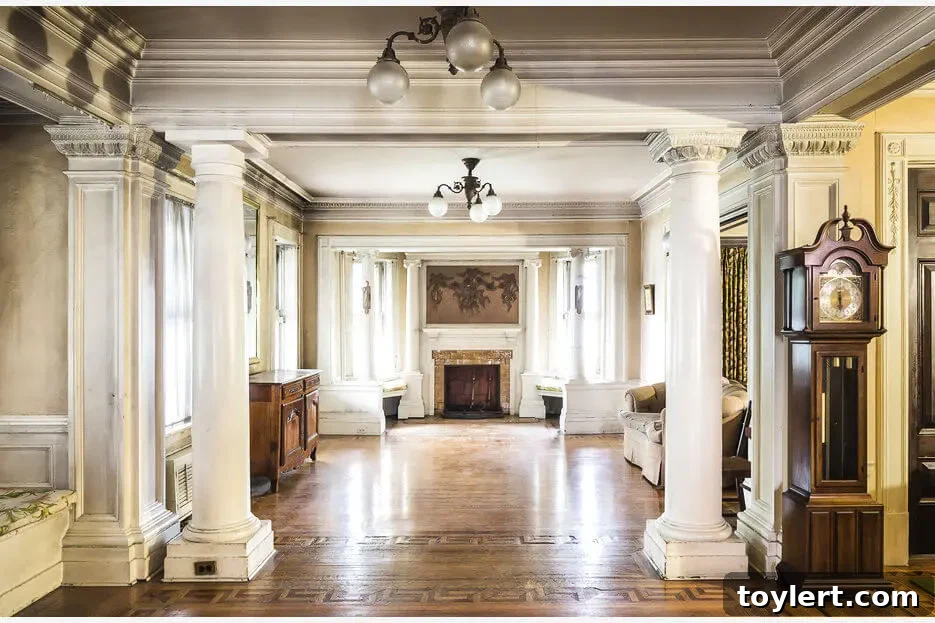
These mansions were scenes of lavish entertaining, intellectual gatherings, and charitable endeavors, reflecting the broader social and cultural landscape of the era. The residents of Clinton Avenue played crucial roles in the development of Brooklyn, contributing to its educational institutions, cultural organizations, and civic infrastructure. Their homes were an extension of their public personae, meticulously crafted to project an image of dignity, power, and impeccable taste. Walking along Clinton Avenue, one can almost hear the echoes of their grand soirées and feel the weight of the history they created, reminding us that these buildings are not just structures but monuments to human achievement and aspiration.
Preserving the Past: Clinton Avenue in the Modern Era
Today, Clinton Avenue remains a cherished and remarkably well-preserved example of 19th-century urban grandeur. The survival of so many of these extraordinary mansions is a testament to dedicated preservation efforts and the enduring appeal of the neighborhood. Facing the challenges of maintenance, changing economic conditions, and evolving urban landscapes, many of these properties have found new life. While some remain private residences, others have been sensitively adapted for institutional use, housing schools, cultural centers, or sophisticated multi-family dwellings. The establishment of historic districts in Clinton Hill has been instrumental in protecting the architectural integrity and character of the avenue, ensuring that future generations can appreciate its unique heritage.
Community groups and preservationists work tirelessly to advocate for these architectural treasures, educating the public about their significance and fostering a sense of pride among residents. Maintaining these large, historic properties is a significant undertaking, but the commitment to preserving Brooklyn’s “Gold Coast” is unwavering. As a result, Clinton Avenue continues to thrive as a vibrant, historic neighborhood where the past gracefully coexists with the present, offering an authentic experience of Brooklyn’s rich history and architectural prowess.
Experience the Legacy: Planning Your Clinton Avenue Architectural Tour
For anyone with an interest in history, architecture, or simply the captivating stories of Brooklyn, a visit to Clinton Avenue is an absolute must. We wholeheartedly encourage you to embark on your own self-guided architectural tour. The best way to experience the avenue’s splendor is on foot, allowing you to pause, admire the intricate details, and truly appreciate the scale and artistry of each mansion. Pay attention to the varied building materials, the intricate carvings, the unique window designs, and the landscaping that complements these stately homes. Consider visiting during spring or autumn for comfortable strolling weather and to see the avenue bathed in beautiful light.
As you wander, imagine the lives that unfolded within these walls and the city that grew around them. Clinton Avenue isn’t just a collection of old buildings; it’s a profound narrative of American ambition, artistic expression, and the enduring spirit of preservation. It offers a unique opportunity to connect with Brooklyn’s past and to witness, firsthand, the breathtaking legacy of its architectural masterpieces. Don’t miss the chance to explore this unparalleled street and uncover the remarkable history that awaits around every corner.