A Transformative Vision: Mixed-Income Mega-Development Set to Reshape Bed Stuy’s Fulton Park
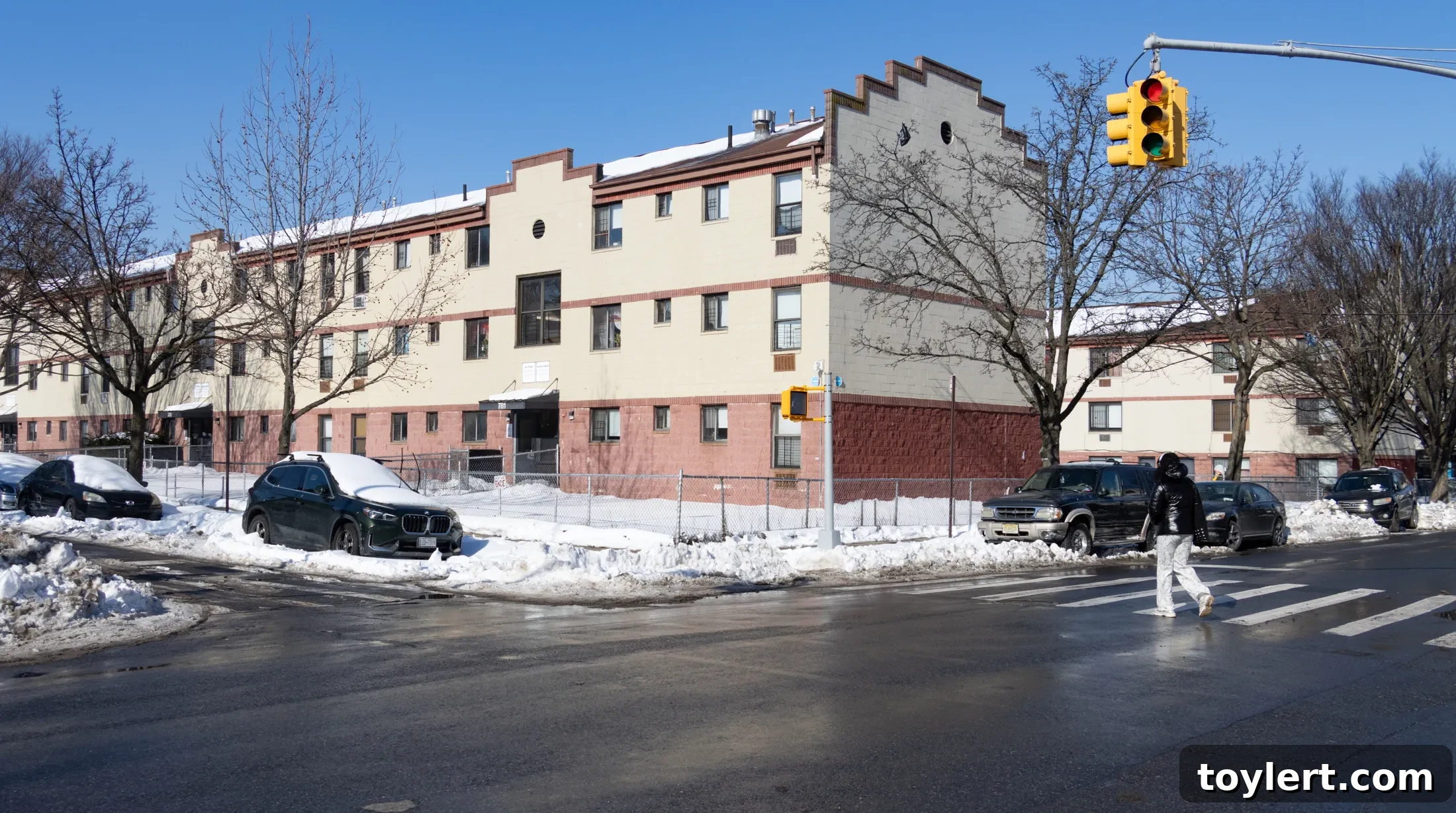
A significant urban transformation is on the horizon for a well-known low-income apartment complex nestled on the southeastern edge of Brooklyn’s vibrant Bed Stuy neighborhood. Known as Fulton Park, this distinctive property, characterized by its three-story buildings with iconic Dutch stepped gables occupying an expansive superblock, is slated for a dramatic redevelopment. Developers have officially filed to rezone the site, paving the way for a colossal mixed-income project. This ambitious plan envisions up to a dozen new buildings, some reaching an impressive 17 stories in height, and collectively housing over 2,000 modern market-rate and much-needed affordable apartments.
This proposed mega-development represents a pivotal moment for Bed Stuy, promising to inject a substantial volume of new housing into a rapidly growing area while simultaneously aiming to preserve the community fabric for existing residents. Crucially, the plan indicates that approximately half of the new units could be designated as affordable. Furthermore, current residents of Fulton Park are promised the opportunity to transition into new, high-quality apartments within the redeveloped complex, maintaining their current rent structures. This commitment to existing tenants underscores a complex effort to balance modernization and growth with equitable community development.
Fulton Park: A Community Cornerstone Poised for Change
For decades, Fulton Park has served as a vital anchor for its residents and the surrounding Bed Stuy community. Its architectural uniqueness, featuring three-story structures adorned with distinctive Dutch stepped gables, offers a visual nod to historical European influences, setting it apart from typical urban housing projects. Situated on a superblock – a large urban block that consolidates several smaller blocks, often resulting in larger, more self-contained developments – the complex provides a substantial footprint for its current low-income residents, fostering a close-knit community environment over many years.
The complex is more than just a collection of buildings; it represents home, history, and a sense of belonging for countless families. Its design, while perhaps not groundbreaking by modern standards, has offered accessible and stable housing for a demographic often overlooked in the city’s increasingly competitive housing market. The decision to redevelop such a deeply rooted community raises questions about preservation, progress, and how best to navigate the needs of an evolving urban landscape.
The existing structures, while providing essential housing, are now considered by developers to be ripe for modernization and increased density to meet contemporary housing demands. This push for redevelopment reflects broader trends across New York City, where older, low-rise complexes on valuable land parcels are often targeted for higher-density, mixed-use projects designed to address the persistent housing shortage. The challenge lies in undertaking such a monumental shift without eroding the established social fabric and history that define places like Fulton Park.
Unveiling the Vision: A Mixed-Income Housing Solution
The proposed mega-development at Fulton Park is conceptualized as a diverse, mixed-income community designed to cater to a wide spectrum of residents. With plans for up to a dozen new buildings and heights reaching 17 stories, the scale of this project is truly ambitious, aiming to deliver upwards of 2,000 residential units. This significant increase in housing stock is a direct response to Brooklyn’s intense demand for both market-rate and affordable housing options.
The “mixed-income” designation is central to the project’s philosophy. It signifies an intentional blend of apartments available at market rates with those reserved for individuals and families earning below a certain income threshold, often tied to the Area Median Income (AMI). In the context of New York City, defining “affordable” can be complex, involving various income bands and regulatory frameworks. For a project of this magnitude, achieving a balance between market-rate units, which help finance the development, and genuinely affordable units, which address critical housing needs, is paramount for securing community and governmental approval.
The potential for approximately half of the units to be affordable is a key promise that could make this development a model for equitable urban renewal. Such a high percentage of affordable housing is crucial in a neighborhood like Bed Stuy, which has experienced rapid gentrification and increasing housing costs. This commitment suggests an attempt to create a more inclusive community, fostering economic diversity and ensuring that new development benefits a broader segment of the population, not just those able to afford market rates.
Preserving Community: A Commitment to Current Residents
One of the most critical aspects of this proposed redevelopment, and often the most contentious in similar projects, is the fate of the existing residents. The developers have made a pivotal pledge: current Fulton Park residents will have the opportunity to relocate into new, modern apartments within the redeveloped complex, and crucially, their rents will remain at their current, affordable levels. This commitment is designed to mitigate concerns about displacement, a common fear associated with large-scale urban renewal projects in gentrifying neighborhoods.
Implementing this promise will involve a meticulously planned relocation strategy. This typically includes providing temporary housing for residents during the construction phases, assistance with moving, and comprehensive support to ensure a smooth transition back into their new, permanent homes. Such a process requires transparent communication, robust tenant protection policies, and consistent community engagement to build trust and address any anxieties or logistical challenges that may arise for families during what can be a disruptive period.
The ability for residents to return to their neighborhood at the same affordable rent is a significant safeguard against the negative impacts of gentrification. It aims to ensure that the revitalization of Fulton Park benefits those who have long called it home, rather than pushing them out. This commitment reflects a growing recognition within urban planning that successful development must go beyond simply constructing new buildings; it must also protect and empower existing communities. The success of this aspect will be a defining factor in how the project is ultimately perceived and its long-term impact on Bed Stuy.
Bed Stuy’s Evolution: A Microcosm of NYC Development
The redevelopment of Fulton Park serves as a microcosm of the broader urban development trends sweeping across New York City, particularly in rapidly evolving neighborhoods like Bed Stuy. Once a historically underserved area, Bed Stuy has transformed into one of Brooklyn’s most sought-after and vibrant communities, attracting new residents and businesses. This resurgence has, however, brought with it the dual challenges of escalating housing costs and the pressure to modernize existing infrastructure.
Large-scale developments like the one proposed for Fulton Park play a critical role in addressing NYC’s persistent housing crisis. By increasing density on underutilized or older sites, they can provide thousands of new homes, theoretically alleviating some of the pressure on the housing market. However, such projects are rarely simple. They necessitate a complex regulatory process, primarily the Uniform Land Use Review Procedure (ULURP) in New York City, which involves extensive public review, community board recommendations, borough president input, and ultimately, City Council approval. This process is designed to ensure that community voices are heard and that projects align with broader urban planning goals.
Economic and Social Ripple Effects
The economic benefits of a mega-development are substantial. During the construction phase, thousands of jobs will be created, providing employment opportunities for a diverse workforce. Once completed, the new complex will generate increased property tax revenues for the city, which can be reinvested into public services and infrastructure. Beyond direct economic gains, the influx of new residents can stimulate local businesses, leading to a more vibrant commercial corridor.
However, these benefits must be weighed against potential social impacts. An increase of over 2,000 new units, and potentially thousands of new residents, will undoubtedly place additional strain on existing neighborhood infrastructure. Concerns often arise regarding the capacity of local schools, the efficiency of public transportation, and the adequacy of utilities such as water and sewage. Thoughtful planning and investment in these areas are essential to prevent overcrowding and maintain the quality of life for all Bed Stuy residents. Furthermore, the sheer scale of the development could alter the cherished low-rise character of parts of Bed Stuy, prompting conversations about architectural integration and preserving neighborhood identity amidst growth.
Fostering Dialogue and Shaping Bed Stuy’s Future
The proposed transformation of Fulton Park necessitates an ongoing and robust dialogue between developers, city planners, current residents, community boards, and local advocacy groups. It is through this collaborative process that the complexities of urban development can be navigated, ensuring that the final outcome genuinely serves the best interests of the community. Community input is vital in shaping project details, from the design of public spaces to the implementation of resident support programs, ensuring that the development is not just built *in* the neighborhood, but truly built *for* the neighborhood.
Striking a balance between promoting growth and preserving the unique character of Bed Stuy is a central challenge. This mega-development presents an opportunity to create a new model for mixed-income housing, one that actively addresses displacement risks and integrates new residents seamlessly into the existing social fabric. The long-term vision for Bed Stuy, and indeed for New York City, depends on how successfully such ambitious projects can be executed, ensuring that development contributes to a diverse, equitable, and thriving urban environment for generations to come.
The redevelopment of Fulton Park is more than just a construction project; it is a profound reimagining of a community’s future. As Bed Stuy continues its dynamic evolution, this mega-development will undoubtedly stand as a testament to the ongoing challenges and transformative potential of urban renewal in one of New York City’s most iconic neighborhoods. The journey ahead will be complex, but the opportunity to create a more inclusive and vibrant Bed Stuy is significant.