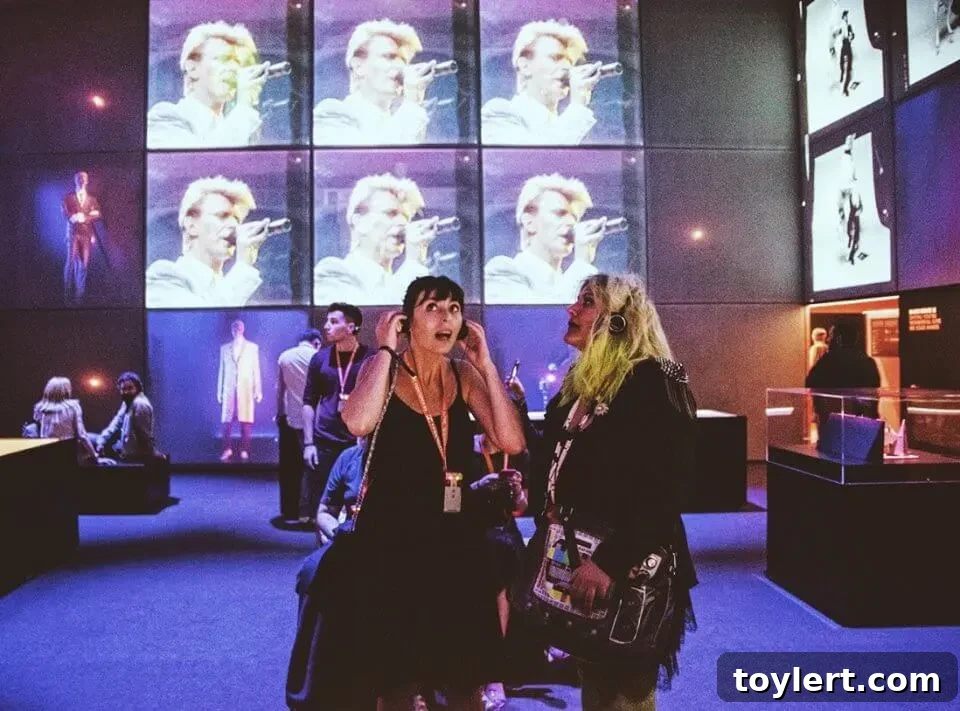
David Bowie Is: A Monumental Exhibition’s Arrival at the Brooklyn Museum
The cultural landscape of New York City was set abuzz in late 2017 when the Brooklyn Museum cryptically hinted at a major announcement on its social media channels. Following widespread speculation, the iconic institution officially confirmed what many fans and art enthusiasts hoped: the globally acclaimed “David Bowie Is” exhibition, a comprehensive retrospective of the legendary glam-rock pioneer, was slated to open its doors to the public in March 2018. This announcement marked a significant moment for the museum and for Bowie devotees across the Americas, promising an unparalleled journey into the multifaceted universe of an artist who redefined music, fashion, and identity.
David Bowie, born David Robert Jones, transcended the typical celebrity persona, evolving through an array of alter egos and artistic expressions that mirrored and shaped contemporary culture for over five decades. His passing in January 2016 left a void, but his legacy only grew stronger, solidifying his status as a perpetual innovator. The “David Bowie Is” exhibition, conceived by the Victoria and Albert Museum (V&A) in London, emerged as the definitive homage, providing an intimate and expansive look into his creative process, groundbreaking collaborations, and profound impact on generations of artists and fans.
The Genesis of a Global Phenomenon: “David Bowie Is”
The “David Bowie Is” exhibition first captivated audiences at the V&A in 2013, quickly becoming one of the museum’s most successful and talked-about shows. Its overwhelming success in London paved the way for an ambitious international tour that saw it travel to major cities across Europe, North and South America, Asia, and Oceania. Each stop garnered critical acclaim and record attendance, demonstrating Bowie’s universal appeal and the exhibition’s exceptional ability to bring his world to life.
What set “David Bowie Is” apart was its revolutionary approach to presenting an artist’s career. Eschewing a conventional chronological display, the exhibition masterfully wove together themes of identity, transformation, music, fashion, and theatricality. Curators Victoria Broackes and Geoffrey Marsh were granted unprecedented access to the David Bowie Archive, a treasure trove of over 75,000 objects. This access allowed them to curate an astonishing collection of costumes, handwritten lyrics, instruments, photographs, music videos, album artwork, and intimate diary entries, many of which had never been seen by the public.
The exhibition wasn’t just a display of artifacts; it was an immersive, multi-sensory experience. Visitors were equipped with headphones that automatically triggered audio corresponding to their location, delivering a personalized soundtrack of Bowie’s music, interviews, and stage performances. This innovative use of technology transformed the viewing experience, making it feel as though Bowie himself was guiding attendees through his creative odyssey, from the audacious Ziggy Stardust and Aladdin Sane eras to the sophisticated Thin White Duke and beyond.
Why the Brooklyn Museum Was the Perfect Host
The selection of the Brooklyn Museum as the final stop for “David Bowie Is” on its North American tour was particularly poignant and fitting. Brooklyn, with its vibrant arts scene, diverse communities, and reputation as a hub for innovation and cultural expression, provided an ideal backdrop for an exhibition celebrating an artist synonymous with reinvention. The museum itself boasts a long history of hosting significant, thought-provoking exhibitions that resonate with contemporary audiences, making it a natural choice for an artist of Bowie’s caliber.
For New York City, a city that played a crucial role in Bowie’s later life and where he made his home for many years, the exhibition represented a homecoming. It offered a unique opportunity for his local fans to immerse themselves in his world, while also introducing his genius to new generations. The Brooklyn Museum’s expansive galleries and its commitment to engaging storytelling ensured that the “David Bowie Is” experience would be presented with the grandeur and reverence it deserved, solidifying its place as a must-see event in the city’s cultural calendar for 2018.
An Unforgettable Journey Through Bowie’s Universe
Visitors to “David Bowie Is” at the Brooklyn Museum were treated to an extraordinary exploration of an unparalleled career. The exhibition showcased iconic stage costumes, including the Kansai Yamamoto creations for Ziggy Stardust and Aladdin Sane, which not only defined an era but also pushed the boundaries of gender and fashion. These sartorial masterpieces highlighted Bowie’s collaborative spirit and his ability to use clothing as an extension of his artistic narrative, transforming his body into a living canvas.
Beyond the visual spectacle, the exhibition delved deep into Bowie’s creative process. Display cases held handwritten lyrics for hits like “Heroes” and “Space Oddity,” revealing the evolution of his poetic and often enigmatic storytelling. Original instruments, storyboards for music videos, and rare photographs provided insight into his meticulous craftsmanship and visionary approach to every aspect of his art. From early sketches to fully realized productions, the journey illuminated how Bowie consistently challenged conventions, blurred lines between disciplines, and remained at the forefront of cultural innovation.
Interactive displays allowed guests to explore Bowie’s influences, ranging from German Expressionism and mime to philosophy and science fiction. These sections underscored his intellectual curiosity and his unique ability to synthesize disparate ideas into a cohesive and groundbreaking artistic output. The exhibition effectively painted a portrait of Bowie not just as a musician, but as a multidisciplinary artist, a cultural provocateur, and a keen observer of the human condition.
David Bowie’s Enduring Legacy and Cultural Impact
Even years after its run, the significance of the “David Bowie Is” exhibition, particularly its stop at the Brooklyn Museum, continues to resonate. It served as a powerful reminder of Bowie’s enduring legacy and his profound impact on music, fashion, and popular culture. His fearless experimentation with sound, image, and identity paved the way for countless artists who followed, demonstrating the power of authenticity and the courage to defy categorization.
Bowie’s fearless exploration of gender fluidity and sexual identity, epitomized by characters like Ziggy Stardust, opened crucial conversations and contributed to greater acceptance and understanding within society. He was a pioneer in using performance and presentation to challenge societal norms, making space for individuals to express themselves authentically. The exhibition celebrated this aspect of his work, highlighting how his art was intrinsically linked to broader cultural shifts and movements.
For long-time fans, the exhibition was a profound and emotional experience, a chance to reconnect with the artist who soundtracked their lives. For new generations, it served as an immersive introduction to a true polymath, inspiring them to delve deeper into his extensive catalog and understand his monumental influence. “David Bowie Is” at the Brooklyn Museum was more than just an exhibition; it was a cultural event that reaffirmed Bowie’s status as an immortal icon whose creativity continues to inspire, provoke, and enchant. It was a testament to a life lived extraordinarily, a celebration of an artist who truly changed the world.