Bushwick Avenue’s Architectural Evolution: A Church Conversion Sparks Community Dialogue
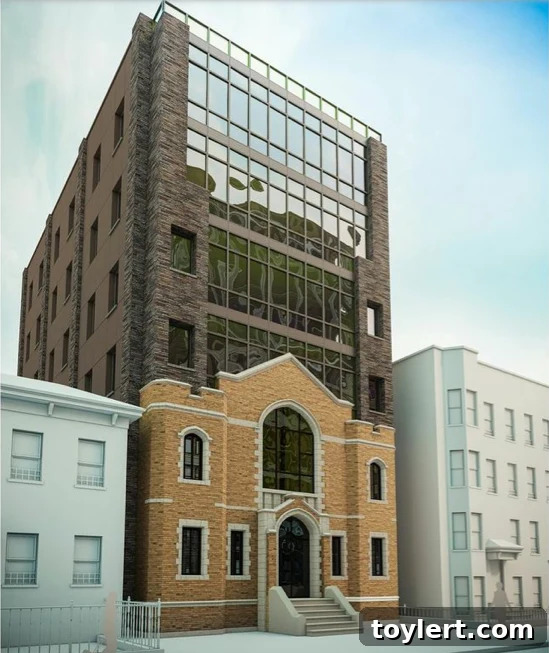
Bushwick Avenue, a storied thoroughfare in Brooklyn, has always been a fascinating study in urban development and architectural transformation. Once renowned for its grand mansions and stately churches, the avenue now presents a compelling, albeit sometimes chaotic, tableau of the old and the new. It’s a heavily trafficked route, serving as a vital artery to the Jackie Robinson Parkway, and its landscape is a vibrant, often jumbled, mix of commercial enterprises, established residences, and even significant infrastructural elements like a giant electrical substation. Amidst this dynamic backdrop, the announcement of a proposed residential conversion of a small brick church by Issac & Stern has ignited considerable discussion within the community regarding adaptive reuse and architectural integrity.
The Evolving Character of Bushwick Avenue
For generations, Bushwick Avenue stood as a testament to Brooklyn’s prosperity and architectural ambition. Its tree-lined sidewalks once cradled an impressive collection of Victorian mansions, sturdy brownstones, and ornate religious institutions, each telling a piece of the neighborhood’s rich history. However, like many urban areas, Bushwick has undergone significant shifts over the decades. Today, while echoes of its former grandeur remain, the avenue also bears the marks of time and change. Many of the historic mansions and row houses have suffered from well-intentioned but often incongruous renovations, distorting their original character. Others stand in advanced states of disrepair, their facades scarred by peeling paint and patchwork repairs, vividly illustrating the challenges of preserving heritage in a rapidly evolving city. One poignant example is a house at the corner of Halsey and Bushwick, whose side is clad in a quilt of plywood, parts of which are already starting to delaminate, revealing the underlying decay. This complex visual tapestry sets the stage for any new development, demanding a sensitive approach that respects the past while embracing the future.
Adaptive Reuse: A Modern Solution for Historic Structures
The concept of adaptive reuse, particularly the conversion of religious buildings, is not new. Churches, often built with robust materials and occupying prime locations, frequently become candidates for new purposes when congregations shrink or relocate. Converting these structures into residential apartments, community centers, or commercial spaces offers numerous benefits, including sustainability through the recycling of existing buildings, the preservation of unique architectural details, and the revitalization of neighborhoods. However, such projects also come with significant challenges, not least of which is integrating modern functionality and aesthetics without sacrificing the historical essence of the original building. Developers and architects are tasked with a delicate balancing act, aiming to create functional, contemporary spaces that still honor the spirit and form of the past.
The Proposed Design: A Study in Contrast
The rendering for the Bushwick Avenue church conversion, envisioned by Issac & Stern, makes no secret of its “marriage of old and new.” On paper, this approach can often yield innovative and successful results, breathing new life into forgotten structures. However, the initial design has raised eyebrows and sparked debate. The proposed addition, a modern structure towering above the original brick church, appears somewhat outsized and potentially intrusive. Concerns have been voiced that its scale and form clash rather than complement the existing architecture. Critics have drawn parallels to the infamous “Carroll Gardens Atrocity,” a building in another Brooklyn neighborhood that became a symbol of poorly integrated design due to its jarring addition atop an existing structure. This comparison underscores the community’s apprehension regarding the visual impact of such a dramatic juxtaposition.
The essence of successful adaptive reuse lies in respectful integration. When a modern addition is grafted onto a historic building, architects often employ strategies to ensure harmony. These might include setting the new structure back from the original facade to give it visual breathing room, reducing the number of stories to maintain a proportionate scale, or echoing key architectural elements like rooflines, window patterns, or material palettes from the older building. Such considerations can soften the transition and create a cohesive whole rather than a stark division. In this particular instance, suggestions have emerged for a deeper setback, fewer stories, or the incorporation of design elements that reflect the church’s existing roofline or color scheme. These modifications could potentially mitigate the perceived intrusiveness and foster a more sympathetic integration, allowing the unique character of the original church to remain a focal point rather than being overshadowed.
Economic Drivers and Community Impact
The economic forces driving such developments are undeniable. Brookland Capital, the developer behind this project, acquired the property in June for $1,950,000, according to PropertyShark. This substantial investment reflects the ongoing demand for housing in Brooklyn and the increasing value of land, even in neighborhoods like Bushwick that are undergoing rapid gentrification. While new residential units contribute to the city’s housing stock, the manner in which they are integrated into existing communities is paramount. Property development, particularly in historically rich areas, often walks a fine line between providing necessary housing and preserving the unique fabric that makes a neighborhood desirable in the first place. The community’s response to projects like this is a critical component of the urban planning process, highlighting the need for transparent dialogue and thoughtful consideration of design impact before construction begins. As of now, public records indicate that no permits have been officially filed for the proposed conversion, leaving room for further discussion and potential design revisions.
The Future of Bushwick’s Architectural Heritage
The conversion of the Bushwick Avenue church represents more than just another development project; it embodies the ongoing conversation about urban identity and historical stewardship. How we choose to evolve our built environment reflects our values and our vision for the future. Preserving the aesthetic and historical integrity of structures like this brick church, while adapting them for contemporary needs, is crucial for maintaining the unique character of neighborhoods like Bushwick. It’s a challenge that demands creativity, sensitivity, and a collaborative spirit among developers, architects, and the community. The ultimate goal should be to create spaces that enhance the quality of life for residents, honor the area’s rich past, and contribute positively to the streetscape rather than detracting from it. The opportunity exists to transform this historic church into a truly integrated and admired residential building that serves as a model for thoughtful adaptive reuse. The question remains: will the final design prove to be a harmonious addition to Bushwick Avenue, or will it become another contentious landmark in its evolving story?
Rendering via Brookland Capital