The Future of Bushwick: Navigating Community Vision Amidst Rezoning Pressures
For many years, the vibrant Brooklyn neighborhood of Bushwick has been at the heart of a significant grassroots effort: the development of a comprehensive community plan. This meticulously crafted proposal is intended to serve as a guiding framework for any potential rezoning efforts, aiming to steer the neighborhood’s growth in a direction that reflects the values and needs of its long-standing residents. Yet, a pressing question now looms large over this extensive work: what is the current status of this crucial community plan, and will its recommendations truly be honored?
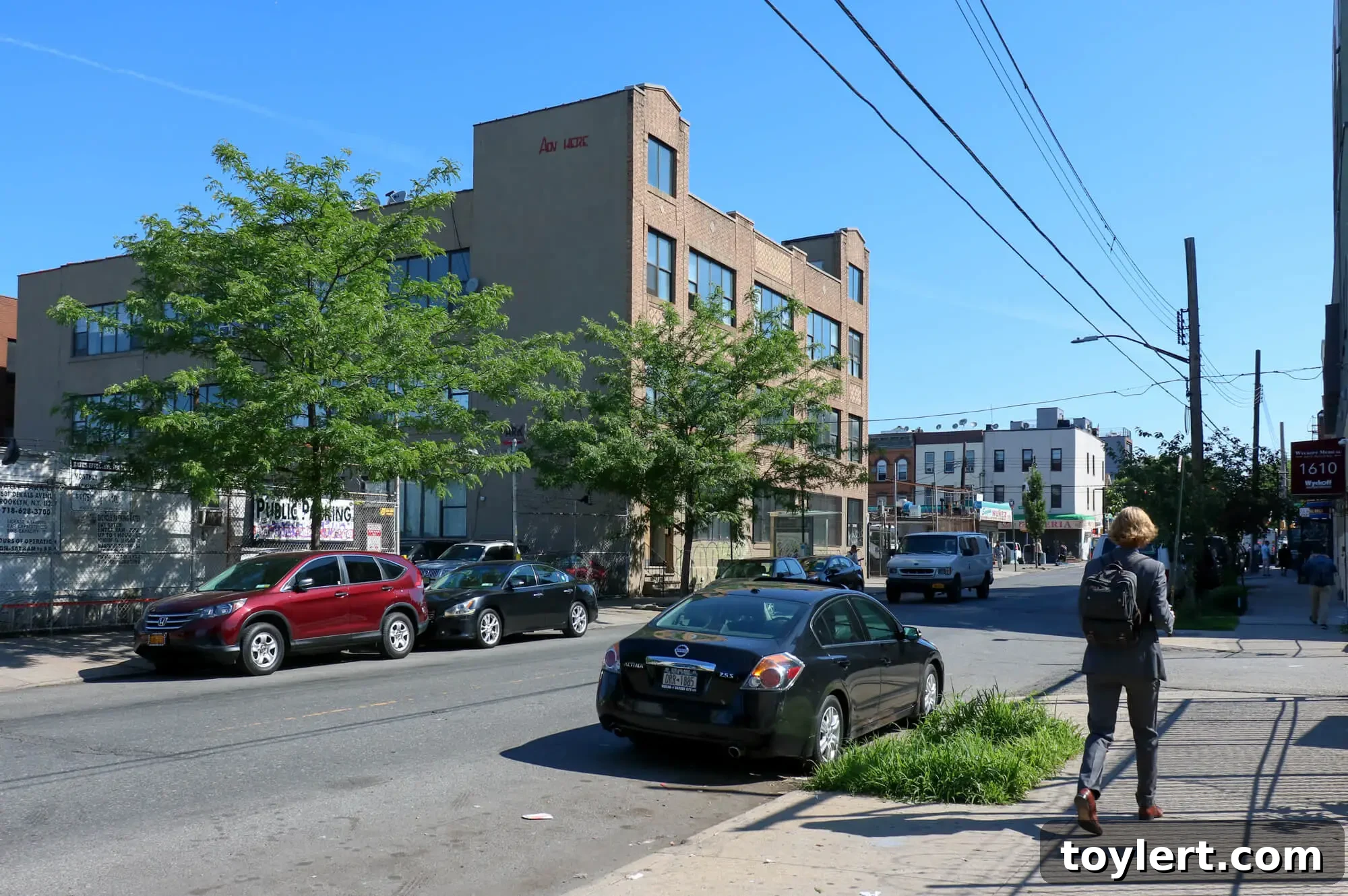
This query resonates deeply within Bushwick, echoed by numerous residents, community leaders, and dedicated activists who have invested countless hours in shaping the area’s future. Their concerns have intensified in recent weeks, fueled by speculation surrounding a specific rezoning proposal at 1597-1601 Dekalb Avenue. Here, the Camber Property Group, a prominent developer, intends to construct two substantial residential buildings on what is currently a vacant parking lot. The fear among community members is palpable: this particular development could establish an unfavorable precedent, effectively sidelining or even outright disregarding the carefully formulated recommendations put forth in their collective vision for Bushwick.
Marcel Negret, a seasoned urban planner and a resident deeply rooted in the Bushwick community, articulates this apprehension succinctly. “The larger community plan for Bushwick is being jeopardized,” Negret warns, highlighting the fragile balance between development aspirations and community-driven planning. He views the Dekalb Avenue project as more than just a single development; for Negret and many others, “I see [1597-1601 Dekalb] as a litmus test.” This perspective underscores a critical moment for Bushwick, where the outcome of this specific rezoning application could determine the efficacy and future influence of years of community organizing and planning.
Unpacking the Bushwick Community Plan: A Vision For Sustainable Growth
The Bushwick Community Plan (BCP) is not merely a reactive document; it’s a proactive blueprint forged through extensive community engagement, workshops, and dialogues spanning several years. Born from a desire to maintain the neighborhood’s unique character while addressing pressing issues like housing affordability, displacement, and inadequate infrastructure, the BCP represents a collective aspiration for Bushwick’s sustainable future. Residents and local organizations collaborated with urban planning experts to identify key priorities, including preserving existing affordable housing, creating new deeply affordable units, protecting industrial jobs, enhancing public spaces, and ensuring that new development contributes positively to the community.
The plan outlines specific zoning recommendations designed to guide future construction, proposing appropriate building heights, density limits, and mixed-use areas that align with Bushwick’s historical fabric and community needs. It emphasizes contextual development, suggesting that new buildings should complement the existing streetscape rather than overshadowing it. Furthermore, the BCP champions investments in local infrastructure, advocating for improved transit, green spaces, and community facilities that can genuinely support a growing population without compromising the quality of life for current residents. It’s a testament to the power of community organization, embodying the belief that those who live and work in a neighborhood should have a principal voice in shaping its evolution.
What Does the Community Plan Aim To Achieve? Key Pillars of Bushwick’s Future
- Preservation of Affordability: A core tenet is to combat the ongoing housing crisis by protecting existing rent-stabilized units and ensuring that any new residential development includes a significant percentage of genuinely affordable housing options, not just market-rate luxury units.
- Contextual Development: The plan advocates for building heights and densities that respect Bushwick’s diverse architectural heritage and avoid overwhelming the neighborhood’s low-rise character.
- Economic Opportunity: It seeks to safeguard and promote local businesses and industrial zones, recognizing their importance for job creation and the neighborhood’s economic diversity.
- Infrastructure Improvement: Calls for significant investment in public transit, schools, parks, and other essential services to support the community’s needs effectively.
- Community Empowerment: Ensures that residents have a continuous, impactful voice in future planning and development decisions, fostering transparency and accountability from developers and city agencies.
The Crossroads at 1597-1601 Dekalb Avenue: A Developer’s Proposal Under Scrutiny
The proposed development by Camber Property Group at 1597-1601 Dekalb Avenue has become a focal point of this broader discussion. Situated on a parcel currently used as a parking lot, the developer plans to erect two residential buildings. While details regarding the proposed height, unit count, and affordability components are critical, the immediate concern stems from the very initiation of such a project without explicit alignment with the Bushwick Community Plan. Residents fear that if approved, this project could open the floodgates for similar developments that prioritize developer profits over community-led planning principles.
The site, a former parking lot, represents a significant opportunity for development, but for many in Bushwick, it also represents a potential misstep if not handled correctly. The community plan likely has specific recommendations for this area, perhaps suggesting different densities, heights, or a greater emphasis on community benefit aspects like truly affordable housing or local job creation. The developer’s proposal, if it deviates significantly from these recommendations, puts the efficacy of years of community planning into question. It forces the community to confront whether their collective voice will genuinely shape the neighborhood or merely serve as advisory input that can be circumvented by powerful development interests.
Camber Property Group and Their Vision: What’s at Stake?
Camber Property Group, known for its work on various New York City developments, presents its project as a necessary addition to Bushwick’s housing stock. However, without details that clearly demonstrate how this project integrates with or contributes positively to the goals of the Bushwick Community Plan, suspicion and concern naturally arise. Is the proposal for market-rate housing, deeply affordable housing, or a mix? What community amenities, if any, are included? These questions are paramount for residents who see the Dekalb Avenue site as a critical juncture in Bushwick’s development narrative. The proposed structures’ scale, design, and affordability components will be rigorously scrutinized against the backdrop of the BCP, making this development a key test case for the respect afforded to community-driven initiatives in New York City’s ever-evolving urban landscape.
The Alarming Precedent: Why Residents Are Concerned About the Future of Bushwick
The concept of a “precedent” holds immense weight in urban planning and development. When community activists and residents express concern that the 1597-1601 Dekalb Avenue project could “set a precedent,” they are articulating a fear that its approval, especially if it ignores the Bushwick Community Plan, will establish a pattern. This pattern could signal to other developers that community plans are not binding or are easily sidestepped, thereby undermining future efforts by residents to guide their neighborhoods’ growth. If the city greenlights a project that significantly diverges from the community’s vision, it sends a powerful message that local input, no matter how robust or well-researched, can be disregarded when pitted against commercial interests.
Such a precedent could have cascading effects throughout Bushwick. It might embolden other developers to pursue projects that maximize profit without adequately considering the neighborhood’s existing character, infrastructure limitations, or the pressing need for truly affordable housing. This would inevitably lead to increased gentrification, displacement of long-term residents, and a loss of the very cultural vibrancy that makes Bushwick unique. The struggle over 1597-1601 Dekalb Avenue, therefore, is not just about one site; it’s about the fundamental principle of community self-determination in the face of rapid urban development.
The “Litmus Test” for Bushwick’s Future: Upholding Community Values
Marcel Negret’s description of the Dekalb Avenue project as a “litmus test” perfectly captures the high stakes involved. A litmus test is a definitive indicator of something’s true nature or value. In this context, the approval process for 1597-1601 Dekalb Avenue will serve as a clear indicator of how much weight city planners and elected officials truly place on community-led initiatives like the Bushwick Community Plan. Will the city side with the community’s carefully considered blueprint for balanced growth, or will it prioritize a developer’s proposal that might bring additional units but potentially at the cost of the neighborhood’s long-term well-being and affordability?
The outcome of this “test” will resonate far beyond this specific development. It will determine whether Bushwick can maintain its distinct identity, whether its residents will continue to have agency in shaping their environment, and whether the extensive efforts poured into the community plan will be validated or rendered largely ineffectual. For residents, it’s about safeguarding their homes, their culture, and their vision for a Bushwick that remains inclusive and sustainable for generations to come.
Understanding the NYC Rezoning Landscape: A Complex Bureaucracy
Navigating the rezoning process in New York City is an inherently complex endeavor, involving multiple layers of city agencies, community boards, and elected officials. Any proposed rezoning, especially one as impactful as a large residential development, typically goes through the Uniform Land Use Review Procedure (ULURP). This process is designed to provide opportunities for public review and input, but its effectiveness in truly empowering communities is often debated.
ULURP involves a series of steps: initial application, review by the local Community Board, recommendations from the Borough President, review and vote by the City Planning Commission, and finally, a vote by the City Council. While community boards provide invaluable local insight and recommendations, their votes are advisory. The City Planning Commission and especially the City Council, whose members are elected officials, hold the ultimate decision-making power. This structure means that even the most compelling community plans can face an uphill battle if they clash with powerful development interests or broader city-level development agendas.
The Role of Community Boards and City Planning in Bushwick’s Development
Bushwick’s Community Board 4 (CB4) has been instrumental in facilitating the creation of the Bushwick Community Plan. Their role is to represent the needs and concerns of local residents and businesses. When a rezoning proposal like the one at 1597-1601 Dekalb Avenue comes before them, CB4 conducts public hearings, gathers feedback, and formulates a recommendation based on community input and existing plans. However, as mentioned, this recommendation is non-binding. The City Planning Commission, a body appointed by the Mayor, then evaluates the proposal based on city-wide planning goals, often balancing development needs with community desires. Finally, the City Council, particularly the local council member representing Bushwick, plays a crucial role as they are often seen as the ultimate arbiter, weighing community sentiment against broader political and economic considerations. The effectiveness of the Bushwick Community Plan hinges on these bodies giving genuine weight to its meticulously crafted recommendations.
Potential Impacts: Affordability, Infrastructure, and Neighborhood Character
The stakes in the Bushwick rezoning debate are incredibly high, with potential impacts reverberating across affordability, infrastructure, and the very character of the neighborhood. Unchecked development, particularly projects that prioritize luxury or market-rate housing, can accelerate gentrification, pricing out long-term residents and small businesses. This leads to displacement, eroding the diverse social and economic fabric that makes Bushwick unique. The Bushwick Community Plan was specifically designed to mitigate these negative effects, advocating for policies that promote genuine affordability and prevent mass displacement.
Beyond affordability, rapid, unmanaged development places immense strain on existing infrastructure. Bushwick’s schools, transit lines (particularly the L train), sanitation services, and public spaces are already under pressure. New residential buildings, without corresponding investments in these areas, can exacerbate overcrowding, reduce service quality, and diminish the overall quality of life for all residents. The community plan includes provisions for necessary infrastructure upgrades, recognizing that growth must be accompanied by robust public services.
Preserving Bushwick’s Unique Identity Amidst Change
Bushwick boasts a rich history and a vibrant, eclectic character, defined by its diverse communities, thriving arts scene, and distinctive urban landscape. Residents fear that large-scale, out-of-context developments could homogenize the neighborhood, replacing its unique charm with generic high-rises. The architectural style, scale, and density recommended in the community plan are crucial for maintaining the visual identity and human scale of Bushwick. The fight for the community plan is, therefore, also a fight for the soul of Bushwick, a determination to guide its evolution responsibly rather than allowing it to be solely shaped by external development pressures.
Voices from the Community: Marcel Negret and Beyond
Marcel Negret’s voice is just one among many in Bushwick’s robust network of community activists and planners. Organizations like the Bushwick Community Plan steering committee, local tenant associations, and grassroots groups have tirelessly advocated for resident empowerment. These voices often highlight the disconnect between theoretical urban planning and the lived experiences of everyday residents. They speak to the struggle of preserving cultural heritage, fighting for basic amenities, and ensuring that their neighborhood’s future isn’t decided without their meaningful participation.
Their collective message is clear: the Bushwick Community Plan isn’t merely a document; it’s the culmination of democratic engagement and a reflection of the community’s collective will. Disregarding it would not only be a slap in the face to years of hard work but also a dangerous precedent for participatory planning efforts across New York City. The strength of these voices lies in their unity and their persistent dedication to a vision for Bushwick that is equitable, sustainable, and truly reflective of its people.
Navigating the Path Forward: Collaboration or Conflict?
The current situation presents a critical juncture for Bushwick. The path forward could either be one of continued conflict between community interests and developer ambitions or, ideally, a move towards genuine collaboration. For the Bushwick Community Plan to succeed, there needs to be a stronger commitment from city agencies and developers to engage with its recommendations early in the planning process, rather than presenting proposals as faits accomplis. This means a shift from viewing community plans as mere suggestions to considering them as essential components of responsible urban development.
The City Council’s decision on projects like 1597-1601 Dekalb Avenue will be pivotal. It will demonstrate whether the city is willing to prioritize community-driven planning or if it will continue a pattern that often marginalizes resident input. Advocates hope that ongoing dialogue, supported by strong political leadership, can lead to compromises that respect both the need for new housing and the imperative to protect Bushwick’s character and affordability. True progress will require a commitment from all stakeholders to find common ground and build a future for Bushwick that truly benefits everyone.
Conclusion: The Future of Bushwick Hangs in the Balance
The saga of Bushwick’s rezoning is a microcosm of larger urban challenges facing cities worldwide: how to balance growth and development with the preservation of community character, affordability, and resident well-being. The Bushwick Community Plan stands as a testament to the power of collective action and a clear articulation of a neighborhood’s desired future. However, its effectiveness is now being rigorously tested by specific development proposals, such as the one at 1597-1601 Dekalb Avenue.
The residents of Bushwick, through their tireless efforts, have laid out a clear vision. The question remains whether city leaders and developers will heed this vision or allow development to proceed in a manner that disregards years of community-led planning. The outcome of this “litmus test” will not only define the future landscape of Bushwick but also send a powerful message about the true value placed on community voice in the ongoing transformation of New York City’s vibrant neighborhoods. The future of Bushwick, rich in history and potential, truly hangs in the balance, awaiting a resolution that hopefully honors its people and their collective dream.