Bushwick’s Evolving Landscape: Tenants Face Eviction Amidst Ambitious Redevelopment Plans
Bushwick, a vibrant and rapidly transforming neighborhood in Brooklyn, is once again at the epicenter of a familiar narrative: property redevelopment leading to tenant displacement. Recent reports indicate that residents in two prominent buildings at 735 and 737 Bushwick Avenue are facing eviction as new ownership prepares for significant renovations and expansions. This move, while legal under certain circumstances, highlights the ongoing tension between urban growth, developer ambitions, and the pressing need for tenant protection in New York City’s fiercely competitive housing market.
The Heart of the Matter: Evictions and Development at 735 & 737 Bushwick Avenue
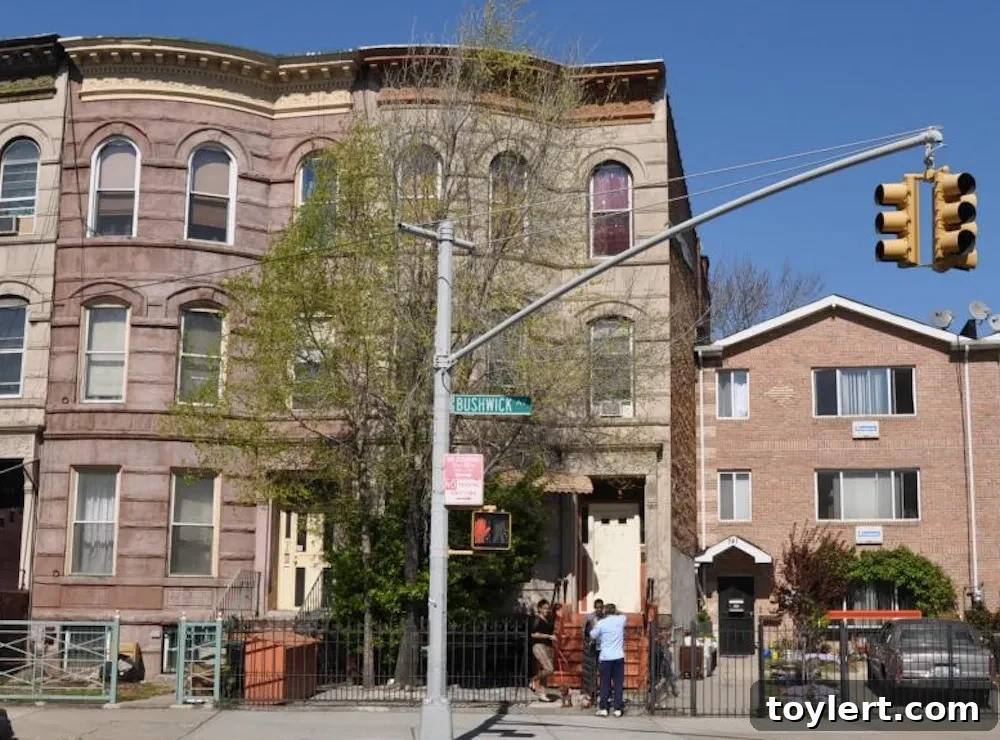
According to information received, tenants in both buildings have been served eviction notices. Despite their efforts to resist, the process appears to be moving forward, with construction anticipated to commence within the next month. This scenario is becoming increasingly common in high-demand areas like Bushwick, where older, often underutilized properties are being targeted for modernization and increased density to meet the soaring demand for housing.
Our investigation into public records and permit applications for 735 and 737 Bushwick Avenue confirms these development plans. The owner has filed ambitious proposals to add a fourth floor to each structure, significantly increasing the total number of residential units. Specifically, one building, currently configured with three apartments, is slated to expand to seven units, while its neighbor, also with three units, will grow to six. These plans, submitted this month, are currently awaiting official approval from city authorities. The proposed increase in unit count reflects a clear strategy to maximize the return on investment by capitalizing on Bushwick’s booming real estate market and its appeal to a new wave of residents.
Understanding the Developer’s Vision for Bushwick Avenue
From a developer’s perspective, these projects represent a strategic investment in a neighborhood ripe for further growth. Bushwick’s unique blend of artistic heritage, diverse community, and excellent transit links makes it an attractive location for those seeking a dynamic urban lifestyle. Modernizing older buildings, adding floors, and creating more units can address the housing shortage, albeit often at higher price points, and contribute to the area’s tax base. The proposed renovations likely aim to introduce contemporary amenities and finishes that appeal to a demographic willing to pay a premium for new construction in a desirable Brooklyn location. This kind of adaptive reuse and vertical expansion is a common tactic in land-scarce cities, transforming existing structures to unlock greater residential capacity.
The Human Cost: Impact on Bushwick Tenants and the Eviction Process
While development often brings economic benefits, it frequently comes at a steep human cost, particularly for long-term residents. For the tenants facing eviction at 735 and 737 Bushwick Avenue, this news means disruption, uncertainty, and the daunting challenge of finding new housing in an unforgiving market. Evictions, even when legally executed for substantial renovations, can be profoundly stressful. Tenants often invest years in their homes, building communities and routines that are suddenly uprooted. The fight mentioned by our tipster underscores the emotional and practical difficulties involved, as residents try to protect their homes and negotiate their rights.
New York City’s tenant protection laws are complex, but they generally allow landlords to evict tenants for “owner occupancy” or “major capital improvements” if certain conditions are met, often requiring relocation assistance or the right of first refusal to return to the renovated unit at a potentially higher rent. The specific details of the evictions at Bushwick Avenue would depend on whether the units were rent-stabilized, market-rate, or had other specific lease agreements. Regardless, the process is rarely easy, forcing individuals and families to contend with limited affordable housing options and an increasingly competitive rental landscape across Brooklyn.
Bushwick’s Rapid Transformation: A Microcosm of NYC Gentrification
The situation on Bushwick Avenue is not an isolated incident but rather a microcosm of the broader gentrification trends sweeping through Brooklyn and other parts of New York City. For decades, Bushwick was primarily an industrial and working-class neighborhood, home to diverse immigrant communities. However, over the past fifteen to twenty years, it has undergone a dramatic transformation.
This shift began with artists and creatives seeking more affordable studio and living spaces compared to neighboring Williamsburg. Their presence fostered a vibrant arts scene, which in turn attracted cafes, bars, and boutiques. As amenities improved and the neighborhood’s “cool factor” grew, developers took notice. Property values began to soar, and investment poured into the area, leading to new residential buildings, renovated brownstones, and a significant increase in rental prices.
The influx of new residents, often with higher incomes, has undeniably brought economic vitality to Bushwick. Streets are cleaner, new businesses thrive, and the overall infrastructure sees improvements. However, this progress often comes at the expense of long-standing communities. Rising rents and property taxes make it difficult for original residents and small businesses to remain, leading to displacement and a gradual erosion of the neighborhood’s original character. The eviction of tenants for building expansion is a direct consequence of this economic pressure, where existing structures are seen as opportunities for more profitable ventures.
Navigating the New York City Housing Market
For tenants displaced from Bushwick, the search for a new home presents significant challenges. New York City’s housing market is notoriously tough, characterized by high demand, limited supply, and escalating rents. Finding an apartment that is both affordable and meets basic living standards can be an arduous task. Many displaced residents are forced to move further out into less connected neighborhoods, impacting their commutes, access to services, and community ties. This constant churn in the rental market disproportionately affects vulnerable populations, including low-income families, seniors, and individuals with limited resources.
The availability of genuinely affordable housing remains a critical issue across all five boroughs. While city initiatives aim to create and preserve affordable units, the pace of new market-rate development and the conversion of existing properties often outstrip these efforts. This imbalance perpetuates a cycle where communities struggle to retain their diversity and character in the face of relentless development pressure.
Property Development and Urban Renewal: A Balancing Act
The case of 735 and 737 Bushwick Avenue highlights the complex interplay between property development, urban renewal, and community impact. Developers play a crucial role in revitalizing neighborhoods and providing housing, but their actions must be balanced with considerations for existing residents and the broader community’s well-being. Zoning regulations, while designed to guide urban growth, can also influence development intensity and housing affordability.
Discussions around sustainable and equitable development often center on how cities can encourage growth without sacrificing the existing social fabric. This involves exploring policies such as mandatory inclusionary zoning (requiring a percentage of affordable units in new developments), strengthening tenant protections, and providing robust legal aid services for those facing eviction. The goal is to create neighborhoods that are dynamic and economically prosperous but also inclusive and stable for all residents, not just the newest arrivals.
The Future of Bushwick: A Neighborhood in Flux
As Bushwick continues its evolution, the fate of buildings like 735 and 737 Bushwick Avenue serves as a bellwether for the neighborhood’s future. The trend of adding floors and units to existing structures is likely to continue, intensifying the area’s density and potentially further transforming its demographic makeup. While new residents and businesses contribute to economic vibrancy, maintaining a sense of community and ensuring housing stability for long-term residents will be paramount.
The story of Bushwick is far from over. It is a dynamic narrative of change, growth, and ongoing challenges. The decisions made by developers, policymakers, and community activists today will shape whether Bushwick can truly thrive as an inclusive, diverse, and vibrant urban center for generations to come, or if it will become another casualty in the relentless march of gentrification.
The specific evictions on Bushwick Avenue are more than just a real estate transaction; they are a poignant reminder of the broader forces at play in one of New York City’s most iconic and evolving neighborhoods. As construction looms, the displaced tenants embody the ongoing struggle to find a stable home in a city that constantly reinvents itself.