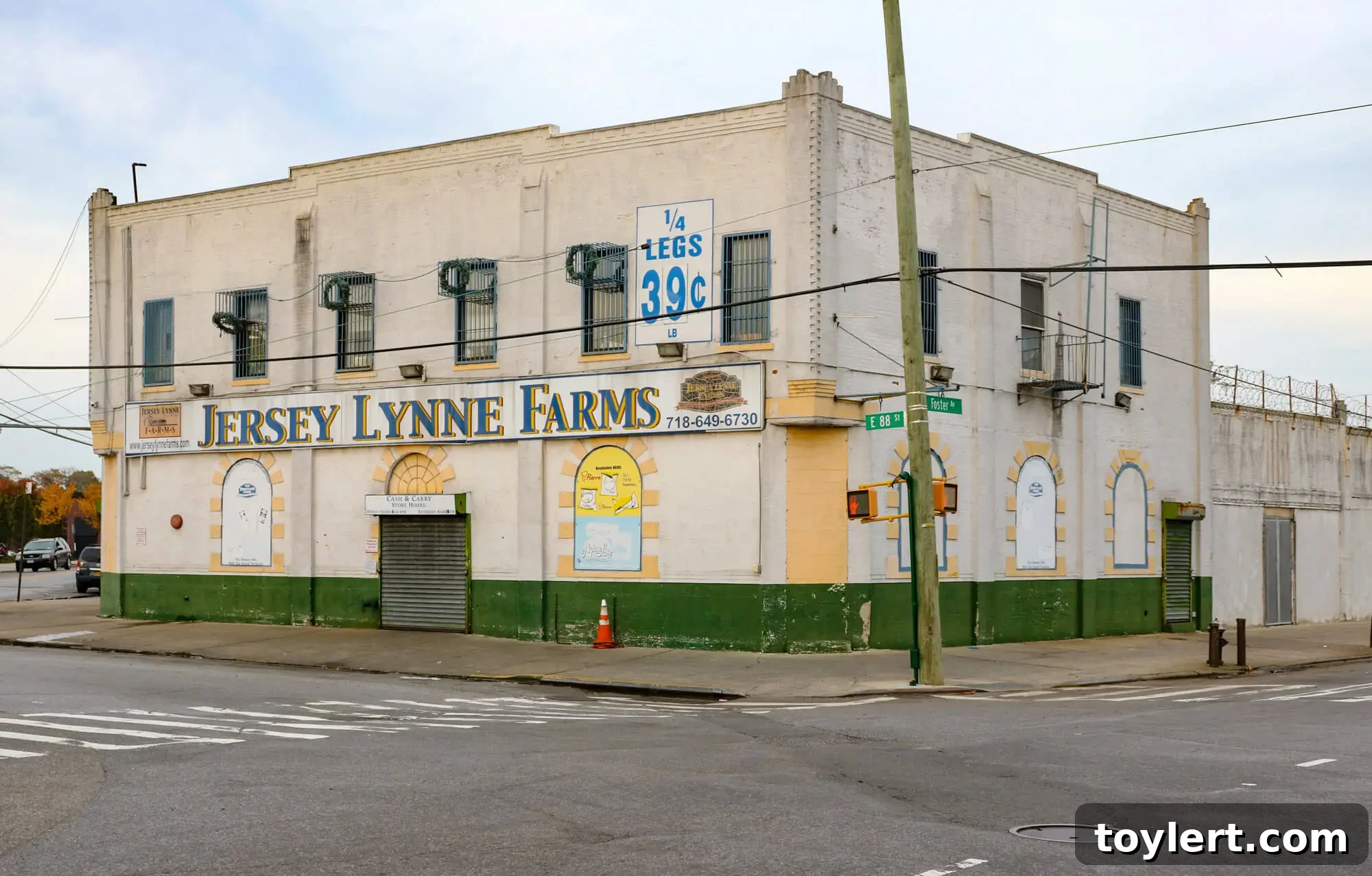
In the vibrant tapestry of Brooklyn’s diverse neighborhoods, certain structures stand as silent witnesses to eras long past, their unassuming facades often concealing a rich, dynamic history. Such is the case with the complex at 8801 Foster Avenue in Canarsie. A building that, throughout the 20th century, transformed its identity as frequently as the cultural tides shifted. Depending on the decade, one might have visited this prominent block for the exhilarating clatter of bowling pins, the smooth melodies of lounge singers, the raw energy of rock and roll bands, or the chic allure of a fashion show. This fluidity of purpose makes 8801 Foster Avenue more than just a building; it’s a living archive of Canarsie’s evolving social and commercial landscape.
Today, the full-block complex, strategically situated between Avenue D, East 88th, and East 89th streets, primarily projects a utilitarian and robust air. Its current role as the long-standing home of Jersey Lynne Farms since the late 1970s gives it a distinctly industrial appearance, reflecting its functional commitment to distribution. This dairy enterprise, deeply rooted in the area’s logistical advantages, seems perfectly placed, particularly with its location just a few steps away from the bustling Brooklyn Terminal Market. This close proximity often leads casual observers to presume the building was originally constructed as an extension of the market itself, a logical, yet ultimately incomplete, conclusion about its intricate past. However, a deeper dive into its architectural journey and the chronicles of Canarsie reveals a narrative far more captivating than its current, practical facade might suggest.
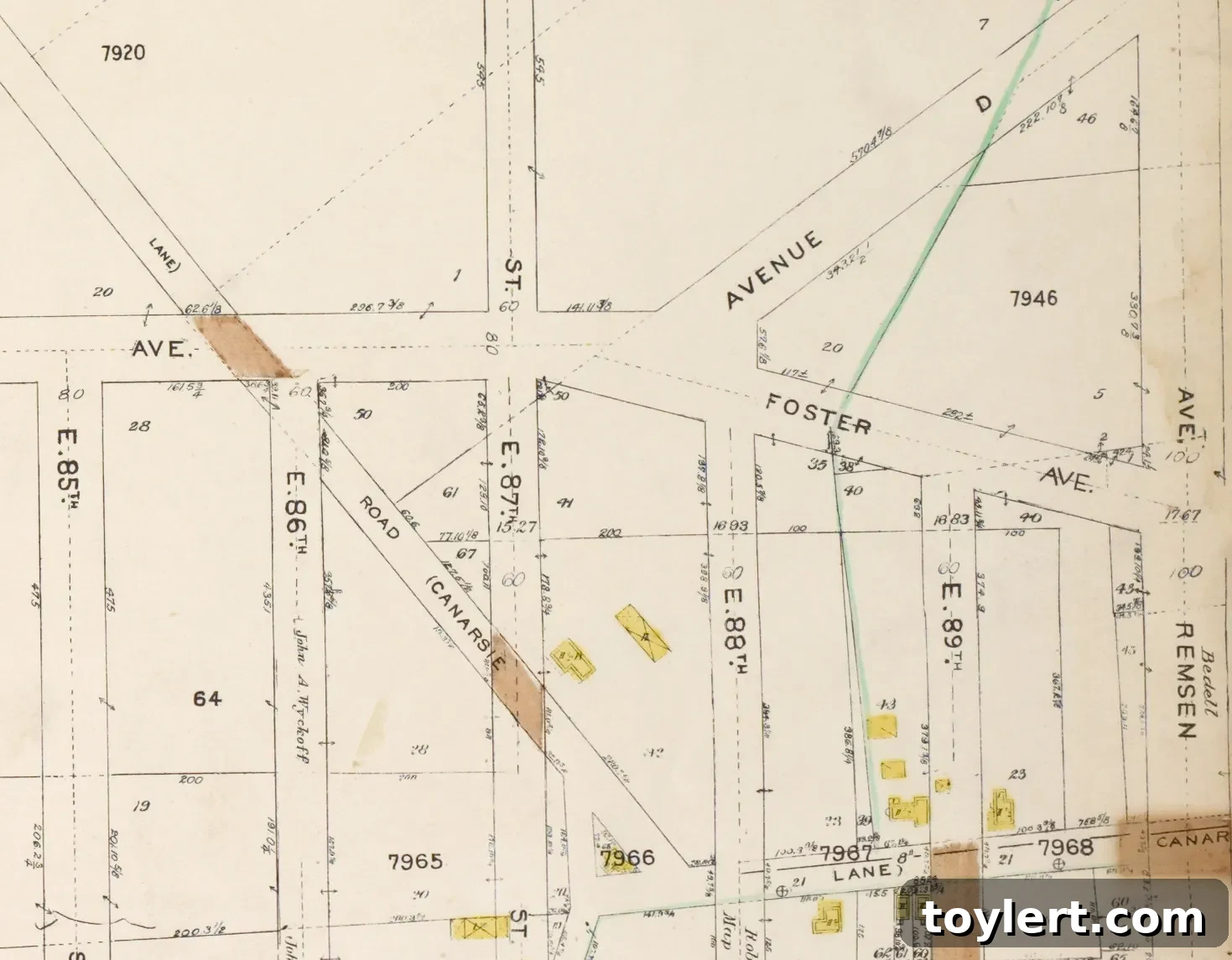
The Genesis of a Market: From Wallabout to Canarsie
To truly understand the commercial pulse of this block, one must first look to the historical roots of Brooklyn’s food distribution. The Brooklyn Terminal Market, which anchors the area, was established in the 1940s as the modern replacement for the legendary Wallabout Market. Wallabout, once the undisputed heart of Brooklyn’s wholesale food scene, was a sprawling complex that fed a rapidly growing city, a vital nexus where produce, meats, and other provisions were traded on a grand scale. Its closure in 1941 marked the end of an era, driven by the need for more efficient, centralized, and accessible distribution channels, particularly as urban landscapes evolved and the demands of a wartime economy loomed large. This pivotal event prompted many of its venerable vendors to seek new horizons, leading them to a large, largely vacant expanse of land in Canarsie, a neighborhood ripe for development and strategic for its burgeoning transport links.
The relocation was a monumental undertaking, an ambitious project spearheaded by city planners and dedicated merchants. Initially, these resilient vendors operated out of temporary wooden structures, a testament to their unwavering commitment to supplying the city with fresh goods. This period of makeshift operations eventually gave way to the vision of a permanent, state-of-the-art facility. The eventual construction of robust, purpose-built stalls transformed the landscape, solidifying Canarsie’s new role as a major hub for food commerce. It was a proud moment for the city when Mayor Fiorello LaGuardia, a figure synonymous with progress and civic improvement, officially opened the complex in 1943. This grand opening not only marked a new chapter for Brooklyn’s food industry but also firmly cemented Canarsie’s identity as a crucial center for provisioning, drawing a direct lineage from the venerable Wallabout Market.
From Utilitarian to Entertainment Mecca: The Versatile Life of 8801 Foster Avenue
While the proximity of 8801 Foster Avenue to the Brooklyn Terminal Market certainly makes its current use as a dairy distribution center sensible, its history predates and far exceeds this singular function. The building itself, with its expansive footprint across a full city block, possessed an inherent adaptability that allowed it to morph through various incarnations, serving the diverse needs and desires of Canarsie residents through several transformative decades. Before Jersey Lynne Farms laid claim to its vast interiors, the address was a vibrant hub for recreation and social interaction, reflecting the changing entertainment preferences of the 20th century.
The Golden Age of Bowling: 1950s and 60s Social Hub
In the mid-20th century, particularly through the 1950s and 1960s, 8801 Foster Avenue was renowned as a grand bowling alley. Bowling was more than just a sport; it was a quintessential American pastime, a cornerstone of community life, and a popular social gathering point for families, friends, and leagues. Imagine the lively atmosphere: the rhythmic crash of pins, the cheerful shouts of strikes and spares, the distinct aroma of polished wood and snack bar offerings. Families would spend their weekends here, teenagers would gather for casual dates, and competitive leagues would battle it out on polished lanes. A pro shop offered the latest gear, while a bustling snack bar provided refreshments and quick bites. This era saw the building serve as a vibrant anchor for local leisure, a place where memories were made and neighborhood bonds were strengthened over friendly competition.
Lounge Singers and Live Music: The Evolving Nightlife of the 1960s and 70s
As the cultural landscape began to shift, so too did the identity of 8801 Foster Avenue. By the late 1960s and early 1970s, parts of the expansive complex transformed into a lively entertainment venue, hosting lounge singers and live music acts. This transition catered to a burgeoning demand for intimate performances and sophisticated nightlife options. Imagine evenings filled with the soulful crooning of local talent, perhaps jazz ensembles or contemporary folk acts, creating a sophisticated yet accessible ambiance for adults seeking an escape from the daily grind. This period likely saw the introduction of a bar and dining area, fostering a more mature and refined atmosphere than the family-centric bowling alley. The building became a destination for those looking to enjoy good company, good music, and a taste of urban sophistication right in their neighborhood.
The Disco Inferno and Rock Revolution: Tempo City and Beyond in the 1970s and Early 80s
The late 1970s ushered in perhaps the most flamboyant chapter in the building’s history: the disco era and the rise of rock music. The facility, potentially known at one point as Tempo City, became an energetic hotspot, a pulsating nexus of music, dance, and fashion. This was a time of self-expression, vibrant lights, and infectious rhythms. The space would have throbbed with the beats of disco music, drawing crowds eager to dance the night away under shimmering lights. Simultaneously, or perhaps alternatingly, it would have welcomed local and regional rock bands, providing a vital stage for live performances and catering to the diverse musical tastes of the era. The mention of “fashion shows” also hints at the building’s role in showcasing the latest trends, making it a true cultural touchstone where music, style, and social interaction converged in an exhilarating display of urban life. These dynamic transformations underscore the building’s remarkable ability to adapt to changing societal needs, shifting seamlessly from a daytime recreational facility to a nighttime entertainment destination.
Architectural Resilience and Canarsie’s Enduring Spirit
The journey of 8801 Foster Avenue from a diverse entertainment complex to a functional dairy distribution center perfectly encapsulates the concept of adaptive reuse. Its robust construction and generous interior spaces proved incredibly versatile, capable of housing everything from bowling lanes and stages to cold storage and loading docks. The “utilitarian air” it projects today is not merely a reflection of its current purpose but also a testament to its inherent structural integrity and the practical considerations that have guided its evolution. This adaptability is a hallmark of many historic industrial and commercial buildings in New York City, which often find new leases on life by serving entirely different functions than their original design intended.
Moreover, the story of this single block in Canarsie is intrinsically linked to the broader narrative of the neighborhood itself. Canarsie, historically a waterfront community with a rich agricultural and fishing past, has continually reinvented itself. From a quiet residential area to a bustling commercial hub, and then to a diverse, vibrant urban landscape, the neighborhood has demonstrated remarkable resilience and an unwavering spirit of adaptation. The presence of the Brooklyn Terminal Market, and the ever-changing identity of 8801 Foster Avenue, serve as micro-narratives within this larger story of urban evolution and community transformation. These structures are more than just bricks and mortar; they are tangible connections to the lives, livelihoods, and leisure pursuits of generations of Brooklynites.
Conclusion: A Legacy Etched in Steel and Stone
The complex at 8801 Foster Avenue stands today as a powerful emblem of Canarsie’s rich and multifaceted history. Its unassuming exterior belies a past teeming with social gatherings, vibrant entertainment, and pivotal commercial activities. From its origins as a potential recreational haven, evolving through phases of lounge music and the energetic pulse of disco and rock, to its current indispensable role in the city’s food supply chain, the building has mirrored the dynamic spirit of Brooklyn itself. It reminds us that every building, no matter how utilitarian its current appearance, holds a unique story, a legacy etched in its steel and stone, waiting to be rediscovered. As Jersey Lynne Farms continues its vital operations, the ghost of bowling pins, melodic tunes, and rhythmic dances undoubtedly echo softly within its walls, a testament to 8801 Foster Avenue’s enduring place in the heart of Canarsie’s captivating history.