The Enduring Allure of 534 Henry Street: A Carroll Gardens Architectural Gem
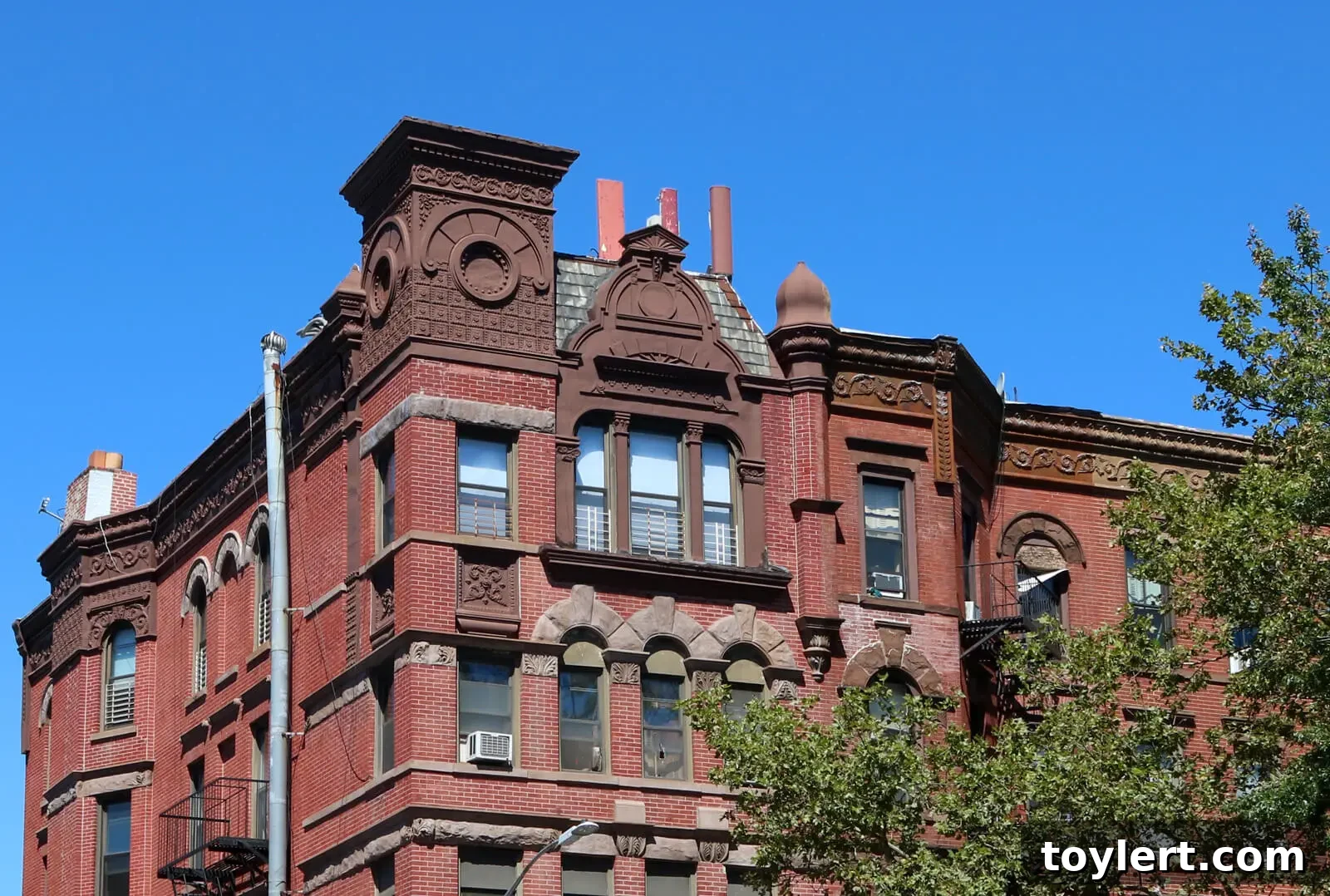
Nestled just beyond the esteemed boundaries of the Carroll Gardens Historic District, 534 Henry Street stands as a testament to Brooklyn’s rich architectural tapestry. This striking edifice captivates the eye with its dynamic and harmonious fusion of two prominent late 19th-century styles: the robust Romanesque Revival and the intricate Queen Anne. Its presence adds a distinct character to an already architecturally diverse neighborhood, inviting passersby to pause and appreciate its unique blend of strength and ornamentation.
Erected during a period of rapid urban expansion and architectural innovation, specifically between 1886 and 1895, 534 Henry Street was originally conceived as a quintessential mixed-use building. This pragmatic design featured residential apartments on its upper floors, providing homes for a burgeoning population, while its ground floor was dedicated to commercial enterprises. This dual functionality was a common and essential feature of urban planning in that era, fostering vibrant, self-sufficient communities. Today, the building proudly retains its mixed-use character, continuing to serve both residential and commercial needs within the Carroll Gardens landscape. Its history echoes through its storefront, which once housed a bustling pharmacy in the 1890s, a vital hub for local residents, and now accommodates a modern dry cleaner, illustrating a continuous thread of neighborhood service and adaptation.
An Architectural Dialogue: Romanesque Revival Meets Queen Anne
The “bold and striking mix” observed at 534 Henry Street is far more than a casual combination of styles; it represents a sophisticated architectural dialogue between two distinct artistic movements. Romanesque Revival, a style that gained immense popularity in the United States, particularly through the influential works of Henry Hobson Richardson, is characterized by its imposing scale, robust masonry, rounded arches, and a general sense of solidity and grandeur. It often evokes a fortress-like strength, utilizing heavy stone, deep-set windows, and a powerful, horizontal emphasis.
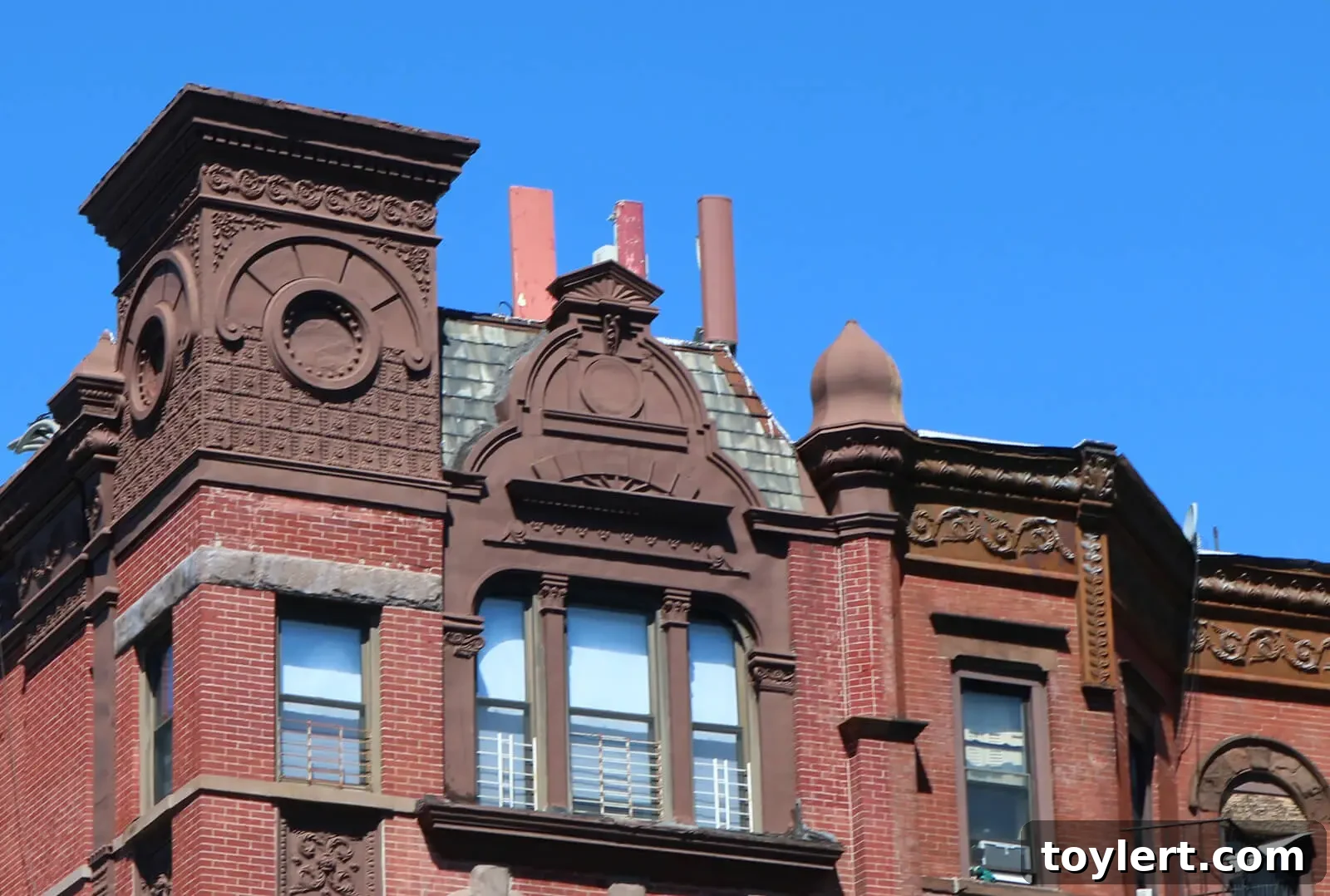
Conversely, Queen Anne architecture, flourishing during the same period, is known for its exuberant ornamentation, asymmetry, varied textures, and picturesque qualities. It embraces features such as turrets, bay windows, decorative shingling, elaborate spindlework, and a playful use of color and materials. Where Romanesque Revival emphasizes mass and structure, Queen Anne delights in detail and surface embellishment. At 534 Henry Street, these seemingly disparate aesthetics coalesce, with the Romanesque Revival likely providing the building’s underlying sturdy form and monumental presence, while Queen Anne elements contribute the decorative flourishes, unique window treatments, and textural variety that elevate its visual appeal.
Unpacking Romanesque Revival Elements at 534 Henry Street
The Romanesque Revival style draws inspiration from medieval European Romanesque architecture, translating its grand principles into late 19th-century American urban contexts. Key features often include massive, rough-hewn stone or brick facades, prominent rounded arches over windows and doorways, and a sense of weighty solidity. Buildings in this style frequently display rusticated stonework, where the stone blocks are cut with a rough, unfinished surface, enhancing their rugged appearance. The fenestration, or arrangement of windows, tends to be deeply recessed, further emphasizing the thickness of the walls. In the context of 534 Henry Street, one might anticipate seeing the influence of Romanesque Revival in the lower stories, perhaps in the robust ground-floor commercial frontage, or in the powerful articulation of its window openings, suggesting a profound sense of permanence and strength. This style communicated stability and established presence, making it popular for public buildings, churches, and significant urban structures.
The Decorative Charm of Queen Anne Style
Queen Anne architecture, on the other hand, is distinctly Victorian in its sensibility, prioritizing visual complexity and decorative flair. It originated in England and swiftly crossed the Atlantic, becoming a favored style for residential and commercial buildings across America. Hallmarks of Queen Anne include an asymmetrical facade, often featuring a dominant corner tower or turret, varied rooflines, and a rich array of materials such as brick, terracotta, wood shingles, and decorative panels. Windows are often diverse in shape and size, including bay windows, oriel windows, and stained glass. The style revels in intricate detailing, from carved wooden elements and turned spindles to decorative brickwork and patterned masonry. At 534 Henry Street, the Queen Anne influence likely manifests in the upper stories, perhaps in the elaborate window surrounds, patterned brickwork, or a distinctive cornice line that adds a touch of whimsical elegance to the building’s otherwise stoic foundation. This interplay creates a visually rich exterior that rewards closer inspection.
A Glimpse into the Past: The Building’s Genesis and Evolution
The construction period of 534 Henry Street, between 1886 and 1895, places it squarely within a transformative era for Brooklyn. The late 19th century witnessed an explosion of urban development, fueled by industrial growth, immigration, and improved transportation networks. Neighborhoods like Carroll Gardens were rapidly evolving from semi-rural areas into densely populated, vibrant communities. Buildings like 534 Henry Street were not just structures; they were integral components of this urban expansion, designed to accommodate the needs of a growing city. The choice of a mixed-use model reflects a keen understanding of urban dynamics, providing both living spaces and essential services within close proximity, a concept that remains highly valued in contemporary urban planning.
The Enduring Legacy of Mixed-Use Architecture
The design of 534 Henry Street as an apartment house with ground-floor commercial space epitomizes the efficiency and community-centric philosophy of mixed-use architecture. This model was incredibly prevalent in late 19th and early 20th-century urban centers, long before modern zoning laws often separated residential and commercial functions. For residents, having a pharmacy, grocery store, or other services directly below their living quarters offered unparalleled convenience, fostering a sense of neighborhood vitality and reducing the need for extensive travel. For businesses, the steady stream of residents provided a built-in customer base. This integrated approach created bustling streetscapes and fostered strong local economies, making these buildings not just places to live or work, but true community anchors. The fact that 534 Henry Street continues this tradition today, albeit with a new commercial tenant, speaks volumes about the enduring practicality and appeal of this architectural and urban planning strategy.
Echoes of Commerce: From Pharmacy to Dry Cleaner
The historical record reveals that a pharmacy occupied the storefront of 534 Henry Street in the 1890s. In an era before large chain stores and drive-through pharmacies, local drugstores were vital social and health hubs. They not only dispensed medicines but often served as general stores, selling a variety of household goods, cosmetics, and even offering soda fountains. A pharmacy on Henry Street would have been an indispensable resource for the residents of the building and the surrounding Carroll Gardens community, representing a cornerstone of daily life. The transition from a pharmacy to a dry cleaner reflects the evolving needs and commercial landscape of the neighborhood. While the specific service has changed, the building’s ground floor has maintained its role as a local commercial establishment, continuing its century-long tradition of serving the community. This continuity highlights the adaptive resilience of these historic mixed-use structures.
Carroll Gardens: A Neighborhood Forged in History and Style
Carroll Gardens is renowned for its charming streets, historic brownstones, and distinctive front gardens, from which the neighborhood derives its name. The Carroll Gardens Historic District, established to preserve this unique character, encompasses many of the area’s most iconic residential blocks. While 534 Henry Street sits just outside this official district, its proximity means it shares in the same rich architectural heritage and community spirit. Henry Street itself is a historically significant thoroughfare, linking various parts of Brooklyn and lined with buildings that tell stories of different eras and styles. The presence of buildings like 534 Henry Street, with its intriguing architectural blend, enriches the overall fabric of Carroll Gardens, offering a broader perspective on the architectural movements that shaped this cherished Brooklyn neighborhood.
Preserving Brooklyn’s Architectural Heritage
Buildings such as 534 Henry Street are more than just old structures; they are living artifacts that chronicle the history of urban development, architectural trends, and societal changes. Their preservation is crucial for maintaining the unique identity and cultural heritage of Brooklyn. Each brick, each arch, and each decorative detail tells a story of the craftsmen who built them and the communities they served. By understanding and appreciating the architectural nuances of buildings like this Romanesque Revival and Queen Anne blend, we gain a deeper connection to the past and ensure that the rich visual narratives of our cities endure for future generations. These structures contribute significantly to the aesthetic appeal and historical depth of neighborhoods, making them desirable places to live and visit.
Exploring 534 Henry Street: A Modern Perspective
Today, 534 Henry Street continues to be a vibrant part of the Carroll Gardens streetscape. Its upper floors provide contemporary residential living spaces, while its ground floor efficiently serves the local community through its commercial tenant. Its enduring presence stands as a physical link to Brooklyn’s past, demonstrating how historical architecture can be seamlessly integrated into modern urban life. The building invites residents and visitors alike to appreciate the intricate details of its design, the story behind its construction, and its ongoing contribution to the unique character of Carroll Gardens. It serves as a reminder that architectural innovation and thoughtful design from over a century ago continue to shape the beauty and functionality of our urban environments.
Conclusion
534 Henry Street is a remarkable example of late 19th-century Brooklyn architecture, distinguished by its compelling synthesis of Romanesque Revival and Queen Anne styles. From its origins as a mixed-use building supporting a bustling pharmacy to its present-day role with residential units and a dry cleaner, it has continuously adapted while retaining its unique architectural character. This building is not merely a structure but a narrative woven into the fabric of Carroll Gardens, reflecting the area’s rich history, evolving urban landscape, and enduring appeal. Its architectural complexity and functional longevity make it a significant landmark worthy of appreciation and study, embodying the spirit of innovation and resilience characteristic of historic Brooklyn.