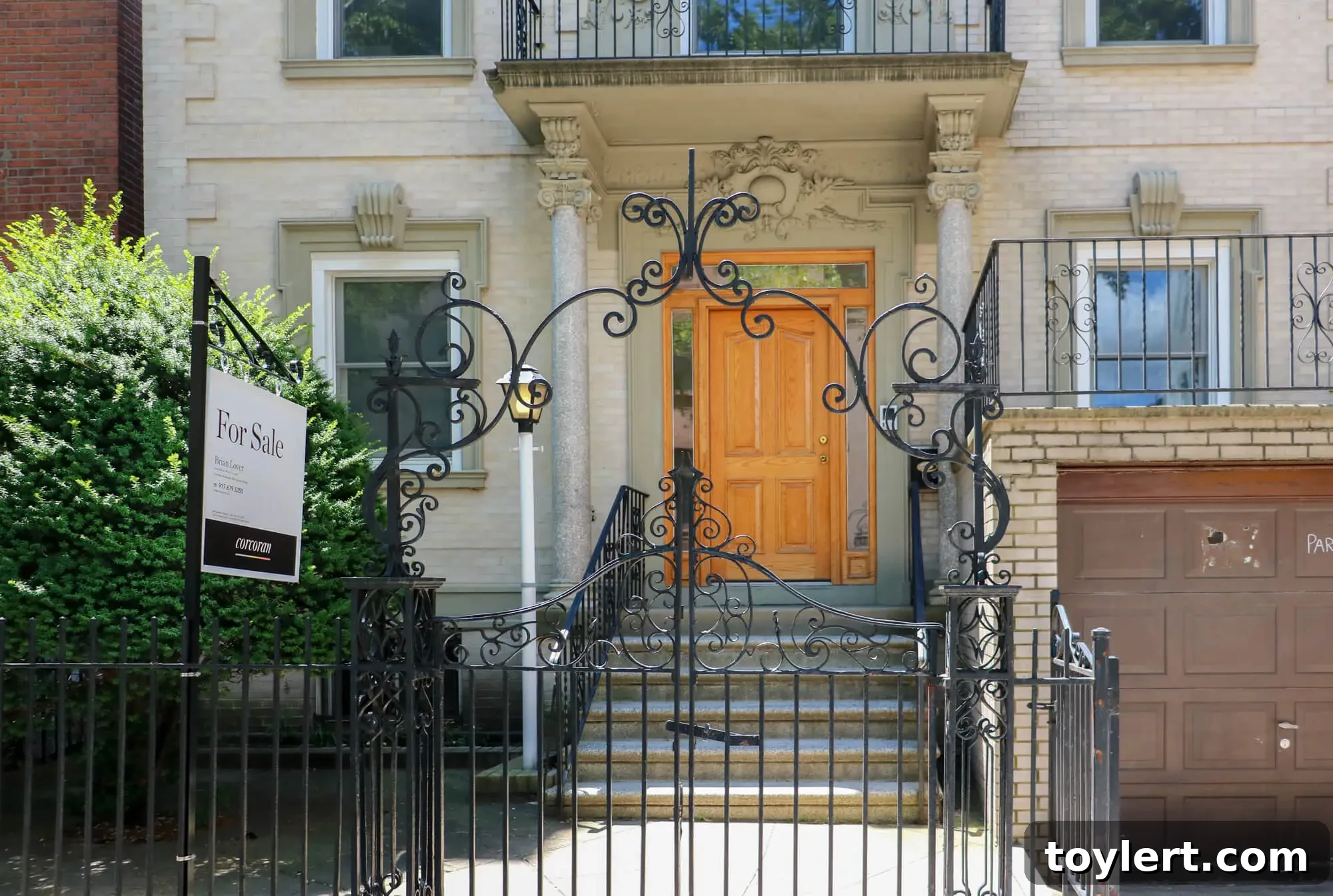
Landmark Designation Secures Future for Two Historic Carroll Gardens Gems
In a significant stride towards safeguarding Brooklyn’s invaluable heritage, the Landmarks Preservation Commission (LPC) has officially conferred landmark status upon two distinct properties nestled within the charming Carroll Gardens neighborhood. These newly designated landmarks, the Hans S. Christian Memorial at 236 President Street and the historically rich pre-Civil War residence at 238 President Street, now stand recognized among New York City’s most treasured historical sites. This crucial designation ensures that their unique architectural splendor and profound historical narratives will be meticulously protected, preserving the distinctive character of one of Brooklyn’s most cherished districts for future generations.
Frederick Bland, Vice Chair of the LPC, emphasized the profound significance of these designations in a recent press release, stating, “These two properties are distinguished by their architecture and share a great history of education and social reform in Brooklyn.” Bland’s insightful remarks highlight not only the visual appeal and structural uniqueness of these buildings but also their deeper connection to the social fabric and pivotal developmental milestones of the borough. They embody crucial movements in education and societal betterment that profoundly shaped Brooklyn throughout the 19th and early 20th centuries, making their preservation a tribute to a transformative era.
The Landmarks Preservation Commission: Guardians of NYC’s Irreplaceable Heritage
The Landmarks Preservation Commission plays an indispensable role in safeguarding the architectural, historical, and cultural heritage of New York City. Established in 1965, a direct response to the lamentable demolition of the historic Pennsylvania Station, the LPC stands as the largest municipal preservation agency in the United States. Its core mission is to protect buildings and sites that represent significant facets of the city’s history, architecture, and culture by designating them as individual landmarks, scenic landmarks, or by establishing comprehensive historic districts. This rigorous process involves exhaustive research, public hearings to gather community input, and meticulous consideration of a property’s unique qualities and its invaluable contribution to the city’s urban landscape.
For a property to attain the coveted landmark status, it must fulfill specific, stringent criteria. These often relate to its age, distinctive architectural style, significant historical association with pivotal events or influential figures, or its integral role in the development and evolution of a particular neighborhood. Once a property receives this designation, any proposed alterations to its exterior, or to properties situated within a historic district, mandate prior approval from the LPC. This regulatory oversight is paramount, ensuring that any changes are sympathetic and harmonious with the building’s original design and character, thereby meticulously maintaining its historical integrity. The landmarking of 236 and 238 President Street serves as a powerful testament to the LPC’s unwavering commitment to identifying, recognizing, and protecting the irreplaceable architectural assets that vividly narrate the compelling story of New York City.
236 President Street: The Enduring Philanthropic Vision of the Hans S. Christian Memorial
The striking edifice at 236 President Street, revered as the Hans S. Christian Memorial, stands as a poignant emblem of personal devotion and the vibrant philanthropic spirit that once characterized Brooklyn. Meticulously designed in 1897 by the renowned architectural firm Hough & Deuell, this structure exemplifies the refined aesthetic of late 19th-century architecture, distinguished by its intricate details and an overarching sense of purpose-driven elegance. Its construction was set in motion by Elmira E. Christian, a woman of remarkable vision who sought to establish a enduring tribute to her beloved late husband, Hans S. Christian, who had passed away three years prior. Her profound desire manifested in the creation of a kindergarten, a truly pioneering educational institution for its era, dedicated to fostering the crucial early childhood development in his honor.
The establishment of a kindergarten at the dawn of the 20th century was, without doubt, a progressive and forward-thinking endeavor. It mirrored a burgeoning understanding of the critical importance of early education and the broader implications of social welfare within burgeoning urban communities. Hans S. Christian, though historical records may not detail every aspect of his life, was clearly a figure of local prominence whose legacy Elmira felt compelled to perpetuate through an institution devoted to community betterment. The architectural vision of Hough & Deuell likely incorporated popular styles of the period, perhaps Romanesque Revival or Neo-Grec elements, lending the building a dignified and inviting presence perfectly suited for its educational and philanthropic mission.
Over the decades, the Hans S. Christian Memorial gracefully adapted, evolving to meet the changing needs of the dynamic Carroll Gardens community. Following its impactful tenure as a kindergarten, the building transitioned into a sacred communal space, serving as a church for a significant period. This remarkable transformation underscores its inherent versatility and its enduring role as a central hub for community gathering and service. Its lifecycle eloquently mirrors a broader historical pattern seen in many cherished structures that adapt their functions over time while steadfastly retaining their original character and historical significance. In 1974, the building eventually changed hands, passing into the ownership of the parents of its present occupants. This marked a new chapter in its rich history, as it became a private residence, yet it continues to preserve its unique historical essence. This continuous use, initially public and subsequently private, vividly illustrates its profound and sustained integration into the narrative of the neighborhood.
238 President Street: A Rare Glimpse into Pre-Civil War Brooklyn Architecture
Directly adjacent to the Hans S. Christian Memorial, 238 President Street presents a narrative that, while different, is equally compelling and historically rich. This remarkable pre-Civil War house offers an invaluable and increasingly rare glimpse into the architectural styles and urban planning philosophies that characterized Brooklyn prior to the tumultuous and defining years of the American Civil War. Such period homes are becoming exceedingly rare, rendering their preservation an absolute imperative for a comprehensive understanding of the city’s intricate developmental trajectory. The architecture of 238 President Street likely embodies the robust, functional, and often elegantly restrained design principles prevalent in the mid-19th century. It would typically feature classic proportions, meticulously crafted brickwork, and possibly subtle influences of Federal or Greek Revival styles, reflecting the aesthetic preferences and craftsmanship of that formative era.
Carroll Gardens itself underwent significant development in the mid-19th century, transforming from verdant agricultural land into a burgeoning residential enclave, attracting a diverse mix of working and middle-class families. The sustained presence of a pre-Civil War structure like 238 President Street speaks volumes about the neighborhood’s nascent growth and the demographic profiles of its earliest settlers. It stands as a tangible physical artifact, forming a crucial link between contemporary Carroll Gardens and its foundational beginnings, offering invaluable insights into the daily lives, social hierarchies, and architectural trends of a bygone era. The act of preserving this building is far more than simply maintaining an old façade; it is about protecting a palpable connection to a pivotal period in American history and Brooklyn’s distinct role within that larger historical tapestry.
The fascinating juxtaposition between the two landmarked properties at 236 and 238 President Street is particularly illuminating. While 236 represents the more ornate and publicly oriented architecture that emerged from the philanthropic and educational ideals of the late 19th century, 238 embodies the simpler, yet equally significant, residential character of an earlier, more nascent period. Together, they create a rich and dynamic architectural dialogue that spans several pivotal decades, vividly showcasing the evolution of Brooklyn’s urban landscape and the changing aspirations of its diverse residents. Their close proximity on the same block effectively provides a miniature historical timeline, offering an accessible and compelling narrative for all who wish to appreciate the depth of Brooklyn’s past.
A Shared Narrative of Education and Societal Progress in Brooklyn
Frederick Bland’s profound assertion that these properties “share a great history of education and social reform in Brooklyn” serves as a powerful testament to their intricately interconnected narratives. The Hans S. Christian Memorial’s foundational purpose as a kindergarten directly embodies the pioneering spirit of educational progress, especially noteworthy at a time when formal early childhood education was still a relatively novel and experimental concept for many. It represents a fundamental step in forging more equitable access to learning opportunities and meticulously nurturing the intellectual development of young Brooklynites, laying the groundwork for future generations.
While 238 President Street, as a private residence, may not have had a direct institutional role in organized social reform, its very existence as a meticulously preserved pre-Civil War home significantly contributes to our comprehensive understanding of the societal context in which such reforms originally took root and flourished. The stable, evolving communities that built and subsequently inhabited such homes often formed the bedrock and fertile ground for progressive movements. The emergence of a robust middle class, the burgeoning of civic consciousness, and the collective desire for improved community services all coalesced and gained momentum in vibrant neighborhoods like Carroll Gardens. Consequently, the physical preservation of these structures transcends mere architectural upkeep; it allows us to interpret the broader historical context—how communities lived, learned, organized, and interacted—that fundamentally underpinned the enduring drive for social betterment and progress.
Collectively, these two remarkable buildings symbolize Brooklyn’s unwavering and enduring commitment to evolving and progressing as a society. They serve as potent reminders that architectural beauty and historical significance are often inextricably intertwined with stories of profound human endeavor, deep-seated compassion, and the relentless pursuit of a better, more just future. From groundbreaking educational initiatives to the intimate everyday lives of its citizens, these newly designated landmarks offer tangible and compelling proof of a community constantly striving for positive change and continuous advancement.
The Profound Importance of Landmarking for Carroll Gardens’ Future
The landmark designation of both 236 and 238 President Street represents an invaluable boon for Carroll Gardens, a neighborhood already widely celebrated for its distinctive brownstones, serene tree-lined streets, and incredibly vibrant community spirit. Landmarking serves as a crucial protective mechanism, safeguarding the unique aesthetic and rich historical character that draws both residents and visitors to this charming area. It proactively prevents inappropriate or insensitive development and ensures that any new constructions or significant renovations respect and harmonize with the existing architectural fabric, thereby meticulously preserving the neighborhood’s quintessential charm and irreplaceable authenticity.
Beyond the purely aesthetic considerations, historic preservation contributes immensely to fostering a strong local identity and instilling a deep sense of community pride. When buildings are officially landmarked, it unequivocally reinforces the message that a neighborhood’s past is highly valued and that its history is an integral, living component of its present and its future trajectory. This profound recognition cultivates a stronger sense of belonging among residents and actively encourages a deeper, more nuanced appreciation for the myriad stories embedded within their historical surroundings. Furthermore, historic properties frequently contribute significantly to local tourism and bolster economic vitality, attracting discerning visitors interested in architecture and history, which in turn supports a thriving ecosystem of local businesses and services.
The judicious decision by the LPC to specifically designate these particular properties is a powerful reaffirmation of Carroll Gardens’ esteemed status as a historically rich and culturally significant area within the vast tapestry of Brooklyn. It stands as a testament to the fact that the unique architectural styles and the compelling human stories inextricably linked to 236 and 238 President Street will continue to inspire, educate, and resonate for generations to come, serving as enduring and cherished symbols of Brooklyn’s vibrant, layered past and its unwavering commitment to preserving its irreplaceable heritage for all time.