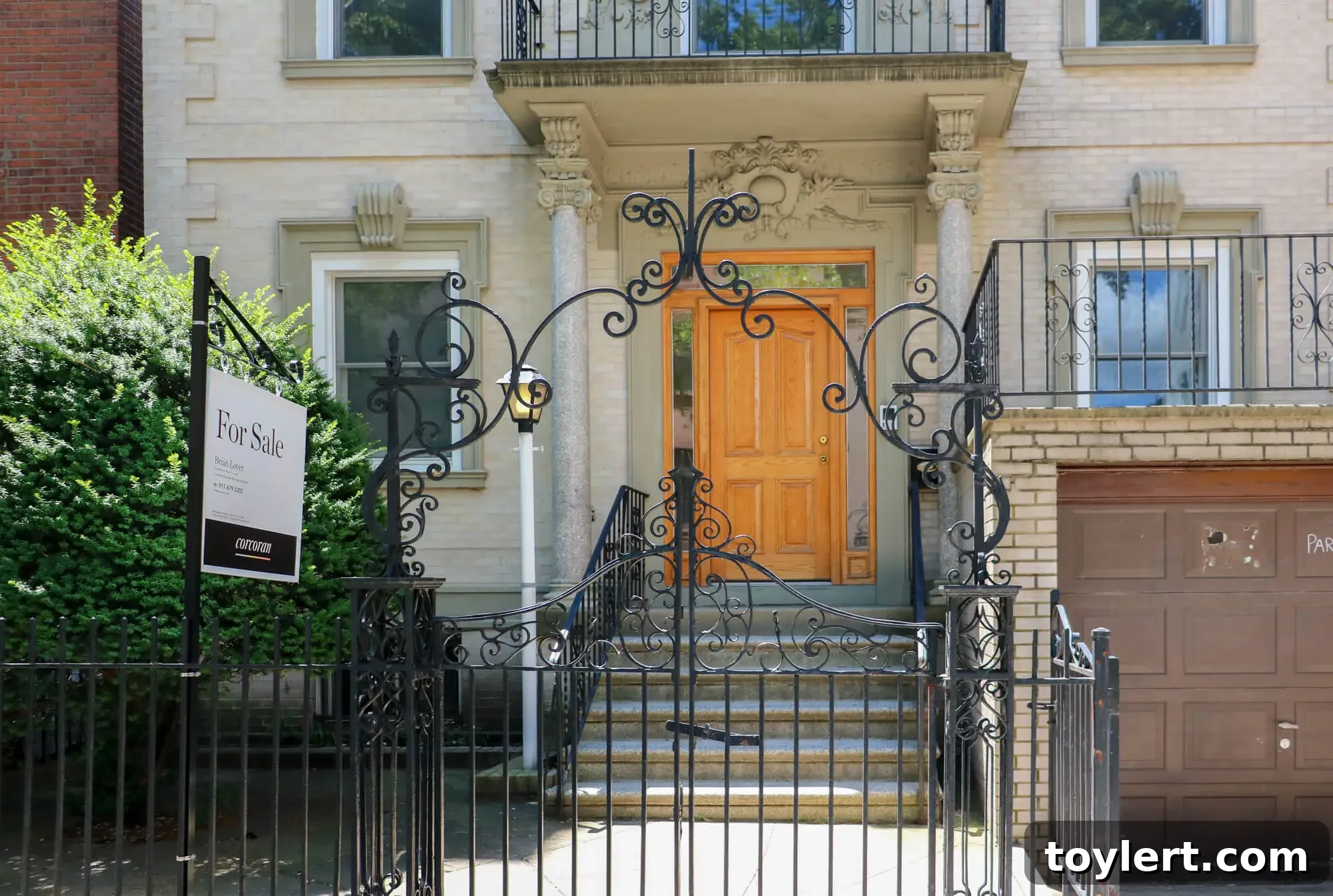
At a recent public hearing held by the esteemed Landmarks Preservation Commission (LPC), a significant debate unfolded, drawing the attention of residents, historians, and preservationists alike. The subject at hand: the proposed landmarking of two prominent properties located at 236 President Street and 238 President Street within Brooklyn’s cherished Carroll Gardens neighborhood. The hearing, a crucial step in the landmarking process, illuminated a clear divide between fervent community support for preservation and the firm objections of one of the property owners.
The Tug-of-War Over History: Landmarking 236 & 238 President Street in Carroll Gardens
Carroll Gardens, with its iconic brownstones, tree-lined streets, and deep-rooted community spirit, stands as a testament to Brooklyn’s rich architectural heritage. The prospect of landmarking properties within this historic enclave is often met with widespread enthusiasm, reflecting a collective desire to safeguard the very essence that makes the neighborhood so unique. However, the path to historic designation is rarely without its complexities, as evidenced by the recent proceedings concerning 236 and 238 President Street.
Overwhelming Support for Preservation: A Community United
The public hearing on Tuesday at the Landmarks Preservation Commission office was largely characterized by a powerful display of community solidarity. Speaker after speaker, representing local residents, neighborhood associations, architectural historians, and preservation advocacy groups, stepped forward to voice their unequivocal support for the landmark designation of both 236 and 238 President Street. The sentiment was clear: these buildings are not merely structures but integral components of Carroll Gardens’ historical fabric, contributing significantly to its distinct charm and character.
Advocates highlighted the architectural integrity of the properties, emphasizing their well-preserved 19th-century detailing and their harmonious relationship with adjacent historic structures. Many spoke of the need to protect the visual continuity of President Street, a block celebrated for its remarkably intact row houses. Testimonies often touched upon the irreplaceable historical value these buildings represent, serving as tangible links to the past and providing a sense of place that contemporary developments often fail to replicate. The community’s argument underscored that landmarking would not only protect the buildings themselves but also reinforce the existing historic district, preventing insensitive alterations that could erode the neighborhood’s unique identity.
The collective voice of the community underscored a fundamental belief in the public good that historic preservation serves. They argued that once these irreplaceable architectural gems are altered or demolished without careful consideration, they are lost forever, diminishing the historical narrative of the entire neighborhood. For many, the decision to landmark these properties was a clear choice that reflected a commitment to heritage, community values, and responsible urban development.
The Sole Dissenter: Owners Raise “Grave Issues and Concerns”
Despite the chorus of support, the hearing was not entirely harmonious. A singular, yet significant, voice of opposition emerged from Susan Morrow, an attorney representing the owners of 236 President Street. Ms. Morrow presented a counter-narrative, expressing what she termed “grave issues and concerns” regarding the proposed landmarking. Her dissent introduced a crucial dimension to the debate, highlighting the complexities that can arise when private property rights intersect with public preservation efforts.
Ms. Morrow’s primary contention revolved around alleged factual inaccuracies within the commission’s presentation documents. She asserted that the LPC had “erroneously” conveyed several key historical details, which, in her view, undermined the very foundation of the landmarking proposal for 236 President Street. This challenge to the factual basis of the designation marked a pivotal point in the proceedings, demanding a closer examination of the historical record.
Disputed Narratives: The Kindergarten Claim and Building Modifications
One of the most notable factual disputes raised by Ms. Morrow concerned the building’s origins. The LPC’s initial presentation, according to the attorney, incorrectly identified 236 President Street as having once served as a kindergarten. While seemingly a minor detail, such historical attributes can significantly influence a property’s perceived cultural and historical value, thereby impacting its eligibility and the rationale for landmark designation. If the building’s original use was indeed misrepresented, it could potentially challenge a narrative of community service or specific historical function that the LPC might have relied upon.
Furthermore, Ms. Morrow also disputed the commission’s account of the number and nature of changes that had been made to the building over time. The extent of alterations is a critical factor in landmarking considerations. Properties that have undergone extensive modifications, particularly those that diminish their original architectural integrity or historical fabric, can sometimes be deemed less suitable for landmark status. Conversely, buildings that have retained a high degree of their original design and materials are often stronger candidates for preservation. The attorney’s argument suggested that the LPC’s assessment of these changes was inaccurate, implying that the building at 236 President Street may have been altered more significantly than acknowledged, potentially impacting its suitability for designation.
The implications of these factual discrepancies are substantial. For property owners, landmark designation imposes strict regulations on future modifications, requiring LPC approval for even minor exterior changes. These restrictions can impact renovation plans, property values, and the overall autonomy of owners. Therefore, any perceived misrepresentation of a building’s history or physical state during the designation process is understandably a point of serious contention, as it forms the basis for legal and financial obligations.
Carroll Gardens: A Historic Gem Worth Preserving
The backdrop for this particular landmarking debate is the storied neighborhood of Carroll Gardens, a place renowned for its exceptional architectural character and deeply ingrained sense of community. Established in the mid-19th century, Carroll Gardens quickly became known for its picturesque streetscapes, characterized by Italianate brownstones with deep front gardens — a feature that inspired the “Gardens” in its name. Many of these homes, including those on President Street, boast intricate cornices, detailed window moldings, and grand stoops, showcasing the craftsmanship of a bygone era.
The neighborhood’s historic district designation, established in parts, recognizes the collective value of its well-preserved buildings. Landmarking individual properties like 236 and 238 President Street is not just about a single building; it’s about safeguarding the larger urban tapestry. These structures contribute to the visual coherence and historical narrative of the street, reflecting periods of growth, design trends, and the lives of the people who shaped Brooklyn. Preserving them ensures that future generations can experience and appreciate the authentic character of Carroll Gardens, fostering a connection to history that is increasingly rare in rapidly developing urban centers.
The Role of the Landmarks Preservation Commission (LPC)
Central to this entire discussion is the Landmarks Preservation Commission, New York City’s guardian of historic and architectural heritage. Established in 1965, the LPC is responsible for protecting the city’s architecturally, historically, and culturally significant buildings and sites. Its mission is to designate landmarks and historic districts, regulate changes to these properties, and help preserve the unique character of New York City. The process for designation is thorough, involving extensive research, public hearings, and careful deliberation by a panel of experts in architecture, history, and urban planning.
During public hearings, the LPC invites testimony from all stakeholders – property owners, community groups, experts, and the general public – to gather comprehensive information and perspectives. The commission then reviews all presented evidence, including historical documentation, architectural analyses, and the arguments made for and against designation. The factual claims raised by Ms. Morrow, therefore, directly challenge the research and assessment work undertaken by the LPC staff, potentially requiring further investigation and verification before a final decision can be rendered.
Navigating the Tensions: Property Rights vs. Public Interest
The disagreement over 236 President Street perfectly encapsulates the perennial tension inherent in historic preservation efforts: the balance between individual property rights and the broader public interest in safeguarding cultural heritage. Property owners often view landmarking as an infringement on their ability to manage and modify their assets as they see fit, citing potential financial burdens, increased bureaucracy, and diminished flexibility. Concerns about property values, maintenance costs for historic features, and the perceived loss of autonomy are frequently raised.
On the other hand, proponents of landmarking argue that historic buildings are not merely private assets but public trusts, contributing to the collective identity and quality of life within a community. They assert that the long-term benefits of preservation – including enhanced neighborhood character, tourism, property value stability in historic districts, and educational opportunities – outweigh the individual restrictions. The LPC’s role is to carefully weigh these competing interests, ensuring that designations are based on sound historical and architectural merit while considering the impact on all parties involved.
What Lies Ahead for President Street?
Following the public hearing, the Landmarks Preservation Commission will now undertake a thorough review of all testimony and presented evidence, including a re-evaluation of the specific factual points raised by the attorney for 236 President Street. This critical phase will involve scrutinizing historical documents, architectural blueprints, and perhaps even revisiting the properties themselves to confirm or refute the alleged errors. The outcome of this process holds significant implications for both property owners and the Carroll Gardens community.
If the LPC upholds its initial findings and proceeds with landmarking, 236 and 238 President Street will join a distinguished roster of protected sites, ensuring their architectural integrity for generations to come. This would be a significant victory for local preservationists and a reaffirmation of the neighborhood’s commitment to its heritage. Conversely, if the commission finds the factual challenges to be substantial and determines that the properties do not meet the criteria for designation, or that only one does, it would represent a different outcome with its own set of repercussions.
Regardless of the final decision, the public hearing served as a vital forum for democratic engagement, allowing diverse voices to shape the future of a cherished Brooklyn neighborhood. The debate over 236 and 238 President Street is a poignant reminder that history is not static; it is continually interpreted, contested, and ultimately, decided upon through a dynamic process that involves collective memory, expert analysis, and community advocacy. The eyes of Carroll Gardens, and indeed broader preservation circles, will remain fixed on the LPC as it deliberates the destiny of these two notable President Street properties.