Community Board 9 Overwhelmingly Rejects Controversial Spice Factory Development, Citing Threat to Brooklyn Botanic Garden
In a decisive move that underscores the persistent tension between urban development and environmental preservation, Crown Heights’ Community Board 9 (CB9) has voted overwhelmingly to disapprove the contentious Spice Factory development. This proposed project, situated perilously close to the globally renowned Brooklyn Botanic Garden (BBG), has ignited fierce opposition due to the severe and irreversible harm it could inflict upon the garden’s delicate ecosystem and invaluable plant collections. The community board’s stance sends a clear message: the protection of vital green spaces and cultural institutions remains a paramount concern for local residents and their representatives.
The Proposed Development: A Towering Threat to Green Sanctuary
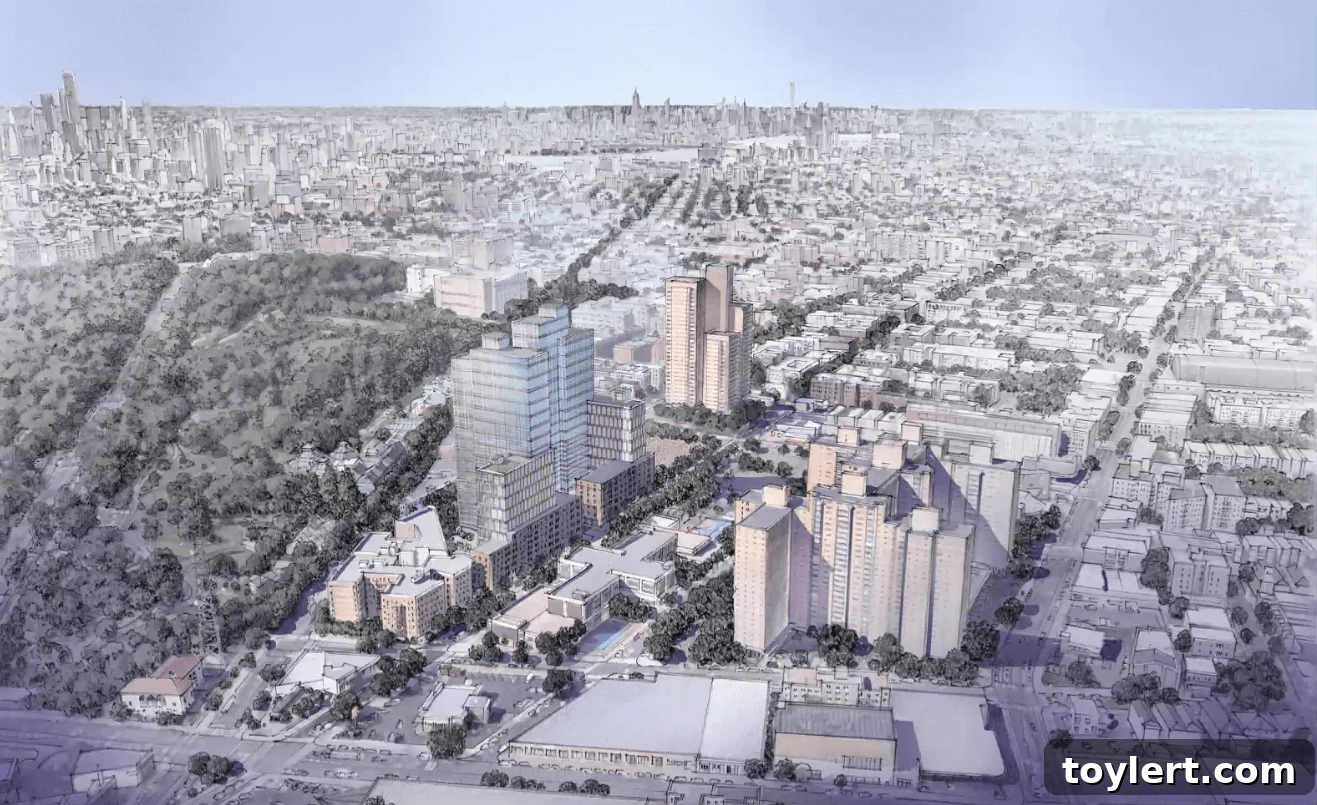
The developer behind this ambitious and controversial undertaking, Continuum Company, is actively seeking a critical rezoning approval for the site located at 960 Franklin Avenue. The rezoning application, if approved, would pave the way for an unprecedented construction project featuring two towering structures, each soaring to over 30 stories high. Alarmingly, these colossal buildings would stand a mere 150 feet from the cherished botanic garden. In addition to these twin behemoths, the development plan also includes a number of other ancillary, albeit smaller, towers, collectively transforming the urban landscape in a manner that critics argue is entirely out of scale and character with the surrounding neighborhood, particularly in light of its proximity to such a vital natural asset.
“Save the Sunlight”: The Brooklyn Botanic Garden’s Fight for Survival
The core of the opposition, vehemently articulated by the Brooklyn Botanic Garden itself, centers on the indispensable role of sunlight in sustaining its vast and diverse plant life. The BBG has launched a compelling campaign, aptly titled “Save the Sunlight,” to highlight the existential threat posed by the proposed development. According to the institution, should the rezoning and subsequent construction be allowed to proceed, the towering structures would effectively “block hours of sunlight to the Garden’s 23 conservatories, greenhouses, and nurseries.” These critical facilities are not merely showcases; they are the vibrant heart of the entire 52-acre Garden site, serving as the primary cultivation grounds for a myriad of plants that populate its diverse collections and underpin its extensive community programs. Without adequate natural light, the delicate balance of these controlled environments would be irrevocably disrupted, jeopardizing decades of horticultural achievement and scientific research.
The implications of this sunlight deprivation extend far beyond aesthetics. The BBG houses rare and endangered species, research collections vital for botanical science, and educational programs that serve countless students and community members annually. Many of its specialized conservatories, such as the Steinhardt Conservatory, host unique plant environments requiring specific light levels, humidity, and temperature. The loss of direct sunlight for significant portions of the day would necessitate increased reliance on artificial lighting, dramatically escalating operational costs and potentially altering the delicate growth cycles of countless plants. This isn’t merely about shade; it’s about disrupting a finely tuned ecosystem that has been meticulously cultivated and preserved for over a century, offering a crucial green oasis in the heart of one of the world’s most densely populated cities. The garden serves as a living laboratory, a sanctuary for urban dwellers, and a testament to horticultural excellence, all of which are directly threatened by shadows cast by unchecked development.
Community Board 9’s Resounding Disapproval: A Voice for Preservation
The overwhelming vote by Community Board 9 against the Spice Factory development represents a significant victory for local residents and environmental advocates. Community Boards in New York City play a crucial, albeit advisory, role in the Uniform Land Use Review Procedure (ULURP). While their votes are not binding, they carry substantial weight and often heavily influence the decisions of Borough Presidents, the City Planning Commission, and ultimately, the City Council. The emphatic nature of CB9’s disapproval signals a unified and resolute opposition from the immediate community that would be most directly impacted by the development. This rejection is not merely a formality; it reflects extensive community engagement, careful consideration of expert testimony, and a clear prioritization of the long-term health and vitality of the Brooklyn Botanic Garden over short-term development gains.
The board’s decision was informed by numerous public hearings, detailed presentations from the BBG and environmental groups, and passionate pleas from local residents who recognize the garden’s irreplaceable value. Concerns voiced during these proceedings ranged from the immediate ecological impact of shadow casting to the broader implications for the neighborhood’s character, infrastructure, and quality of life. The consensus within CB9 highlighted a collective belief that the proposed scale and proximity of the towers posed an unacceptable risk, setting a dangerous precedent for future developments around cherished public institutions. This vote underscores the power of organized community action and serves as a powerful testament to the democratic process in safeguarding urban treasures.
Broader Implications: Balancing Development with Environmental Stewardship
The dispute surrounding the Spice Factory development at 960 Franklin Avenue encapsulates a larger, ongoing debate in rapidly gentrifying urban centers like Brooklyn: how to balance the increasing demand for housing and economic development with the imperative to preserve vital green spaces, cultural institutions, and neighborhood character. Developers often highlight the need for new housing units, job creation, and economic investment. However, environmentalists, urban planners, and community advocates increasingly emphasize the intrinsic value of preserving open spaces, protecting biodiversity, and ensuring access to nature for all urban residents. The Brooklyn Botanic Garden, a non-profit institution founded in 1910, is more than just a collection of plants; it is a critical lung for the city, an educational hub, and a sanctuary for mental well-being.
This case also brings to the forefront the complexities of urban planning and zoning laws. While developers operate within existing regulations, rezoning applications often seek to alter these parameters significantly, leading to conflicts. The concept of “shadow studies” has become increasingly central in such debates, scientifically quantifying the potential impact of new structures on light-sensitive areas. For an institution like the BBG, where specific species thrive only under certain light conditions, these studies are not theoretical but represent a direct threat to its mission and existence. The outcome of this particular rezoning battle could establish a significant precedent for how future development projects are evaluated, particularly those bordering other invaluable public assets across New York City and beyond.
The Path Forward: Navigating New York’s ULURP Process
Following Community Board 9’s decisive vote, the proposed Spice Factory development now enters the subsequent stages of New York City’s Uniform Land Use Review Procedure (ULURP). The application will next move to the office of the Brooklyn Borough President, whose recommendation, while also advisory, carries considerable political weight and is often viewed as a bellwether for the city’s broader sentiment. After the Borough President’s review, the City Planning Commission will conduct its own thorough examination, culminating in a vote that is legally binding. However, the final arbiter in this complex process is the New York City Council, which holds the ultimate authority to approve, modify, or reject the rezoning application. The Council often defers to the wishes of the local Council Member whose district encompasses the proposed development, making local advocacy efforts critically important.
The overwhelming opposition from Community Board 9 provides a strong foundation for continued advocacy as the project progresses through these crucial stages. The “Save the Sunlight” campaign by the Brooklyn Botanic Garden, supported by a broad coalition of environmental groups, educational institutions, and concerned citizens, will undoubtedly intensify its efforts. Their goal is to ensure that the compelling scientific evidence regarding sunlight deprivation and the widespread community sentiment against the project are fully considered at every level of review. This ongoing battle underscores the protracted nature of major land use decisions in New York City, where diverse interests often clash, and the protection of long-standing public assets requires sustained vigilance and collective action.
The Enduring Value of Green Sanctuaries in a Concrete Jungle
In a metropolitan area as dense and dynamic as New York City, the existence and thriving health of green sanctuaries like the Brooklyn Botanic Garden are not just amenities; they are indispensable necessities. The BBG offers more than just aesthetic beauty; it is a living classroom, a crucial center for botanical research and conservation, and a vital resource for community engagement. It provides educational programs for children and adults, fostering a love for nature and an understanding of ecological principles. It serves as a scientific repository for plant collections, many of which are endangered or rare, contributing to global biodiversity efforts. Crucially, it offers a tranquil escape from the urban grind, providing mental and physical health benefits to thousands of visitors annually.
The fight to protect the Brooklyn Botanic Garden from the encroaching shadows of the Spice Factory development is therefore a fight for the future of urban green spaces everywhere. It highlights the principle that some assets are simply too precious to be compromised for the sake of development. Preserving the sunlight for the garden means preserving its ability to fulfill its multifaceted mission for generations to come. It affirms a commitment to environmental stewardship, community well-being, and the enduring value of nature within our increasingly urbanized world. The community’s resolute stand sends a powerful message that the long-term ecological and cultural health of a city’s green institutions must take precedence over projects that threaten their fundamental viability.
Conclusion: A Watershed Moment for Urban Preservation
Community Board 9’s decisive rejection of the proposed Spice Factory development near the Brooklyn Botanic Garden marks a significant watershed moment in the ongoing discourse around urban planning and preservation in New York City. Citing the profound and irreversible harm that the colossal structures would inflict upon the garden’s invaluable plant life by blocking essential sunlight, the board’s overwhelming vote reflects a powerful collective will to safeguard this cherished institution. As the contentious rezoning application proceeds through the remaining stages of the ULURP process, the battle for the Brooklyn Botanic Garden’s future is far from over. However, the resolute stand taken by CB9 provides a robust foundation for continued advocacy, sending an unequivocal message that protecting critical green spaces and cultural treasures must remain at the forefront of development considerations in our ever-evolving urban landscape.