The Verrazano-Narrows Bridge: A Timeless Marvel Connecting New York’s Boroughs
When the Verrazano-Narrows Bridge first opened its lanes in November 1964, it wasn’t just another connection; it was hailed as an unprecedented engineering marvel. This colossal structure was envisioned to profoundly transform transportation and commerce between New York City’s bustling boroughs. Over half a century later, while it might stir contemporary discussions about tolls and traffic, its historical significance and ongoing role as a vital artery remain undisputed, a testament to human ingenuity and a foundational element of the metropolitan landscape.
A Vision for Connection: The Genesis of the Verrazano
The concept of bridging the Narrows – the strait connecting Upper New York Bay with the Atlantic Ocean, separating Staten Island and Brooklyn – had been debated for decades. Prior to the bridge’s construction, Staten Island remained relatively isolated, relying heavily on ferry services for its connection to the other boroughs. The demand for a direct, high-capacity link grew exponentially with the increasing urbanization of the region, promising not just convenience but also significant economic development.
This ambitious project became a cornerstone of Robert Moses’s grand vision for New York City’s infrastructure. Moses, a formidable power broker and urban planner, was instrumental in shaping much of modern New York through his extensive network of highways, parks, and bridges. The Verrazano-Narrows Bridge was conceived as a critical piece in this expansive puzzle, designed to facilitate easier commutes, foster suburban growth on Staten Island, and streamline commercial traffic flow, ultimately aiming to integrate the boroughs more cohesively into the fabric of the greater metropolitan area.
Engineering Brilliance: Othmar H. Ammann’s Masterpiece
Behind the striking silhouette of the Verrazano-Narrows Bridge stood the visionary mind of structural engineer Othmar H. Ammann. Ammann was a luminary in the field, renowned for his monumental contributions to bridge design, which include several other iconic New York crossings such as the George Washington Bridge and the Triborough Bridge. His meticulous attention to both structural integrity and aesthetic grace defined his illustrious career, making him one of the most respected engineers of his era.
The Verrazano-Narrows Bridge was designed as a double-decked suspension bridge, a cutting-edge approach that allowed for unparalleled traffic capacity. At its completion, it boasted the longest main span in the world, stretching an incredible 4,260 feet (1,298 meters) between its colossal towers. Each tower rises to a majestic height of 693 feet (211 meters), anchored by foundations that plunge more than 100 feet (30 meters) into the Narrows. The four main cables, each a staggering 36 inches (91 cm) in diameter, comprise hundreds of thousands of individual steel wires, intricately spun together to bear the immense weight of the roadway and its constant flow of traffic. Ammann’s design not only pushed the boundaries of engineering but also ensured the bridge’s graceful presence, making it a powerful symbol of urban progress.
From Blueprint to Reality: The Construction Journey (1959-1964)
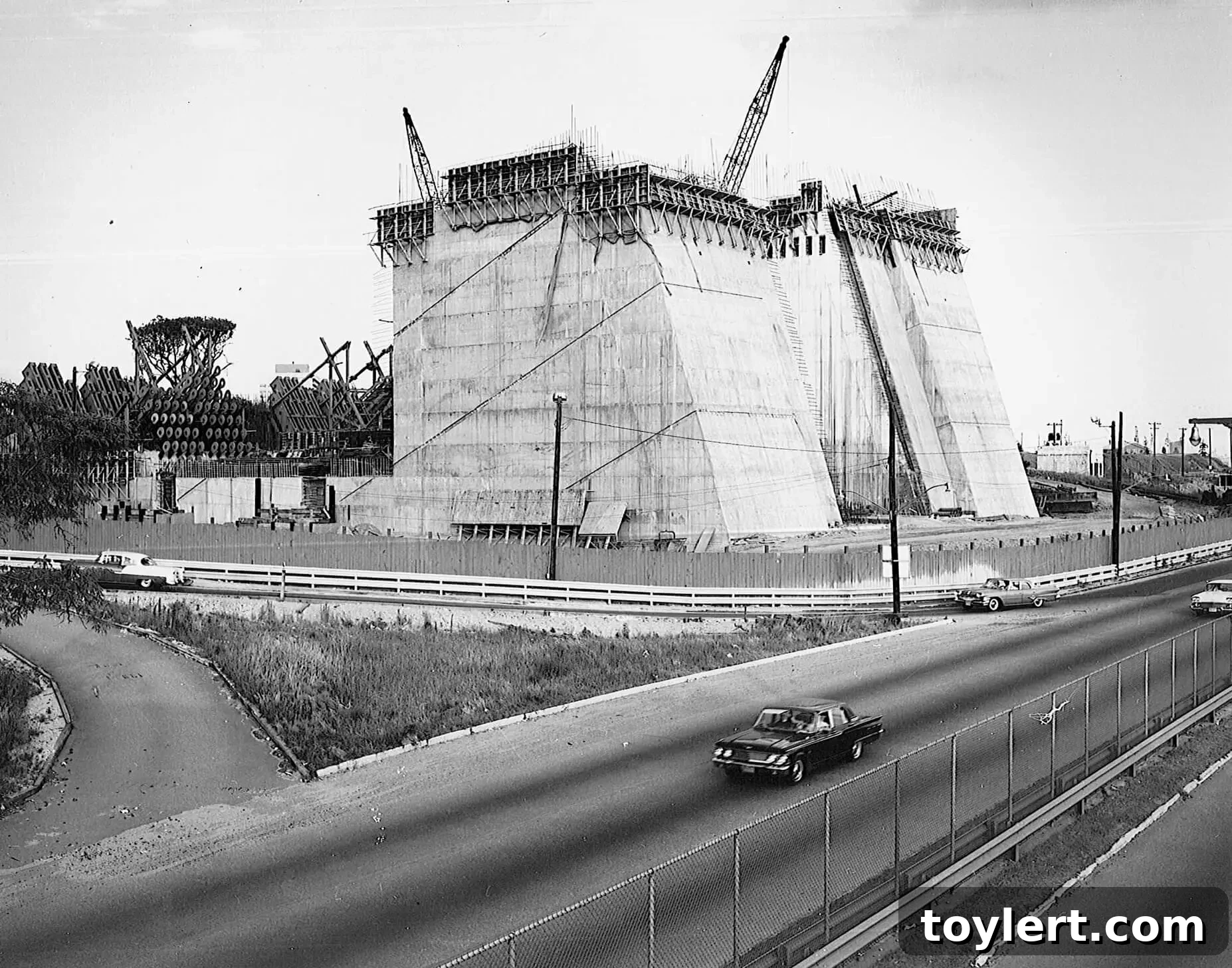
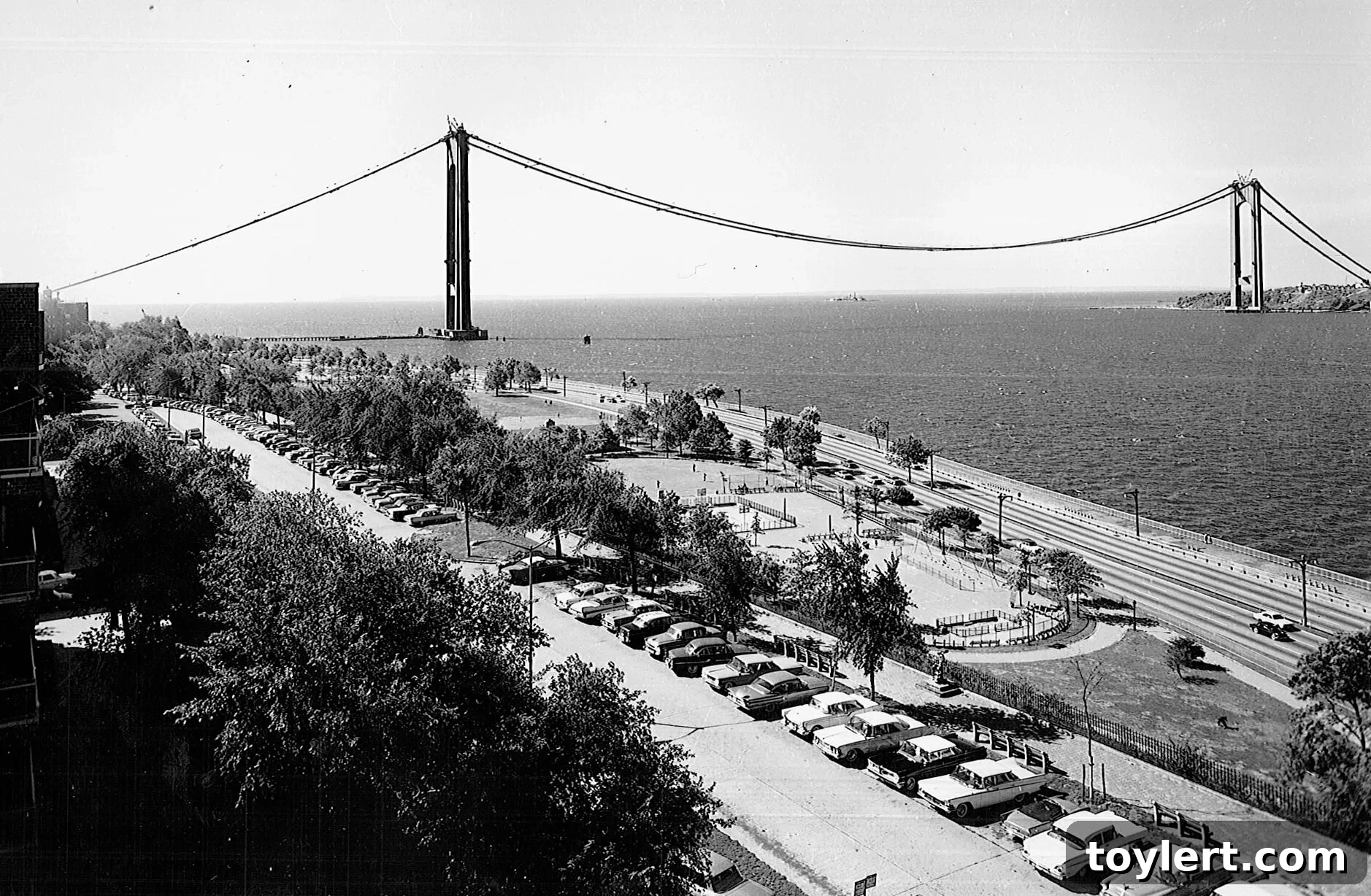
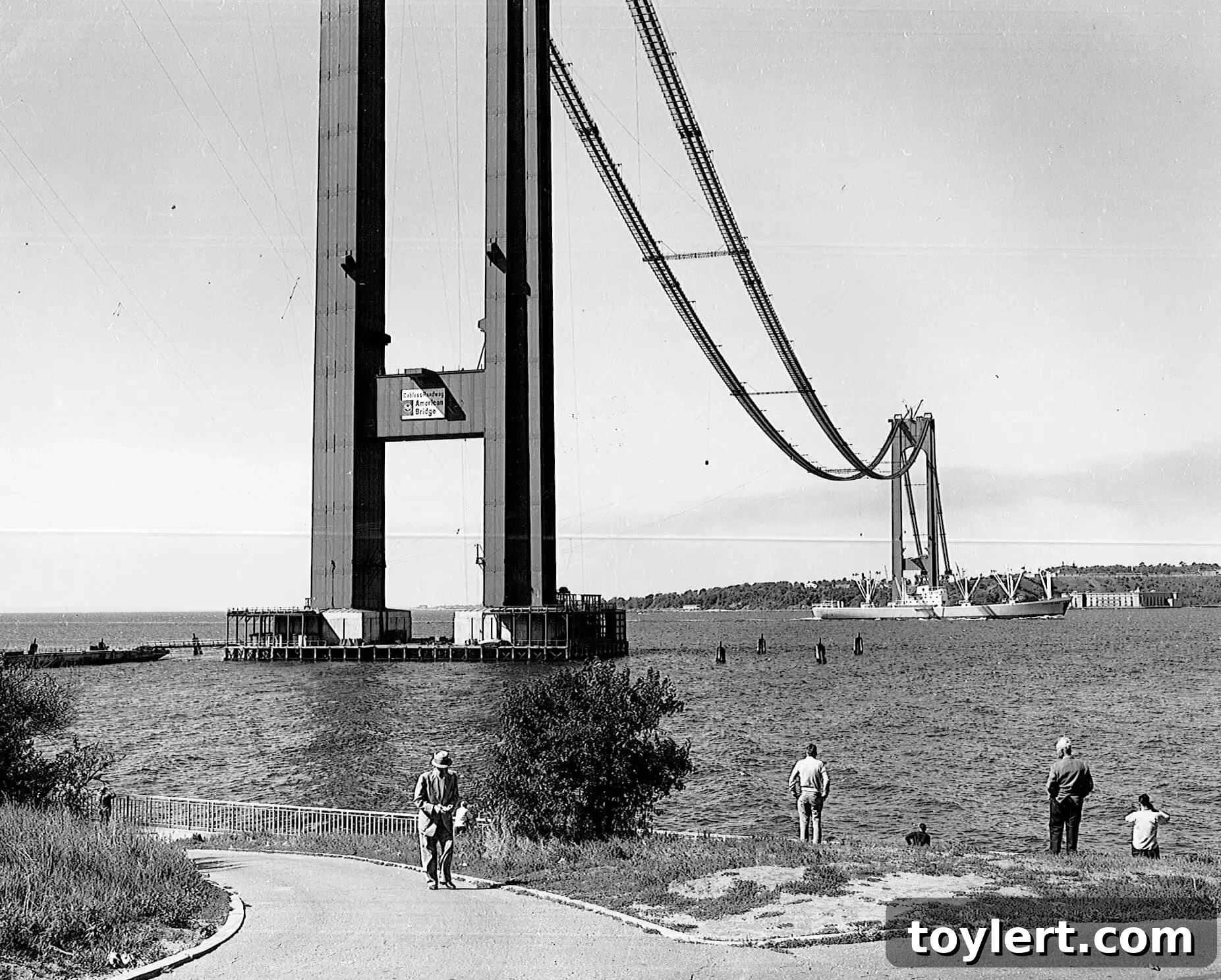
The construction of the Verrazano-Narrows Bridge, which commenced in 1959, was an undertaking of epic proportions, requiring the dedication of thousands of skilled workers and the deployment of advanced engineering techniques for its time. Glimpses from the historical photo archives, such as those from the Brooklyn Reporter, reveal the bridge’s graceful span gradually rising in the water, a testament to the methodical and monumental effort involved.
The initial phase involved the formidable task of laying the foundations for the two massive towers. Caissons, large watertight chambers, were sunk deep into the bedrock of the Narrows, creating stable bases upon which the towers would rest. This was followed by the meticulous erection of the steel tower sections, piece by piece, ascending skyward. Once the towers stood tall, the intricate process of cable spinning began. This involved high-wire acts where workers meticulously spun hundreds of thousands of individual steel wires across the Narrows, bundling them into the colossal main cables that would ultimately support the bridge deck. The precision required for this operation was immense, as any misalignment could compromise the entire structure.
Finally, the road deck sections were hoisted into place and painstakingly connected, forming the dual roadways. The construction faced numerous challenges, from battling harsh weather conditions in the exposed Narrows to overcoming complex logistical hurdles in transporting vast quantities of materials. Safety for the workforce was paramount, and groundbreaking techniques were implemented to protect those working at dizzying heights and depths. The entire project represented an extraordinary feat of human endeavor, culminating in a structure that would redefine the landscape of New York City and stand as a symbol of mid-20th-century American ambition.
A New Era Begins: The Opening and Immediate Impact
The grand opening of the Verrazano-Narrows Bridge in November 1964 was met with widespread celebration and fanfare. Dignitaries, engineers, and thousands of eager citizens gathered to witness the inauguration of what was, at the time, the world’s longest suspension bridge. Its completion was not merely an infrastructural achievement but a significant cultural event, marking a new chapter for the city and its surrounding areas.
The immediate impact on transportation was profound. Travel times between Brooklyn and Staten Island were dramatically reduced, offering a direct route that bypassed the more circuitous paths through Manhattan or lengthy ferry waits. This newfound accessibility spurred rapid development on Staten Island, transforming it from a relatively quiet, suburban borough into a more integrated part of the metropolitan hustle. Real estate values surged, and new communities blossomed as commuters found it easier to live on Staten Island while working in Brooklyn, Queens, or Manhattan. Economically, the bridge facilitated smoother freight movement, bolstering trade and contributing to the regional economy. It quickly established itself as a critical artery, alleviating congestion on other city crossings and becoming an indispensable component of New York’s complex transportation network.
Beyond Function: Cultural Icon and Enduring Symbol
More than just a practical link, the Verrazano-Narrows Bridge quickly transcended its functional role to become a beloved cultural icon. Its majestic presence at the mouth of New York Harbor serves as a gateway to the city, offering a dramatic welcome to ships sailing in from the Atlantic. Its distinctive silhouette is instantly recognizable, frequently featured in films, television shows, and photography, symbolizing the grandeur and ambition of New York City itself.
Perhaps its most globally recognized cultural role is as the starting line for the annual New York City Marathon. Each year, thousands of runners from around the world gather on its lower deck, commencing their 26.2-mile journey into the heart of the city. This event not only showcases the bridge to an international audience but also solidifies its place in the collective consciousness as a landmark of human endurance and triumph. The bridge’s name itself sparked a minor controversy, with some advocating for the original spelling of Giovanni da Verrazzano, the Italian explorer who was the first European to enter New York Harbor in 1524. Despite the varied opinions, the bridge stands as a testament to historical recognition and modern connectivity, an enduring symbol of progress and the human spirit.
The Verrazano Today: Challenges and Legacy
Today, the Verrazano-Narrows Bridge continues its essential work, serving as a vital conduit for hundreds of thousands of commuters and commercial vehicles daily. While its initial awe has settled into the everyday reality of urban life, the “grumbles” about tolls and traffic congestion, as mentioned in passing, are a testament to its immense popularity and critical role in the region’s transportation infrastructure. It remains the longest suspension bridge in the United States, a title it has proudly held for decades, and its capacity continues to be tested by the ever-growing population and economic activity of the greater New York metropolitan area.
Maintaining a structure of this age and scale is an ongoing, monumental task. The bridge requires continuous inspection, repair, and upgrades to ensure its structural integrity and safety. Engineers and maintenance crews work tirelessly to combat the effects of weather, corrosion, and constant wear and tear. This perpetual effort underscores the enduring commitment required to preserve such an invaluable piece of public infrastructure.
The Verrazano-Narrows Bridge’s legacy extends far beyond its concrete and steel. It is a powerful reminder of Robert Moses’s transformative influence on urban planning and Othmar H. Ammann’s unparalleled engineering genius. It fundamentally altered the demographics and economic landscape of Staten Island and Brooklyn, shaping the daily lives of millions. As it continues to connect communities and facilitate commerce, the Verrazano-Narrows Bridge stands as an enduring monument to mid-century ambition, a testament to what can be achieved when vision and engineering prowess converge, and an indispensable part of New York City’s vibrant, interconnected future.