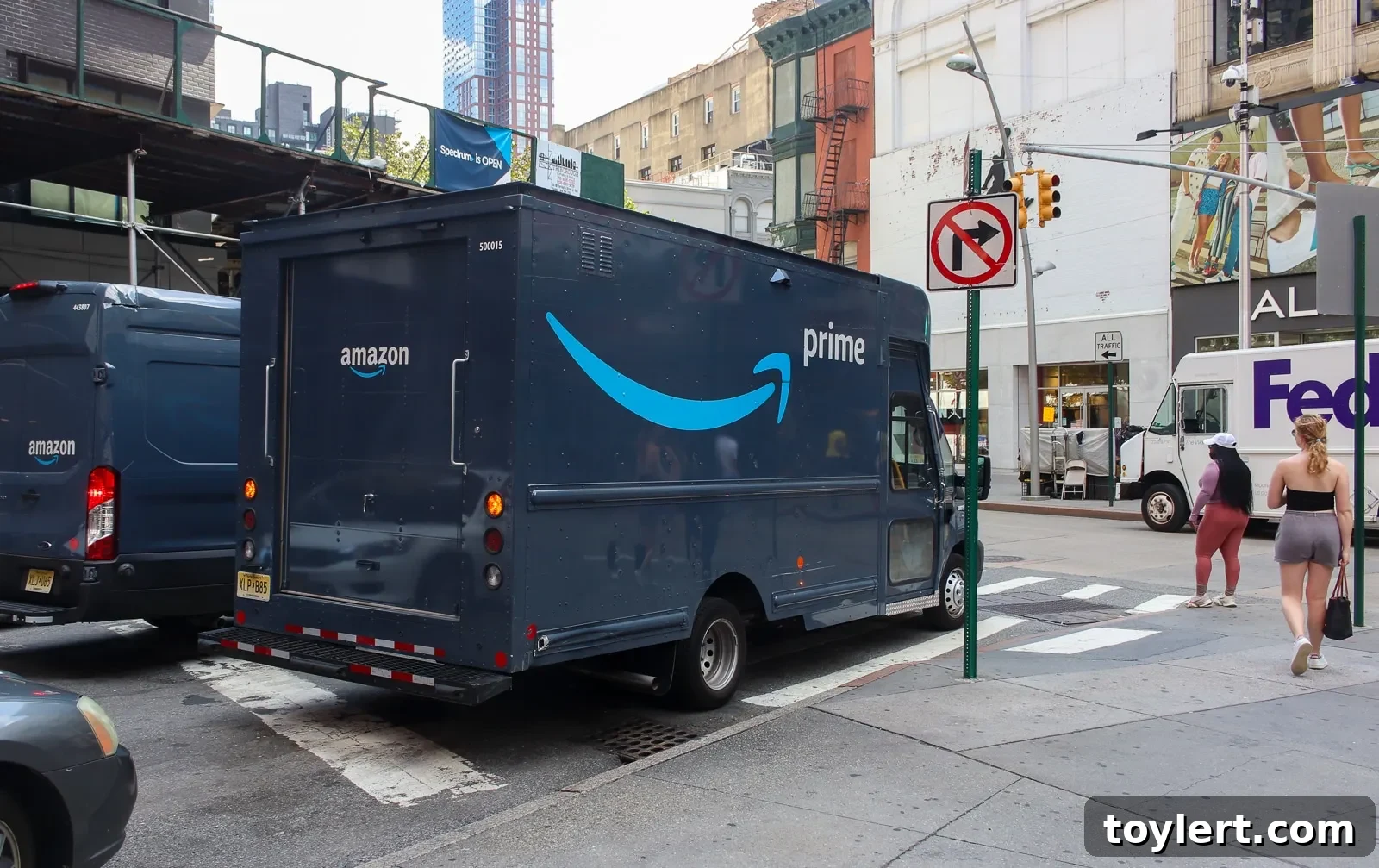
NYC Embraces Green Delivery: DOT Advances Microhub Pilot Program for a Sustainable Future
By Kirstyn Brendlen, Brooklyn Paper
New York City is taking a significant stride towards revolutionizing urban package delivery with the advancement of a pioneering “microhub” pilot program by the Department of Transportation (DOT). This initiative, which moved a critical step forward on Tuesday, aims to transform the often-congested and pollution-heavy last-mile delivery process into a more efficient, environmentally friendly, and safer system for all New Yorkers. It represents a proactive approach to address the growing challenges posed by the surge in e-commerce and the sheer volume of goods moving through the city’s densely populated streets.
The core concept behind these innovative delivery microhubs is straightforward yet impactful: to create strategic transshipment points within the urban landscape. These hubs will serve as crucial intermediate stations where large, long-haul delivery trucks can safely and efficiently offload their cargo. Once transferred, goods will then be sorted and loaded onto a fleet of smaller, more agile, and significantly more sustainable vehicles for the final leg of their journey – the “last-mile delivery.” This transition is anticipated to drastically reduce the environmental footprint and enhance street safety, offering a cleaner, quieter, and less congested future for New York City’s vibrant neighborhoods.
Understanding the “Microhub” Revolution in Urban Logistics
Delivery microhubs are essentially scaled-down urban consolidation centers designed to optimize the final stages of the delivery process. Instead of large tractor-trailers navigating narrow streets, battling traffic, and struggling for parking, these vehicles will deliver their bulk shipments to designated microhub locations, typically situated on the periphery of high-density areas or in strategically chosen underutilized urban spaces. From these hubs, a new generation of delivery vehicles takes over, optimized for city conditions.
This includes a diverse array of transport methods: nimble handcarts for pedestrian-dense zones, compact electric vans capable of navigating smaller streets and utilizing less parking space, and perhaps most excitingly, e-cargo bikes. These electric-assisted bicycles, capable of carrying substantial loads, offer a zero-emission, low-noise, and highly efficient solution for weaving through traffic and reaching destinations quickly without contributing to gridlock or air pollution. By facilitating this transfer, microhubs act as crucial pivots, enabling a seamless shift from traditional, often inefficient, urban logistics to a smart, sustainable model.
The Urgent Imperative for Sustainable Last-Mile Delivery in NYC
New York City faces unparalleled challenges when it comes to urban freight and delivery. The sheer volume of packages delivered daily has skyrocketed with the relentless rise of e-commerce, placing immense strain on the city’s infrastructure and quality of life. Large delivery trucks are a significant contributor to:
- Traffic Congestion: They occupy substantial road space, move slowly, and frequently double-park, exacerbating gridlock.
- Air Pollution: Diesel engines emit harmful pollutants, negatively impacting air quality and public health, especially in vulnerable communities.
- Noise Pollution: The constant hum of engines and the frequent stopping and starting contribute to the cacophony of urban life.
- Street Safety Concerns: Large trucks have significant blind spots and longer braking distances, posing increased risks to pedestrians and cyclists in a city where active transportation is growing.
- Infrastructure Wear and Tear: The heavy weight of these vehicles contributes to accelerated degradation of city streets and bridges.
Given its unique density, the intricate network of its streets, and its commitment to environmental sustainability, New York City is an ideal candidate, and indeed, a vital proving ground for innovative urban logistics solutions like microhubs. Addressing these issues is not just about efficiency; it’s about enhancing public health, safety, and the overall livability of the metropolitan area.
Transformative Benefits: How Microhubs Will Reshape NYC Delivery
The implementation of a city-wide microhub network promises a cascade of transformative benefits, touching every aspect of urban life from environmental quality to economic efficiency:
Environmental Impact and Air Quality Improvement
One of the primary drivers of the microhub program is its potential to dramatically reduce the ecological footprint of urban delivery. By replacing conventional diesel trucks with electric vans and e-cargo bikes for the last mile, the city can achieve substantial reductions in carbon emissions and other harmful particulate matter. This shift directly contributes to cleaner air, offering significant public health benefits, particularly for residents living near major thoroughfares or in historically underserved areas that often bear the brunt of traffic-related pollution.
Alleviating Traffic Congestion
Fewer large trucks traversing the city’s arterial roads and residential streets means less congestion. This improvement in traffic flow benefits everyone, from commuters and public transit users to emergency services. Reduced gridlock also translates to faster travel times and a more predictable urban environment, easing the daily frustrations associated with city driving and transit.
Enhanced Street Safety for All
The transition to smaller, more maneuverable delivery vehicles like e-cargo bikes and compact electric vans is expected to significantly enhance street safety. These vehicles have better visibility, shorter braking distances, and are less imposing than their larger counterparts, reducing the risk of accidents involving pedestrians and cyclists. Creating safer streets encourages more people to choose active forms of transportation, further supporting sustainable urban living.
Operational Efficiency and Cost Savings for Carriers
While the initial investment in microhub infrastructure and a new fleet may be substantial, carriers stand to gain long-term operational efficiencies. By consolidating shipments at hubs and utilizing optimized, often shorter, routes for last-mile deliveries, companies can reduce fuel costs, improve delivery times, and potentially increase the number of deliveries per shift. This streamlining can lead to significant cost savings and improved service reliability, making urban delivery more profitable and sustainable for businesses.
Noise Reduction for Quieter Neighborhoods
Electric vehicles operate with significantly less noise than internal combustion engine vehicles. Widespread adoption of electric vans and e-cargo bikes for last-mile delivery will contribute to a quieter urban soundscape, improving the quality of life for residents, especially during early morning or late-night delivery windows. This subtle but profound change can transform the ambient noise levels in residential and commercial districts alike.
The Mechanics of Microhubs: A Glimpse into Operations
The success of the NYC DOT’s microhub pilot hinges on meticulous planning and strategic execution. Key operational aspects include:
- Strategic Location Selection: Microhubs must be strategically located to maximize their impact. Ideal sites might include underutilized city-owned properties, existing parking lots repurposed for logistics, or even creative uses of ground-floor commercial spaces. Proximity to major transportation arteries is essential for inbound large trucks, while proximity to dense residential and commercial areas is crucial for efficient last-mile distribution.
- Robust Infrastructure: Each hub will require infrastructure for unloading, sorting, and temporarily storing packages. Critically, extensive charging infrastructure for electric vans and e-cargo bikes will be necessary to ensure continuous operation. Security measures, including surveillance and controlled access, will also be paramount to protect valuable cargo.
- Diverse Fleet Integration: The program encourages the use of a variety of sustainable delivery methods. E-cargo bikes, with their agility and zero emissions, are particularly well-suited for dense urban cores and bike-friendly infrastructure. Electric vans provide capacity for larger or more numerous packages, while handcarts remain effective for localized, pedestrian-friendly delivery routes.
- Seamless Operational Flow: The process is designed for efficiency. Large trucks arrive at the microhub, unload their consolidated shipments. Packages are then rapidly sorted and transferred to the appropriate last-mile vehicle based on destination and delivery zone. This multi-modal approach ensures that each package reaches its final destination via the most appropriate and sustainable means.
NYC DOT’s Pilot Program: Setting the Stage for Change
The NYC Department of Transportation’s decision to advance this delivery microhub pilot program marks a significant commitment to innovative urban planning. The pilot phase is crucial for testing the viability, efficiency, and scalability of the microhub model within New York City’s unique context. The DOT will likely focus on several key objectives:
- Measuring Impact: Assessing the quantifiable reductions in traffic congestion, air pollution, and delivery vehicle miles traveled (VMT).
- Evaluating Operational Effectiveness: Analyzing the efficiency of package transfer, sorting, and last-mile distribution from the hubs.
- Gathering Stakeholder Feedback: Collecting insights from delivery companies, local businesses, residents, and couriers to refine the model.
- Identifying Optimal Locations: Determining the most effective and feasible sites for future microhub expansion.
The initial pilot sites are expected to be strategically chosen to provide diverse operational environments, allowing the city to gather comprehensive data and tailor the program for broader city-wide implementation. Success in this pilot could pave the way for NYC to become a global leader in sustainable urban logistics.
Navigating the Hurdles: Challenges on the Path to a Green Future
While the potential benefits of microhubs are immense, their successful implementation will require overcoming several significant challenges:
- Initial Investment and Funding: Establishing a network of microhubs requires substantial upfront capital for land acquisition (or repurposing), construction, infrastructure development (especially charging stations), and the procurement of new fleets of electric vehicles. Securing adequate funding and demonstrating a clear return on investment will be crucial.
- Space Constraints in a Dense City: Finding suitable and available urban space for microhubs in New York City is perhaps one of the most formidable challenges. Creative solutions, such as utilizing existing public parking facilities, redeveloping underpasses, or integrating hubs into new commercial developments, will be necessary.
- Logistical Complexity and Coordination: Managing the intricate logistics of multiple carriers, diverse vehicle types, and varied delivery schedules at each microhub demands sophisticated planning and advanced technological solutions for route optimization and real-time tracking.
- Stakeholder Buy-in and Collaboration: Successful implementation relies on strong collaboration between the city, private delivery companies, local businesses, and community groups. Addressing concerns and ensuring that all stakeholders see the long-term benefits will be essential for widespread adoption.
- Regulatory Adaptations: Existing urban planning and traffic regulations may need to be adapted to accommodate this new model of freight delivery, particularly concerning vehicle types, loading/unloading zones, and operational hours.
A Vision for the Future: A Greener, Safer NYC Through Innovation
The advancement of the microhub pilot program is more than just a logistical update; it’s a bold vision for New York City’s future. It signals a shift towards an integrated urban logistics system that prioritizes sustainability, efficiency, and public well-being. By embracing smart city principles and innovative freight management, NYC has the opportunity to:
- Become a global model for sustainable urban development and climate action.
- Significantly improve the quality of life for its residents through cleaner air and less noise.
- Create safer streets for all users, encouraging active transportation.
- Foster a more resilient and efficient urban economy, adapting to the demands of modern e-commerce.
The intelligent deployment of technology, from advanced route optimization algorithms to potential future integration with autonomous delivery solutions, will be key to maximizing the effectiveness and scalability of the microhub network. This initiative underscores New York City’s commitment to innovation and its dedication to creating a healthier, more vibrant urban environment for generations to come.
As the pilot program unfolds, the insights gained will be invaluable, guiding the expansion and refinement of a system poised to redefine urban delivery. The journey towards a truly green and efficient last-mile delivery system is complex, but with the DOT’s proactive steps, New York City is clearly on the right path to achieving a sustainable future for its bustling streets.
By Kirstyn Brendlen, Brooklyn Paper