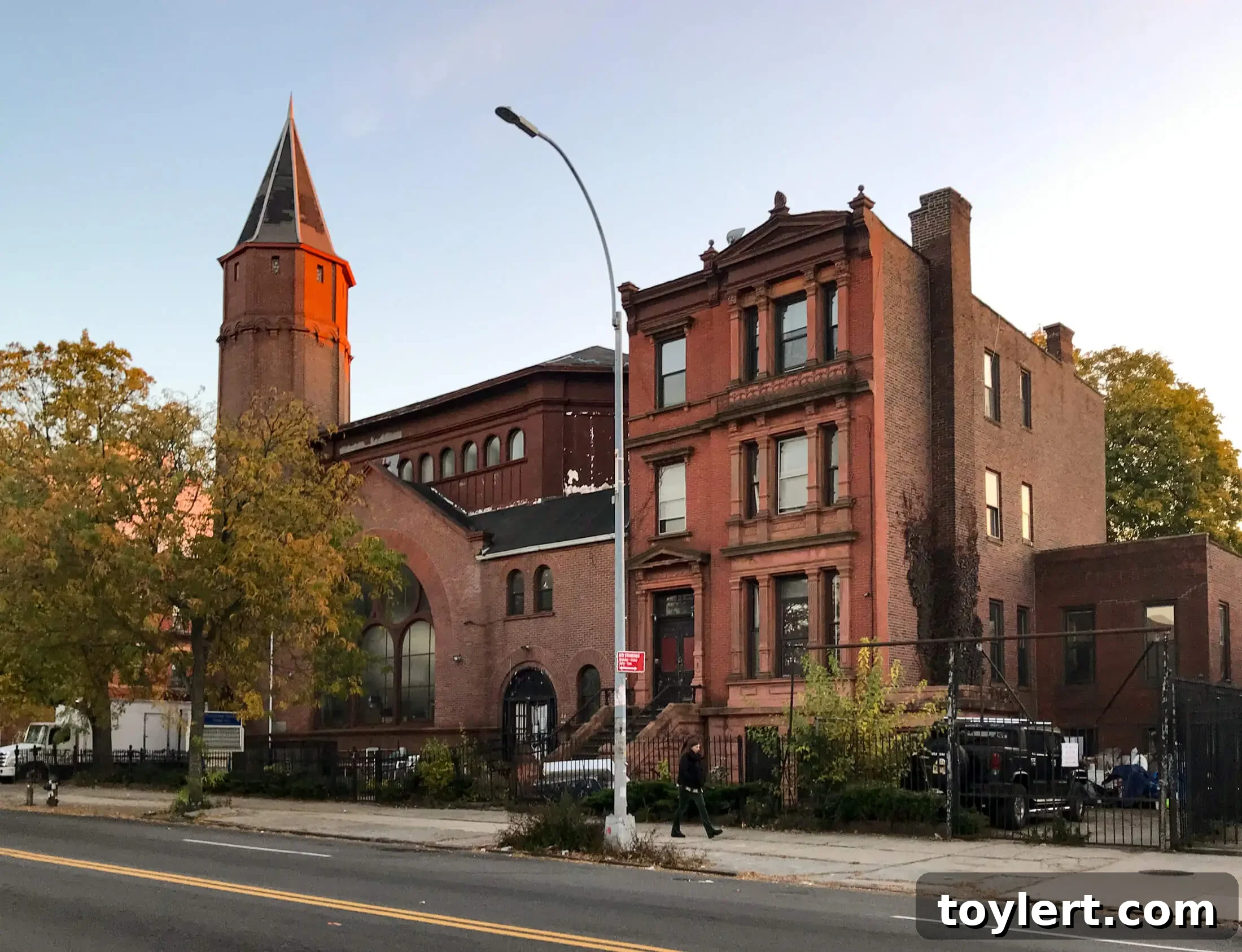
Bushwick’s Historic Romanesque Revival Church Faces Uncertain Future After City Vacate Order
A significant piece of Bushwick’s architectural and community heritage now stands at a precarious crossroads. The majestic 1890s Romanesque Revival church, prominently situated at the corner of Bushwick Avenue and Cornelia Street, has been served with a full vacate order by the city. This urgent directive comes in response to severe structural deficiencies, most critically a crumbling roof and other dangerous conditions, rendering the building unsafe for occupancy. The immediate consequence has been the closure of a popular thrift store that had become a local fixture within its walls, thrusting the entire building’s future into a profound state of uncertainty.
For generations, this impressive edifice has been more than just a place of worship; it has been an enduring symbol for the Bushwick community, a silent sentinel witnessing the neighborhood’s evolution. Its sudden closure due to these structural failures sends a ripple of concern through residents and preservationists alike, prompting urgent questions about the fate of such an irreplaceable landmark. The vacate order highlights a growing challenge across New York City: how to preserve and maintain aging historic structures, especially those vital to community identity, in the face of escalating costs and complex renovation demands.
A Crisis Unveiled: The City’s Urgent Vacate Order
The severity of the situation became undeniably clear with the issuance of the July vacate order. Detailed findings from city inspectors paint a grim picture of the church’s structural integrity. Critical among the listed concerns is the imminent danger of the ceiling collapsing in multiple areas, posing a direct threat to anyone inside. Further compounding these structural vulnerabilities are extensive water damage to walls, a stark indicator of the compromised roof, and a severely rotted stairwell, making safe access within the building impossible.
These conditions are not merely cosmetic; they represent fundamental threats to public safety, prompting the city to take decisive action. A full vacate order signifies that a building is deemed unfit for any form of occupancy, demanding immediate evacuation and prohibiting entry until all hazardous conditions are rectified and inspected. For a building of this size and age, addressing such widespread and severe issues will undoubtedly require a monumental effort, both in terms of engineering expertise and financial resources. The very foundation of the building’s utility has been called into question, leaving its current owner, Restoration Worship Temple, Inc., with an arduous path ahead.
A Testament to Time and Tribulation: The Church’s Storied Past
The church’s current predicament is unfortunately not its first encounter with adversity. Its history is marked by both architectural splendor and significant trials, reflecting the resilient spirit of Bushwick itself.
Architectural Grandeur: The Romanesque Revival Style
Erected in the 1890s, the church is a magnificent example of Romanesque Revival architecture, a style popular in the late 19th century that drew inspiration from medieval European Romanesque buildings. Characterized by its robust masonry, rounded arches, heavy ornamentation, and often a monumental scale, this architectural style sought to evoke a sense of permanence, strength, and historical grandeur. Buildings like this Bushwick church were designed to make a profound statement, serving not only as spiritual centers but also as significant anchors in their burgeoning urban landscapes.
The Bushwick Avenue church, with its distinctive features, stands as a tangible link to a bygone era, offering a glimpse into the craftsmanship and aesthetic values of over a century ago. Its presence contributes immeasurably to the streetscape of Bushwick Avenue and the broader architectural tapestry of Brooklyn, a borough celebrated for its diverse and historic building stock. Preserving such a structure is not just about saving bricks and mortar; it’s about safeguarding a visual narrative of the city’s past and maintaining the unique character that defines its neighborhoods.
The Scars of 1997: A Fiery Devastation
The current structural crisis also revives memories of a devastating event from decades past. In 1997, the church was gutted in a massive fire, leaving behind a skeletal shell of its former glory. It was a tragedy that deeply affected the congregation and the surrounding community. In the wake of the disaster, the then-pastor made a heartfelt vow to rebuild, promising to restore the beloved landmark to its former prominence. While significant efforts were undoubtedly made in the intervening years, the current state of the roof and other systemic issues suggest that the path to full recovery has been a protracted and ultimately incomplete one.
The challenges of rebuilding a historic structure after such extensive damage are immense, requiring specialized knowledge, significant funding, and unwavering commitment. The 1997 fire left deep scars, both visible and hidden, and the current structural failures indicate that some of those long-term issues, particularly concerning the roof, have persisted, slowly deteriorating the building’s integrity over time. This ongoing battle against decay underscores the relentless nature of maintaining historic properties.
The Arduous Fight for Survival: Pastor Loftman’s Vision
The recent history of the church is marked by the earnest efforts of its current leadership to combat its decline and ensure its survival, demonstrating a deep dedication to both the building and the community it serves.
A Church in Disrepair: Halting Services Since 2017
For Pastor Owen Loftman of Restoration Worship Temple, Inc., the church’s disrepair has been a constant source of concern and a major impediment to its core mission. Pastor Loftman revealed to BK Reader in 2021 that he had been unable to hold regular worship services within the church since as far back as 2017. This prolonged suspension of services was directly attributed to the building’s deteriorating condition, which rendered it unsafe for congregants. The inability to gather in their sacred space has undoubtedly been a profound challenge for the Restoration Worship Temple community, highlighting the tangible impact of structural neglect on spiritual life.
The decision to cease services is never taken lightly by a religious institution, signifying that the safety risks had become too great to ignore. This period of forced inactivity within the main sanctuary underscores the long-standing nature of the structural issues and the immense pressure on Pastor Loftman and his congregation to find a viable solution for their crumbling home. Their commitment to the building, even in its state of disrepair, speaks volumes about its importance to their identity and mission.
The Thrift Store Endeavor: A Plea for Funds
In a creative and heartfelt attempt to generate much-needed funds for critical repairs, especially for the ailing roof, Pastor Loftman transformed parts of the historic building at 1170 Bushwick Avenue into a unique thrift store. This initiative was born out of necessity, a desperate plea to save a cherished landmark. The store quickly became known for its eclectic collection of knick-knacks, antiques, and salvaged treasures sourced from estate sales across the northeast, earning it the affectionate moniker of an “undiscovered treasure trove.”
The thrift store was more than just a retail space; it was a community hub, a place where neighbors could find unique items and contribute directly to the preservation of a local landmark. Pastor Loftman candidly shared his ambitious goal of raising an estimated $500,000 specifically for roof repairs—a sum indicative of the extensive work required. However, despite the store’s charm and community appeal, it appears the revenue generated was insufficient to tackle the monumental task at hand. The recent vacate order, forcing the closure of this very fundraising venture, presents a heartbreaking irony, effectively shutting down the primary engine of hope for the church’s revival. This closure not only halts the flow of potential repair funds but also removes a beloved local business from the community, further deepening the sense of loss.
The Broader Landscape: Challenges in Historic Preservation
The plight of the Bushwick church is not an isolated incident but rather a microcosm of broader challenges faced by historic structures and the communities that cherish them, particularly in rapidly developing urban areas like Brooklyn.
The Plight of Historic Religious Structures
Throughout New York City and indeed across the nation, historic religious institutions often find themselves in a precarious position. While they contribute immeasurably to the architectural and cultural fabric of their neighborhoods, they frequently struggle with the immense financial burden of maintaining aging, large-scale buildings. Unlike many other historic properties, religious institutions may face limitations in accessing certain types of public funding or preservation grants. Furthermore, many older congregations have experienced dwindling memberships, leading to reduced offertories and a diminishing capacity to fund costly repairs, especially for infrastructure items like roofs, foundations, and heating systems.
The challenge lies in balancing their spiritual mission with the overwhelming demands of building stewardship. For many, the building itself is an integral part of their heritage and identity, making the prospect of demolition or sale deeply distressing. The Bushwick church exemplifies this struggle, where dedication to the structure is evident, yet the financial and logistical obstacles prove formidable.
Navigating Brooklyn’s Preservation Tensions
Bushwick, like many vibrant Brooklyn neighborhoods, is experiencing rapid transformation and development. This dynamic environment often creates tension between the desire for new growth and the imperative to preserve historic assets. Developers eye properties for their potential, while preservationists advocate for retaining the character and history embodied in structures like the Romanesque Revival church. When historic buildings fall into disrepair, they become particularly vulnerable to demolition and replacement, sometimes under the guise of safety concerns.
Navigating these waters requires careful consideration from city agencies, community groups, and property owners. The Bushwick church’s situation highlights the urgent need for collaborative solutions that prioritize both public safety and the long-term viability of irreplaceable cultural landmarks. Adaptive reuse, where historic buildings are repurposed for new functions while preserving their architectural integrity, is often proposed as a solution, but it comes with its own set of complexities and significant investment requirements.
What Lies Ahead: The Crossroads for 1170 Bushwick Avenue
With the city’s vacate order firmly in place, the future of the 1890s Romanesque Revival church at 1170 Bushwick Avenue hangs precariously in the balance. The immediate priority is addressing the severe structural deficiencies to ensure safety, but beyond that, multiple pathways, each fraught with challenges, lie ahead.
One potential scenario involves a comprehensive restoration, a monumental undertaking that would demand substantial funding from various sources, including grants, private donors, and potentially government aid. This would require not only repairing the roof and internal damage but also bringing the entire structure up to modern safety codes while preserving its historic character. Another possibility is adaptive reuse, where the church could be transformed into a different kind of community space, housing, or commercial establishment, allowing its shell to survive even if its original function changes. However, such projects are complex, costly, and require creative vision and deep pockets.
The most dire outcome, of course, would be demolition, a fate that many historic buildings in distressed conditions eventually face. The loss of such a distinctive and aged structure would be an irreparable blow to Bushwick’s cultural landscape and a somber reminder of the difficulties in preserving our architectural past. The coming months will be critical, as stakeholders, including the church leadership, community organizations, preservation groups, and city officials, deliberate on the best course of action for this imperiled Brooklyn landmark.
A Call to Action for Bushwick’s Architectural Gem
The vacate order placed on the Romanesque Revival church on Bushwick Avenue is more than just a bureaucratic directive; it is a wake-up call for the community and for all who value Brooklyn’s rich architectural heritage. The potential loss of this 1890s structure would not only mean the demolition of a magnificent piece of history but also the erasure of a significant spiritual and communal anchor in Bushwick.
Its crumbling roof and compromised interior serve as a stark reminder of the continuous effort required to safeguard our historic treasures. As the future of 1170 Bushwick Avenue remains uncertain, the hope is that a collaborative effort can emerge to secure the necessary resources and expertise to rescue this iconic building, allowing it to once again stand as a vibrant, safe, and cherished landmark for generations to come.