NYC’s Vanishing Heritage: A City Hall Cry to Save Historic Landmarks
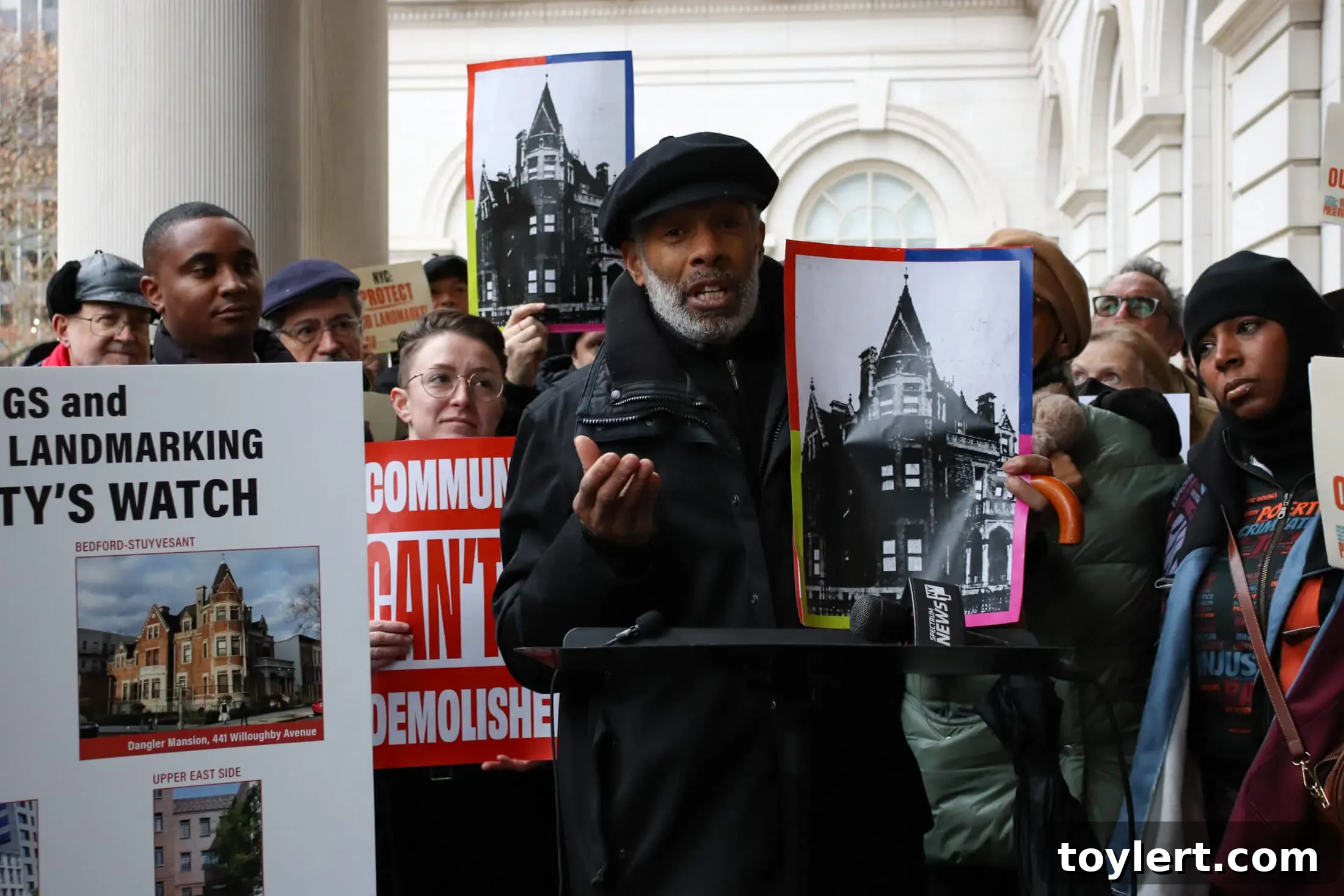
New York City, a metropolis famed for its dynamic skyline and rich tapestry of history, is increasingly facing a heartbreaking dilemma: the rapid disappearance of its irreplaceable historic structures. From grand mansions to humble literary row houses, landmarked or calendared properties across the five boroughs are falling victim to neglect, demolition orders, and the relentless march of development. This growing crisis recently culminated in a fervent gathering on the steps of City Hall, where dozens of dedicated preservationists, concerned politicians, and passionate neighborhood activists united to demand urgent change and an end to the demolition of New York’s precious past.
The outrage is palpable, fueled by recent losses that resonate deeply within communities. The Jacob Dangler mansion at 441 Willoughby Avenue in Bed Stuy, an architectural marvel steeped in local lore, has been a significant flashpoint. Similarly, the literary landmark at 14 Gay Street in Greenwich Village, once home to famed authors and a cornerstone of its bohemian history, has also been threatened. These incidents are not isolated; they represent a systemic erosion of the city’s unique character and collective memory, sparking a citywide movement determined to protect what remains.
The Heart of the Protest: A Cry for Preservation and Identity
The protest on a recent Thursday afternoon was more than just a rally; it was a collective outpouring of grief and determination. Speakers from various community groups and elected officials articulated a shared vision for a New York that respects its heritage. A particularly poignant statement came from a member of the Mount Morris Park Community Improvement Association, who declared, “To lose these buildings is a deterioration of our culture. We’re not only speaking about physical structures. We’re speaking about the soul of Harlem. The soul of Black people.”
This powerful sentiment encapsulates the essence of the preservation movement in New York City. For many, these historic buildings are not merely old bricks and mortar; they are living archives, embodying the struggles, triumphs, and daily lives of generations. They represent the architectural styles that define neighborhoods, the cultural narratives woven into the city’s fabric, and the very identity of its diverse communities. In Harlem, for instance, centuries-old brownstones and row houses are tangible links to the Harlem Renaissance, the Civil Rights Movement, and the broader history of African Americans in the United States. Their loss is perceived as a direct attack on this profound cultural legacy, an erasure of the physical spaces that hold the spirit and stories of a people.
The call to action from the City Hall steps reverberated with a clear message: New York’s heritage is non-negotiable. Activists and political leaders called for a re-evaluation of current preservation policies, urging the city’s Landmarks Preservation Commission (LPC) and the Department of Buildings (DOB) to adopt more stringent protective measures and proactive enforcement. They emphasized that protecting these buildings is not just about aesthetics; it’s about safeguarding the social equity and cultural capital that makes New York City a truly global and historically rich destination.
Case Studies in Loss: Iconic Properties Under Threat
The Jacob Dangler Mansion: A Bed Stuy Jewel Ignored
The Jacob Dangler mansion at 441 Willoughby Avenue in Bed Stuy, Brooklyn, stands as a stark example of a landmarked property left to decay. Built in 1887 for Jacob Dangler, a German butcher and businessman, this stunning Queen Anne-style mansion with its distinctive turrets, intricate brickwork, and rich detailing is a testament to the architectural grandeur of its era. For decades, it served as a beacon in the neighborhood, a visual narrative of Bed Stuy’s prosperous past. Despite its calendared status, indicating its potential for landmark designation, the property suffered years of severe neglect by its owners. This neglect led to significant structural deterioration, culminating in a demolition order from the Department of Buildings, sparking outrage and desperate attempts by the community to save it. Its impending demolition symbolizes a broader failure in the city’s ability to protect its most vulnerable historic assets, igniting fierce debates about owner responsibility and the efficacy of existing preservation laws.
14 Gay Street: A Literary Heart in Greenwich Village
In the heart of Greenwich Village, 14 Gay Street represents a different kind of cultural loss. This charming 19th-century townhouse, though less grand than the Dangler mansion, holds immense literary and historical significance. Nestled on one of Manhattan’s most picturesque and historic streets, it has been home to various writers, artists, and influential figures, contributing to the rich bohemian lore of the Village. Its designation as a literary landmark speaks to its role in nurturing creative minds and shaping American literature. The threat to 14 Gay Street underscores the vulnerability of smaller, yet equally significant, historic buildings that contribute immeasurably to the unique character and storytelling of neighborhoods like Greenwich Village. Its potential loss raises questions about how the city values and protects not just architectural marvels, but also the more subtle, yet profound, cultural landmarks that define its identity.
Harlem’s Vanishing Gems: A Threat to Community Soul
Harlem, a neighborhood synonymous with cultural pride and architectural splendor, has also seen its historic fabric threatened. The recent demolition orders for an 1886 row house at 186 Lenox Avenue within the Mount Morris Park Historic District and an 1882 house at 28 West 130th Street in Astor Row highlight a worrying trend. Both properties, cherished examples of Harlem’s historic residential architecture, were ordered demolished by the Department of Buildings following years of severe owner inattention and neglect. These structures are not isolated buildings; they are integral components of designated historic districts, areas specifically recognized for their collective architectural and historical significance. The Mount Morris Park Historic District and Astor Row are living museums, showcasing stunning examples of Victorian and Neo-Grec architecture, and serving as critical links to Harlem’s vibrant past as a center of African American culture and achievement. The repeated instances of “owner inattention” leading to demolition orders reveal critical gaps in how the city monitors and intervenes to protect properties before they reach a point of no return. It signals a need for more robust enforcement mechanisms, clearer accountability for owners of historic properties, and more proactive measures to prevent such decay.
Beyond Bricks and Mortar: The Cultural and Economic Impact of Demolition
The demolition of historic buildings carries consequences far beyond the immediate loss of a physical structure. It represents a tangible cultural erosion, stripping New York City of its unique narrative and sense of place. Each lost landmark is a lost chapter in the city’s story, weakening its collective memory and the very identity of its neighborhoods. Historic buildings often serve as vital anchors for communities, providing a sense of continuity and belonging. Their removal can fragment local cohesion, diminish community pride, and sever the connection between present residents and their predecessors.
Moreover, the economic implications of demolition and failed preservation efforts are significant. Historic districts and well-preserved buildings are powerful magnets for tourism, drawing visitors eager to experience New York’s unique heritage. The loss of these attractions can negatively impact local economies dependent on heritage tourism. Beyond tourism, historic preservation has been shown to stabilize and even increase property values in surrounding areas, foster local businesses, and create jobs in specialized restoration trades. From a sustainability perspective, reusing and rehabilitating existing structures is inherently more environmentally friendly than new construction, which often entails significant waste and energy consumption. The drive to constantly rebuild rather than restore ignores these multifaceted benefits, prioritizing short-term development gains over long-term cultural and economic vitality.
The Preservation Imperative: Challenges and Solutions
The escalating crisis of landmark demolitions in New York City is a complex issue, rooted in several challenges that demand innovative and concerted solutions. One primary challenge is owner neglect, often driven by the high costs associated with maintaining historic properties, the lure of lucrative development opportunities, or simply speculative hoarding where owners allow properties to deteriorate in hopes of facilitating demolition and new construction. The Landmarks Preservation Commission (LPC), while dedicated, faces limitations in its power, budget, and the sheer volume of properties requiring oversight. The process of landmarking can be slow and reactive, often initiated only after a property is already threatened, rather than proactively protecting vulnerable sites.
Developer pressure is another formidable force. In a city with insatiable demand for new housing and commercial spaces, there’s a constant drive to maximize land use, often at the expense of older, smaller structures. This pressure is sometimes exacerbated by legal loopholes or aggressive tactics that allow owners to bypass preservation efforts. Furthermore, the Department of Buildings (DOB) often acts primarily on structural safety concerns, and while essential, its mandates do not inherently prioritize historical preservation, leading to demolition orders when a building is deemed unsafe, regardless of its cultural significance.
To stem this tide of loss, preservationists and policymakers are calling for a multi-pronged approach. Firstly, there’s a demand for stricter enforcement mechanisms for neglected properties, including penalties for deliberate decay and more proactive intervention from city agencies. This could involve creating a ‘watch list’ for at-risk landmarks and implementing mandatory maintenance standards. Secondly, advocates propose strengthening the LPC’s capabilities through increased funding, expanded staff, and a more proactive landmarking agenda that identifies and protects sites before they are endangered. Incentives for preservation, such as tax breaks, grants, and low-interest loans for property owners undertaking restoration, could also play a crucial role in making preservation economically viable.
Community involvement and early intervention are paramount. Empowering neighborhood groups with resources and providing clear pathways for reporting neglect can ensure that issues are addressed promptly. Policy changes that prioritize adaptive reuse over demolition, and that scrutinize demolition permits for calendared or landmarked properties with greater rigor, are also essential. Ultimately, a holistic strategy that combines robust enforcement, financial incentives, proactive designation, and strong community partnerships is needed to truly safeguard New York City’s invaluable architectural and cultural heritage for generations to come.
The Road Ahead: A Battle for NYC’s Soul
The protests at City Hall were not merely an expression of anger; they were a declaration of intent. The fight to preserve New York City’s historic landmarks is a battle for its very soul, a struggle to retain the unique character and cultural richness that has always defined this extraordinary city. As development continues to reshape the urban landscape, the imperative to protect these irreplaceable structures grows ever more urgent. The activists, politicians, and community members who stood united on the steps of City Hall are committed to ensuring that future generations can experience the tangible history of New York, learning from its past and being inspired by its enduring legacy. Their collective voice serves as a powerful reminder that while buildings may be made of stone and steel, their true value lies in the stories they tell and the cultural spirit they embody.