Tragedy Strikes Clinton Hill: Facade Collapse and Scaffolding Incident at 128 Cambridge Place Sparks Urgent Safety Concerns
Clinton Hill, Brooklyn, a neighborhood revered for its tree-lined streets and historic brownstones, was shaken yesterday by a serious construction accident that has ignited a crucial conversation about building safety and landmark preservation. The incident, involving a partial facade collapse and a worker falling from scaffolding at 128 Cambridge Place, has brought immediate attention to the rigorous demands of urban development, especially within designated historic districts.
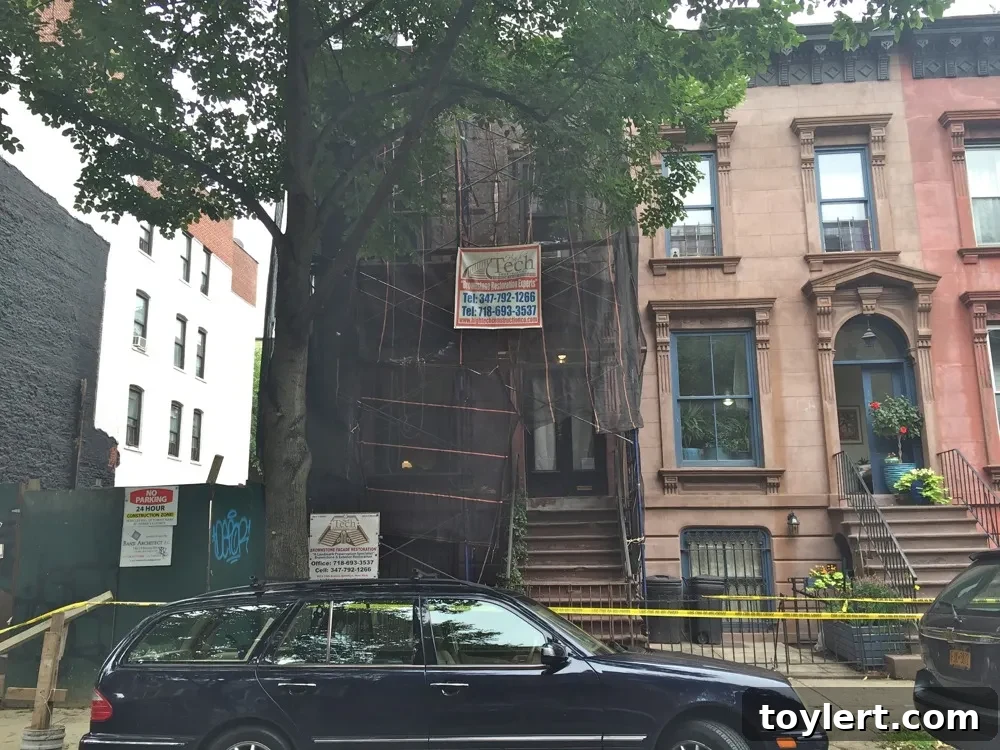
An Unexpected Disaster: The Incident Unfolds at 128 Cambridge Place
The alarm was first raised by vigilant community members, with a commenter providing critical details of the unfolding situation. According to reports, the brownstone located at 128 Cambridge Place experienced a partial facade collapse. Simultaneously, a worker engaged in construction activities on the site tragically fell from scaffolding. While details regarding the worker’s condition are still emerging, the incident underscores the inherent dangers faced by construction personnel daily, particularly in densely populated urban settings with aging infrastructure.
The immediate aftermath saw emergency responders quickly converge on the scene, securing the area and assessing the extent of the damage. Such collapses are not merely structural failures; they represent significant risks to life and limb, not only for those working on site but also for pedestrians and neighboring properties. Investigations into the precise cause of the collapse and the scaffolding failure will undoubtedly be launched by city authorities, including the NYC Department of Buildings (DOB) and potentially the Occupational Safety and Health Administration (OSHA), to determine if safety protocols were adequately followed and if any structural deficiencies contributed to the accident.
A Shadowy Neighbor: Concerns Over the Adjacent Project at 132 Cambridge Place
The incident at 128 Cambridge Place casts a spotlight not only on the immediate property but also on its neighbor, 132 Cambridge Place. The commenter noted a “very slow moving new construction project” at this adjacent address, raising questions about its nature and impact on the block. More strikingly, the commenter expressed confusion and concern regarding the prior demolition of the original structure at 132 Cambridge Place, stating, “132 was a a wood frame with a lot of potential that I don’t even know how they tore down because the block is landmarked.”
This observation introduces a crucial dimension to the narrative: the complexities of development within landmarked districts. The pace and methodology of construction projects, especially those adjacent to ongoing incidents or in historically sensitive areas, often come under intense scrutiny. A “slow-moving” project can indicate various issues, from funding problems and material delays to permit challenges or unforeseen structural complications. The concern about the demolition of a potentially significant structure in a landmarked area points directly to the strict regulations governing alterations or demolitions in such zones, which aim to preserve the architectural integrity and historical character of the neighborhood.
Clinton Hill’s Landmarked Legacy: Balancing Preservation with Progress
Clinton Hill is celebrated for its rich architectural heritage, particularly its stunning collection of 19th-century brownstones and mansions. Its designation as a landmarked district by the NYC Landmarks Preservation Commission (LPC) is a testament to its historical significance. This designation, while crucial for preservation, imposes stringent rules on property owners and developers. Any significant exterior alterations, additions, or demolitions must obtain LPC approval, ensuring that new constructions or renovations are in harmony with the existing historical context.
The commenter’s confusion about the demolition at 132 Cambridge Place underscores a common tension in rapidly developing cities like New York: the delicate balance between progress and preservation. While landmark status protects historic structures, it doesn’t always prevent development. Sometimes, permits for demolition are granted under specific circumstances, such as structural instability, or if the proposed new construction is deemed to enhance the historic character of the district. However, such decisions are typically subject to rigorous review and community input. The perceived discrepancy at 132 Cambridge Place warrants further investigation to understand the specific approvals, if any, that allowed for its demolition and the subsequent construction project.
The Imperative of Construction Safety: Regulations and Oversight
Construction sites in New York City are governed by a complex web of regulations designed to ensure worker safety and public protection. The NYC Department of Buildings (DOB) is the primary agency responsible for overseeing construction and renovation projects, enforcing the city’s building codes, and issuing permits. Projects involving scaffolding, facade work, or demolition require specific permits and adhere to strict safety guidelines, including regular inspections.
Scaffolding, in particular, is a frequent point of concern. OSHA mandates comprehensive safety standards for scaffolding, covering aspects like proper erection, maintenance, load capacity, and fall protection. A worker falling from scaffolding is a grave indicator that these critical safety measures may have been compromised or failed. Likewise, facade integrity is paramount, especially for older brownstones. Regular facade inspections, often mandated by local laws (such as Local Law 11/98 in NYC), are crucial to identify and address potential structural issues before they lead to collapses. This incident at 128 Cambridge Place serves as a stark reminder of the non-negotiable importance of rigorous adherence to these safety protocols, diligent supervision, and robust enforcement by regulatory bodies.
Community Response and the Call for Accountability
Construction accidents inevitably send ripples through local communities. Residents of Clinton Hill, proud of their neighborhood’s character, are likely to express concerns not just about safety but also about transparency and accountability. Incidents like these can foster unease about ongoing construction projects, potential disruption, noise, and the overall pace of change in their beloved area.
The role of community tip-offs, as seen in this instance, is vital. Engaged residents often act as informal watchdogs, reporting anomalies or potential violations to authorities and local news outlets. This community vigilance plays a crucial role in bringing critical issues to light and pressuring developers and city agencies to uphold the highest standards of safety and compliance. The incident at Cambridge Place will undoubtedly lead to calls for more stringent oversight, quicker response to complaints, and greater transparency in the permit and inspection processes for all construction work in historic districts.
Looking Ahead: Investigations, Remedies, and Lessons Learned
The path forward for 128 Cambridge Place will involve extensive investigations by the DOB and potentially other agencies. Stop-work orders are typically issued immediately after such incidents to prevent further accidents and allow for thorough examination. Depending on the findings, the property owner and contractors could face significant fines, legal action, and requirements for structural remediation or complete rebuilding, all while adhering to landmark preservation guidelines.
For the broader community of Clinton Hill, this event serves as a critical case study. It highlights the constant need for vigilance, effective communication between developers and residents, and a steadfast commitment to construction safety and historic preservation. As Brooklyn continues its dynamic evolution, balancing the urgent demands of development with the irreplaceable value of its heritage remains a perpetual challenge. Ensuring that tragedies like the one at Cambridge Place are prevented in the future requires a collective effort from city officials, developers, workers, and community members alike.