Unveiling the Pfizer Mansion: A Masterpiece of Queen Anne Grandeur in Clinton Hill
Nestled within the prestigious Clinton Hill Historic District, the Queen Anne brownstone at 280 Washington Avenue stands as a testament to Brooklyn’s rich architectural heritage and an icon of timeless elegance. Far from being an ordinary residence, this magnificent mansion distinguishes itself with its breathtaking original architecture, a captivating history spanning over a century, and a recent renovation that meticulously blends period charm with contemporary luxury. It’s a property that doesn’t just offer a home; it offers a narrative, an experience, and a unique piece of New York City’s past.
The Enduring Allure of Clinton Hill: A Historic Enclave
Clinton Hill, with its tree-lined streets and majestic brownstones, is one of Brooklyn’s most coveted neighborhoods. Designated a historic district, it boasts a collection of architectural treasures, each telling a story of prosperity and artistic vision from the late 19th and early 20th centuries. The district’s commitment to preserving its architectural integrity ensures that properties like 280 Washington Avenue retain their value and unique character. Living in Clinton Hill means being part of a vibrant community that cherishes its past while embracing modern urban living. The neighborhood offers a serene escape from the city’s hustle, yet provides easy access to cultural institutions, verdant parks, and an array of dining and shopping experiences.
Architectural Splendor: A Glimpse into Queen Anne Elegance
Designed in 1887 by the esteemed architect Marshall J. Morrill, this brownstone is a prime example of the Queen Anne style, a dominant architectural trend of the late Victorian era. The Queen Anne style is renowned for its picturesque asymmetry, dynamic massing, and rich ornamentation, all of which are exquisitely displayed at 280 Washington Avenue. Enthusiasts will immediately recognize hallmarks such as the varied wall textures, often combining brick, terra cotta, and carved stone, intricate spindlework, decorative gables, and projecting bay windows that flood interiors with natural light. The facade itself is a work of art, inviting admiration with its detailed cornices, elaborate window surrounds, and the distinctive reddish-brown hues of its primary building material. This architectural extravagance speaks volumes about the original owner’s status and Morrill’s mastery, ensuring the property stands out even among the grand residences of Clinton Hill.
The “Pfizer Mansion” – A Name Rooted in History, Not Residency
Though popularly known as the “Pfizer Mansion,” an interesting historical nuance reveals that no member of the Pfizer family ever resided within its walls. The moniker stems from its original patron, Charles Erhart, who was one of the co-founders of the pharmaceutical giant, Pfizer. Erhart commissioned Marshall J. Morrill to design this magnificent residence, alongside a neighboring property, as part of a grand residential development in 1887. While Erhart himself may not have called it home, the association with such a prominent industrialist of the era firmly embeds the property in Brooklyn’s industrial and economic history. The fact that one of his daughters subsequently lived here further solidifies its connection to the Pfizer legacy, making the nickname understandable and historically significant, even if slightly inaccurate in terms of direct residency.
A Journey Through Time: The Mansion’s Diverse Occupants
The history of 280 Washington Avenue is as colorful and varied as its architectural details, reflecting the changing social and cultural landscape of Brooklyn. Following its initial period as a private residence for Charles Erhart’s daughter, the mansion embarked on a series of transformations, each adding a unique layer to its storied past. At one point, its grand halls and numerous rooms served the noble purpose of a branch of the Brooklyn Public Library, offering knowledge and community resources to the residents of Clinton Hill. Imagine the quiet rustle of pages, the murmur of scholarly pursuits, and the countless individuals who sought enlightenment within these historic walls. Later, the mansion transitioned into an educational institution, becoming a Catholic girls’ school. This era would have seen the vibrant energy of students, the solemnity of lessons, and the shaping of young minds within an environment steeped in history. From a sanctuary of knowledge to a hub of education, the mansion proved its adaptability and its capacity to serve diverse societal needs. In more recent times, the property found a new life under the ownership of a musician, further adding to its artistic pedigree. The sellers of the property have even recounted how a member of the iconic post-punk band Killing Joke once resided there, lending an edgy, rock-and-roll cachet to its already rich narrative. This eclectic mix of past occupants – from industrial scions and literary patrons to educators and musicians – imbues 280 Washington Avenue with a truly unique spirit, making it a living museum of Brooklyn’s evolution.
The Art of Renovation: Blending Heritage with Modernity
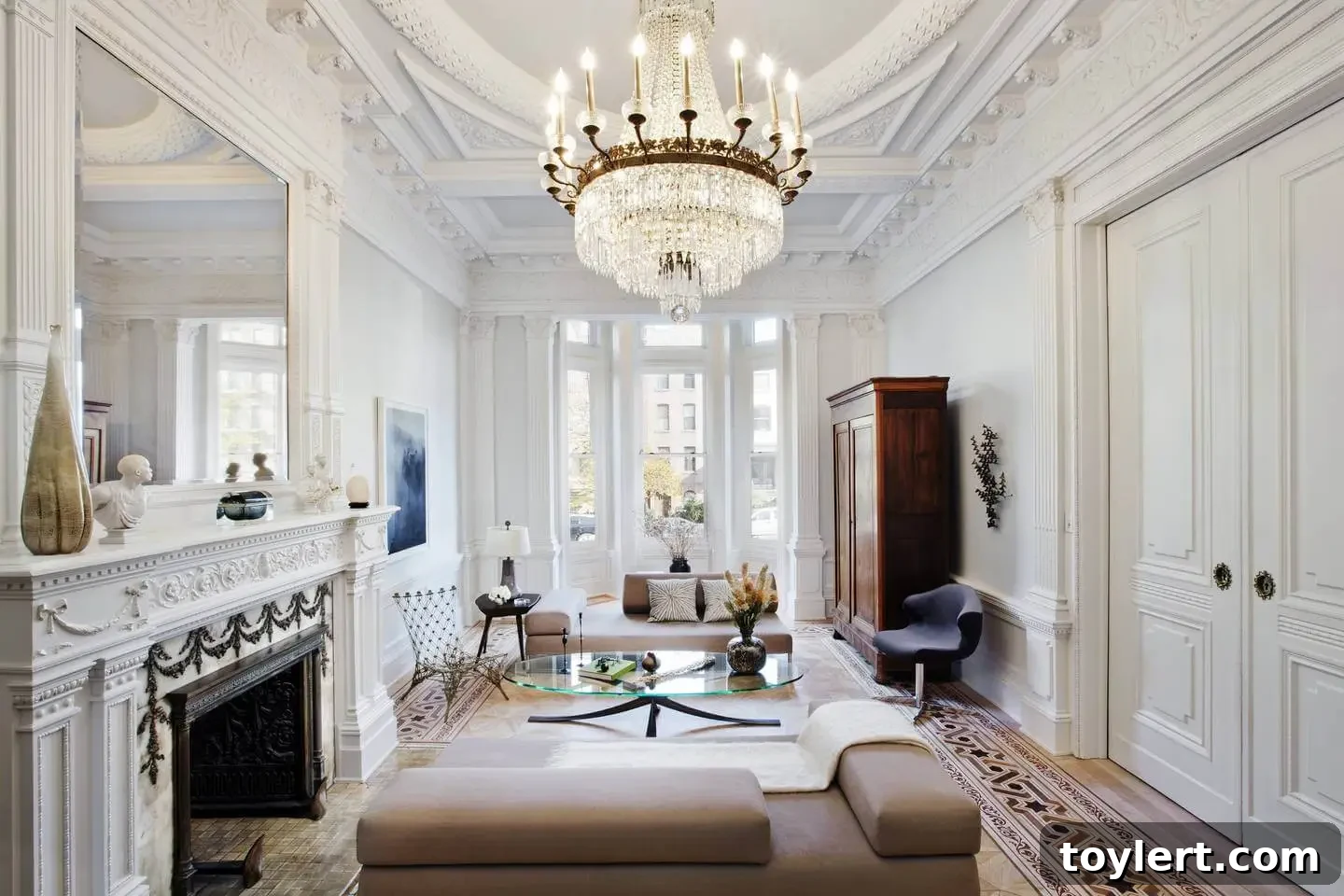
One of the most compelling aspects of 280 Washington Avenue today is its “stunning recent renovation.” In properties of such historic significance, a renovation is not merely an update but a delicate art form, requiring immense respect for the original design while incorporating the comforts and technologies of the 21st century. A truly successful renovation of a Queen Anne brownstone typically involves a meticulous restoration of original architectural details – think intricate woodwork, ornate plaster ceilings, original fireplaces, and preserved stained glass – ensuring that the home’s historic soul remains intact. Simultaneously, modern infrastructure such as plumbing, electrical systems, and HVAC are seamlessly integrated, offering unparalleled comfort and efficiency without compromising aesthetic integrity. High-end finishes in kitchens and bathrooms, often featuring custom cabinetry, premium countertops, and state-of-the-art appliances, transform these spaces into luxurious contemporary havens. This delicate balance of preservation and modernization is what elevates a renovated historic home from merely old to exquisitely timeless. The recent efforts at 280 Washington Avenue promise a living experience that honors its past while providing every conceivable amenity for a discerning owner.
Beyond Bricks and Mortar: A Legacy Awaits
The Queen Anne brownstone at 280 Washington Avenue is more than just a magnificent building; it’s a profound piece of Brooklyn’s living history. Its grandeur, its intricate details, its multi-layered past, and its thoughtful modernization converge to create an unparalleled residential offering. It appeals not only to those seeking a luxury home but also to history enthusiasts, architectural connoisseurs, and anyone who appreciates the unique character that only a truly historic property can provide. In an era where new constructions often lack soul, this mansion stands as a powerful reminder of an age of craftsmanship and enduring beauty. Owning a piece of the “Pfizer Mansion” means becoming a custodian of a legacy, living within walls that have witnessed generations of change, and enjoying the prestige of residing in one of Brooklyn’s most iconic and beautifully preserved homes. It represents a rare opportunity to acquire not just a property, but a story, a style, and a significant slice of New York’s enduring charm.
For those seeking a distinguished residence that marries historical significance with contemporary luxury in one of Brooklyn’s most desirable neighborhoods, 280 Washington Avenue presents an irresistible proposition. Its storied past, remarkable architecture, and meticulous renovation solidify its status as a premier historic home, ready to embark on its next chapter with a new owner.