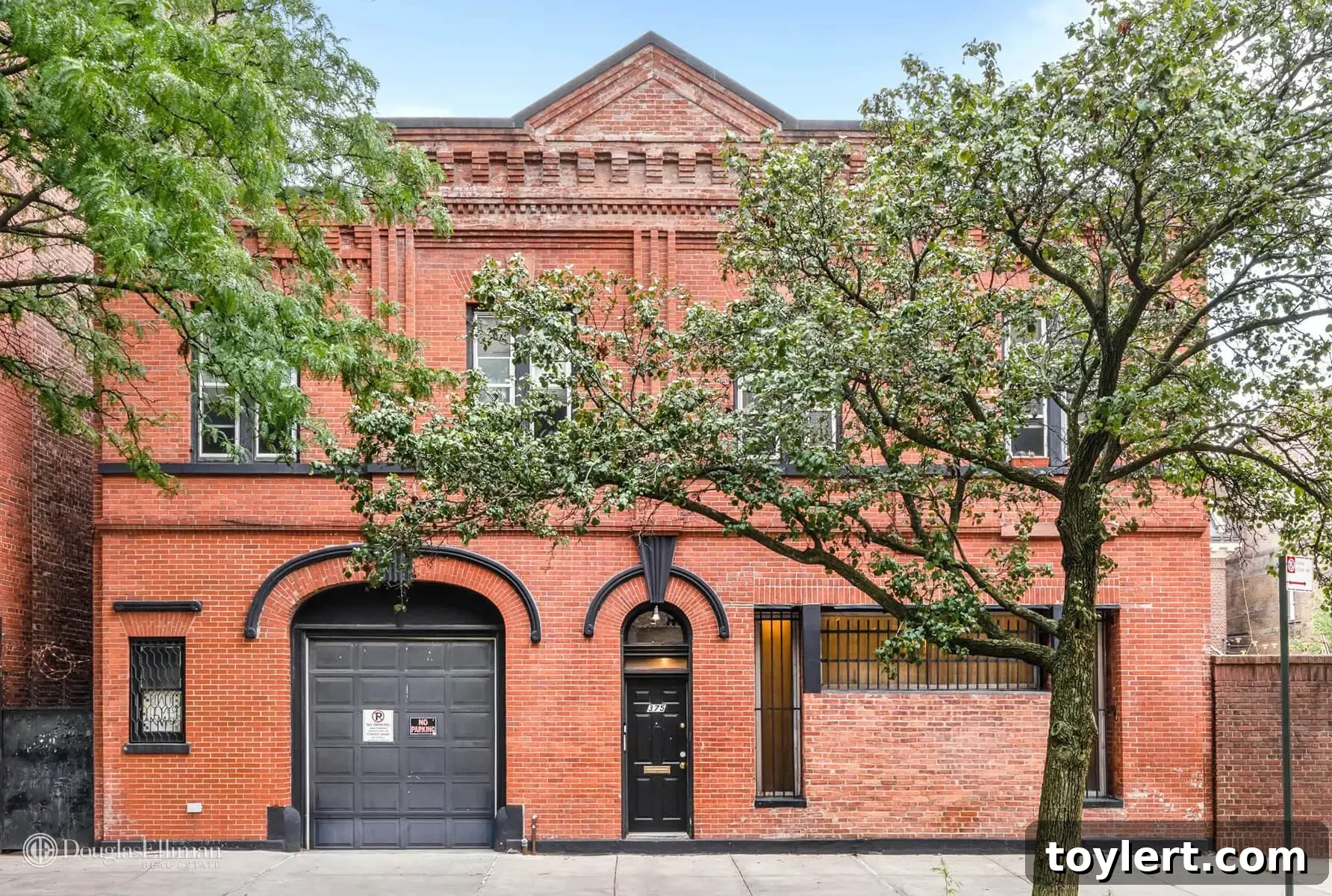
Discover the Grandeur: A Combined Carriage House Sanctuary in Clinton Hill, Brooklyn
For many, the phrase “carriage house living” conjures romantic images of quaint, charming, yet often compact dwellings. However, nestled within the prestigious Clinton Hill Historic District, a truly exceptional property at 375 Vanderbilt Avenue shatters these preconceptions. This isn’t just a carriage house; it’s a magnificent fusion of two distinct carriage houses, meticulously combined into a single, expansive residence that boasts remarkable curb appeal and an unexpected wealth of space.
This unique offering provides a rare opportunity to own a piece of Brooklyn’s rich architectural heritage, reimagined for modern luxury and comfort. It stands as a testament to thoughtful preservation and innovative design, offering an unparalleled living experience that blends historical charm with contemporary functionality.
The Enduring Allure of Carriage House Living
Carriage houses, originally built to shelter horses and carriages alongside the main residences, have evolved into some of the most coveted properties in historic urban centers. Their inherent charm stems from their unique back-alley locations, often providing a sense of privacy and tranquility rarely found in bustling city environments. These structures typically feature distinctive architectural details, robust construction, and an intimate connection to the past. Owners often cherish the secluded courtyards, the thick brick walls, and the character that only a building with a rich history can possess.
The challenge, however, often lies in their original footprint, which can sometimes translate into limited living space. This particular Clinton Hill gem at 375 Vanderbilt Avenue elegantly sidesteps this common constraint. By uniting two adjacent carriage houses, the property achieves a scale and versatility that is truly extraordinary, offering ample room for diverse living arrangements, creative pursuits, and gracious entertaining.
375 Vanderbilt Avenue: A Journey Through Time and Architecture
The story of 375 Vanderbilt Avenue is as captivating as its physical presence. While official designation reports often leave certain details to historical sleuthing, a review of historic maps provides a vivid timeline of this property’s evolution. By 1880, two distinct wood-frame carriage houses, individually addressed as 373 and 375 Vanderbilt Avenue, already occupied these lots. These humble structures served the grand brownstones fronting Clinton Avenue, residences notably designed by architect Robert Dixon and constructed around 1878 in the then-popular Neo-Grec style.
The late 19th century brought significant transformation. By 1898, subsequent maps reveal that these two stables had undergone a substantial metamorphosis, now appearing as robust brick structures. This suggests a likely rebuilding or extensive remodeling, transforming them into their current distinguished Romanesque Revival style. This architectural shift from functional wood-frame structures to enduring brick edifices reflects a period of increased permanence and a desire for more ornate, stylistic details even in auxiliary buildings.
The 20th century marked another pivotal moment: the two separate carriage houses were thoughtfully combined into a single, cohesive dwelling. This integration preserved their individual character while maximizing their collective potential. The facade of the unified structure proudly showcases hallmark elements of Romanesque Revival architecture, including striking keystoned arches above the doorways, a finely detailed corbeled cornice that adds an intricate band below the roofline, and a central pediment crowning the composition, lending a sense of classical formality and grandeur.
Further insights into the property’s journey are gleaned from historical records, such as a circa 1940 tax photo, which clearly depicts the solid brick facade. This image confirms the enduring quality of its construction. In the latter half of the 20th century, adapting to evolving residential needs, one of the original arched door openings was thoughtfully filled in and skillfully converted into functional windows, allowing for increased natural light and a more conventional residential facade, without sacrificing the building’s historic integrity.
Clinton Hill Historic District: A Legacy of Architectural Splendor
The Clinton Hill Historic District, where 375 Vanderbilt Avenue proudly resides, is renowned for its exceptional collection of 19th-century architecture. Established to protect and preserve the unique character of this Brooklyn neighborhood, the district encompasses a magnificent array of brownstones, mansions, and carriage houses, each telling a story of a bygone era. The preservation efforts ensure that the tree-lined streets retain their charm, and the architectural details that define the area are protected for future generations.
Living within a historic district means being part of a vibrant community that values its past while embracing the present. Residents benefit from meticulously maintained streetscapes, a strong sense of community, and the inherent value that comes with owning property in a historically significant area. Clinton Hill itself is celebrated for its lush parks, diverse culinary scene, independent boutiques, and easy access to Manhattan, making it one of Brooklyn’s most desirable neighborhoods. The district’s designation acts as a safeguard, ensuring that the unique aesthetic and historical narrative of places like 375 Vanderbilt Avenue are honored and sustained.
Unlocking Potential: Life at 375 Vanderbilt Avenue
The unparalleled advantage of owning a combined carriage house like 375 Vanderbilt Avenue lies in its expansive footprint and inherent flexibility. This property moves beyond the typical one-dimensional dwelling, offering boundless possibilities for customization and modern living. Imagine generous living areas, multiple bedrooms, and perhaps even dedicated spaces for a home office, an artist’s studio, or a private gym. The sheer scale allows for a spacious primary residence, a multi-generational family home, or even a live/work setup, catering to the diverse needs of today’s urban dwellers.
The thoughtful adaptation of its original structure, such as the conversion of an arched doorway into windows, exemplifies how historic buildings can be sensitively modernized. This blend ensures that while the exterior retains its Romanesque Revival grandeur, the interior can be transformed into a bright, airy, and thoroughly contemporary living space. The robust brick construction provides excellent insulation and soundproofing, contributing to a serene home environment, a precious commodity in New York City.
Investing in Brooklyn’s Enduring Heritage
Owning a property like 375 Vanderbilt Avenue is more than just acquiring a home; it’s an investment in a piece of Brooklyn’s living history. Properties within the Clinton Hill Historic District consistently command strong interest due to their architectural integrity, desirable location, and the prestige associated with historic ownership. The Brooklyn real estate market, particularly in sought-after neighborhoods like Clinton Hill, has demonstrated remarkable resilience and appreciation over the years.
For those seeking a residence that transcends the ordinary, offering both a connection to the past and the comforts of modern living, this combined carriage house presents an exceptional opportunity. Its unique story, impressive scale, and prime location within one of Brooklyn’s most cherished historic districts make it a truly rare find. It promises not just a beautiful home, but a lifestyle steeped in character, privacy, and community. This is a chance to not only own a remarkable piece of real estate but also to become a steward of a significant architectural legacy.
Save this listing on Brownstoner Real Estate to get price, availability and open house updates as they happen >>