Cobble Hill Rises: Community Demands New Vision for Controversial LICH Campus Redevelopment
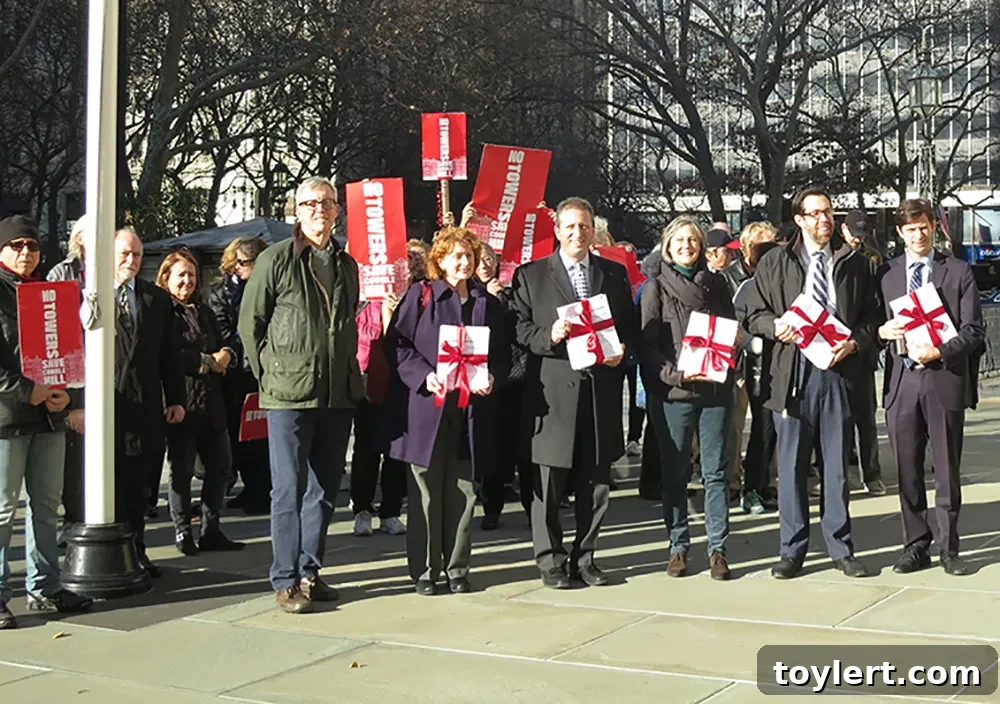
A wave of palpable frustration and unwavering determination swept through City Hall Plaza Wednesday morning as a spirited crowd of Cobble Hill residents converged, united in their urgent plea to Mayor de Blasio. At the heart of their demonstration lay the hotly debated redevelopment of the former Long Island College Hospital (LICH) campus, a project that has ignited widespread community opposition and a sustained campaign for a more equitable outcome. City Council Member Stephen Levin, a staunch advocate for the neighborhood, addressed the passionate assembly, offering words of encouragement that resonated deeply: “You have an association with a long history,” he affirmed, referring to the venerable Cobble Hill Association, “Keep on fighting the good fight.”
This powerful display of community solidarity underscores a critical moment in Brooklyn’s ongoing urban development discourse. The Cobble Hill Association, alongside its extensive network of supporters and concerned citizens, is not merely seeking minor adjustments; they are demanding direct intervention from Mayor de Blasio to facilitate the creation of an entirely new, more thoughtful, and community-responsive plan for the expansive LICH site. Their message is clear: the current trajectory for this pivotal Cobble Hill location is unacceptable, and the Mayor’s office holds the key to unlocking a truly beneficial future for the neighborhood.
The Legacy and Loss: Understanding the LICH Campus
To fully grasp the magnitude of the present controversy, one must first understand the profound historical significance of the Long Island College Hospital. For over 150 years, LICH served as a vital healthcare pillar for Cobble Hill, Carroll Gardens, Red Hook, and wider Brooklyn communities. Its closure, a complex saga involving state health authorities, financial distress, and multiple ownership changes, left an immense void in local healthcare infrastructure. The loss was not just of a hospital, but of an institution deeply woven into the fabric of daily life, providing emergency services, specialty care, and countless jobs.
The sprawling campus, comprising numerous historic buildings and prime waterfront real estate, became a highly coveted asset. After years of legal battles and public outcry, the property was ultimately sold, paving the way for a large-scale residential and mixed-use development. While the community acknowledged the inevitability of redevelopment, the specific plans brought forth have consistently drawn fierce criticism, igniting a sustained “good fight” led by the Cobble Hill Association to ensure the project aligns with the neighborhood’s character and needs.
Unpacking the Controversy: Community Concerns and Project Impacts
The current redevelopment proposal for the former LICH campus has become a lightning rod for community discontent, primarily due to its perceived scale, density, and potential negative impacts on the quality of life in Cobble Hill. Residents express a litany of concerns that they believe have been largely overlooked in the planning process:
- Over-Density and Building Height: The proposed residential towers and structures are seen as excessively tall and dense, overshadowing existing historic brownstones and altering the low-rise character of Cobble Hill. This radical shift in urban fabric is a primary driver of opposition.
- Strained Infrastructure: A massive influx of new residents without corresponding upgrades to local infrastructure is a major worry. This includes concerns about overcrowded schools, inadequate public transportation capacity, and overburdened sanitation services.
- Traffic Congestion: The narrow, residential streets of Cobble Hill are ill-equipped to handle a significant increase in vehicular traffic generated by thousands of new residents. This raises issues of noise, pollution, and pedestrian safety.
- Lack of Adequate Public Space: Critics argue that the plans do not allocate sufficient public parkland or green spaces to accommodate the expanded population, exacerbating an already limited resource in the dense urban environment.
- Historic Preservation: Many buildings on the LICH campus possess architectural and historical significance. The community fears that the redevelopment does not adequately preserve these structures, nor does it integrate new construction sensitively with the neighborhood’s celebrated historic district.
- Diminished Healthcare Access: Despite the site’s history as a hospital, the proposed plans offer little in the way of comprehensive healthcare facilities to replace the services lost with LICH’s closure, leaving a glaring gap in community needs.
- Insufficient Community Input: Residents feel their voices and concerns have been marginalized throughout the planning and approval process, leading to a profound sense of disillusionment and distrust in the system.
These concerns collectively paint a picture of a neighborhood struggling to maintain its cherished character and livability in the face of large-scale development driven by external interests. The Cobble Hill Association emphasizes that responsible urban planning must prioritize the well-being of existing residents and the long-term sustainability of the community.
Key Players in the LICH Redevelopment Battle
The Cobble Hill Association: A Legacy of Advocacy
The Cobble Hill Association (CHA) is not a newcomer to neighborhood advocacy. With a storied history spanning decades, the organization has consistently championed the preservation and enhancement of Cobble Hill’s unique charm and quality of life. From fighting against inappropriate development to advocating for local parks and services, the CHA has established itself as a formidable voice for its residents. In the context of LICH, the CHA has played a pivotal role in organizing community meetings, commissioning independent analyses of development plans, and lobbying elected officials. Their demand for Mayor de Blasio’s intervention stems from a deep conviction that a genuinely better plan is achievable if all stakeholders are willing to engage in good-faith negotiations.
City Council Member Stephen Levin: A Steadfast Ally
Council Member Stephen Levin’s presence and encouraging words at the City Hall protest underscore the political support for the Cobble Hill residents’ cause. Representing the district, Levin understands firsthand the challenges posed by large-scale development in established neighborhoods. His call for residents to “keep on fighting the good fight” is not merely symbolic; it signifies a commitment to leveraging his office to advocate for revised plans that better serve his constituents. Levin’s involvement is crucial, as City Council members often play a significant role in influencing land-use decisions and ensuring community concerns are heard at the municipal level.
Mayor Bill de Blasio: The Deciding Factor?
The residents’ direct appeal to Mayor de Blasio highlights their belief in the power of the Mayor’s office to mediate and ultimately influence the direction of major urban development projects. As the city’s chief executive, the Mayor possesses considerable authority and leverage to bring developers, community groups, and city agencies to the table to hammer out compromises. While the approval processes for large projects can be complex, involving multiple city departments, the Mayor’s direct engagement could provide the necessary political will and impetus to revisit and recalibrate the LICH redevelopment plan. The community hopes that the Mayor will recognize the depth of their concerns and help forge a solution that genuinely reflects community input, rather than purely economic imperatives.
The Path Forward: Envisioning a “New and Better Plan”
The phrase “a new and better plan” encapsulates the community’s aspirations for the former LICH campus. This isn’t just about stopping development; it’s about advocating for thoughtful, context-sensitive urban design that enriches, rather than detracts from, the existing neighborhood. A better plan, from the community’s perspective, would likely involve:
- Reduced Density and Height: Scaling back the overall size and height of new buildings to better integrate with Cobble Hill’s historic streetscape.
- Increased Public Green Space: Dedicating a substantial portion of the campus to accessible parks and open areas for all residents.
- Affordable Housing Integration: Ensuring a meaningful percentage of truly affordable housing units are included, serving a diverse economic stratum.
- Community Facilities: Incorporating public-serving amenities such as a library, senior center, or even a small urgent care clinic to address the healthcare void.
- Historic Preservation: Meticulously preserving and adaptively reusing historically significant structures on the campus.
- Thoughtful Traffic Management: Implementing strategies to mitigate increased traffic and prioritize pedestrian and cyclist safety.
- Genuine Community Engagement: Establishing transparent processes for ongoing dialogue and incorporating community feedback into design revisions.
The demonstration at City Hall serves as a powerful reminder that grassroots activism remains a crucial force in shaping New York City’s urban landscape. The “good fight” championed by Council Member Levin and embodied by the Cobble Hill Association is a testament to the enduring power of community collective action. It’s a call for urban development that balances economic growth with neighborhood integrity, historical preservation, and the quality of life for its residents.
Conclusion: A Fight for Cobble Hill’s Future
As the dust settles from the latest protest, the resolve of Cobble Hill residents remains unshaken. Their message to Mayor de Blasio is an urgent plea for leadership and intervention to redefine the future of the LICH campus. The controversy surrounding this Brooklyn development project underscores a broader tension between rapid urban growth and the preservation of established neighborhood character. The Cobble Hill Association, with the backing of their Council Member, stands ready to continue their advocacy, holding firm to the belief that with the right leadership, a “new and better plan” is not just a hope, but an achievable reality for the vital Cobble Hill community.