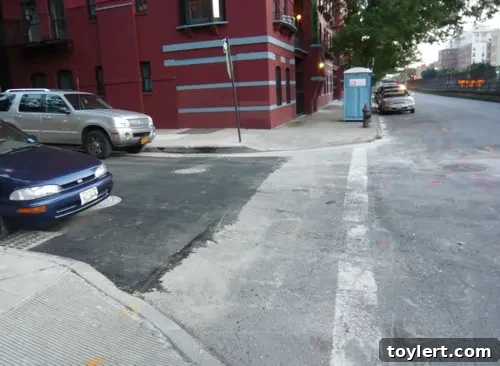
The Swift Resolution of a Cobble Hill Sinkhole: A Testament to Urban Infrastructure Vigilance
The urban landscape, while often appearing as an unyielding expanse of concrete and steel, is a complex web of hidden infrastructure constantly subjected to the relentless forces of nature and the steady march of time. From the bustling streets of Brooklyn, a recent incident in the charming and historic neighborhood of Cobble Hill served as a stark reminder of this delicate balance. A watchful resident, demonstrating commendable civic engagement, brought to our attention a significant sinkhole that had emerged at the critical intersection of Hicks and Warren streets. What could have escalated into a prolonged disruption for the community was, remarkably, addressed with impressive speed and efficiency. We were informed of the ongoing repairs last week, and upon our follow-up visit just days later, the affected area was completely restored, a testament to the rapid response and diligent work of the city’s dedicated maintenance teams. This swift resolution not only restored safety and normalcy to the vibrant Cobble Hill community but also highlights the continuous, often unseen, efforts required to maintain our vital urban infrastructure.
Understanding Urban Sinkholes: Causes and Consequences
Sinkholes are depressions or holes in the ground caused by some form of collapse of the surface layer. While often associated with natural geological processes, such as the gradual dissolution of soluble bedrock like limestone, urban sinkholes frequently have anthropogenic origins. In densely populated areas like New York City, the primary culprits are usually related to aging and compromised subterranean infrastructure. For instance, a broken water main can saturate the underlying soil, washing away fine particles and creating insidious voids. Similarly, leaking sewer lines or stormwater pipes can significantly contribute to sub-surface erosion, further undermining the stability of the ground.
The cumulative effect of heavy traffic vibration, especially from trucks and buses, combined with inadequate or poor drainage systems, further exacerbates these conditions. This continuous stress weakens the ground structure until it can no longer support the surface load, leading to a sudden and dangerous collapse. The consequences of such collapses range from minor traffic disruptions to serious safety hazards for pedestrians and vehicles, potential damage to nearby buildings, and interruptions to essential utility services. Understanding these multifaceted causes is absolutely crucial for effective prevention and rapid intervention strategies to safeguard urban environments.
The Cobble Hill Incident: A Snapshot of Community and Response
The swift emergence and equally swift repair of the sinkhole at Hicks and Warren in Cobble Hill provides an excellent case study of how urban infrastructure challenges are identified and resolved in a dynamic metropolitan setting. The initial tip-off from a concerned resident living in the area underscores the invaluable and often understated role of community vigilance. In a city as vast and complex as Brooklyn, residents frequently act as the eyes and ears on the ground, reporting anomalies that might otherwise go unnoticed for longer periods, potentially leading to more severe outcomes. This prompt notification allowed city agencies to deploy resources with remarkable speed, initiating the necessary assessment and repair work without delay.
The chosen intersection, a busy thoroughfare nestled within a historic and highly pedestrian-friendly neighborhood, would have experienced significant and prolonged traffic disruption, not to mention increased hazards, had the issue lingered. The rapid deployment of repair crews, therefore, meant minimal inconvenience for local businesses, residents, and daily commuters. More importantly, it mitigated potential safety risks for pedestrians and vehicles alike, preventing possible accidents or injuries. The impressive transformation from an active repair site, complete with heavy machinery and safety barriers, to a fully restored and seamlessly integrated street surface within a single week is a testament to well-coordinated efforts and efficient public service.
The Intricate Process of Sinkhole Repair: From Assessment to Restoration
Repairing a sinkhole, particularly one in a bustling urban environment, is a far more intricate and demanding process than simply filling a hole in the ground. It involves a multi-stage operation that prioritizes safety, accurately identifies the root cause of the collapse, and meticulously ensures long-term structural stability. Each step is critical to prevent recurrence and restore the area to its former integrity:
- Initial Assessment and Safety Measures: Upon receiving a report, emergency response crews are immediately dispatched to secure the perimeter with highly visible barricades, warning signs, and traffic cones. This crucial first step prevents accidents and protects the public. Simultaneously, geotechnical engineers and utility experts arrive on site to thoroughly assess the extent of the collapse, meticulously examining the surrounding ground for instability and identifying any immediate threats to adjacent structures or critical utility lines like gas, water, or electricity.
- Thorough Investigation and Precise Excavation: The area directly around and beneath the sinkhole is then carefully excavated. This precise excavation aims to expose the underlying void and, more importantly, to determine the exact cause of the ground failure. This often involves uncovering and identifying compromised or broken water pipes, corroded sewer lines, or collapsed stormwater drainage systems that are actively leaking or have failed structurally. Advanced techniques, such as ground-penetrating radar, might be employed to map subterranean conditions and identify hidden weaknesses before further excavation.
- Root Cause Remediation: Addressing the underlying issue is paramount for a lasting repair. If the investigation reveals a broken or corroded pipe, it must be promptly repaired, replaced, or reinforced. If extensive soil erosion is identified as the primary factor, specialized measures are implemented to stabilize the soil, which can include injecting grout into the affected areas or employing advanced compaction techniques to increase soil density and load-bearing capacity.
- Systematic Backfilling and Compaction: Once the root cause has been thoroughly fixed and the subsurface stabilized, the excavated void is systematically backfilled. This process uses suitable granular material, such as sand or gravel, which is added layer by layer. Each successive layer is then meticulously compacted using heavy machinery to achieve optimal density and prevent any future settlement or subsidence. This step is absolutely critical to ensure the longevity, stability, and structural integrity of the entire repair.
- Surface Restoration: Finally, after the subsurface work is complete and verified, the excavated area is precisely repaved. This involves laying down new asphalt or concrete, matching the existing roadway and ensuring a smooth, durable, and aesthetically pleasing finish. The rapid and efficient execution of all these stages in Cobble Hill highlights a well-coordinated effort between various city departments and expert contractors.
Beyond the Patch: The Broader Context of Urban Infrastructure
The Cobble Hill sinkhole incident, while resolved efficiently, serves as a significant microcosm of the larger, pervasive challenges facing urban infrastructure nationwide and indeed globally. Cities like Brooklyn rely on vast, intricate, and often unseen networks of pipes, conduits, cables, and roadways, many of which are several decades, if not a century, old. These essential systems are constantly under immense stress from increasing population density, ever-heavier traffic loads, fluctuating environmental conditions, and the relentless march of time, which inevitably leads to material degradation.
Proactive maintenance, continuous monitoring, and strategic, long-term infrastructure upgrades are not merely desirable; they are absolutely essential for ensuring public safety, fostering economic stability, and enhancing the overall quality of life for urban residents. Deferred maintenance, often due to budget constraints or lack of foresight, can lead to more frequent, more severe, and more extensive incidents like sinkholes, incurring significantly higher emergency repair costs and causing greater, more prolonged disruption. The quick fix in Cobble Hill, while commendable as an immediate response, must therefore be viewed within the broader context of a continuous, systemic commitment to safeguarding, modernizing, and fortifying our city’s foundational systems for future generations.
Preventing Future Sinkholes: A Collective Responsibility
While a rapid and effective response to an emergent sinkhole is undeniably vital, prevention remains the ultimate and most cost-effective goal. Municipalities globally are increasingly investing in and adopting advanced technologies for comprehensive infrastructure monitoring. This includes innovative solutions such as drone inspections for elevated structures, sophisticated fiber optic sensing embedded within pipes for real-time leak detection, and advanced data analytics that can predict potential failure points long before they manifest as visible problems. Regular, scheduled inspections of critical infrastructure like water mains, sewer lines, and storm drains are paramount to identify and address weaknesses proactively.
Furthermore, the critical role of community involvement, so effectively demonstrated by the vigilant Cobble Hill resident, cannot be overstated. Citizens are encouraged to act as active partners in urban maintenance by promptly reporting any suspicious signs or anomalies. These can include seemingly minor indicators such as cracks in the pavement that widen rapidly, depressed or sunken areas in roads or sidewalks, unusual or unexplained puddles that do not dissipate, or even the sound of running water where there should be none. By combining cutting-edge technological advancements with vigilant and engaged public participation, cities can work collaboratively towards creating a more resilient, safer, and sustainable urban environment for everyone, ensuring that incidents like the one in Cobble Hill become increasingly rare.
Conclusion: A Model for Urban Resilience
The swift and successful repair of the sinkhole at the intersection of Hicks and Warren in Cobble Hill stands as a prime example of effective urban management, coupled with invaluable community engagement. What began as a potential hazard to public safety and daily life was transformed into a powerful testament to operational efficiency and the critical importance of a well-maintained urban infrastructure. This incident underscores that while infrastructure challenges are an inevitable aspect of living in a dynamic city, proactive monitoring, rapid and coordinated response, and an actively engaged citizenry are the most powerful tools at our disposal for preserving the safety, functionality, and overall integrity of our urban environments. It represents a continuous, collaborative effort, but one that is absolutely essential to ensure that our streets remain safe, our vital utilities flow uninterrupted, and our cherished communities continue to thrive for years to come.