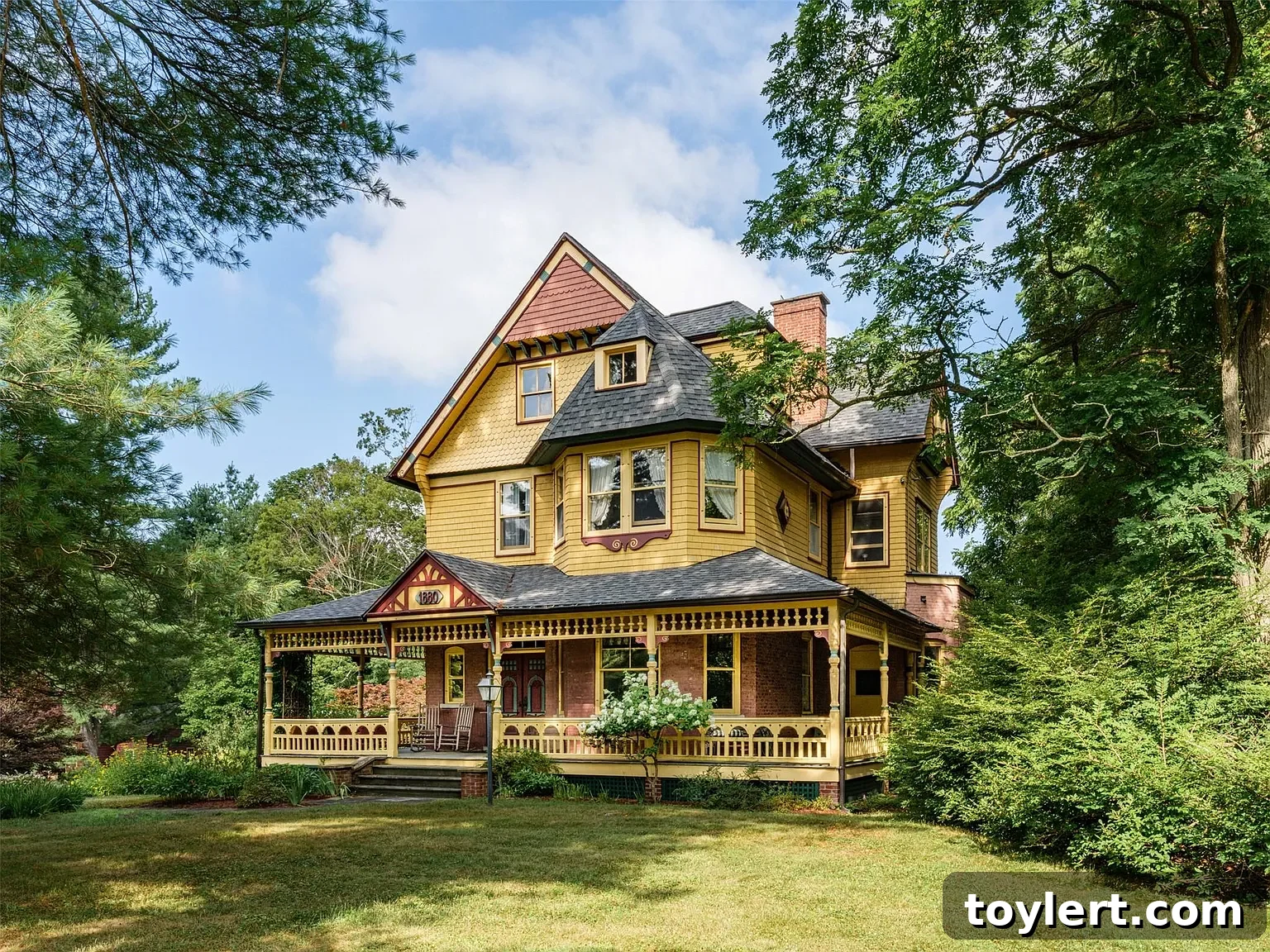
Discover Knollcroft: A Historic Queen Anne Estate in New Concord, East Chatham
Nestled amidst nearly 20 acres of pristine Columbia County landscape, Knollcroft stands as a magnificent testament to Queen Anne architectural elegance and timeless allure. This captivating country home, dating back to the 1880s, exudes a sunny and picturesque charm, its exterior a vibrant canvas of ornamental details painted in cheerful hues. Beyond its enchanting facade, the interior unfolds into a rich tapestry of period features, offering a unique blend of historic grandeur and tranquil living.
Currently gracing the market, this distinguished property, affectionately known as Knollcroft, is situated at 2659 County Route 9 in New Concord, a historic hamlet that forms part of the scenic East Chatham area. The sprawling 20-acre estate is a treasure trove of amenities, encompassing not only the meticulously restored Queen Anne residence but also a functional pump house, a versatile carriage house, and a serene, expansive pond, each contributing to the estate’s idyllic charm and practical functionality.
A Glimpse into History: The Roots of Knollcroft
Knollcroft holds a significant place within the New Concord National Register Historic District, a recognition that underscores its historical and architectural importance. Prior to its inclusion in the district, the house earned individual listing in the National Register in 1985, a testament to its singular heritage. Archival records, particularly the original nomination report, identify George Chesterman as the initial owner and traditionally date the house to 1880. Interestingly, the report also chronicles the existence of an earlier home on the site, distinguished by a mansard roof, which was tragically lost to fire before the current magnificent structure rose from its ashes.
However, the advent of digitized records and historical newspapers has allowed for a more precise historical excavation. Modern research suggests that the 1880 construction date might be off by a few years, and the credit for the construction of the present-day Queen Anne marvel more accurately belongs to the subsequent generation of owners. This discovery not only adds a layer of intrigue to Knollcroft’s narrative but also highlights the ongoing evolution of historical understanding, continually refined by accessible digital archives. The detailed history of Knollcroft, from its fiery beginnings to its current stately presence, invites residents and visitors alike to step back in time and appreciate the enduring legacy of this remarkable estate.
Architectural Grandeur: The Queen Anne Legacy
The Queen Anne style, prevalent in American architecture from roughly 1880 to 1910, is celebrated for its distinctive asymmetry, varied textures, and intricate ornamentation, all of which are beautifully exemplified at Knollcroft. This architectural movement moved away from the more rigid styles that preceded it, embracing a playful and picturesque aesthetic that captivated the late Victorian imagination. At Knollcroft, one can observe the characteristic hallmarks of the style: a complex roofline often featuring turrets or towers, bay windows that flood interiors with natural light, and ornate decorative elements such such as spindlework, fish-scale shingles, and elaborate trim that adorn the exterior. The “cheerful paint job” mentioned in its description hints at the vibrant color palettes often employed in Queen Anne homes, designed to accentuate their varied forms and textures.
Beyond its visual appeal, the Queen Anne style was also about creating homes that were grand yet inviting, blending sophisticated design with comfortable living spaces. Knollcroft’s exterior promises a journey into an era of craftsmanship and artistic expression. The house’s orientation on the property, designed to maximize sunlight, further enhances its “sunny and picturesque” qualities, ensuring that the elaborate details are always beautifully illuminated. This architectural masterpiece is not just a dwelling; it is a piece of living history, meticulously preserved and ready to continue its story with new custodians.
The Expansive Estate: Twenty Acres of Serenity and Opportunity
The almost 20 acres that cradle Knollcroft represent a significant asset, offering unparalleled privacy, natural beauty, and a canvas for diverse outdoor pursuits. This extensive acreage is far more than just open land; it is a meticulously managed landscape that enhances the historic home and provides a rich environment for country living. Imagine waking to the sounds of nature, with vast lawns, mature trees, and perhaps even established gardens contributing to a sense of tranquil retreat. The sheer size of the property allows for a buffer from the outside world, creating a secluded oasis perfect for relaxation or entertaining on a grand scale.
Key among the estate’s ancillary features are the restored pump house and a substantial carriage house. The pump house, while serving a functional purpose, often reflects the architectural style of the main residence, adding to the cohesive charm of the property. The carriage house, a relic from an era when horse-drawn transport was paramount, offers immense potential. It could be reimagined as a guest cottage, a spacious artist’s studio, a dedicated workshop, or even an equestrian facility, subject to necessary conversions and permissions. Its robust structure and historic character provide an ideal foundation for such transformations. Furthermore, the large, shimmering pond on the property is not merely an aesthetic enhancement; it can provide opportunities for fishing, boating, or simply enjoying the tranquil reflections of the surrounding landscape, adding immeasurable value to the outdoor experience at Knollcroft.
A Prime Location: New Concord and Columbia County Appeal
Knollcroft’s address at 2659 County Route 9 places it squarely within New Concord, a historic hamlet renowned for its charm and quiet beauty, part of the broader East Chatham community. This location offers the best of rural living while remaining accessible to vibrant cultural hubs and essential amenities. New Concord itself is a picturesque enclave, characterized by its well-preserved historic homes and a strong sense of community. Residents can enjoy the peace and quiet of country life, with ample opportunities for hiking, biking, and exploring the natural wonders of the surrounding area.
Beyond the immediate hamlet, Knollcroft benefits from its situation in Columbia County, Upstate New York, an increasingly sought-after region known for its stunning natural landscapes, rich artistic scene, and burgeoning farm-to-table culinary movement. Columbia County boasts a captivating mix of rolling hills, scenic farmlands, charming small towns like Hudson, Kinderhook, and Chatham, and access to the majestic Hudson River. It’s a region that appeals to those seeking a slower pace of life without sacrificing access to sophisticated cultural offerings. Art galleries, antique shops, organic farms, and exquisite dining experiences are all within easy reach. Furthermore, its proximity to major metropolitan areas like New York City and Albany makes Knollcroft an ideal escape for weekenders or a convenient full-time residence for those who appreciate both rural tranquility and urban accessibility. The confluence of history, natural beauty, and a vibrant community truly sets this location apart.
Interior Elegance: A Canvas of Period Details
While the initial description tantalizingly mentions a “surfeit of period details” within Knollcroft’s interior, one can readily imagine the grandeur and intricate craftsmanship that define a Queen Anne home of this caliber. Step inside, and you are likely to be greeted by a grand staircase, often a focal point of the entryway, adorned with ornate newel posts and balustrades. High ceilings create an expansive feel, while original hardwood floors, possibly inlaid with intricate patterns, extend through formal parlors, dining rooms, and libraries. Elaborate crown moldings, wainscoting, and decorative fireplace mantels would be commonplace, each telling a story of the era’s skilled artisans.
The layout typically features distinct, well-proportioned rooms, allowing for both intimate family gatherings and sophisticated entertaining. Bay windows, a hallmark of the Queen Anne exterior, project inward, creating cozy nooks bathed in natural light, perfect for reading or quiet contemplation. Pocket doors might separate formal living areas, offering flexibility in floor plan and preserving privacy when desired. Despite its historical roots, a home like Knollcroft would undoubtedly have been sensitively updated over the years to incorporate modern comforts – efficient heating and cooling systems, contemporary plumbing, and updated electricals – all integrated seamlessly to maintain the historical integrity while ensuring a comfortable, luxurious living experience for its inhabitants.
A Unique Opportunity: Embrace History and Luxury
Knollcroft presents a truly unique opportunity for discerning buyers to own a significant piece of American architectural history. It is more than just a house; it is a meticulously preserved estate offering a lifestyle defined by elegance, tranquility, and a deep connection to the past. The combination of its impressive Queen Anne architecture, its historical significance within the National Register, and its expansive 20-acre grounds creates an unparalleled offering in the Columbia County real estate market.
Whether envisioned as a magnificent primary residence, a luxurious weekend retreat from the city, or a distinctive venue for special occasions, Knollcroft is poised to fulfill a multitude of aspirations. Its established historical context, coupled with the potential for further personalization and enjoyment of its extensive grounds and ancillary buildings, makes it an investment not just in property, but in a rich legacy. This is an invitation to become part of Knollcroft’s ongoing story, to steward its beauty and charm for future generations, and to experience the very best of historic country living in one of Upstate New York’s most captivating regions.