Dumbo’s Waterfront Future: Brooklyn Bridge Park Secures Key Con Edison Parcel for $9.2 Million
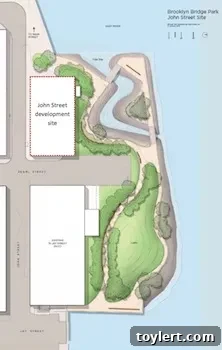
A significant real estate transaction is poised to dramatically transform a coveted section of the Dumbo waterfront, as Brooklyn Bridge Park successfully acquires a vital 3.4-acre parcel from Con Edison. This landmark deal, valued at $9.2 million, marks a pivotal moment for urban development and public space enhancement in one of New York City’s most dynamic neighborhoods. The land, which has been under Con Ed’s ownership since the 1950s—initially purchased for a modest $250,000—is now slated for a dual purpose: a significant expansion of the acclaimed Brooklyn Bridge Park and the strategic development of a residential complex. This innovative approach aims to leverage private investment to fund public parkland, setting a compelling precedent for sustainable urban growth in waterfront communities.
Strategic Land Acquisition: Bridging Dumbo’s Past and Future
The 3.4-acre site, strategically positioned between John Street and the East River, represents a crucial piece in the ongoing revitalization of Brooklyn’s iconic waterfront. For decades, this parcel primarily served its utility function under Con Edison’s stewardship. However, as Dumbo evolved from a gritty industrial hub into a celebrated nexus of art, technology, luxury living, and breathtaking views of the Manhattan skyline, the potential for public use and enhanced community amenities on this land became increasingly clear. The substantial $9.2 million sale price reflects the astronomical appreciation of Dumbo real estate over the past half-century, underscoring the neighborhood’s exponential growth and desirability as a prime Brooklyn property investment. This transaction is a testament to the forward-thinking vision of Brooklyn Bridge Park, an organization continuously dedicated to expanding and improving accessible green spaces for millions of New York City residents and visitors.
The decision by Con Edison to divest this valuable asset, and Brooklyn Bridge Park’s strategic commitment to acquire it, exemplifies a shared understanding of urban progress and community benefit. While Con Ed’s original purchase price was a mere fraction of the current valuation, the present sale ensures that a substantial portion of this prime waterfront property will now serve the greater public good. The financing mechanism underpinning this ambitious acquisition is particularly noteworthy and innovative. A carefully designated, smaller portion of the 3.4-acre site will be leased for residential development. The revenues generated from this private sector leasing arrangement are specifically earmarked to directly offset the $9.2 million purchase cost. This creative funding model is instrumental, allowing for significant park expansion without placing undue strain on public funds, thereby showcasing a pragmatic approach to large-scale urban planning and development.
Brooklyn Bridge Park’s Expanding Vision: Iconic Views and Green Havens
The integration of the Con Edison parcel is a monumental stride forward for Brooklyn Bridge Park, an initiative that has already successfully transformed miles of formerly industrial waterfront into a world-class recreational and cultural destination. The park’s master plan for this new section is both ambitious and thoughtfully designed, promising to deliver extraordinary public amenities and enhance the quality of life for the surrounding community. Central to this new development is a planned 13,000-square-foot lawn, envisioned as a vibrant, verdant oasis for relaxation, active recreation, and community gatherings. This expansive lawn is meticulously planned to offer unparalleled, breathtaking views of the majestic Manhattan Bridge and the iconic New York City skyline, further cementing Brooklyn Bridge Park’s reputation for providing some of the most spectacular vistas in the entire city.
Beyond the central lawn, the expansion will be seamlessly integrated with the existing park infrastructure, enhancing pedestrian access along the East River and creating new opportunities for direct waterfront engagement. The inclusion of public art installations, comfortable seating areas, and accessible pathways will further enrich the visitor experience, inviting both local Dumbo residents and tourists from around the globe to explore and enjoy this newly revitalized stretch of waterfront. The unwavering commitment to creating diverse recreational spaces—from passive enjoyment on the lush lawn to active exploration along the water’s edge—is a defining characteristic of Brooklyn Bridge Park’s design philosophy. This significant addition reinforces the park’s vital role as an urban sanctuary, actively promoting health, well-being, and a deeper connection to the natural environment within the heart of a bustling metropolis.
Innovative Financing: Residential Development Fuels Public Park Growth
A distinctive and strategically important aspect of this Dumbo land deal is its innovative financing model, which skillfully leverages private residential development to fund significant public infrastructure and green space expansion. The master plan for the site carefully allocates a small, precisely delimited portion of the 3.4-acre parcel for the construction of a new residential complex. The financial revenues derived from leasing this land to a selected developer will directly contribute towards the substantial $9.2 million purchase price, effectively positioning the residential component as a crucial financial engine for the park’s expansion. This strategic approach significantly minimizes reliance on traditional taxpayer funds and establishes a viable blueprint for funding large-scale public projects in dense urban environments across the nation.
In the period preceding this announcement, Brooklyn Bridge Park proactively issued a Request for Proposals (RFP) to potential developers expressing interest in undertaking the residential project. This crucial step initiated a competitive and rigorous process to select a partner who could best align with the park’s overarching vision for high-quality, architecturally sensitive design that seamlessly complements both the historic Dumbo neighborhood and the natural beauty of the park itself. The selection criteria for this partnership will undoubtedly emphasize not only robust financial proposals but also a commitment to architectural excellence, environmental sustainability, and thoughtful integration with the public realm. Such public-private partnerships are increasingly recognized as essential tools in major urban centers, offering pragmatic solutions to the complex challenges of funding ambitious civic projects while ensuring thoughtful, community-benefiting development that respects and enhances the existing urban fabric. The careful balance between residential density and expansive public parkland is paramount for the long-term success and broad community acceptance of such a transformative endeavor.
Addressing Modern Urban Challenges: Resilience, Planning, and Community Engagement
While the prospects of expanded green space and new residential opportunities on the Dumbo waterfront are undeniably exciting, the development plan for this prime parcel also brings forth important considerations, particularly concerning environmental resilience and flood mitigation. Local residents and community advocacy groups have actively voiced concerns about the potential for future flooding in the area. This is a vital issue for any waterfront development in New York City, especially in the wake of increasingly frequent and intense weather events, such as hurricanes that have historically impacted coastal regions. These concerns underscore the critical need for thoughtful, resilient urban planning that proactively anticipates, prepares for, and effectively mitigates environmental risks.
Developers and urban planners working on projects situated in vulnerable coastal zones like Dumbo must integrate advanced flood mitigation strategies into their designs. This includes elevating critical infrastructure, utilizing permeable surfaces to manage stormwater runoff efficiently, and incorporating natural buffers where feasible. The ongoing dialogue surrounding these flood concerns highlights the paramount importance of transparent and continuous community engagement throughout all phases of planning, design, and construction. Addressing these issues proactively and embedding robust sustainability and resilience measures will be absolutely critical to ensuring the long-term viability, safety, and enduring success of both the new residential complex and the expanded Brooklyn Bridge Park. Future designs will undoubtedly incorporate and build upon lessons learned from past environmental challenges, striving to create a resilient, adaptable, and safe waterfront for generations to come.
Con Edison’s Profit Sharing: A Customer-Centric Approach to Asset Sales
Beyond its immediate impact on the Dumbo neighborhood and Brooklyn Bridge Park, the sale of this valuable 3.4-acre parcel carries broader financial implications, particularly for Con Edison and its vast customer base across New York. In a move reflecting corporate responsibility, Con Ed has committed to sharing approximately half of its significant gains from the $9.2 million sale with its customers, retaining the remainder for its corporate operations, necessary infrastructure investments, and overall financial stability. This decision highlights a public utility’s inherent responsibility to its ratepayers and is widely seen as a significant gesture of goodwill and a commitment to shared value.
According to detailed insights reported by The New York Times, when the shared amount is distributed proportionally among Con Ed’s impressive 3.2 million customers, the benefit breaks down to approximately $1.40 for each individual customer. While this per-customer refund might appear modest in isolation, the principle of sharing such a substantial profit generated from an asset sale is profoundly significant. It illustrates a potential model for how large utility companies can manage and divest surplus or non-essential assets, effectively balancing corporate financial interests with a tangible benefit for the broader public. This financial dividend underscores the multifaceted nature of urban land transactions, where the positive ripple effects and benefits can extend far beyond direct stakeholders to a much wider community, fostering greater trust and goodwill. It also reflects a broader trend towards increased accountability, transparency, and a focus on public good for large corporations operating within the public trust.
Dumbo: A Beacon of Urban Transformation and Desirable Living
The neighborhood of Dumbo, an acronym for “Down Under the Manhattan Bridge Overpass,” has undergone one of New York City’s most extraordinary urban transformations. What was once a gritty industrial and manufacturing hub has gracefully evolved into a highly coveted residential enclave, a vibrant cluster of tech and creative industries, and a significant cultural destination drawing visitors from across the globe. Its distinctive cobblestone streets, elegantly converted warehouse lofts, and unparalleled views of both the majestic Manhattan and historic Brooklyn bridges define its unique and magnetic character. The demand for Dumbo real estate, particularly prime waterfront properties, continues to soar, fueled by its exceptional quality of life, immediate proximity to Manhattan, and the undeniable allure of Brooklyn’s dynamic cultural scene.
The thoughtful integration of the Con Edison parcel into Brooklyn Bridge Park, alongside the meticulously planned new residential development, is a direct continuation of this compelling narrative of transformation and growth. It adds another sophisticated layer to Dumbo’s already considerable appeal, enhancing its green infrastructure while carefully expanding its residential capacity. This latest development ensures that Dumbo remains at the forefront of sustainable urban growth, masterfully balancing historical preservation with modern amenities, expansive public access, and a commitment to environmental stewardship. The value created by this land deal is not merely monetary but also reflects the intrinsic worth of accessible open space and vital community assets in a rapidly developing and increasingly dense global city.
Conclusion: A Blueprint for Sustainable and Integrated Urban Growth
The $9.2 million acquisition of Con Edison’s 3.4-acre Dumbo parcel by Brooklyn Bridge Park represents far more than a simple land transaction; it is a meticulously crafted blueprint for sustainable, integrated urban growth. This visionary deal masterfully combines the vital expansion of public parkland with carefully targeted residential development, employing an innovative financing model that sets a compelling precedent for future civic projects across urban landscapes. It promises to deliver a magnificent new 13,000-square-foot lawn offering stunning, unobstructed views, thereby enriching the lives of the millions who visit, recreate, and reside in the vibrant Dumbo neighborhood.
While proactively addressing important community concerns about environmental resilience and future preparedness, this project exemplifies thoughtful urban planning that achieves a delicate balance between economic vitality, ecological responsibility, and social equity. It powerfully highlights the strategic importance of waterfront development and the transformative power of public-private partnerships in creating vibrant, resilient, and universally accessible urban spaces. As Dumbo continues its remarkable journey as a beacon of urban transformation and desirable living, this latest acquisition ensures that its future remains bright, green, and intimately connected to the majestic East River and its iconic bridges, serving as a model for cities worldwide.
Don’t Own It? Still Make Money on Land Sale Near Brooklyn Bridge [NY Times]
Image via Brooklyn Bridge Park