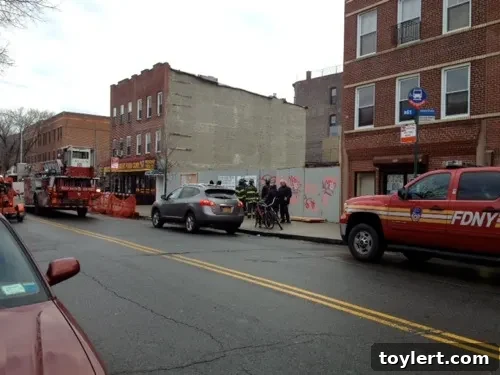
Devastating Flood Strikes Columbia Street: Construction Accident Causes Widespread Damage
A recent construction incident on Columbia Street has led to significant flooding, displacing residents and disrupting local businesses. The calamity, attributed to a damaged water main at the site of the former Sokol Brothers Building at 255 Columbia Street, underscores critical concerns regarding construction site safety and oversight in urban development.
The incident unfolded swiftly, plunging several properties into disarray. According to reports from the community, construction activities at the site inadvertently compromised a vital water main, unleashing a torrent of water that quickly inundated surrounding buildings. This unfortunate event has brought immediate and severe consequences for those living and working in the affected area, raising questions about accountability and preventive measures in future projects.
The Immediate Aftermath: Water Rushes Through Properties
Yesterday afternoon, the serene atmosphere of Columbia Street was shattered by the unexpected disaster. As construction work progressed at the 255 Columbia Street location, an error, likely involving heavy machinery or excavation, led to the rupture of a crucial water main. The ensuing gush of water rapidly spread, affecting multiple adjacent properties and causing extensive damage.
Our sources indicate that the impact was widespread. Cellars at 249 and 257 Columbia Street were submerged, as officially noted in a subsequent stop-work order. Furthermore, information from a local tipster revealed that 259 Columbia Street was also heavily affected. The severity of the flooding was such that “two apartment buildings are uninhabitable right now – we’re not allowed in – and the grocery store is out of commission for time being.” This paints a grim picture of immediate displacement and economic loss for the affected community members.
For residents, the sudden flood means a loss of their homes, personal belongings, and a sense of security. The unexpected need to relocate creates immense stress and logistical challenges. For the grocery store, being “out of commission” translates directly into lost revenue, potential spoilage of inventory, and an uncertain future for its employees and customers who rely on its services. Such incidents disrupt the very fabric of local commerce and community life.
Official Intervention: Stop Work Order Issued
In response to the severe nature of the incident, the building department promptly intervened. A stop work order was issued for the construction site at 255 Columbia Street. The official documentation explicitly states that construction on the site “caused a water pipe to burst, flooding neighboring properties, entire block.” This order serves as a critical regulatory tool, halting all activities until the underlying issues are resolved and safety protocols can be assured.
A stop-work order is not merely a formality; it is a serious directive that indicates a breach of safety or permitting regulations. In this instance, it highlights a direct link between the construction activity and the widespread damage incurred by neighboring properties. The issuance of such an order places the onus squarely on the developer and contractors to assess the damage, implement corrective measures, and demonstrate compliance before any further work can resume. This process can be lengthy and costly, impacting project timelines and budgets.
A Troubling Pattern: Previous Violations at the Site
Compounding the concerns surrounding this recent flood is the fact that this is not the first time the construction site at the former Sokol Brothers Building has run afoul of regulatory standards. A stop work order was previously issued back in June of the previous year. That particular order was enforced because the developer lacked a full demolition permit, a fundamental requirement for undertaking such extensive structural work.
This history of non-compliance raises serious questions about the project’s planning, oversight, and adherence to safety and permitting regulations. Repeated violations suggest a systemic issue, perhaps a lack of due diligence or an aggressive approach to development that prioritizes speed over safety and compliance. For the community, this pattern erodes trust and heightens anxiety about the potential for future incidents as development continues.
Understanding Construction Site Risks and Water Main Integrity
Water mains are vital components of urban infrastructure, responsible for delivering fresh water to homes and businesses. They are typically buried deep underground and are designed to withstand significant pressure and environmental stress. However, they are vulnerable to damage from external forces, particularly during excavation and heavy construction work.
Common causes of water main breaks during construction include:
- Excavation Errors: Accidental strikes by excavators or digging equipment.
- Heavy Machinery Vibration: Ground vibrations from heavy machinery can weaken older pipes or fittings.
- Insufficient Utility Locating: Failure to accurately identify and map underground utility lines before digging begins.
- Inadequate Shoring: Lack of proper support for trenches, leading to ground instability and stress on pipes.
Preventative measures, such as thorough utility mapping, careful excavation techniques, and regular inspections, are paramount to avoiding such costly and disruptive incidents. Developers and contractors are legally and ethically obligated to ensure these precautions are meticulously followed to safeguard both infrastructure and public safety.
The Far-Reaching Costs of Negligence
The financial and social ramifications of an incident like the Columbia Street flood extend far beyond the immediate damage. Property owners face substantial repair costs for water remediation, structural drying, and replacement of damaged property. Many will have to navigate complex insurance claims, which can be a slow and frustrating process. For businesses, the loss of operating time translates directly into lost income, potentially jeopardizing their long-term viability.
Beyond individual losses, there are broader community costs. The city may incur expenses related to emergency response, infrastructure repairs, and potential legal disputes. The developer responsible for the site could face significant fines, penalties, and even lawsuits from affected property owners seeking compensation for damages and displacement. Such incidents not only tarnish a developer’s reputation but also foster an environment of skepticism and opposition towards future development projects in the community.
Rebuilding and Recovery: A Community’s Path Forward
The path to recovery for the Columbia Street community will be challenging, requiring coordinated efforts from residents, businesses, local authorities, and the responsible parties. For those displaced, finding temporary housing and managing the logistics of repairs will be a primary concern. The grocery store and other affected businesses will need support to reopen, potentially requiring financial aid or expedited permitting for necessary repairs.
Moving forward, enhanced oversight and stricter enforcement of construction regulations will be crucial to prevent similar incidents. This includes more rigorous checks of permits, site safety plans, and adherence to best practices for working near critical infrastructure. Community engagement, allowing residents to voice concerns and report suspicious activity, can also play a vital role in ensuring accountability.
Lessons for Future Development: Prioritizing Safety and Accountability
The Columbia Street flooding serves as a stark reminder of the potential dangers associated with urban construction, especially when proper procedures are not meticulously followed. It highlights the critical importance of robust regulatory oversight, responsible development practices, and clear accountability when accidents occur.
As communities continue to evolve and new developments emerge, it is imperative that safety, infrastructure integrity, and the well-being of residents remain paramount. Only through diligent planning, strict adherence to regulations, and a commitment to transparent communication can we hope to mitigate such risks and foster a built environment that supports rather than imperils its inhabitants.
This incident demands a thorough investigation into its root causes and the implementation of corrective measures to ensure that such a devastating flood does not recur. The affected residents and businesses deserve swift resolution and full support in their recovery efforts, while the broader community deserves assurance that future development projects will be conducted with the utmost care and respect for public safety.