Park Slope Residents Face Prolonged Disruption as 6th Street Closes for Construction
The vibrant and historically rich neighborhood of Park Slope, Brooklyn, is currently grappling with a significant challenge: the extended closure of a crucial block of 6th Street. Residents and local businesses are experiencing considerable disruption due to ongoing apartment building construction, leading to concerns about safety, quality of life, and economic impact. The stretch of 6th Street between 4th and 5th Avenues has been slated for closure for an anticipated period exceeding two months, fundamentally altering daily routines for countless community members.
The Epicenter of Disruption: 6th Street Between 4th and 5th Avenues
The core of the issue lies near the bustling corner of 4th Avenue, where a new apartment building is taking shape. This specific development, managed by 278 6th Street LLC, is the catalyst for the prolonged street shutdown. Adding to the complexity and density of construction in this particular micro-neighborhood, a larger, prominent Karl Fischer-designed apartment building is simultaneously rising on the same corner. This dual development underscores the rapid urban transformation occurring along the 4th Avenue corridor, often hailed as “Brooklyn’s Gold Coast” for its burgeoning residential high-rises. While new housing is vital for a growing city like New York, the execution of such projects critically impacts the existing community.
Developer Promises Versus On-the-Ground Realities
Residents in the vicinity received official notification via a letter from 278 6th Street LLC, detailing the planned street closure. The letter outlined a weekday traffic shutdown window from 9 am to 4 pm, with specific assurances that deliveries and parking for residents would still be accommodated. This attempt at transparent communication was a welcome step, yet the subsequent on-the-ground reality has, unfortunately, diverged significantly from these initial promises, leading to a mounting wave of frustration among Park Slope residents.
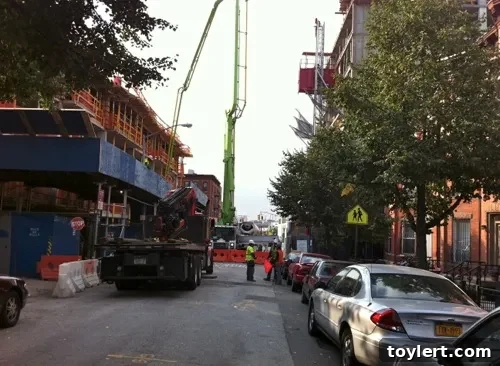
According to reports from residents, the construction team has frequently exceeded the permitted operational hours, infringing upon evening and early morning tranquility. This disregard for the agreed-upon schedule exacerbates the already intrusive nature of construction noise, which has been a constant companion for several months. Moreover, the haphazard and often illegal parking of construction vehicles has become a severe point of contention. Vehicles have been observed parking indiscriminately across the block, often directly in front of fire hydrants – a blatant safety hazard that could impede emergency services. Pedestrian walkways are routinely obstructed, forcing pedestrians, including parents with strollers, individuals with disabilities, and young children, into the active street. This creates a perilous situation, particularly after the designated hours when the street is supposed to be fully reopened to traffic.
Beyond traffic and pedestrian safety, basic urban services have also suffered. Despite explicit assurances from the developer to accommodate municipal services, street cleaning was reportedly skipped on a recent Thursday, and concerns have been raised about consistent garbage pickup. In a densely populated urban environment like Park Slope, maintaining sanitation is paramount for public health and quality of life. Such lapses reflect a broader pattern of developer negligence that directly affects the daily lives of those living around the construction site.
Official Complaints and the Burden on Residents
The issues extend beyond mere inconvenience. Official records indicate that at least two complaints regarding after-hours work have already been lodged with the Department of Buildings (DOB) in recent weeks. These complaints serve as concrete evidence of alleged violations and underscore the community’s proactive efforts to seek accountability. Residents have endured a barrage of disruptive elements for months, including incessant construction noise, frequent sidewalk closures, and the constant presence of massive trucks and cement mixers clogging the narrow streets. This cumulative burden takes a significant toll, transforming what should be a temporary inconvenience into a chronic source of stress and disruption.
The daily challenges faced by residents are multi-faceted. The persistent noise pollution from jackhammers, heavy machinery, and reversing alarms disrupts sleep, impacts remote work productivity, and diminishes the overall serenity expected in a residential neighborhood. Sidewalk closures force residents into the street, creating hazardous conditions, especially for children and the elderly. The sheer volume of construction traffic not only contributes to local congestion but also raises concerns about air quality due to exhaust fumes from idling vehicles.
Devastating Impact on Local Businesses
While residents contend with daily inconveniences, local businesses face a more existential threat. One poignant example comes from a tinsmith operating right next door to the construction site. As shared by a resident tipster, this business owner laments that the current situation is “totally killing his business this week.” This sentiment reflects a broader economic vulnerability. Street closures, even partial ones, drastically reduce foot traffic, a lifeline for many small retail establishments, cafes, and service providers. Customers may avoid the area due to perceived difficulty in access, lack of parking, or simply the unpleasant environment created by ongoing construction.
Deliveries, both to and from these businesses, become complicated and delayed, impacting supply chains and customer satisfaction. The constant noise and visual disruption can deter potential clients, leading to lost revenue. For small businesses, particularly those operating on thin margins, even a few weeks of significant disruption can have catastrophic long-term consequences, potentially leading to closures and job losses. The economic ripple effect of such construction practices extends beyond the immediate site, affecting the vitality of the entire commercial strip and the livelihoods of hardworking individuals who contribute to Park Slope’s unique character.
Balancing Growth with Community Well-being: A Constant Struggle
The situation on 6th Street in Park Slope highlights a perennial challenge in rapidly developing urban areas: how to balance the need for new housing and infrastructure with the preservation of existing community quality of life. Developers, while crucial for urban growth, carry a profound responsibility to operate with respect for the surrounding neighborhood. This includes not only adhering to permits and regulations but also engaging in proactive communication, adopting best practices for noise and debris control, and implementing effective mitigation strategies to minimize disruption.
City agencies like the Department of Buildings and the Department of Transportation play a critical oversight role. Their ability to respond swiftly to complaints, enforce regulations rigorously, and impose meaningful penalties for non-compliance is essential in holding developers accountable. When enforcement is perceived as lax or delayed, it erodes public trust and emboldens problematic practices.
For residents, advocacy becomes a powerful tool. Documenting violations, filing official complaints, and engaging with local elected officials are crucial steps in ensuring their voices are heard and that necessary actions are taken. Community vigilance is often the most effective check against unchecked development practices.
Seeking Solutions and Accountability
Moving forward, a multi-pronged approach is needed to address the ongoing issues on 6th Street and prevent similar scenarios in the future. Enhanced communication from developers, perhaps through dedicated community liaisons or regularly updated project websites, could help manage resident expectations and provide timely information. Stricter, more frequent inspections by city authorities are vital to ensure adherence to permitted hours, safety protocols, and environmental standards. Penalties for violations should be substantial enough to act as a deterrent rather than just a cost of doing business.
Furthermore, developers should be encouraged, or even mandated, to implement advanced mitigation techniques, such as noise barriers, dust control measures, and clear, safe alternative pedestrian pathways. Collaborative community forums involving residents, businesses, developers, and city officials could foster a more cooperative environment for problem-solving. While direct financial compensation for affected businesses is rare, discussions around temporary tax abatements or other forms of support might be explored in cases of severe economic hardship due to prolonged city-sanctioned disruptions.
The photographs taken at 4:10 yesterday afternoon, after the supposed end of the day’s closure, offer a stark visual testament to the ongoing issues. They capture a scene of continued disruption, highlighting the disconnect between the developer’s stated plans and the reality on the ground. These images serve as a powerful reminder of the tangible impact on the community, urging a renewed focus on responsible urban development practices that prioritize both progress and the well-being of the people who call Park Slope home.