The Irreplaceable Legacy: Preserving Brooklyn’s Architectural Soul Amidst Rapid Development
Joni Mitchell’s poignant observation, “Don’t it always seem to go that you don’t know what you’ve got ‘til it’s gone,” resonates with profound truth when examining the relentless pace of real estate development in New York City. This sentiment, often overlooked in the fervor of urban expansion, underscores a critical dialogue about what we gain and, more importantly, what we irrevocably lose in the name of progress. The fate of architectural treasures and community landmarks frequently hangs precariously in the balance, a struggle particularly evident in the dynamic boroughs of New York.
Few examples illustrate this loss more starkly than McKim, Mead & White’s magnificent Pennsylvania Station. Once a grand Beaux-Arts masterpiece, a gateway to the city that inspired awe and reflected the nation’s soaring aspirations, it was tragically demolished in the 1960s. Its destruction, widely condemned in retrospect, ignited the modern historic preservation movement, yet it remains a haunting symbol of what can be lost when short-term economic gains overshadow enduring cultural and architectural value. The station’s grand concourses and majestic waiting rooms gave way to the utilitarian, subterranean labyrinth we know today, leaving many to wonder about the true cost of such an exchange.
Brooklyn’s Vanishing Heritage: A Half-Century of Irreversible Losses
In Brooklyn, the story of vanishing heritage mirrors that of Manhattan, albeit often on a less publicized scale. Over the last half-century, countless historic buildings, each a thread in the borough’s rich tapestry, have succumbed to the wrecking ball. These were structures that could have been saved, perhaps repurposed through innovative adaptive reuse, yet ultimately were not. The reasons for their demolition are as varied as the buildings themselves, ranging from legitimate concerns over structural integrity or prohibitive renovation costs, to more cynical motives driven purely by speculative greed or a baffling lack of foresight. Regardless of the justification, each demolition represents a piece of Brooklyn’s unique identity chipped away, leaving a void that can never truly be filled by new construction.
The borough’s diverse architectural landscape, from pre-Civil War brownstones to Gilded Age mansions and robust industrial complexes, tells the story of immigrants, entrepreneurs, and artists who built this vibrant community. When these physical manifestations of history disappear, so too does a tangible connection to the past, making it harder for future generations to understand the foundations upon which their modern Brooklyn stands. The loss of these structures isn’t merely aesthetic; it’s a severing of communal memory and cultural continuity, diminishing the character that makes Brooklyn so desirable in the first place.
The Complexities of Demolition: Balancing Progress and Preservation
The decisions behind demolishing a historic building are rarely simple. Often, compelling arguments are made for structural deficiencies that render a building unsafe or uneconomical to repair. Developers might present sound economic rationales, arguing that new construction will bring much-needed housing, commercial space, or jobs to an area, stimulating local economies. Social considerations also play a role; some might argue that a dilapidated building is an eyesore or a safety hazard, detracting from neighborhood quality of life and hindering community revitalization efforts. These arguments, when genuinely rooted in public good, present a difficult challenge for preservationists who seek to protect the architectural fabric of a city.
However, the narrative often shifts when “sound economic or social reasons” are merely a thinly veiled justification for maximizing profit. In the red-hot New York City real estate market, properties with development potential can command astronomical prices. Developers eager to capitalize on land value sometimes view existing structures, regardless of their historical or architectural merit, as mere obstacles to be removed. This pursuit of profit can lead to “spiteful and greedy reasons” for demolition, where historically significant buildings are intentionally neglected, allowing them to deteriorate to a point where their demolition becomes ostensibly unavoidable. Such practices prioritize speculative gains over the long-term cultural and historical wealth of a community, leaving scars on the urban landscape and fueling a sense of powerlessness among those who cherish Brooklyn’s heritage.
A Case in Point: The Legacy of 960 Franklin Avenue, Crown Heights
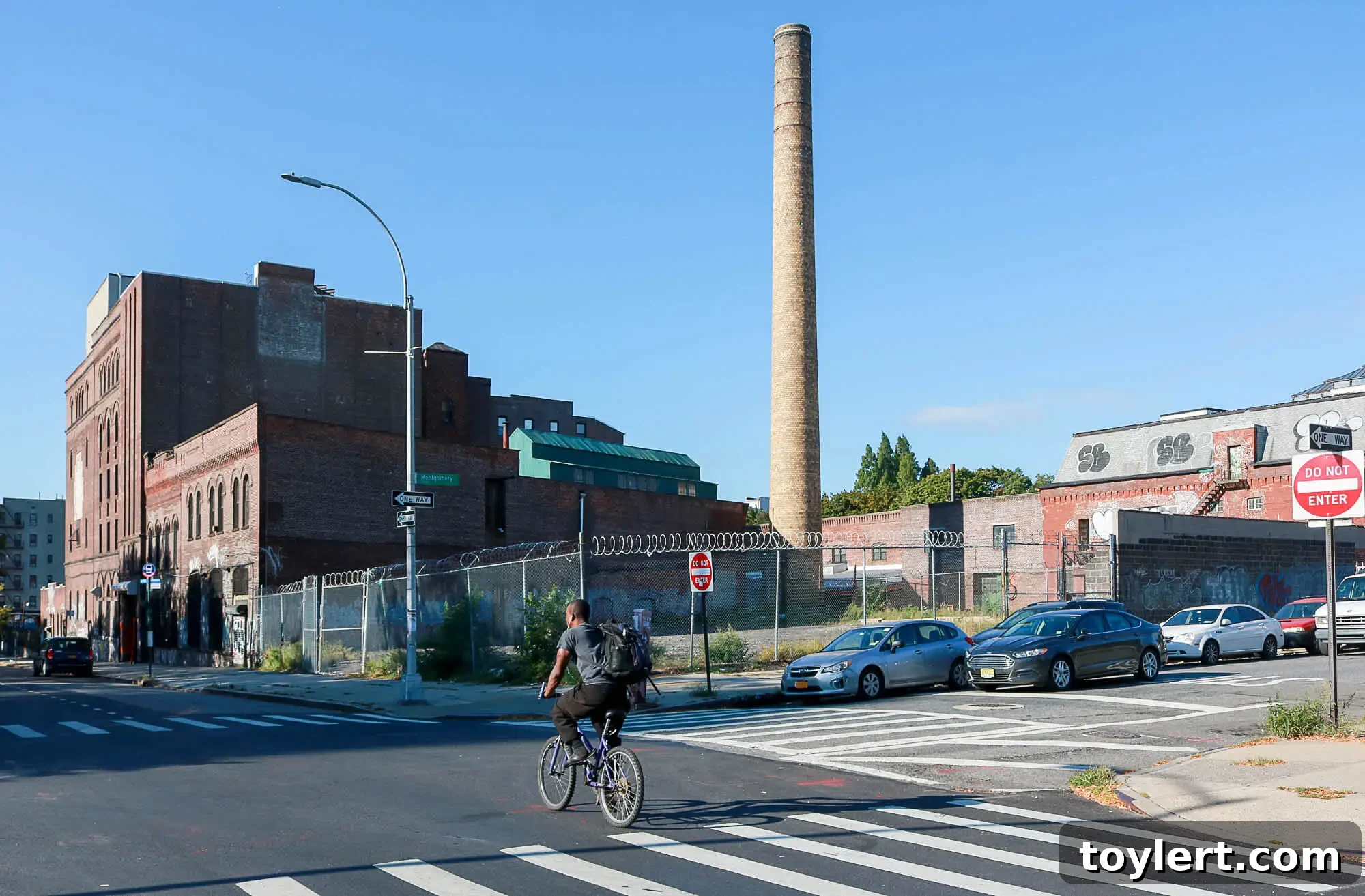
One compelling example of Brooklyn’s ongoing struggle between preservation and development can be found at 960 Franklin Avenue in Crown Heights. This site, historically associated with industrial activity, including a former “Spice Factory” and connections to the “Consumers Park Brewery,” embodies the very challenges and opportunities discussed. For decades, the imposing brick structures at 960 Franklin Avenue stood as silent witnesses to Crown Heights’ evolution. Their robust construction and distinctive industrial aesthetic offered a glimpse into a bygone era when Brooklyn was a hub of manufacturing and commerce.
The Consumers Park Brewery, specifically, was a significant employer and a landmark in its own right, its operations contributing to the local economy and culture. While the exact details of its later transformation into a “Spice Factory” or other industrial uses may vary, the continuity of industrial activity at this address speaks volumes about Brooklyn’s working-class heritage and its entrepreneurial spirit. These buildings, with their large open spaces, high ceilings, and sturdy frames, inherently possess the qualities that make them ideal candidates for adaptive reuse – transforming former industrial sites into modern residential, commercial, or mixed-use developments while preserving their unique character.
The Development Pressure on 960 Franklin Avenue
Crown Heights, like many Brooklyn neighborhoods, has experienced an unprecedented surge in development interest. Its strategic location, vibrant community, and relative affordability (compared to other parts of Brooklyn) have made it a prime target for developers. The land at 960 Franklin Avenue, given its considerable size and proximity to public transit and Prospect Park, represents a goldmine for those looking to build new, high-density residential or commercial properties. This immense pressure places historic structures like the former brewery or spice factory in a precarious position.
The challenge lies in balancing the need for new housing and economic growth with the imperative to protect the architectural legacy that gives Crown Heights its distinctive charm. Developers often argue that preserving old industrial buildings is too costly, citing environmental remediation, structural upgrades, and complex design challenges. They contend that a complete demolition and new build offer a cleaner slate and a more profitable outcome. However, this approach risks erasing tangible connections to the neighborhood’s past and replacing unique structures with generic, characterless developments that contribute little to the area’s rich identity.
The Power of Adaptive Reuse: A Sustainable Path for Urban Development
The narrative of lost heritage doesn’t have to be a foregone conclusion. The practice of adaptive reuse offers a compelling alternative to outright demolition, demonstrating how historic buildings can be reimagined for contemporary needs while retaining their essential character. By converting old factories into loft apartments, breweries into art galleries, or historic warehouses into innovative workspaces, developers can create truly unique and desirable properties that resonate with a sense of place and history. This approach not only preserves architectural beauty but also offers significant environmental benefits by reducing construction waste and leveraging existing materials and infrastructure.
Moreover, buildings with a story often command higher market value and foster a stronger sense of community pride. Residents and businesses are increasingly drawn to spaces that possess character, history, and a unique aesthetic, differentiating them from newly built, often indistinguishable structures. Adaptive reuse projects can become anchors for neighborhood revitalization, attracting new investment while honoring the past. For sites like 960 Franklin Avenue, a thoughtful approach to adaptive reuse could transform the former industrial complex into a vibrant mixed-use development that respects its origins, offers modern amenities, and contributes positively to the ongoing evolution of Crown Heights.
Advocacy and Vision: Safeguarding Brooklyn’s Future
The struggle for preservation in Brooklyn is a continuous one, requiring vigilance, strong advocacy, and a clear vision for the future of our urban landscape. Community groups, local historians, and preservation societies play a crucial role in identifying threatened landmarks, raising awareness, and proposing viable alternatives to demolition. Their efforts are essential in holding developers and city planners accountable, ensuring that decisions about our built environment are not solely driven by profit motives but also by a profound respect for heritage and sustainable urbanism.
The story of Brooklyn’s development, punctuated by both significant losses and inspiring preservation successes, serves as a powerful reminder of Joni Mitchell’s enduring words. We often fail to appreciate the intrinsic value of our historic buildings until they are threatened or gone. The grand industrial edifices of 960 Franklin Avenue, much like countless other structures across the borough, represent more than just bricks and mortar; they are repositories of memory, testaments to human endeavor, and vital components of Brooklyn’s irreplaceable identity. By choosing to preserve and adapt, rather than simply demolish and rebuild, we ensure that Brooklyn’s future is built not on forgetting its past, but on celebrating and integrating its rich, diverse legacy.