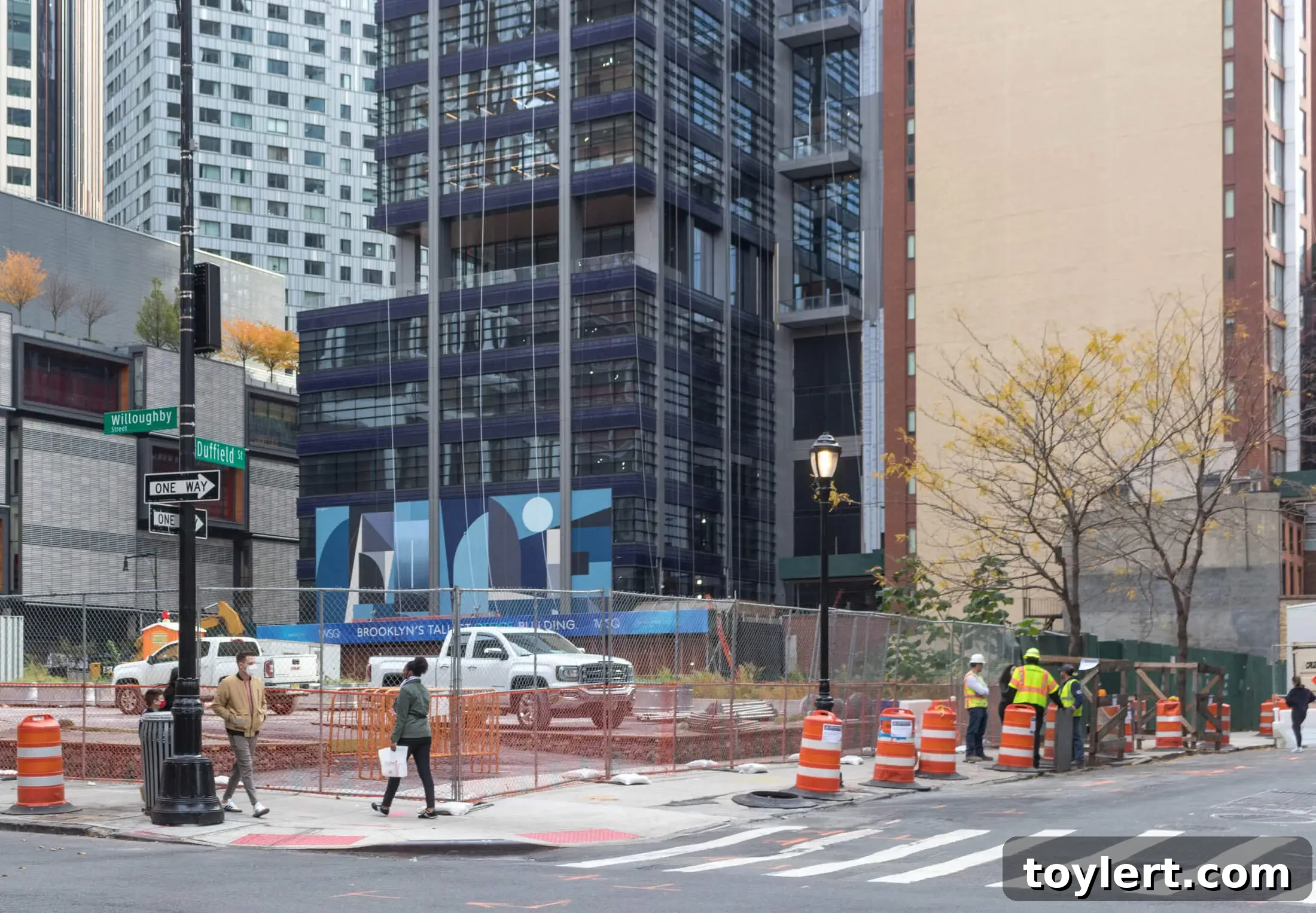
Shaping History: Kameelah Janan Rasheed’s Public Art for Downtown Brooklyn’s Abolitionist Place Park
Downtown Brooklyn is embarking on a significant journey to commemorate its rich abolitionist legacy with the development of Abolitionist Place Park. At the heart of this transformative project is an ambitious public art installation, helmed by acclaimed Brooklyn-based artist Kameelah Janan Rasheed. Last week marked the commencement of a crucial three-month public engagement process, inviting community members to contribute their perspectives and insights to this deeply resonant and, for some, controversial initiative. This participatory approach underscores a commitment to crafting a monument that truly reflects the diverse voices and collective memory of a neighborhood steeped in the fight for freedom.
Rasheed’s vision for the artwork extends beyond mere historical recounting; it seeks to weave together a narrative that acknowledges the past, interrogates the present, and envisions an abolitionist future. As she articulates on her website, “The goal of the public programming is to hear from different communities about how they are making sense of abolitionist pasts, abolitionist presents and abolitionist futures in order for me to generate the text to be engraved and featured on the freestanding structure.” This textual focus is central to Rasheed’s artistic practice, often utilizing language as a medium to explore historical archives, Black liberation, and the complexities of memory and power.
The Genesis of a Significant Public Art Project
The selection of Kameelah Janan Rasheed in 2020 by representatives from the Economic Development Corporation (EDC) – the quasi-governmental agency overseeing both the multi-million dollar development of Abolitionist Place and its broader parent initiative, the Downtown Brooklyn Redevelopment Plan – signaled a clear intention for an impactful and thoughtful artistic intervention. The EDC’s choice highlighted a desire for an artist capable of grappling with complex historical narratives and translating them into a compelling public experience. Rasheed’s proven track record of creating thought-provoking, text-based installations made her an ideal candidate to address the profound legacy of the Abolitionist movement and the Underground Railroad in this historically vital neighborhood.
The conceptual designs for Rasheed’s project received official approval from the Public Design Commission last year, marking a critical milestone. This approval paved the way for the current phase of public engagement, solidifying the project’s trajectory from concept to concrete realization. The art piece is envisioned as a freestanding structure, intricately engraved with text generated directly from the community’s input, making the public an active co-creator of this historical commemoration.
Why Abolitionist Place Matters: A Historical Nexus
Downtown Brooklyn holds an unparalleled significance in the history of the abolitionist movement. Far from being a mere footnote, it was a thriving hub of anti-slavery activism, home to prominent abolitionists, clandestine meeting places, and critical stops on the Underground Railroad. Churches, private residences, and community centers served as vital safe houses, offering refuge and passage to enslaved people seeking freedom. Figures like Henry Ward Beecher, pastor of Plymouth Church, and courageous local activists played pivotal roles in organizing resistance and advocating for emancipation.
The creation of Abolitionist Place Park is more than just an aesthetic addition to the urban landscape; it is a profound acknowledgment of this heritage. It serves as a tangible link to a pivotal era in American history, reminding contemporary New Yorkers of the sacrifices made and the enduring struggle for justice. The park, integrated into the larger Downtown Brooklyn Redevelopment Plan, seeks to ensure that while the area undergoes modern transformation, its historical roots are not only preserved but celebrated and actively remembered.
Kameelah Janan Rasheed: An Artist of Depth and Dialogue
Kameelah Janan Rasheed is an interdisciplinary artist, writer, and educator whose work frequently explores how language structures our understanding of history, identity, and power. Her artistic methodology often involves extensive research into archives, challenging conventional narratives, and inviting audiences to engage critically with the past. For the Abolitionist Place project, her approach is particularly fitting, as it eschews traditional monumental sculpture in favor of a textual installation that demands introspection and dialogue.
Her focus on “abolitionist pasts, presents, and futures” is a powerful framework. It acknowledges that abolition is not a closed historical chapter but an ongoing process. “Abolitionist pasts” recognizes the historical struggle against slavery; “abolitionist presents” calls attention to contemporary forms of oppression and the movements resisting them (e.g., prison abolition, racial justice); and “abolitionist futures” encourages imaginative thinking about a more just and equitable society. This framework transforms the art piece from a static commemoration into a dynamic prompt for continued thought and activism.
The Crucial Role of Public Engagement
The three-month public engagement process is not merely a formality; it is integral to the very essence of Rasheed’s project. For an artwork that aims to speak to the spirit of abolition, true community input is paramount. This process is designed to gather a diverse range of voices, experiences, and interpretations, ensuring that the final text engraved on the structure resonates deeply with those it seeks to honor and inform.
Methods of engagement will likely include a series of workshops, town hall meetings, and perhaps online submission platforms, allowing individuals from all walks of life to share their understanding of abolition. This collaborative approach helps to mitigate potential controversies, ensuring that the artwork reflects a collective understanding rather than a singular interpretation. It fosters a sense of ownership among residents, making the park and its art piece a true community asset. The depth and breadth of participation will directly influence the richness and nuance of the final textual composition, making the public active co-authors of this significant historical statement.
Navigating the “Controversy”: Understanding Diverse Perspectives
The initial characterization of the project as “controversial” is understandable given the sensitive nature of historical memory and urban development. Public art, especially that which addresses historical injustices, often sparks debate. Potential areas of contention might include:
- Historical Interpretation: Different communities or individuals may hold varying perspectives on how the abolitionist movement should be represented, what narratives should be prioritized, and which figures should be highlighted.
- Context of Redevelopment: The park itself is part of a larger Downtown Brooklyn Redevelopment Plan. Some residents might view new developments with skepticism, concerned about gentrification or the displacement of existing communities, and may project these concerns onto ancillary projects like the art installation.
- Artistic Approach: Rasheed’s textual, conceptual approach might differ from public expectations of a more traditional, figurative monument. While powerful, text-based art can sometimes be perceived as less accessible by those unaccustomed to it.
- Inclusivity: Ensuring that the engagement process genuinely reaches and represents all segments of the community, especially those whose ancestors were directly impacted by slavery and abolition, is crucial and can be a source of controversy if perceived as inadequate.
By openly seeking public input, the project aims to address these potential flashpoints head-on, fostering dialogue and striving for a monument that bridges different understandings and celebrates a shared commitment to justice.
A Legacy Etched in Stone: The Impact of the Project
Once completed, Kameelah Janan Rasheed’s art installation at Abolitionist Place Park will stand as a profound and enduring testament to Downtown Brooklyn’s pivotal role in the fight for freedom. It will serve as an educational beacon for future generations, inviting visitors to reflect on the historical struggle against oppression and to consider its ongoing relevance. The collaborative nature of its creation will imbue it with a unique authenticity, ensuring it truly represents the collective memory and aspirations of the community.
This project is more than just a park and a piece of art; it is a living monument to the power of human resilience, the enduring spirit of activism, and the continuous pursuit of freedom. As the public engagement process unfolds, every voice contributed will help shape a narrative that will be literally etched into the urban fabric, fostering a deeper connection between the past, present, and the vision of an equitable future for Downtown Brooklyn and beyond.