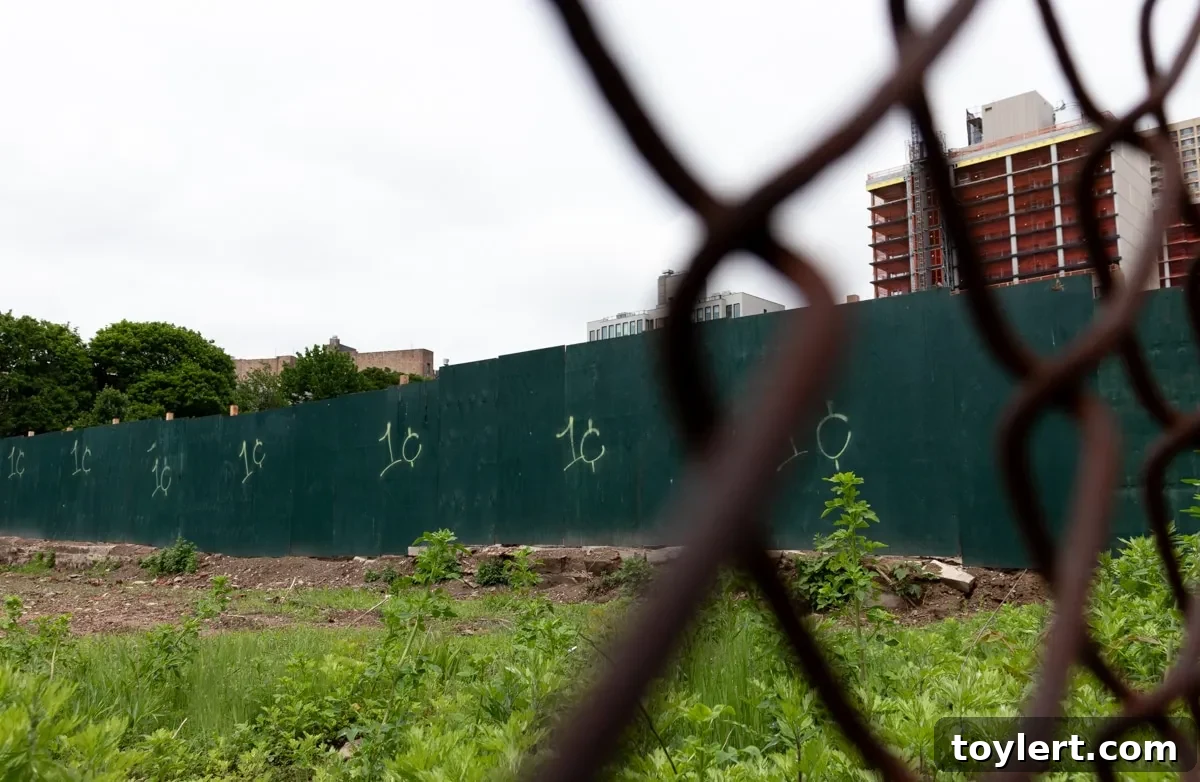
Crown Heights Development Reaches Resolution: City Council Approves Modified Spice Factory Plan, Safeguarding Brooklyn Botanic Garden
After years of intense community debate, meticulous urban planning, and a steadfast commitment to preserving one of New York City’s most cherished green spaces, the City Council has finally given its unanimous approval to a pivotal rezoning proposal. This landmark decision paves the way for a significant development on the former Spice Factory site in Crown Heights, putting to rest a protracted battle over the project’s scale and its potential environmental impact on the nearby Brooklyn Botanic Garden. The approval marks a triumph for collaborative planning, demonstrating how developer interests can be aligned with vital community and ecological concerns.
The journey to this resolution has been long and fraught with challenges, reflecting the complex dynamics often inherent in urban expansion within a densely populated city like New York. The site, a prominent fixture in Crown Heights, has long been eyed for redevelopment. However, its proximity to the world-renowned Brooklyn Botanic Garden introduced a unique and critical constraint: the need to protect the garden’s delicate ecosystem from excessive shading. This unanimous vote by the City Council on Thursday signifies a significant step forward, not just for the development itself, but for the future of responsible urban growth in environmentally sensitive areas across the city.
The Approved Vision: A Thoughtfully Designed Tower on Franklin Avenue
The newly approved plan will bring a modern, 10-story, 355-unit tower to 962-972 Franklin Avenue. This mixed-use development promises to add much-needed housing stock and vibrancy to the Crown Heights neighborhood. However, what truly distinguishes this project is its innovative architectural design, born from necessity and compromise. A crucial element of the approval lies in the tower’s unique sloping plane, precisely restricted to a 10-degree angle. This carefully engineered design feature is specifically intended to mitigate the amount of sunlight obstructed, thereby significantly reducing the shadow cast upon the vulnerable plant collections within the Brooklyn Botanic Garden. This architectural solution represents a groundbreaking approach to urban design, prioritizing ecological preservation alongside urban density.
The intricate planning behind the 10-degree slope was not merely an aesthetic choice but a scientific imperative. Experts and community advocates worked tirelessly with developers and city planners to model the sun’s trajectory throughout the year, ensuring that critical hours of direct sunlight would still reach the garden’s diverse plant species. These species, many of which are rare, exotic, or require precise light conditions to thrive, are the heart of the garden’s educational and scientific mission. The commitment to this specific design detail underscores a broader understanding that urban development must consider its macro and micro environmental impacts, fostering a harmonious coexistence between concrete structures and natural landscapes.
Recalling the Initial Battle: Community Opposition and Ecological Concerns
The path to this consensus was far from smooth. When the Continuum Company first unveiled its original proposal for the Franklin Avenue site, it ignited a firestorm of community opposition. The initial vision called for not one, but two towering 34-story structures. These ambitious plans were immediately met with widespread alarm from local residents, environmental groups, and, most vocally, the leadership of the Brooklyn Botanic Garden. The concern was clear and immediate: two colossal towers of that height would cast extensive, prolonged shadows over significant portions of the garden, jeopardizing its invaluable collections and its very ability to function as a living museum and research institution.
The potential ecological devastation posed by the original 34-story towers was immense. The Brooklyn Botanic Garden is home to thousands of species, including unique temperate and tropical collections housed in specialized conservatories, a renowned Bonsai Museum, and various themed gardens. Many of these plants are highly sensitive to changes in light exposure, with inadequate sunlight leading to stunted growth, reduced flowering, increased susceptibility to disease, and even death. The prospect of losing years of careful cultivation and irreplaceable botanical specimens galvanized the community into action. The intensity of this opposition ultimately proved decisive, leading to the previous iteration of the plan being ultimately killed due to the undeniable risks it posed to the garden’s future.
The Brooklyn Botanic Garden: A Crown Jewel Worth Protecting
The Brooklyn Botanic Garden is far more than just a local park; it is a global treasure and a vital green lung for New York City. Established in 1910, this 52-acre urban oasis serves as a living museum, a botanical research center, and an educational hub for millions of visitors annually. Its meticulously curated collections include the celebrated Japanese Hill-and-Pond Garden, the Shakespeare Garden, the Cranford Rose Garden, and its iconic Cherry Esplanade, which draws crowds from around the world during its spring bloom. The garden’s mission extends beyond aesthetics, encompassing vital scientific research, conservation efforts, and educational programs that teach urban residents about biodiversity and environmental stewardship.
Protecting the garden’s delicate ecosystem, therefore, transcends local NIMBYism (Not In My Backyard) and becomes a matter of safeguarding a critical scientific and cultural institution. The unique microclimates within the garden, carefully cultivated over a century, support plant life that might not otherwise thrive in an urban environment. Any significant reduction in direct sunlight, especially during crucial growing seasons, could disrupt photosynthetic processes, alter soil temperatures, and fundamentally change the conditions necessary for these sensitive plants. The sustained advocacy by the garden’s leadership, its scientific staff, and a vast network of supporters played an indispensable role in ensuring that the final development plan respected these immutable ecological requirements.
A Model for Collaborative Urban Planning and Community Advocacy
The resolution of the Spice Factory site development stands as a powerful testament to the effectiveness of organized community advocacy and the potential for collaborative urban planning. The initial rejection of the overly ambitious proposal demonstrated that public input and scientific evidence can indeed influence the trajectory of major development projects. This outcome was not achieved through passive observation but through active participation: countless public meetings, petitions, protests, and sustained lobbying efforts by local residents, environmental organizations, and community boards.
The City Council’s unanimous decision to approve the scaled-down and thoughtfully redesigned plan underscores a growing recognition within urban governance of the need to balance economic growth with environmental responsibility and community well-being. It highlights the importance of thorough environmental impact assessments and the willingness of developers to engage in genuine dialogue and make meaningful concessions. The Continuum Company’s eventual pivot to a design that directly addressed the sunlight concerns demonstrates a pragmatic understanding that successful urban development in sensitive areas often requires flexibility and an embrace of innovative, context-specific solutions. This case could well serve as a blueprint for how future developments in close proximity to critical green spaces or historical landmarks are approached, fostering a spirit of cooperation rather than conflict.
Looking Ahead: Impact on Crown Heights and Beyond
The approval of the 10-story tower at 962-972 Franklin Avenue marks a new chapter for the Crown Heights neighborhood. The introduction of 355 new residential units will undoubtedly contribute to the area’s housing supply and bring new residents, potentially fostering further economic activity and diversification. Moreover, the project’s careful design, which prioritizes the long-term health of the Brooklyn Botanic Garden, ensures that this growth will not come at an irreparable cost to a beloved community asset. This balanced approach sets a positive precedent for how urban infill development can proceed in a manner that respects existing natural and cultural institutions.
Beyond Crown Heights, this outcome offers valuable lessons for urban planners, developers, and community leaders across New York City and other metropolitan areas facing similar challenges. It reinforces the idea that large-scale development projects should not be viewed in isolation but as integral components of a wider urban ecosystem, where the interaction between built environments and natural spaces must be carefully considered. The dedication to finding common ground, transforming a contentious proposal into a mutually beneficial outcome, exemplifies a mature and forward-thinking approach to sustainable urban development. This resolution ensures that both the vibrant community of Crown Heights and the irreplaceable botanical wonders of the Brooklyn Botanic Garden can continue to thrive, side by side, for generations to come.