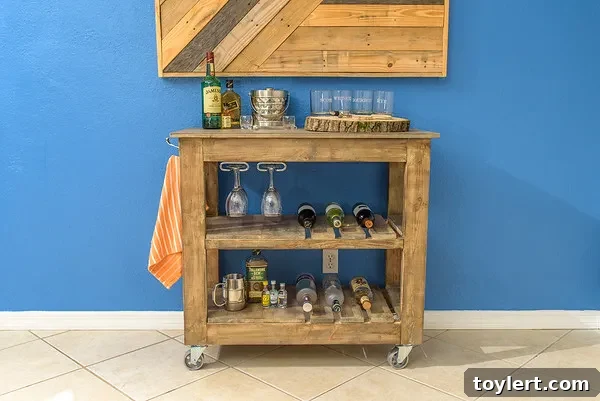
DIY Rolling Bar Cart: Craft Your Perfect Portable Entertainment Hub
Imagine effortlessly moving your drink station from the kitchen to the patio, or from the living room to your home theater. A DIY rolling bar cart offers unparalleled convenience and a touch of bespoke elegance to any living space. More than just a serving trolley, a custom-built bar cart is a statement piece, a functional marvel, and a testament to your DIY prowess. This comprehensive guide will walk you through everything you need to know about designing, building, and customizing your very own portable entertainment solution, ensuring your next gathering is a stylish success.
The beauty of building your own lies in complete creative control. You’re not limited by off-the-shelf designs or predetermined finishes. From selecting the perfect wood to choosing unique hardware, every detail can reflect your personal style and meet your specific needs. With the right tools and materials, readily available at places like The Home Depot, embarking on this woodworking project is both rewarding and surprisingly achievable for DIY enthusiasts of all skill levels.
Why Build a Custom Bar Cart? Beyond Convenience and Style
While the immediate benefits of a rolling bar cart—mobility, aesthetic appeal, and expanded storage for spirits and glassware—are obvious, the advantages of a DIY approach extend much further. Building it yourself offers a unique blend of cost savings, personalization, and the deep satisfaction that comes from creating something beautiful and functional with your own hands.
Unleash Your Creativity and Personal Style
Unlike mass-produced furniture, a DIY bar cart can be a true reflection of your personality and home décor. Do you envision a rustic, reclaimed wood piece with industrial casters? Or perhaps a sleek, modern design with a minimalist finish? With DIY, you’re the designer. You can match existing furniture, experiment with bold colors, or incorporate unique features that you won’t find anywhere else. This level of customization ensures your bar cart isn’t just another piece of furniture, but a cherished part of your home.
Cost-Effective Entertaining Solutions
Purchasing a high-quality bar cart can often be an expensive endeavor. By opting for a DIY project, you primarily invest in raw materials and perhaps a few specialized tools if you don’t already own them. This often translates to significant savings, allowing you to allocate more of your budget towards premium spirits or entertaining essentials. The value you gain from a custom-built item, tailored to your exact specifications, far outweighs the material costs.
A Rewarding DIY Project for All Skill Levels
Building a rolling bar cart is an excellent project for both seasoned woodworkers and eager beginners. The fundamental construction involves basic cuts and joinery, making it an accessible entry point into furniture making. As you gain confidence, you can incorporate more advanced techniques or intricate details. The step-by-step process is intuitive, and the sense of accomplishment upon completing your functional masterpiece is incredibly fulfilling. It’s an opportunity to learn new skills, hone existing ones, and create a lasting piece for your home.
Essential Design Considerations for Your Bar Cart
Before you even pick up a saw, thoughtful planning is crucial. A well-designed bar cart integrates seamlessly into your space, functions efficiently, and looks fantastic. Here’s what to consider:
Size and Dimensions: Finding the Perfect Fit
Measure the space where your bar cart will primarily reside, as well as any doorways or hallways it will need to pass through. Consider its height relative to other furniture or counter space. A standard bar cart height is usually around 30-36 inches, but you might prefer something lower for a sofa-side companion or taller for a standing serving station. Think about the overall footprint and how much surface area you’ll need for mixing drinks and holding essentials.
Storage and Organization: Functionality First
What will your bar cart hold? Bottles of various sizes, glassware (wine, cocktail, tumblers), an ice bucket, bar tools (shaker, jigger, muddler), napkins, and garnishes are common items. Design shelves and compartments accordingly:
- Bottle Storage: Consider vertical space for tall bottles and perhaps a wine rack or dedicated slots to keep bottles secure.
- Glassware: Open shelving is common, but integrated stemware racks can add elegance and save space.
- Accessory Drawers: A small drawer is perfect for keeping bottle openers, corkscrews, and other small tools tidy.
- Surface Area: Ensure ample top surface for preparing drinks and serving. A removable tray or cutting board insert can be a practical addition.
Material Choices: Durability Meets Aesthetics
The material you choose will dictate both the look and longevity of your bar cart:
- Wood: A classic choice. Pine is affordable and easy to work with, ideal for painting or staining. Oak and maple offer greater durability and a more premium look, excellent for clear finishes. Plywood can be a cost-effective option for shelves and internal structures, especially when veneered or painted.
- Metal Accents: Incorporating metal pipes, steel frames, or brass hardware can give your cart an industrial or modern edge.
- Top Surface: A solid wood top is versatile, but you might consider a tile inlay, a stone slab, or a mirrored surface for added flair and ease of cleaning.
Mobility: The Right Casters Make All the Difference
Since it’s a “rolling” cart, the casters are key. Opt for sturdy, smooth-rolling casters, preferably with locking mechanisms on at least two of them. This ensures your cart stays put when serving and prevents accidental movement. Consider the type of flooring it will roll on; rubber wheels are gentler on hard surfaces than hard plastic or metal.
Finishing Touches: Protecting Your Investment
The finish not only enhances the cart’s appearance but also protects the wood. Stains bring out the natural grain, while paint offers endless color possibilities. Always apply a clear protective topcoat (polyurethane, lacquer, or a food-safe sealant for surfaces in contact with drinks) to guard against spills and wear and tear.
Tools and Materials: Your DIY Arsenal
Before you dive into construction, gather all your necessary tools and materials. Most items are readily available at The Home Depot.
Essential Tools:
- Measuring Tape & Pencil: For accurate marking and measuring.
- Safety Glasses & Hearing Protection: Always prioritize safety when working with power tools.
- Saw: A miter saw is ideal for precise crosscuts. A circular saw or jigsaw can be used for sheet goods or curves.
- Drill/Driver: For pre-drilling holes and driving screws.
- Sander (Orbital or Palm): Essential for smoothing surfaces and preparing for finishing.
- Clamps: Various sizes for holding pieces together during assembly and gluing.
- Wood Glue: For strong, durable joints.
- Square & Level: To ensure your cart is plumb and square.
- Router (Optional): For decorative edges or dados for shelves.
Required Materials:
- Lumber: Chosen according to your design (e.g., pine 1x2s, 1x4s, 1x6s for frame and rails; plywood for shelves and panels).
- Casters: Four heavy-duty swivel casters, preferably with brakes.
- Wood Screws: Various lengths suitable for your wood thickness.
- Sandpaper: Assorted grits (e.g., 80, 120, 220) for progressive sanding.
- Wood Filler (Optional): To fill gaps or imperfections.
- Stain or Paint: Your chosen finish.
- Protective Topcoat: Polyurethane, lacquer, or clear sealant.
- Hardware: Handles, towel bars, bottle racks, or other desired accessories.
Step-by-Step Guide to Building Your Rolling Bar Cart
With your design finalized and materials gathered, it’s time to bring your vision to life. This general guide can be adapted to various designs.
Step 1: Planning and Creating a Cut List
Based on your detailed design, create a precise cut list for all your lumber pieces. This includes legs, rails, shelves, and any panels. Double-check all measurements to minimize waste and ensure accuracy.
Step 2: Cutting the Wood
Using your chosen saw, carefully cut all your wood pieces according to your cut list. Precision here is paramount for a professional-looking finish. Label each piece as you cut it to keep organized.
Step 3: Assembling the Frame
Begin by assembling the side frames. Attach the top and bottom rails to the legs using wood glue and screws. Pre-drill all screw holes to prevent splitting. Ensure these frames are square before the glue dries. Once the two side frames are complete, connect them with front and back rails to form the main box-like structure of the cart.
Step 4: Installing Shelves and Panels
Measure and cut your shelves to fit snugly within the frame. You can support shelves using dado joints (routed grooves), cleat strips (small pieces of wood screwed to the frame), or pocket holes. Secure the shelves with glue and screws. If your design includes side or back panels, cut and attach them now, either by recessing them into rabbets or simply screwing them to the frame’s interior.
Step 5: Attaching the Top Surface
Cut your top surface to the desired dimensions. Apply wood glue to the top rails of the frame and carefully position the top piece. Secure it from underneath with screws, or use pocket holes from the underside of the top if you want a cleaner look without visible fasteners on the top surface. Ensure the top is flush and centered.
Step 6: Adding the Casters
Flip the cart upside down. Position the casters near the corners of the base, ensuring they are aligned and won’t interfere with any structural elements. Mark the screw holes, pre-drill, and then attach the casters securely with appropriate screws. Test the cart’s mobility and ensure the locking casters function correctly.
Step 7: Sanding and Finishing
This is where the magic happens. Start sanding with a coarser grit (e.g., 80 or 100) to remove any major imperfections or saw marks. Progress to finer grits (120, then 220) for a smooth, silky finish. Wipe away all dust. Apply your chosen stain or paint according to the manufacturer’s instructions. Once dry, apply several coats of your protective topcoat, lightly sanding with a very fine grit (e.g., 320) between coats for optimal smoothness and durability.
Step 8: Attaching Hardware and Accessories
Once the finish has cured, install any handles, towel bars, bottle racks, or other decorative and functional hardware you’ve chosen. Take care not to scratch your freshly finished surfaces. Now, load up your beautiful, custom-made rolling bar cart and get ready to entertain!
Customization Ideas to Elevate Your Bar Cart
Your DIY bar cart is a canvas for personalization. Consider these ideas to make it truly unique:
- Integrated Cutting Board: Recess a removable cutting board into the top surface for easy fruit and garnish preparation.
- Wine Glass Racks: Install under-shelf racks to elegantly hang stemware, freeing up shelf space.
- Dedicated Bottle Holders: Design specific slots or cross-supports to securely cradle wine or spirit bottles.
- Chalkboard Panel: Add a small chalkboard panel to announce the drink menu or a witty quote.
- LED Lighting: Incorporate subtle LED strip lighting under shelves or along the perimeter for ambient glow, especially for evening events.
- Unique Finishes: Experiment with distressing techniques, two-tone paint jobs, or even decoupage with maps or vintage posters for a truly distinctive look.
- Magnetic Strips: Attach a magnetic strip to the side to hold bar tools or bottle openers.
Maintenance and Care for Your Bar Cart
To ensure your custom rolling bar cart remains a stunning centerpiece for years to come, regular care is essential. Wipe up spills immediately with a soft, damp cloth to prevent staining, especially on wood surfaces. Avoid using harsh chemical cleaners, which can damage the finish. For daily cleaning, a simple mix of mild soap and water is usually sufficient. Periodically check the caster wheels and hardware for any looseness and tighten as needed. Depending on use and exposure, you might consider reapplying a protective topcoat every few years to refresh its appearance and shield it from wear and tear. With proper care, your DIY bar cart will continue to be the star of your entertaining setup.
Conclusion: Your Home’s New Favorite Feature
Building a rolling bar cart is more than just a woodworking project; it’s an investment in your home’s functionality, style, and your own DIY capabilities. From the initial design sketches to the final coat of finish, every step offers an opportunity for creativity and skill development. The result is a bespoke piece of furniture that not only serves your entertaining needs with unmatched convenience but also adds a unique touch of handcrafted charm to your living space. So, gather your inspiration, head to The Home Depot for all your supplies, and embark on this rewarding journey to craft the perfect portable entertainment hub for your home. Cheers to your next successful DIY endeavor!