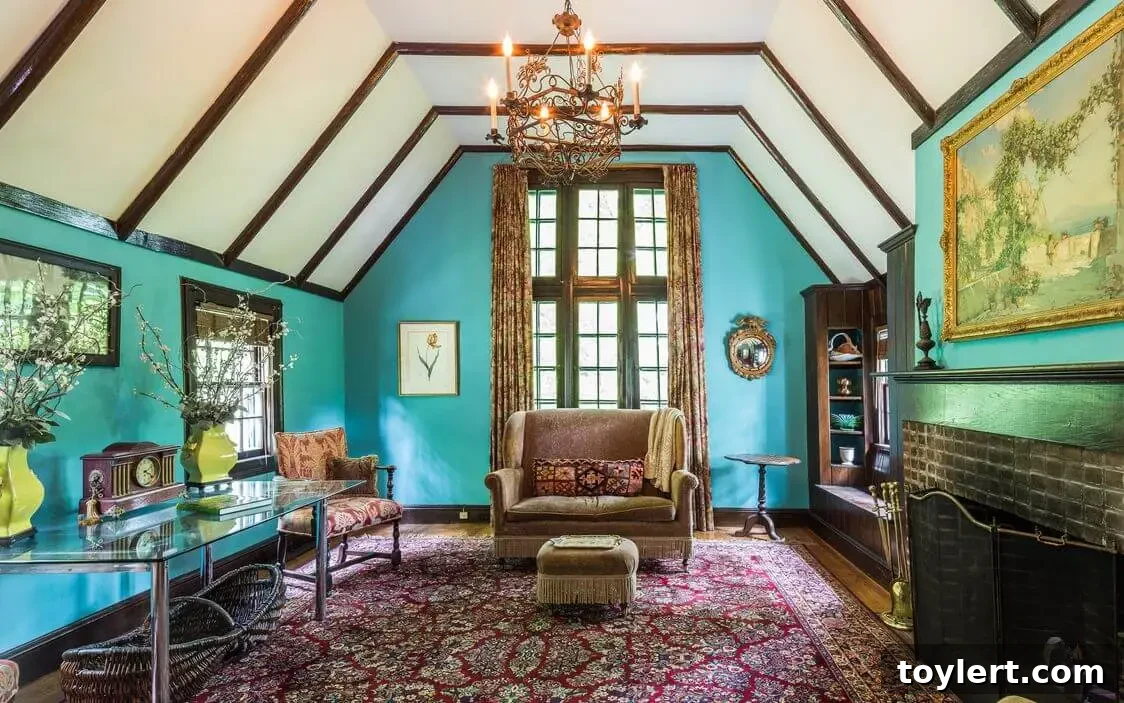
Welcome to an exploration of one of Westchester County’s most desirable residential enclaves, where history, architecture, and a strategic investment converge to create a truly unique living experience. Nestled within the picturesque, hilly landscape of Sagamore, a charming Tudor-style home stands as a testament to early 20th-century foresight and a discerning eye for property development.
Discovering Sagamore: A Bronxville Gem and Its Timeless Tudor Architecture
In an era of burgeoning suburban expansion, a visionary theatrical artist, perhaps seeking to diversify a financial portfolio beyond the footlights and capitalize on the rapid growth of Bronxville, made a shrewd investment. This investment led to the creation of a stunning Tudor residence, strategically perched in the exclusive, elevated contours of the Sagamore community. This particular home is more than just a dwelling; it’s a piece of local history, embodying the architectural elegance and aspirational spirit of its time.
The Genesis of a Dream: William Van Duzer Lawrence and the Rise of Bronxville
The story of Sagamore, and indeed this exceptional Tudor home, is inextricably linked to the remarkable success story of Bronxville itself. At the turn of the 20th century, the landscape of New York’s commuter belt was rapidly evolving. Visionaries like William Van Duzer Lawrence recognized the immense potential of areas just outside the bustling metropolis. Lawrence’s ambitious development in Bronxville proved to be a resounding triumph, establishing it as a highly sought-after residential enclave. Its appeal lay in a harmonious blend of factors: excellent proximity to New York City, allowing for an easy commute; a verdant, scenic environment that offered a peaceful respite from urban life; and a meticulously planned community infrastructure that promised a high quality of life.
Bronxville quickly became synonymous with upscale suburban living. Its carefully laid-out streets, commitment to green spaces, and a village center designed for convenience and charm attracted a discerning clientele. The success of Lawrence’s endeavor laid fertile ground for further development, inspiring other developers to seek out adjacent parcels of land to replicate, or even enhance, this model of successful suburban living. The architectural ethos emphasized quality, character, and a sense of timeless elegance, often drawing inspiration from European styles that evoked a sense of history and permanence.
Sagamore’s Emergence: Extending the Bronxville Legacy
Capitalizing on Bronxville’s undeniable allure, developers in the early 20th century were eager to carve out new residential havens nearby. One of the most notable and successful of these extensions was Sagamore. Launched around 1910, Sagamore was meticulously planned on the northern edge of the already flourishing Bronxville. Its strategic location allowed residents to benefit from Bronxville’s established amenities, schools, and transportation links, while offering its own distinct character.
Sagamore was envisioned as a tranquil, exclusive community, distinguishable by its undulating topography and a commitment to architectural integrity. The hilly terrain provided natural privacy and afforded many properties unique vantage points and picturesque views. Developers sought to attract individuals who valued both community and individuality, offering a blend of suburban convenience with a touch of rural serenity. The architectural guidelines often encouraged styles that complemented the natural landscape, contributing to a cohesive and visually appealing neighborhood.
The Architectural Splendor: A Picturesque Tudor in a Hilly Enclave
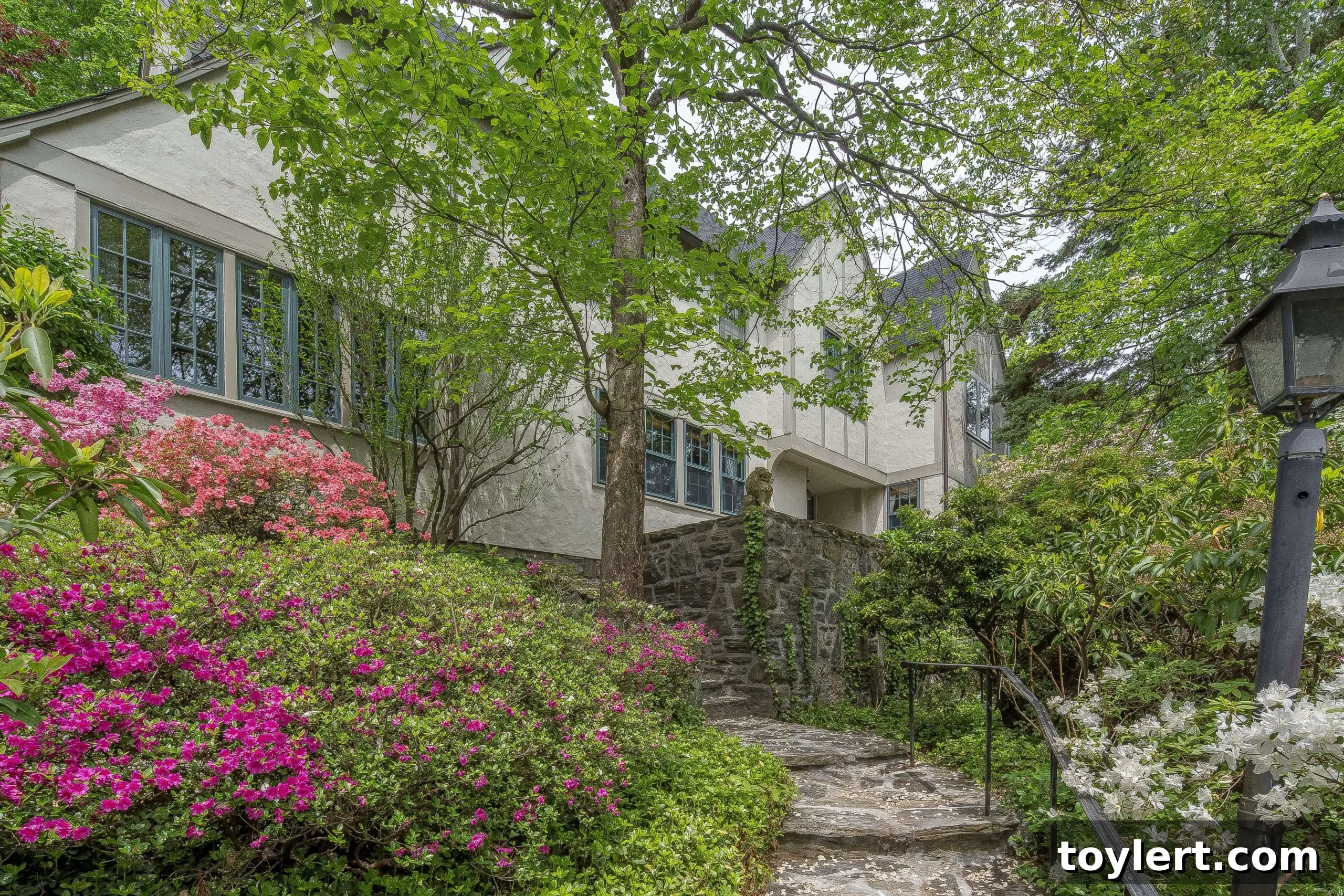
The featured home in Sagamore perfectly encapsulates the architectural trends and aspirations of its time. Designed in the highly popular Tudor Revival style, it embodies a romanticized interpretation of medieval English architecture. This style experienced a significant resurgence in affluent American suburbs during the late 19th and early 20th centuries, prized for its ability to convey a sense of history, prestige, and rustic charm.
Hallmarks of Tudor Revival Architecture
- Half-Timbered Facades: Characterized by decorative exposed wood framing with infill materials like stucco or brick, creating a distinctive pattern on the exterior.
- Steeply Pitched Gabled Roofs: Often multiple gables, adding dramatic height and visual interest, frequently clad in slate or heavy cedar shakes.
- Tall, Narrow Windows: Typically casement windows with multiple panes, sometimes featuring leaded glass, enhancing the historical aesthetic.
- Decorative Chimneys: Elaborate brickwork and chimney pots were common, serving as prominent architectural features.
- Asymmetrical Design: Unlike the symmetrical classical styles, Tudor homes often embrace an irregular, organic layout that gives each house a unique personality.
- Solid Masonry Elements: A combination of brick and stone often forms the base or significant portions of the facade, grounding the structure and providing a sense of permanence.
This particular Tudor, artfully situated in Sagamore’s hilly terrain, leverages its location to enhance its architectural presence. The natural contours of the land would have guided its placement, potentially allowing for terraced gardens or unique interior layouts that flow with the landscape. The very phrase “perched in the hilly enclave” suggests an elevated position, offering views and a sense of majestic seclusion. Such a design choice speaks to a thoughtful approach to site planning, where the building and its environment are in dialogue, creating a harmonious and aesthetically pleasing whole.
The Enduring Appeal of Bronxville and Sagamore Real Estate
Beyond its architectural beauty, this Tudor home represents a sound and enduring investment in one of Westchester County’s most stable and desirable real estate markets. Properties in Bronxville and its satellite communities like Sagamore consistently command strong interest due to a confluence of factors:
- Strategic Location: Unbeatable commuter access to Manhattan via Metro-North, making it ideal for professionals.
- Exceptional Schools: Bronxville boasts a highly-rated public school district, a major draw for families.
- Vibrant Community Life: A charming village center with boutique shops, fine dining, and community events fosters a strong sense of belonging.
- Natural Beauty and Green Spaces: Parks, tree-lined streets, and proximity to scenic areas offer ample opportunities for outdoor recreation.
- Architectural Diversity and Heritage: A rich tapestry of architectural styles, including many historic homes, provides character and individuality often lacking in newer developments.
The decision by the theatrical artist to invest in Sagamore property was, therefore, not merely an aesthetic choice but a remarkably astute financial one. Real estate in well-established, architecturally significant communities like this tends to appreciate steadily, offering both a comfortable lifestyle and a solid asset. The blend of historical charm with the conveniences of modern suburban living creates an unparalleled residential offering.
Living in Sagamore Today: A Harmonious Blend of Past and Present
Today, Sagamore continues to thrive as a highly coveted address within Bronxville. Its serene, tree-lined streets offer a peaceful retreat, while residents still enjoy easy access to the vibrant village life and all the amenities Bronxville has to offer. The commitment to preserving its architectural heritage ensures that communities like Sagamore retain their unique character and charm, distinguishing them from more generic developments.
Homeowners in Sagamore benefit from a strong sense of community, often participating in local events and enjoying the close-knit atmosphere. The blend of historic homes, mature landscaping, and an active community creates an environment that is both welcoming and exclusive. For those seeking a home that tells a story, a property steeped in history and architectural significance, while offering the utmost in modern convenience and luxury, a Sagamore Tudor remains an unparalleled choice.
In conclusion, the picturesque Tudor home in Sagamore stands as a magnificent example of visionary development, strategic investment, and enduring architectural beauty. It is a testament to the foresight of those who shaped Bronxville and its surrounding enclaves, creating communities that continue to captivate and charm discerning homeowners well over a century later. This property is more than just a house; it’s a legacy, a piece of art, and a truly exceptional place to call home in the heart of Westchester County.