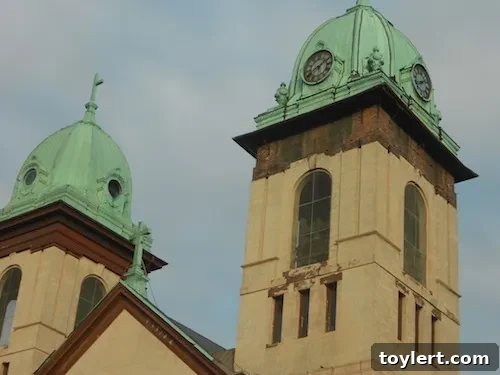
The Fading Grandeur: St. Teresa of Avila Church and the Battle for Preservation in Crown Heights
In the vibrant and historically rich neighborhood of Crown Heights, Brooklyn, a significant piece of its architectural and spiritual heritage recently faced a critical juncture. The St. Teresa of Avila Catholic Church, majestically positioned at the corner of Classon Avenue and Sterling Place, underwent a dramatic intervention to address a severe structural compromise. What was once an ornate metal cornice, a hallmark of the church’s distinctive architecture, now stands conspicuously absent from its facade. This crucial architectural element was meticulously removed by a crane a few days prior, a necessary measure taken after pieces of the cornice were left dangerously dangling, a direct consequence of a powerful storm that swept through the region in late 2012, likely Hurricane Sandy.
The removal of the cornice wasn’t merely an immediate reaction to the storm’s devastation; it highlighted a deeper, more protracted struggle with the church’s structural integrity. As noted by a vigilant reader in an earlier community discussion forum, the tower which supported the now-removed cornice had been in a precarious state for several years. Chronic issues, including persistent problems with pigeons nesting and a section of grating that had previously fallen onto the roof, had contributed to its slow, relentless deterioration. These seemingly minor issues, often overlooked in the day-to-day operations of a bustling parish, compounded over time to create a significant structural vulnerability, making it particularly susceptible to the extreme weather event.
Adding to the gravity of the situation is the unfortunate reality that this particular parish is reported to be grappling with significant financial constraints. The substantial costs associated with maintaining a historic structure of this scale, especially one requiring extensive repair work involving specialized materials and craftsmanship, often prove prohibitive for congregations with limited resources. Furthermore, and perhaps most critically for its long-term survival and potential for future restoration, the St. Teresa of Avila Church is not afforded the protective umbrella of landmark status. This absence means the building lacks the specific legal safeguards and, crucially, the eligibility for many preservation grants and funding opportunities that come with official recognition as a historic landmark. The combination of pre-existing structural decay, severe storm damage, acute financial strain, and a lack of landmark protection paints a truly disheartening picture for this venerable institution.
A Legacy Under Threat: The Architectural and Community Significance of St. Teresa of Avila Church
St. Teresa of Avila Catholic Church is far more than just a place of worship; it is an enduring cultural and architectural symbol within the ever-evolving Crown Heights landscape. Erected in the late 19th or early 20th century, it embodies the architectural grandeur and spiritual aspirations typical of its era. While specific architectural styles can vary, many churches of this period in Brooklyn often feature elements of Romanesque Revival, Gothic Revival, or a blend of both, characterized by robust masonry, intricate detailing, and soaring spires or bell towers designed to inspire reverence and provide a focal point for the community. These monumental churches were frequently constructed by immigrant communities, serving as vital spiritual anchors, social hubs, and powerful symbols of identity and belonging for generations.
For well over a century, St. Teresa of Avila has been a steadfast presence, silently witnessing the dramatic evolution of Crown Heights from a predominantly residential enclave to a diverse, dynamic, and rapidly gentrifying urban neighborhood. Its stately facade, even in its current compromised state, evokes a profound sense of permanence and history that contributes immeasurably to the streetscape along Classon Avenue and Sterling Place. The architectural elements, such as the elaborate cornice that once proudly crowned its tower, were not merely decorative embellishments; they were integral to the building’s aesthetic appeal, reflecting the exceptional craftsmanship of a bygone era and the deep-seated aspirations of its founders. The loss or irreversible deterioration of such distinctive features diminishes not only the church’s individual beauty and structural integrity but also profoundly impacts the collective historical narrative and visual character of the entire Crown Heights neighborhood.
The Storm’s Fury and the Echoes of Neglect: A Deeper Dive into the Damage
The severe storm of late 2012, widely believed to be the devastating Hurricane Sandy, acted as a formidable catalyst, exposing critical vulnerabilities that had festered over years of incremental neglect. High winds, torrential rains, and relentless storm surges exert immense pressure on building exteriors, especially on elevated features like cornices, parapets, and roofing systems. A cornice, an ornamental molding that typically crowns a building or wall, serves both significant aesthetic and practical purposes, often designed to protect the facade by diverting rainwater away. When compromised, as tragically demonstrated in the case of St. Teresa of Avila, it transforms into a severe public safety hazard, with heavy stone or metal pieces threatening anyone passing by below. The decision to remove it was undoubtedly a critical step to mitigate immediate danger.
Roof Collapsing at Crown Heights Church [Brownstoner]
The narrative of decay at St. Teresa of Avila extends significantly beyond the immediate impact of the storm. The explicit mention of “constant problems with pigeons and some grating that fell on the roof” paints a vivid picture of long-term, incremental damage that predated the catastrophic weather event. Pigeons, while often perceived as harmless urban birds, can cause substantial and insidious damage to masonry and roofing through their acidic droppings, which erode stone and mortar, and by dislodging essential components as they nest. Water infiltration, often exacerbated by dislodged grating, compromised flashing, or damaged roofing, is a silent but exceptionally deadly enemy of historic buildings, leading inevitably to rot in wooden structures, rust in metal components, and the overall weakening of critical structural supports. These seemingly minor and often unaddressed issues, when left unchecked, create a devastating domino effect, making larger, far more costly and disruptive interventions absolutely inevitable.
The Perilous Cornice: An Architectural Vulnerability Exposed
The metal cornice, now sadly a memory, was not merely a decorative frieze but a critical architectural detail. Cornices, especially those crafted from heavy materials like metal, stone, or terra cotta, are significant load-bearing elements that require robust anchoring, precise installation, and particularly regular inspection and maintenance. Over time, prolonged exposure to the elements, drastic temperature fluctuations (freeze-thaw cycles), and the natural stresses of building movement can lead to corrosion of metal elements, cracking of masonry, and the gradual loosening of these vital anchors. When a powerful storm strikes, the immense force of the wind can act as the final, destructive blow, tearing away sections that were already critically weakened. The decisive and drastic action to remove the entire cornice with a crane, rather than attempt a hazardous and likely temporary repair, starkly underscores the extreme severity of the damage and the overriding immediate safety concerns involved. It serves as a powerful, albeit unfortunate, testament to the undeniable truth that proactive prevention through diligent, routine maintenance is exponentially less costly and disruptive than emergency remediation following a structural failure.
The visible and now permanent absence of this once ornate feature forever alters the visual character and historical authenticity of the church. What was once a proud statement of architectural grandeur and enduring craftsmanship now stands as a stark and somber reminder of the profound challenges faced by historic structures within the rapidly changing urban fabric of Brooklyn.
The Unseen Costs: Financial Strain and the Absence of Landmark Protection
At the heart of the complex challenges facing St. Teresa of Avila Church, and indeed confronting countless historic religious institutions across the United States, lies the formidable and often overwhelming financial burden of ongoing upkeep and restoration. Older buildings, while possessing unparalleled charm, irreplaceable historical value, and superior craftsmanship, inherently demand specialized and often exorbitantly expensive maintenance. Repairs necessitate the expertise of skilled artisans experienced in traditional building methods, the sourcing or custom fabrication of materials that may be rare or no longer readily available, and significant investments in scaffolding, safety precautions, and structural engineering assessments. For a parish reportedly lacking “lots of money,” these cumulative costs can quickly become insurmountable. As congregational sizes fluctuate and operating budgets tighten, the monumental task of preserving a decaying edifice often falls by the wayside in favor of more immediate pastoral needs, community outreach, or basic operational expenses.
The unfortunate absence of official landmark protection further compounds this already precarious situation. While landmarking can sometimes impose certain restrictions on future alterations to a property, it simultaneously opens crucial doors to vital funding streams, specialized grants, and significant tax incentives specifically designed for the preservation and restoration of historically significant properties. Without this crucial designation, St. Teresa of Avila Church is left exceptionally vulnerable, devoid of the legal safeguards that might prevent drastic and insensitive alterations or even outright demolition, and crucially, without access to the vital financial lifelines that could facilitate its much-needed restoration. It’s a double-edged sword: the freedom from certain preservation regulations also unfortunately means the freedom from critical preservation assistance, leaving the immense responsibility solely on the shoulders of an already struggling parish.
A Community’s Concern: More Than Just Bricks and Mortar
For the long-term residents of Crown Heights, particularly those who have worshipped, celebrated life events, or simply passed by St. Teresa of Avila for decades, the sight of its visibly compromised tower and the distressing absence of its once-majestic cornice is far more than a mere architectural blight; it represents a profound emotional blow. Churches, irrespective of one’s personal faith, often transcend their primary religious function; they frequently serve as invaluable community anchors, sacred repositories of shared memories, and tangible, enduring links to the collective past. The visible deterioration of such an iconic building can evoke potent feelings of loss, deep concern, and a poignant, almost visceral reminder of the inherent fragility of even the most robust and seemingly permanent structures over the relentless march of time. The “shame” explicitly expressed in the original report reflects a collective sadness and a shared sense of regret over the potential loss or permanent alteration of a cherished local icon.
The community’s active engagement and deep concern, as powerfully evidenced by the vigilant reader’s comment on the tower’s long-standing poor condition, highlights a collective awareness and a shared desire for the church’s preservation. This powerful public sentiment and community advocacy are absolutely vital, as they can often be a potent force in galvanizing broader support, initiating crucial fundraising efforts, and drawing much-needed attention to the precarious plight of endangered historic sites.
The Broader Picture: Preserving Brooklyn’s Architectural Heritage in a Changing City
The precarious predicament of St. Teresa of Avila Church is not an isolated incident but rather a striking microcosm of a larger, ongoing, and increasingly urgent challenge faced by many urban areas, particularly those with a rich and layered architectural legacy like Brooklyn. Historic preservation is not merely about aesthetic appeal or nostalgic sentiment; it is fundamentally about retaining the unique character, the distinct identity, and the irreplaceable narrative of a place. These venerable buildings tell compelling stories of past generations—their craftsmanship, their struggles, their triumphs, and their cultural values. They contribute profoundly to a city’s unique architectural fabric, providing an invaluable sense of place, continuity, and rootedness amidst the relentless forces of constant change and rapid development.
However, the forces working against robust preservation efforts are formidable and relentless: soaring property values, the powerful allure of new, often cheaper, development, the prohibitive high costs of specialized maintenance, and the ever-present, insidious threat of long-term neglect. While new constructions are frequently cheaper and more efficient to build, they rarely, if ever, possess the irreplaceable historical depth, the nuanced craftsmanship, and the enduring material integrity of older structures. The delicate balance between urban progress and thoughtful preservation is a precarious one, requiring immense foresight, sustained community involvement, proactive governmental policies, and often, substantial and ongoing financial investment from both public and private sectors.
Lessons Learned and a Critical Call to Action for Community and Heritage
The troubling situation at St. Teresa of Avila Church serves as a potent and unequivocal reminder of several critical lessons that resonate far beyond the immediate neighborhood. Firstly, proactive and consistent maintenance is absolutely paramount. Small issues, when left unaddressed due to financial constraints or oversight, inevitably escalate into far more significant and costly crises. Secondly, the pervasive financial vulnerability of many religious institutions underscores the urgent need for creative fundraising strategies, aggressive grant seeking from preservation bodies, and perhaps even broader, more inclusive community partnerships to ensure the long-term survival of these invaluable architectural and spiritual assets. Thirdly, the strategic importance of official landmark status cannot be overstated, as it provides both crucial public recognition of a building’s value and a potential pathway to essential preservation resources and protective oversight.
For the foreseeable future, the ultimate fate of St. Teresa of Avila Church hangs precariously in the balance. Will it be possible for the parish, perhaps bolstered by external support from dedicated preservation groups, local historical societies, or the wider Crown Heights community, to undertake the extensive and highly specialized repairs needed to not only make it safe and structurally sound but also restore a semblance of its original grandeur? Or will its current state of compromise and visible damage become a permanent feature, a poignant and enduring scar on the face of Crown Heights, symbolizing the ongoing, often uphill struggle to preserve our collective past in the face of modern economic and environmental challenges? The unfolding narrative of this venerable church is a compelling call to action for every community to look critically at its historic treasures, deeply understand their intrinsic value, and actively participate in their safeguarding before more of our shared heritage irrevocably succumbs to the unforgiving ravages of time, neglect, and the forces of nature.