Crown Heights Residents Voice Strong Opposition to Empire Boulevard Rezoning Plan
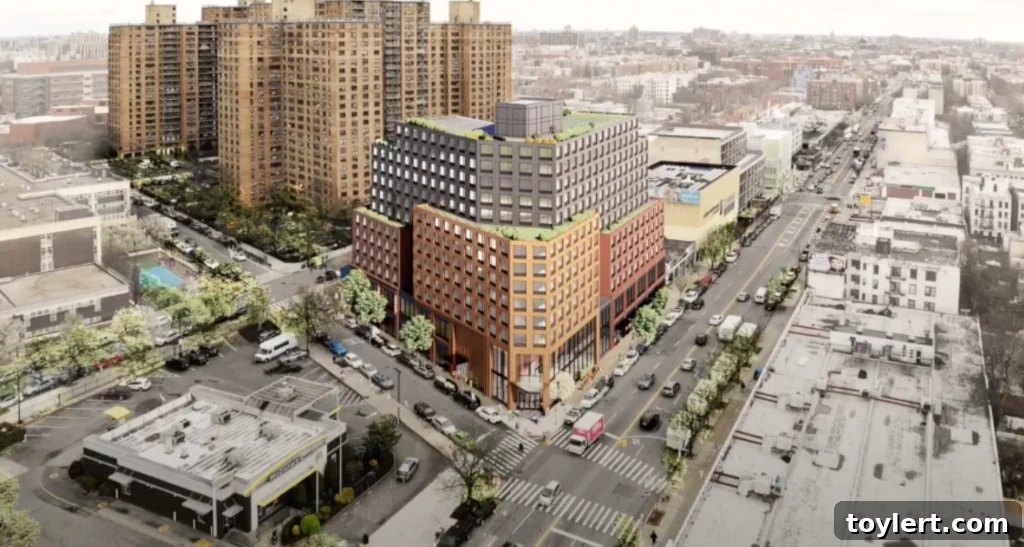
A contentious proposal to rezone and construct a substantial 13-story mixed-use development at the prominent intersection of Empire Boulevard and McKeever Place has ignited significant community pushback in Crown Heights, Brooklyn. During a recent public hearing, hosted by Brooklyn Borough President Antonio Reynoso, local residents articulated a range of serious concerns. Chief among these worries were the potential for the towering structure to cast extensive shadows over nearby children’s play areas, its perceived incompatibility with the existing neighborhood character, and critical doubts regarding the genuine affordability of its residential units for current local inhabitants.
The developer behind this ambitious project, Bridges Development Group, operating under the LLC Empire Boulevard Holdings, officially filed the rezoning application for the site located at 73-99 Empire Boulevard. This address currently hosts a distinctive Gothic-style single-story garage dating back to the 1920s, a structure that holds a unique place in the area’s architectural history. The proposed rezoning seeks a drastic alteration from its current C8-2 and R6 zoning designations, which include a C1-3 overlay, to a new C4-4D classification. This seemingly technical change carries profound implications for the scale and density of future construction on the site.
Understanding the Proposed Development: Scale, Scope, and Community Impact
The shift to a C4-4D zoning district would pave the way for a significantly larger structure than currently permitted. Under the new zoning, the plan outlines a building reaching 13 stories high and approximately 145 feet tall. This vertical expansion would dramatically alter the skyline of this section of Crown Heights. The development is designed to incorporate 261 apartment units, a substantial addition to the local housing stock. Crucially, 78 of these units are designated as rent-stabilized and would be categorized as “affordable” through the city’s Mandatory Inclusionary Housing (MIH) program. While the inclusion of affordable units is often lauded as a step towards addressing New York City’s housing crisis, residents are questioning whether these units will truly meet the economic needs of the existing community.
Beyond residential spaces, the project also dedicates an impressive 98,000 square feet to commercial use. This commercial component is slated to include a much-anticipated grocery store, a feature that could potentially serve a long-standing need for fresh food options in the immediate vicinity. Furthermore, the application specifies a generous allocation of 190 parking spaces, exceeding the minimum requirement of 144 spots. This surplus of parking, while seemingly a bonus for future residents and shoppers, also raises questions about urban planning priorities in a neighborhood striving for sustainable, transit-oriented development.
Shadows Over Playgrounds: A Primary Concern for Families
One of the most emotionally charged arguments presented by Crown Heights locals revolves around the potential for the 145-foot-tall structure to cast extensive shadows over nearby children’s play areas. For a dense urban environment like Crown Heights, access to sunlight and open space is invaluable, especially for parks and playgrounds where children gather. Residents fear that prolonged periods of shade could diminish the quality of life for young families, reduce opportunities for outdoor play and sunlight exposure vital for health, and potentially make these spaces less inviting during cooler months. The community cherishes its limited green spaces, and any threat to their usability is met with strong resistance. This concern highlights a broader issue in urban development: the delicate balance between increasing density and preserving essential public amenities and environmental quality.
Maintaining Neighborhood Context and Architectural Harmony
Another significant point of contention is the belief that the proposed 13-story building would be “out of context” with the existing architectural fabric of Crown Heights. The neighborhood is known for its diverse housing styles, including historic row houses and lower-rise buildings that contribute to its distinctive character. The current site, home to a unique Gothic-style 1920s garage, stands as a testament to an earlier era of Brooklyn’s development. Residents argue that a monolithic 13-story structure would not only dwarf its surroundings but also set a potentially unwelcome precedent for future developments, threatening to erase the very characteristics that make Crown Heights a desirable place to live. The debate extends beyond mere aesthetics; it delves into the preservation of community identity and the fear of rapid, character-altering gentrification driven by large-scale, out-of-scale developments.
The True Meaning of “Affordable Housing” in a Growing City
The inclusion of 78 “affordable” units, rent-stabilized through the Mandatory Inclusionary Housing (MIH) program, is a core component of the developer’s plan. However, residents expressed skepticism about whether these units would genuinely be affordable for the current median income levels within Crown Heights. The MIH program often defines affordability based on area median income (AMI) for a broader region, which can be significantly higher than the actual incomes of many long-term residents in specific neighborhoods. This disconnect frequently leads to situations where “affordable” units are still out of reach for those most in need, inadvertently contributing to the displacement of existing communities rather than providing true relief. Community members are calling for a more localized and nuanced approach to defining affordability, one that truly reflects the economic realities of their neighborhood and prevents further gentrification.
The ULURP Process and Community Engagement
The public hearing organized by Brooklyn Borough President Antonio Reynoso is a crucial stage in New York City’s Uniform Land Use Review Procedure (ULURP). This multi-step process is designed to ensure that major land use decisions involve public input and review from various stakeholders. The Borough President’s recommendations, while advisory, carry significant weight and influence in subsequent stages, which include review by the City Planning Commission and ultimately, the City Council. The outpouring of community concerns at this hearing underscores the vital role of civic engagement in shaping urban development. Residents are utilizing every available avenue to ensure their voices are heard and that the future growth of their neighborhood reflects their needs and values.
The engagement at the hearing went beyond simple objections; it highlighted a community deeply invested in its future. Local groups presented detailed analyses of the project’s potential impacts, emphasizing the strain on existing infrastructure, including schools, public transportation, and sanitation services. While the proposed grocery store was acknowledged as a potential benefit, questions arose about its ability to truly integrate with local businesses and whether its pricing would be accessible to all residents, or if it would cater primarily to a new, higher-income demographic drawn by the luxury apartments.
Looking Ahead: What’s Next for 73-99 Empire Boulevard?
Following the Borough President’s hearing and subsequent recommendations, the rezoning application will proceed to the City Planning Commission for further review and a binding vote. Should it pass there, the ultimate decision rests with the New York City Council, specifically the local council member whose district encompasses the proposed development. This final stage is often where political negotiations and community advocacy reach their peak, as council members frequently weigh community sentiment heavily in their final decisions. The Crown Heights community remains mobilized and determined to continue advocating for a development plan that aligns with their vision for a sustainable, equitable, and historically sensitive neighborhood.
The proposed development at 73-99 Empire Boulevard serves as a microcosm of the larger challenges facing rapidly urbanizing neighborhoods across New York City. It encapsulates the tension between the pressing need for housing, the desire for economic growth, and the equally critical imperative to preserve neighborhood character, ensure true affordability, and protect essential community amenities like sunlight for children’s play areas. The residents of Crown Heights are not simply opposing development; they are advocating for thoughtful, context-sensitive urban planning that prioritizes the well-being and long-term vitality of their beloved community.