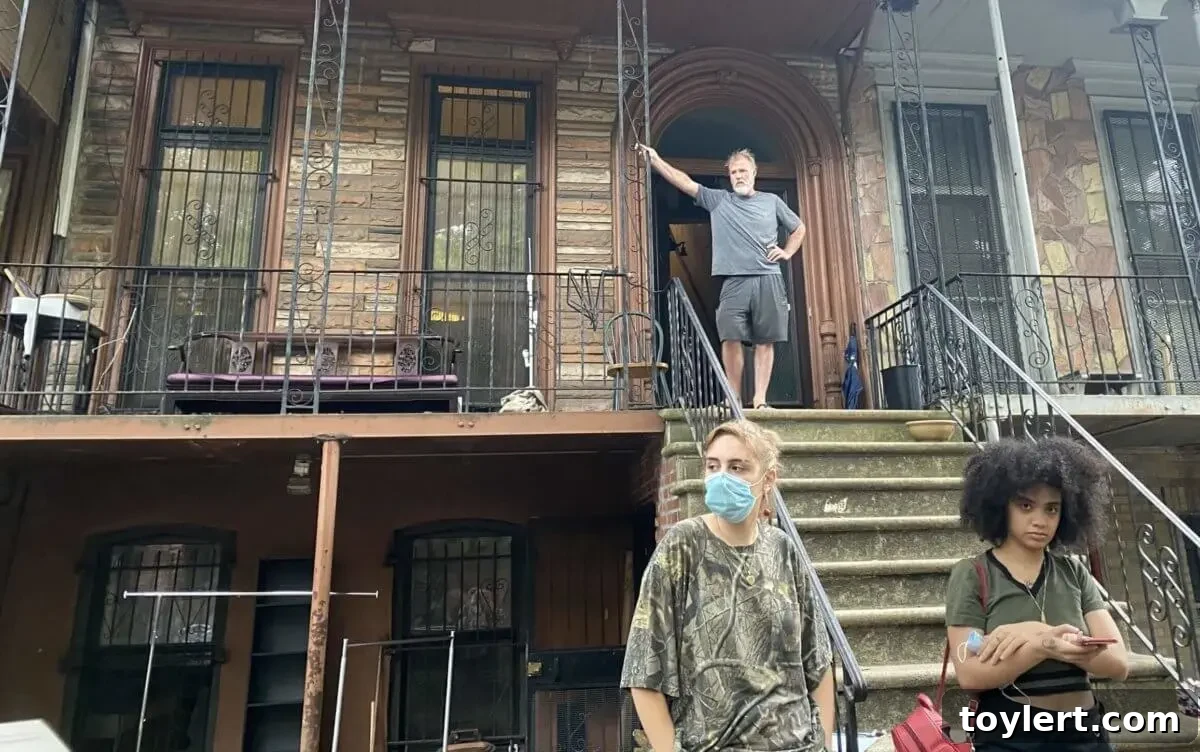
Tenants Demand Justice: Unlawful Eviction Battle at 1214 Dean Street Takes Center Stage
A contentious legal battle is unfolding in Brooklyn as former residents of a building on Dean Street are actively seeking to join a significant lawsuit initiated by New York City against their former landlords. These tenants allege they were subjected to a ruthless campaign of illegal eviction and systematic harassment throughout the summer, actions that left them displaced and seeking redress. Their determined effort highlights the critical need for tenant protection and accountability for landlords who flout housing laws.
The urgency of their request is palpable. “We want to make sure that the former tenants of 1214 Dean [Street] are added as plaintiffs so that they can get both the compensation and the restitution that they deserve, based on the harm that was done this past summer,” stated Michael Higgins Jr., a representative from the Brooklyn Movement Center. This organization, along with TakeRoot Justice, is providing crucial assistance to the affected tenants, advocating tirelessly for their inclusion in the city’s legal proceedings.
The City’s Stance: Confronting Notorious Landlords
The City of New York announced its lawsuit against the landlords, Loretta Gendville and Gennaro Brooks-Church, in November. The suit targets these individuals, who have gained a reputation as “notorious landlords” within the community, for allegedly violating the stringent New York City Unlawful Eviction Law and multiple provisions of the city’s construction code. This legal action underscores the city’s commitment to upholding tenant rights and combating predatory practices that destabilize communities and exploit vulnerable residents.
The allegations against Gendville and Brooks-Church are severe, painting a picture of deliberate efforts to force tenants out of their homes. Such tactics often include a range of illegal actions, from cutting essential services like heat and hot water to initiating disruptive and unpermitted construction work designed to make living conditions unbearable. These actions, particularly during a period when housing security is paramount, represent a profound betrayal of a landlord’s legal and ethical responsibilities.
Understanding Illegal Eviction and Tenant Harassment in NYC
New York City has some of the strongest tenant protection laws in the nation, precisely because of the acute housing crisis and the potential for landlord abuse. The New York City Unlawful Eviction Law is a cornerstone of these protections, explicitly outlining what constitutes a legal eviction process and strictly prohibiting any attempt by a landlord to remove a tenant without a court order. This includes tactics such as changing locks, removing a tenant’s belongings, or threatening tenants to vacate their apartments.
Tenant harassment, often a precursor or companion to illegal eviction, encompasses a broad spectrum of behaviors intended to pressure tenants into leaving their homes. This can range from persistent, unwarranted communications and frivolous lawsuits to neglecting necessary repairs, creating hazardous living conditions, or performing construction work without proper permits and safety measures. For the tenants of 1214 Dean Street, the summer months became a crucible of such alleged harassment, turning their homes into sites of stress and uncertainty.
The impact of unlawful eviction and harassment extends far beyond the immediate inconvenience. It can lead to severe financial distress, forcing displaced families to seek emergency housing or endure significant relocation costs. Emotionally, it can be devastating, causing anxiety, depression, and a deep sense of injustice. The stability of one’s home is fundamental to well-being, and its threatened loss through illegal means constitutes a profound violation.
The Role of Advocacy: Brooklyn Movement Center and TakeRoot Justice
In the complex landscape of tenant-landlord disputes, advocacy groups play an indispensable role. The Brooklyn Movement Center and TakeRoot Justice exemplify this vital support system. These organizations provide much more than just legal advice; they offer a comprehensive network of assistance that includes community organizing, tenant education, and direct legal representation.
The Brooklyn Movement Center is renowned for its grassroots activism, empowering residents to collectively address issues affecting their neighborhoods, including housing rights. Their involvement ensures that the voices of the tenants are heard not just in the courtroom but also within the broader community and political discourse. TakeRoot Justice, on the other hand, brings robust legal expertise, helping tenants navigate the intricate legal system, understand their rights, and build strong cases against exploitative landlords.
Their joint efforts in this case are crucial. They are not merely assisting individuals but are also working to set a precedent, sending a clear message that such unlawful actions will not go unchallenged in New York City. By advocating for the tenants’ inclusion as plaintiffs, they aim to maximize the potential for the victims to receive full compensation for their losses, including potential damages for emotional distress, relocation expenses, and the market difference for new housing.
The Larger Picture: A City Grappling with Housing Insecurity
The situation at 1214 Dean Street is not an isolated incident but rather a microcosm of a larger struggle unfolding across New York City. In a city where housing costs continue to soar and affordable housing remains scarce, tenants are increasingly vulnerable to landlords who seek to capitalize on rising property values by displacing long-term residents. The COVID-19 pandemic further exacerbated these tensions, placing unprecedented strain on both tenants and property owners, sometimes leading to illegal eviction attempts when legal avenues seemed too slow or restrictive.
The city’s active pursuit of landlords like Gendville and Brooks-Church signals a commitment to protect its residents and maintain the integrity of its housing laws. Such lawsuits serve as a deterrent, reminding other property owners that there are severe consequences for violating tenant protections. They also provide a pathway for justice for those who have been wronged, offering a glimmer of hope in what can often feel like an overwhelming battle.
Furthermore, this case underscores the need for robust enforcement mechanisms and continued legislative efforts to strengthen tenant rights. As the housing market evolves, so too must the tools available to protect those most at risk of displacement. Community vigilance, coupled with strong legal advocacy, is essential in safeguarding the diverse fabric of neighborhoods like Crown Heights, where 1214 Dean Street is located.
The Path Forward: Seeking Compensation and Restitution
The request to add the former tenants of 1214 Dean Street as plaintiffs in the city’s lawsuit is a critical procedural step that could significantly impact the outcome for those directly affected. If successful, it would grant them a direct voice and standing in the legal proceedings, enabling them to seek specific damages tailored to the individual harms they suffered.
Compensation in such cases can include financial remuneration for rent paid while services were withheld, costs associated with finding new housing, storage fees for belongings, and damages for the emotional and psychological toll of harassment and illegal displacement. Restitution aims to restore what was lost, potentially including the right to return to their former homes if conditions allow, or significant financial settlements to mitigate their losses.
The determination of these tenants, supported by dedicated advocacy groups and the city’s legal apparatus, sends a powerful message. It asserts that homes are not mere commodities to be manipulated for profit, but fundamental spaces where individuals and families build their lives. The fight at 1214 Dean Street is more than just a legal battle; it is a fight for dignity, housing security, and the affirmation of fundamental tenant rights in one of the world’s most dynamic and challenging real estate markets.
As the legal process unfolds, all eyes will be on this case, watching to see if justice will be served for the former residents of 1214 Dean Street and if their pursuit of accountability will pave the way for a stronger, more equitable housing landscape for all New Yorkers.