Crown Heights, a sprawling and vibrant neighborhood in the heart of Brooklyn, stands as a testament to New York City’s rich tapestry of history, culture, and community spirit. Known for its distinctive brownstones, tree-lined streets, and incredibly diverse population, Crown Heights offers a unique blend of historical charm and contemporary dynamism. From its elevated topography that once inspired its name to its status as a global cultural crossroads, this Brooklyn enclave tells a compelling story of urban evolution, resilience, and profound cultural heritage.
The Genesis of a Name: Unraveling “Crown Heights”
The name “Crown Heights” itself offers a fascinating glimpse into the neighborhood’s topographical past and its aspirational development. Historically, the area was characterized by a distinct ridge, one of the highest points in central Brooklyn. This elevated terrain, a literal “crown” of land, lent itself naturally to the descriptive nomenclature. The name wasn’t officially adopted until the early 20th century, emerging from the consolidation of several smaller communities, including Crow Hill, Prospect Heights (which once extended further east), and parts of Weeksville. The prominent thoroughfare, Crown Street, which traverses the neighborhood east to west, also played a pivotal role in solidifying this identity. Thus, “Crown Heights” became a fitting appellation for a neighborhood literally sitting atop Brooklyn, signifying both its elevation and its emerging prominence.
From Rural Outpost to Urban Grandeur: Early Development
Before its transformation into the densely populated residential area we know today, Crown Heights existed as largely rural farmland in the 19th century, dotted with scattered estates and small villages like Weeksville, one of the nation’s first free African American communities. The area’s significant development began in earnest in the late 1800s, driven by the expansion of Brooklyn and the vision of urban planners. Frederick Law Olmsted and Calvert Vaux, the masterminds behind Central Park and Prospect Park, designed Eastern Parkway as a grand, tree-lined boulevard, intended as a scenic connection between Prospect Park and the Brooklyn Museum. This ambitious project, along with improved transportation links like streetcars and later the subway, opened up Crown Heights for extensive residential construction. Elegant brownstones, limestone row houses, and stately apartment buildings began to replace farmlands, attracting middle and upper-class families looking for spacious homes with easy access to Manhattan.
A Kaleidoscope of Cultures: The West Indian Legacy
Crown Heights is perhaps most widely recognized for its vibrant West Indian population, a community that has profoundly shaped the neighborhood’s character and culture since the mid-20th century. Immigrants from the Caribbean islands, particularly Trinidad and Tobago, Jamaica, Barbados, and Guyana, began settling in large numbers, bringing with them rich traditions, flavors, and rhythms. This strong West Indian presence culminates annually in the spectacular West Indian Day Parade on Labor Day, a dazzling display of cultural pride that draws millions of spectators to Eastern Parkway. The parade, a true festival of vivacious feather headdresses, intricate costumes, pulsating calypso and soca music, and tantalizing street food, transforms the main thoroughfare into a kaleidoscope of Caribbean joy. Beyond the parade, the West Indian influence permeates daily life, evident in the numerous roti shops, jerk chicken eateries, and Caribbean markets that line the streets, offering authentic tastes and sounds of the islands.
The Lubavitcher Legacy: A Global Spiritual Hub
In stark contrast, yet coexisting vibrantly within Crown Heights, is the world headquarters of the Chabad-Lubavitch Hasidic movement, a prominent sect of Orthodox Judaism. Headquartered at 770 Eastern Parkway, this iconic building serves as the spiritual and administrative center for Chabad communities across the globe. The Lubavitcher Rebbe, Menachem Mendel Schneerson, led the movement from this location, transforming it into a beacon of Jewish life and learning. The southern part of Crown Heights boasts the highest concentration of Lubavitcher followers outside of Israel, creating a distinct cultural and religious landscape. The community maintains its unique traditions, language (Yiddish is commonly spoken alongside English), and customs, contributing another rich layer to Crown Heights’ diverse identity. Synagogues, yeshivas, kosher markets, and specialty bakeries are integral parts of this area, fostering a strong sense of communal belonging and spiritual devotion. The global reach of Chabad-Lubavitch means that visitors and adherents from all corners of the world often travel to 770 Eastern Parkway, making Crown Heights a truly international spiritual destination.
Architectural Grandeur and Historic Charm
Beyond its diverse populations, Crown Heights is celebrated for its stunning architecture, primarily its well-preserved brownstones and limestone row houses. Many of these date back to the late 19th and early 20th centuries, showcasing intricate details, stoops, and bay windows characteristic of the period. Several parts of the neighborhood have been designated historic districts, safeguarding their architectural integrity and ensuring the preservation of their unique streetscapes. Walking through Crown Heights reveals block after block of these elegant structures, interspersed with larger apartment buildings and charming pre-war cooperatives. Eastern Parkway, with its wide median and mature trees, remains an architectural marvel, reflecting the grandeur of Olmsted and Vaux’s original vision. The visual appeal of these historical buildings, combined with the mature street trees, creates a charming and aesthetically pleasing environment that continues to attract residents and admirers alike.
Green Spaces and Community Hubs
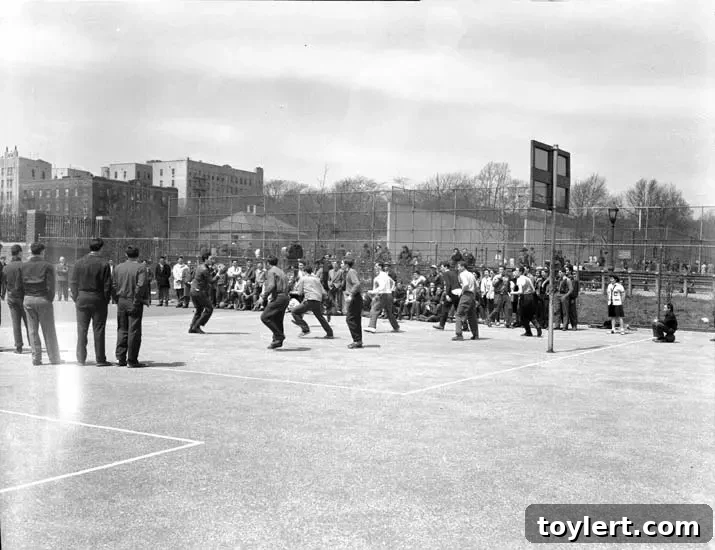
Amidst the urban density, Crown Heights offers several vital green spaces that serve as community hubs and recreational escapes. Lincoln Terrace Park, prominently featured in our archival image from 1943, remains a beloved fixture in the neighborhood’s southeastern corner. This park provides residents with basketball courts, playgrounds, and open areas for relaxation and community gatherings, embodying a timeless spirit of neighborhood interaction. Its historical significance, captured in moments like the basketball contest, underscores its enduring role in local life. Furthermore, Crown Heights benefits from its close proximity to some of Brooklyn’s most cherished natural and cultural institutions, including Prospect Park, the Brooklyn Botanic Garden, and the Brooklyn Museum. While not strictly within its borders, these neighboring gems offer Crown Heights residents unparalleled access to vast green expanses, world-class botanical collections, and significant cultural exhibits, enriching the quality of life for all.
A Culinary Journey Through Crown Heights
The culinary landscape of Crown Heights mirrors its cultural diversity, offering an exciting array of dining experiences. The neighborhood is a paradise for food enthusiasts seeking authentic Caribbean flavors, with countless establishments serving up succulent jerk chicken, flavorful curries, flaky rotis, and refreshing tropical juices. But the gastronomic journey doesn’t stop there. Reflecting its Lubavitcher community, the area also boasts a selection of kosher bakeries, delis, and restaurants, offering traditional Jewish fare and unique specialties. In recent years, Crown Heights has also seen an influx of new restaurants and cafes, reflecting Brooklyn’s broader culinary renaissance. Upscale Mexican eateries, innovative fusion cuisine, artisan coffee shops, and trendy bars now stand alongside long-standing local favorites, creating a dynamic and eclectic dining scene that caters to every palate and preference. From a quick bite to a leisurely brunch, Crown Heights offers an adventure for the taste buds.
Modern Dynamics and Community Life
Today, Crown Heights continues to evolve, navigating the complexities of urban development and demographic shifts. The neighborhood has experienced significant growth and revitalization, attracting new residents and businesses. This growth brings with it a blend of challenges and opportunities, including discussions around gentrification and the preservation of its diverse community fabric. Yet, through it all, Crown Heights maintains a strong sense of identity and community pride. Local initiatives, cultural events, and a vibrant street life foster connections among its residents, creating a dynamic environment where old traditions meet new aspirations. The ease of access to public transportation, bustling commercial corridors, and a thriving arts scene further cement Crown Heights’ status as a desirable and exciting place to live, work, and explore. It is a neighborhood where history is palpable, culture is celebrated, and the future is continuously being shaped by its diverse inhabitants.
The Enduring Spirit of Crown Heights
In essence, Crown Heights is more than just a dot on the Brooklyn map; it is a living, breathing testament to the power of diversity and community. From its elevated “crown” that gave it its name to its status as a nexus for global cultures, it stands as a unique embodiment of urban life. It is a neighborhood where the vibrant rhythms of the West Indies merge with the profound traditions of Hasidic Judaism, all set against a backdrop of historic brownstones and modern aspirations. Crown Heights continues to be a place of discovery, a testament to Brooklyn’s enduring spirit, and a captivating chapter in the ongoing story of New York City.