Exploring Cypress Hills: A Hidden Gem on Brooklyn’s Eastern Edge
Welcome to Nabe Names, our ongoing exploration into the fascinating origins and compelling narratives behind Brooklyn’s most unique neighborhoods. Today, we delve into Cypress Hills, a vibrant community that stands as a testament to Brooklyn’s rich history and diverse cultural tapestry. Nestled strategically at the border of Brooklyn and Queens, Cypress Hills offers a distinctive blend of urban character and residential charm, making it a compelling subject for those curious about New York City’s lesser-known enclaves.
Cypress Hills occupies a significant geographical position, acting as a natural boundary between two of New York City’s largest boroughs. To its west lie the easternmost extensions of Bushwick, a neighborhood renowned for its artistic flair and burgeoning development. To its east, Cypress Hills seamlessly transitions into Queens, bordering the established communities of Woodhaven and Ozone Park. While often considered a subsection of the much larger East New York neighborhood, Cypress Hills carves out its own unique identity, distinguished by its particular historical trajectory, architectural heritage, and the spirited character of its residents.
The demographic landscape of Cypress Hills is as rich and varied as Brooklyn itself. It embodies a truly polyglot makeup, reflecting generations of immigration and settlement. Large Latino and African-American populations form significant parts of its community, contributing vibrant cultural traditions, diverse culinary scenes, and a strong sense of neighborhood pride. In recent decades, Cypress Hills has also become home to growing South Asian and Caribbean immigrant communities, further enriching the area’s cultural mosaic. This blend of backgrounds fosters a dynamic environment where multiple languages are spoken, various cuisines are enjoyed, and a rich tapestry of traditions flourishes daily, making Cypress Hills a microcosm of global diversity within the heart of New York City.
A Journey Through Time: The Historical Roots of Cypress Hills
The name “Cypress Hills” is deeply intertwined with its most prominent landmark: the Cypress Hills Cemetery. Established in 1848, this sprawling burial ground was one of the first non-sectarian and nondenominational cemeteries in the outer boroughs, offering a final resting place regardless of religious affiliation. The cemetery itself, an expansive and verdant space that stretches across the northern border of the neighborhood and into Queens, became a defining feature. Its very presence shaped the development of the surrounding residential areas, and its name lent itself directly to the burgeoning community.
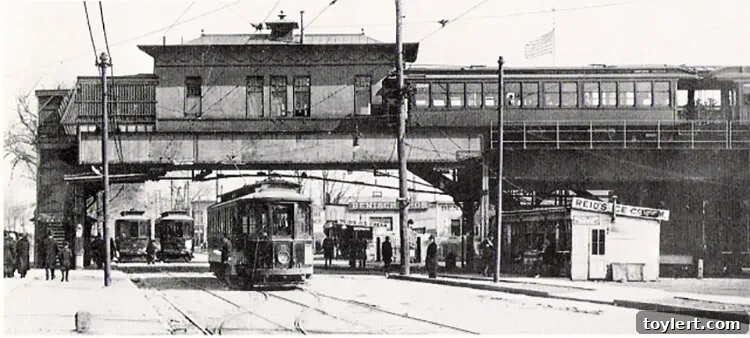
Prior to its residential development, the area was characterized by its elevated terrain and natural woodlands, which likely included cypress trees or other evergreens that contributed to its descriptive moniker. As Brooklyn expanded eastward in the late 19th and early 20th centuries, Cypress Hills began to attract new residents seeking a more suburban feel while remaining within easy reach of Manhattan and downtown Brooklyn. The establishment of transportation links, such as the historic Cypress Hill Station depicted above, played a crucial role in facilitating this growth, connecting the neighborhood to the broader metropolitan area and allowing for the influx of working-class families and immigrants.
The early architecture of Cypress Hills reflects this period of rapid expansion. Despite its relatively modest size – occupying less than a square mile – the neighborhood boasts an impressive stock of historic row houses. These charming homes, often built in styles popular during the late Victorian and early 20th century eras, such as Queen Anne, Romanesque Revival, and Neo-Grec, provide a tangible link to the past. Many feature intricate brickwork, bay windows, stoops, and decorative cornices, showcasing the craftsmanship of a bygone era. Unlike some more gentrified areas of Brooklyn, Cypress Hills has largely retained its architectural integrity, offering a glimpse into what Brooklyn looked like before widespread redevelopment.
Architectural Splendor and Urban Green Spaces
The “impressive stock of historic row houses” in Cypress Hills is more than just an aesthetic detail; it’s a significant part of the neighborhood’s identity and appeal. These aren’t just old buildings; they represent a rich tapestry of residential design. Walking through certain blocks, one can observe well-preserved facades that speak volumes about the evolving architectural tastes and economic conditions of the eras they were built. For a neighborhood that often flies under the radar compared to its more famous Brooklyn counterparts, this concentration of historic homes is a pleasant surprise and a valuable asset, attracting those who appreciate architectural history and a sense of permanence.
Beyond the residential streets, the Cypress Hills Cemetery itself serves as a vital green lung for the community. More than just a burial ground, it functions as an expansive urban park, offering residents a serene space for quiet reflection, leisurely walks, and a connection with nature. Its rolling hills, mature trees, and diverse flora and fauna provide a stark contrast to the surrounding urban density, making it a beloved retreat. The cemetery’s historical significance, housing the graves of numerous prominent figures and veterans, further adds to its gravitas, serving as a silent chronicler of New York City’s past.
Life in Cypress Hills: Community, Culture, and Connectivity
Living in Cypress Hills means being part of a close-knit community that celebrates its diversity. Local businesses, from bustling bodegas and Caribbean bakeries to South Asian spice shops and traditional Latin American restaurants, line the main thoroughfares, providing essential services and a taste of global cuisines. These establishments are more than just commercial entities; they are community hubs where neighbors connect and cultures converge, contributing to the unique flavor of the area.
Connectivity is another hallmark of Cypress Hills. Residents benefit from access to several subway lines, including the J and Z trains, providing efficient commutes to Manhattan, downtown Brooklyn, and other key areas of the city. This excellent public transportation infrastructure ensures that despite its eastern location, Cypress Hills remains well-integrated into the broader fabric of New York City life. Additionally, local buses provide further intra-borough travel options, enhancing accessibility for all.
Education and recreational opportunities also contribute to the neighborhood’s appeal. Cypress Hills is home to various public and private schools, catering to the educational needs of its young residents. Several smaller parks and playgrounds complement the vast green expanse of the cemetery, offering spaces for children to play and families to gather. Community centers and local organizations actively work to enhance the quality of life, providing programs, resources, and events that strengthen social ties and foster a supportive environment for all ages.
The Enduring Appeal of a Borderland Neighborhood
Cypress Hills stands as a compelling example of a Brooklyn neighborhood that has steadfastly retained its character while embracing change and diversity. Its position as a borderland between Brooklyn and Queens has imbued it with a unique identity, neither fully one nor the other, but a vibrant fusion. The impressive collection of historic row houses speaks to a rich architectural legacy, while the sprawling Cypress Hills Cemetery provides both a namesake and an invaluable green sanctuary. The polyglot population ensures a dynamic and ever-evolving cultural landscape, making it a truly fascinating place to live and explore.
In a city that is constantly transforming, Cypress Hills offers a sense of rootedness and authenticity. It’s a neighborhood where history is palpable on its tree-lined streets, where the aroma of diverse cuisines wafts from local eateries, and where the sounds of multiple languages blend into a harmonious urban symphony. For those seeking a vibrant community with deep historical roots, architectural charm, and an unwavering spirit of diversity, Cypress Hills remains one of Brooklyn’s most captivating, yet often unsung, treasures.