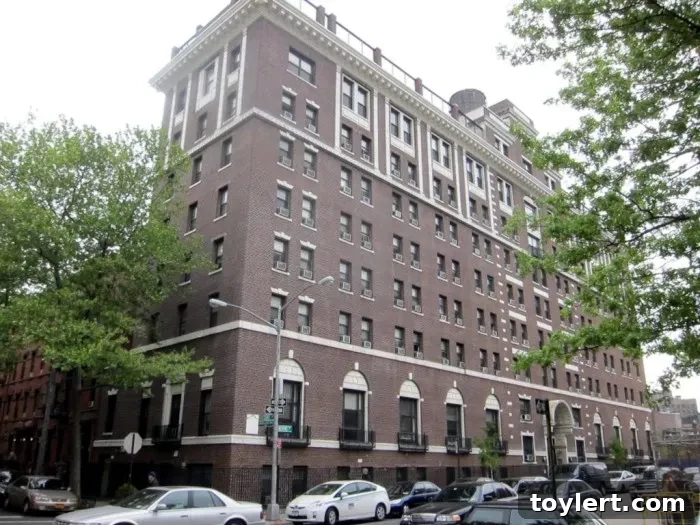
The Enduring Legacy of 50-66 Nevins Street: From Harriet Judson Residence to a Modern Adult Care Facility in Brooklyn
Brooklyn is a borough rich with history, where every street and every building tells a unique story. Among these architectural narratives, the structure at 50-66 Nevins Street stands as a compelling testament to transformation and resilience. Originally known as the Harriet Judson Residence, this prominent Brooklyn landmark has adapted with the times, evolving from a vital haven for young working women into a compassionate adult care residence, serving the community’s changing needs.
Nestled in the bustling heart of Downtown Brooklyn, this impressive building encapsulates decades of social change, architectural evolution, and community service. Its imposing facade hints at a past deeply intertwined with the borough’s development, while its current function reflects a modern commitment to care and support. This article delves into the fascinating journey of 50-66 Nevins Street, exploring its historical significance, architectural character, and its renewed purpose as a vital resource for Brooklynites.
A Glimpse into the Past: The Harriet Judson Residence and the YWCA
To truly appreciate 50-66 Nevins Street, one must look back to its origins. The building was constructed in 1928, during a period of rapid urbanization and social change in New York City. Designed by architect Fred C. Koehler, it was conceived as the Harriet Judson Residence, a flagship project of the Young Women’s Christian Association (YWCA) of Brooklyn. The YWCA played a crucial role in supporting women during the early 20th century, providing safe and affordable housing, vocational training, and social programs for those moving to the city for work or education.
The Harriet Judson Residence was named after a prominent figure or benefactor, embodying the YWCA’s mission to empower women. At a time when single women faced numerous challenges in finding secure and respectable accommodation, facilities like Harriet Judson were indispensable. It offered not just rooms, but a community environment where women could thrive, shielded from the economic and social vulnerabilities of city life. Imagine hundreds of young women, fresh from various parts of the country, finding their footing in the metropolis within its walls, supported by the YWCA’s progressive vision. The residence was a vibrant hub, providing dining facilities, libraries, recreational spaces, and opportunities for social engagement, fostering independence and growth among its residents.
Architecturally, the building reflected the prevailing styles of the era, showcasing a sturdy and dignified institutional design that was both functional and aesthetically pleasing. Its twelve stories rose majestically, a beacon of opportunity and safety for countless women who sought a new life in Brooklyn. The original design prioritized communal living while ensuring individual privacy, a delicate balance crucial for its purpose. The construction itself was a significant undertaking, using durable materials that have allowed the structure to withstand the test of time and remain a prominent feature of the Nevins Street streetscape.
Architectural Splendor and Enduring Design
The architecture of 50-66 Nevins Street is a compelling study in early 20th-century institutional design. Fred C. Koehler’s vision resulted in a building that combines elements of utilitarian efficiency with understated elegance. While not overtly ornate, the facade boasts a robust character, typical of the period’s preference for strong, geometric lines and durable materials. The building’s brickwork, punctuated by regularly spaced windows, creates a rhythmic pattern that speaks to its ordered and structured original purpose. Details such as stone sills, lintels, and subtle decorative motifs around the entrance or upper floors add a touch of refined classicism without overwhelming the overall composition.
Standing tall amidst the evolving urban fabric of Downtown Brooklyn, the building’s scale commands attention. Its robust construction techniques and materials – likely steel-frame with masonry infill – allowed it to serve its original demanding purpose and continue to stand strong today. The large windows were designed to maximize natural light within the living and common areas, a crucial aspect for residents. The entrance, typically the most elaborate part of such structures, would have been designed to convey a sense of welcome and respectability, aligning with the YWCA’s mission. The interior layouts, though repurposed, would have originally featured a logical arrangement of individual rooms, shared bathrooms, and generous common areas, all designed for the comfort and convenience of its female residents.
The strategic location on Nevins Street also contributes to its architectural narrative. Situated in an area that has witnessed immense growth and modernization, the building serves as a tangible link to Brooklyn’s past, providing a striking contrast to the newer, more contemporary structures surrounding it. It is a reminder of the architectural prowess and social foresight that shaped early 20th-century urban environments, demonstrating how well-conceived structures can adapt and remain relevant for generations.
Adaptive Reuse: From Women’s Residence to Adult Care
As social landscapes shift, so too do the needs of a community. By the latter half of the 20th century, the demand for large-scale, institutional residences for working women began to wane, replaced by changing societal norms, greater housing availability, and evolving preferences. Many such YWCA facilities across the country faced the challenge of finding a new purpose. The Harriet Judson Residence was no exception. Its transformation into an adult care residence represents a thoughtful and crucial example of adaptive reuse – a sustainable approach to preserving historic buildings while meeting contemporary community needs.
The conversion of the Harriet Judson Residence into an adult care facility was a significant undertaking. It involved reconfiguring the interior spaces to accommodate the specific requirements of elder care, including accessible rooms, medical facilities, communal dining areas, and activity spaces tailored for seniors. This transformation was not merely about renovation; it was about reimagining the building’s soul to serve a different, yet equally vital, demographic. The sturdy bones of Koehler’s original design, with its emphasis on spaciousness and community areas, likely lent themselves well to this new function, proving the enduring value of well-built architecture.
This repurposing speaks volumes about urban planning and the importance of sustainability. Instead of demolishing a significant historical structure, the building was given a new lease on life, demonstrating how old buildings can continue to contribute meaningfully to their communities. It allowed the spirit of care and community, inherent in its YWCA origins, to persist, albeit for a different generation and with a different focus. This adaptive reuse ensured that 50-66 Nevins Street would continue to be a place of support and well-being in Brooklyn, transforming its legacy without erasing it.
50-66 Nevins Street: A Beacon of Adult Care in Brooklyn
Today, 50-66 Nevins Street operates as a crucial adult care residence, providing essential services and a nurturing environment for its residents. In a dense urban environment like Brooklyn, where the population of seniors is steadily growing, facilities that offer comprehensive care are indispensable. This residence offers a range of services designed to promote the health, dignity, and independence of its elderly residents, making it a cornerstone of senior care in the borough.
An adult care residence typically provides assistance with daily living activities, medication management, meal services, social programs, and often on-site medical or nursing support. For families in Brooklyn, knowing that a loved one resides in a secure, supportive, and engaging environment within their community offers immense peace of mind. The transition from a residence for young working women to a facility for seniors highlights a continuous thread of community service that has defined the building’s history.
The location itself is a significant advantage. Situated in Downtown Brooklyn, residents and their families benefit from easy access to public transportation, medical facilities, cultural institutions, and parks. This connectivity allows residents to maintain ties with their community and loved ones, fostering a sense of belonging and reducing isolation. The adult care residence at 50-66 Nevins Street is not just a building; it is a vibrant community that offers dignity, comfort, and comprehensive care, echoing the foundational principles of its YWCA past in a modern context.
The Dynamic Neighborhood of Downtown Brooklyn
The location of 50-66 Nevins Street places it squarely within one of Brooklyn’s most dynamic and rapidly evolving neighborhoods: Downtown Brooklyn. Once primarily a commercial and civic hub, Downtown Brooklyn has undergone a dramatic transformation over the past two decades, becoming a thriving residential, educational, and cultural center. This vibrant area is characterized by a fascinating blend of historic architecture and sleek modern skyscrapers, creating a cityscape that is both rooted in the past and focused on the future.
The immediate vicinity of Nevins Street offers unparalleled convenience. It is a nexus of transportation, with numerous subway lines (including the 2, 3, 4, 5, A, C, F, and R trains) providing swift access to Manhattan and other parts of Brooklyn. This accessibility is crucial for both staff and visitors to the adult care residence, ensuring ease of travel. Moreover, Downtown Brooklyn boasts an array of amenities, including a diverse selection of restaurants, shops, and cultural venues like the Brooklyn Academy of Music (BAM), the Brooklyn Bridge Park, and various academic institutions.
The presence of an adult care facility in such a bustling urban environment underscores the commitment to creating inclusive communities where residents of all ages can live and thrive. It means seniors can remain close to their families and continue to be active participants in the vibrant life of Brooklyn. The energy and resources of Downtown Brooklyn provide a stimulating backdrop for the residents of 50-66 Nevins Street, connecting them to the pulse of the city while providing a safe and caring sanctuary.
Preserving Brooklyn’s Architectural and Social Heritage
The story of 50-66 Nevins Street is a powerful narrative about the importance of preserving architectural heritage while adapting to social change. Brooklyn, with its rich tapestry of historical buildings, continually grapples with the balance between development and preservation. This building serves as an exemplary model of how a significant historical structure can be thoughtfully repurposed, ensuring its longevity and continued relevance.
The conversion from the Harriet Judson Residence to an adult care facility is more than just a change in function; it represents a continuum of care and community service. It acknowledges the historical context of the building—its original role in supporting women—and translates that ethos into a modern mission of caring for seniors. This adaptive reuse prevents the loss of valuable urban fabric and the stories embedded within its walls, contributing to the unique character and identity of Brooklyn.
As Brooklyn continues its rapid growth and transformation, buildings like 50-66 Nevins Street stand as vital anchors to its past, reminding us of the diverse needs and innovative solutions that have shaped the borough over the centuries. Their enduring presence enriches the urban landscape and provides a tangible link to the social and architectural history that defines this remarkable city.
Conclusion: An Enduring Brooklyn Landmark
From its inception as a pioneering residence for working women to its current role as a compassionate adult care facility, 50-66 Nevins Street has remained a significant landmark in Brooklyn. The former Harriet Judson Residence, a testament to Fred C. Koehler’s enduring design and the YWCA’s visionary mission, has gracefully transitioned through the decades, reflecting the changing social fabric of the borough.
Its journey from a bustling hub for women seeking independence to a tranquil haven for seniors requiring care underscores the power of adaptive reuse and the enduring value of well-constructed architecture. This building is more than just bricks and mortar; it is a repository of countless stories, a symbol of community resilience, and a living example of how Brooklyn honors its past while embracing its future. As one of Brooklyn’s most distinguished buildings, 50-66 Nevins Street continues to serve as a vital resource, embodying a legacy of care and community that spans nearly a century.