Brooklyn’s Enduring Legacy: Uncovering the Story of 638-344 DeGraw Street
Brooklyn, one building at a time, reveals its layered history and vibrant evolution. Each structure, from grand brownstone to humble industrial edifice, tells a unique tale of adaptation, resilience, and the relentless pulse of urban change. Today, we turn our gaze to a remarkable building at 638-344 DeGraw Street, a structure that once served as the bustling Eureka Garage and now stands as the home of Bush Wholesalers. This unassuming building in the heart of Brooklyn offers a compelling narrative of the borough’s industrial past and its dynamic present, embodying the spirit of regeneration that defines so much of New York City.
Nestled within the vibrant, ever-evolving landscape that bridges the historic charm of Carroll Gardens and the industrial grit of Gowanus, 638-344 DeGraw Street represents more than just bricks and mortar. It is a monument to Brooklyn’s continuous reinvention. As we delve into its past and present, we uncover how a single building can encapsulate broader themes of urban development, architectural endurance, and community transformation. This feature aims to illuminate the architectural significance and historical journey of this particular Brooklyn landmark, offering insights into the forces that have shaped its form and function over the decades. Understanding such structures is key to appreciating the rich tapestry of Brooklyn’s heritage and its ongoing dialogue between preservation and progress.
From Wheels to Wares: The Transformation of a DeGraw Street Landmark
The Genesis of Eureka Garage: Fueling Brooklyn’s Automotive Boom
At the turn of the 20th century, as automobiles transitioned from luxury items to essential modes of transport, cities like Brooklyn experienced an explosion in demand for automotive services. Garages, repair shops, and fueling stations became crucial infrastructure. The Eureka Garage, established likely in the early decades of the 1900s, was one such vital establishment. Its strategic location on DeGraw Street, a thoroughfare connecting residential areas with industrial zones and major transportation arteries, made it an ideal spot for motorists and businesses alike. This period saw rapid industrialization across Brooklyn, and the rise of automotive culture profoundly influenced urban planning and commercial enterprise.
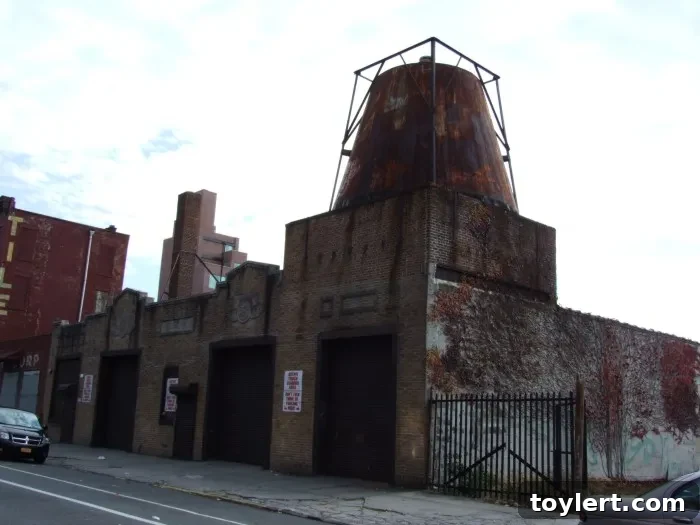
The architecture of the Eureka Garage, as still discernible today, speaks volumes about its original purpose. Its robust brick construction, large ground-floor bays designed for vehicle access, and spacious interior volumes were perfectly suited for housing, maintaining, and repairing the era’s burgeoning fleet of cars and trucks. Industrial buildings from this period often emphasized functionality and durability, utilizing sturdy materials like brick and steel to withstand the rigors of heavy machinery and constant activity. The building’s design, characterized by its utilitarian aesthetic, wide window openings to maximize natural light for mechanics, and high ceilings, was a common vernacular for early 20th-century automotive service centers in urban settings. These design choices were not merely practical; they reflected a modernist embrace of efficiency and honest expression of function.
During its heyday, Eureka Garage would have been a hive of activity. Mechanics would have tinkered under hoods, gasoline pumps would have dispensed fuel, and delivery trucks would have come and gone, contributing to the lively hum of the neighborhood. It served not only the local residents of Carroll Gardens and Cobble Hill but also the businesses that flourished along the Gowanus Canal, underscoring its role as a key player in the borough’s burgeoning industrial and commercial ecosystem. The garage was more than just a place for car repairs; it was a community hub for drivers, a testament to the era’s technological advancements, and a cornerstone of local economic activity. Its operation would have provided employment and essential services, cementing its place in the daily lives of many Brooklynites.
Architectural Heritage: Unpacking 638-344 DeGraw Street’s Design
The building at 638-344 DeGraw Street, while primarily functional, exhibits characteristics typical of early 20th-century industrial architecture in Brooklyn. Its multi-story form, likely three or four floors, with prominent fenestration, suggests a design that balanced utility with a certain civic presence. The choice of brick, a ubiquitous material in Brooklyn, not only provided structural integrity and fire resistance but also allowed for decorative articulation, even in an industrial context. Observe the patterns in the brickwork, the lintels above the windows, and the possibly subtly corbelled cornice – these details, while restrained, contribute to the building’s distinct character and anchor it within its historical period. The building’s facade, though unassuming, reflects a craftsmanship that valued durability and straightforward design, characteristic of the era’s industrial construction principles.
Such buildings were often designed by local architects or engineers specializing in industrial commissions, aiming to create spaces that were efficient, durable, and adaptable. The large windows, crucial for providing ample daylight to workshops, also offer a visual rhythm to the facade, preventing it from appearing monolithic. The ground floor, with its expansive openings, clearly facilitated the movement of vehicles and goods, a hallmark of its garage origins. Above, the repeating window modules indicate floors that might have housed offices, parts storage, or lighter manufacturing operations. This layered functionality is a fascinating aspect of its historical blueprint, showcasing how early 20th-century industrial buildings were often designed with a keen understanding of operational flow and potential for various uses. The building’s robust structural system also hints at its capacity to support heavy loads, a critical requirement for both its original and current commercial functions.
These architectural features are not merely aesthetic; they tell a story about the building’s original purpose and the prevailing construction techniques of its time. The solid construction implies longevity, a quality that has allowed it to endure and adapt to new uses. Its scale and placement within the streetscape also speak to urban planning principles of the era, where industrial and commercial enterprises were often integrated into the urban fabric, fostering a lively mix of uses that is increasingly valued today. The presence of such a well-preserved industrial edifice amidst a diverse streetscape enriches the visual and historical narrative of the neighborhood, providing a tangible link to Brooklyn’s working past while serving its present needs.
Bush Wholesalers: A New Chapter for DeGraw Street
As Brooklyn’s economy shifted from heavy industry to a more diverse commercial and service-oriented landscape in the latter half of the 20th century, many industrial buildings faced obsolescence or the need for significant adaptation. The former Eureka Garage was no exception. Its transformation into Bush Wholesalers marks a natural evolution, demonstrating the inherent adaptability of well-built industrial structures. This process of adaptive reuse has become a hallmark of sustainable urban development, allowing cities to preserve their architectural heritage while meeting contemporary commercial needs.
Bush Wholesalers, a prominent entity in the distribution sector, has breathed new life into the historic structure. While the exact nature of their wholesale operations is specific to their business, the choice of this building highlights its suitability for warehousing, logistics, and administrative functions. The spacious interiors, robust floors, and loading bay access that once served automobiles now efficiently accommodate the movement and storage of various goods. This repurposing is a classic example of adaptive reuse, a sustainable practice that preserves architectural heritage while meeting contemporary commercial needs. The transition reflects a broader trend in Brooklyn, where legacy industrial spaces are finding renewed purpose in the burgeoning commercial sector, often becoming hubs for e-commerce fulfillment, specialized distribution, or creative industries.
The transition from a specialized automotive garage to a general wholesaler reflects broader economic trends in Brooklyn and other urban centers. As manufacturing moved elsewhere, older industrial buildings were either demolished or reimagined. 638-344 DeGraw Street stands as a successful example of the latter, its exterior largely preserved, maintaining a visual link to its past, while its interior has been thoughtfully modernized to support current business operations. This blend of old and new contributes to the rich tapestry of Brooklyn’s streetscapes, where historical integrity often coexists with modern functionality. It is a testament to the foresight of businesses that recognize the value of existing infrastructure and the unique character that historic buildings bring to an urban environment.
DeGraw Street and the Gowanus/Carroll Gardens Evolution
DeGraw Street itself is a microcosm of Brooklyn’s transformation. Historically, it served as a critical artery, connecting the residential areas of Carroll Gardens and Cobble Hill to the bustling Gowanus Canal, a vital waterway that facilitated industrial commerce. The presence of buildings like the Eureka Garage underscores the street’s historical role as a nexus for both community services and industrial activity. Over the decades, as the Gowanus Canal area has undergone significant environmental cleanup and rezoning efforts, the character of its surrounding streets, including DeGraw, has continued to evolve. This evolution has seen a gradual shift from heavy industry to a more mixed-use environment, balancing residential growth with creative and light industrial enterprises.
Today, DeGraw Street presents a fascinating blend. You’ll find meticulously maintained brownstones alongside renovated industrial lofts, emerging creative businesses next to long-standing family operations. The building at 638-344 DeGraw Street perfectly encapsulates this dynamic coexistence. It represents the perseverance of original structures in a rapidly changing urban environment, offering a tangible link to a past era when the sounds of industry defined much of the borough’s activity. Its continued use for commercial purposes, albeit different from its original intent, ensures its relevance and continued contribution to the local economy. This harmonious blend of old and new is a defining characteristic of Brooklyn’s most desirable neighborhoods, where history is not just preserved but actively integrated into modern life.
The area surrounding DeGraw Street has become highly sought after, blending residential tranquility with burgeoning cultural and commercial scenes. The preservation and adaptive reuse of buildings like the former Eureka Garage are crucial in maintaining the unique character and historical depth of these neighborhoods. They offer a physical narrative of Brooklyn’s journey, from an industrial powerhouse to a diverse, creative, and increasingly residential urban hub. The story of 638-344 DeGraw Street is a testament to the innovative spirit that keeps Brooklyn’s history alive while propelling it into the future. It stands as a reminder that urban progress can and should respect the historical fabric that gives a place its distinct identity.
Why 638-344 DeGraw Street Matters Today
In an era of rapid redevelopment and often uniform new construction, buildings like 638-344 DeGraw Street serve as important anchors to Brooklyn’s authentic identity. They remind us that history isn’t just confined to museums or landmarks with grand designations; it lives in the everyday structures that have witnessed generations of change. The former Eureka Garage, now Bush Wholesalers, stands as a prime example of sustainable urban development, showcasing how existing infrastructure can be successfully repurposed to meet contemporary demands without erasing the past. Its continued presence offers valuable lessons in balancing growth with heritage, a critical consideration for any vibrant urban landscape.
Its robust architecture speaks to a bygone era of craftsmanship and utility, offering lessons in durability and thoughtful construction. For architecture enthusiasts, urban planners, and residents alike, it provides a valuable case study in adaptive reuse and the enduring potential of historic industrial buildings. Furthermore, its presence contributes to the street’s unique aesthetic, fostering a sense of place that is distinctly Brooklyn – a blend of the gritty and the refined, the old and the new. These buildings are not just relics; they are living testaments to the continuous evolution of the city, providing character and a sense of rootedness that modern construction often struggles to replicate. They are invaluable assets in crafting truly unique and engaging urban environments.
Exploring the history of individual buildings, one by one, allows us to appreciate the intricate layers of urban history. 638-344 DeGraw Street, with its dual identity as Eureka Garage and Bush Wholesalers, offers a compelling window into the economic, social, and architectural evolution of Brooklyn. It stands as a silent chronicler of the borough’s transformations, inviting us to look closer, appreciate its resilience, and recognize the continuous thread of innovation that runs through its storied streets. Next time you find yourself on DeGraw Street, take a moment to admire this enduring piece of Brooklyn’s heritage, a true building of the day, every day. Its story is a vivid reminder that every structure has a past worth discovering and a future yet to unfold.