Brooklyn’s Enduring Legacy: The National Theatre at 720 Washington Avenue
A Journey from Cinematic Splendor to Community Supermarket
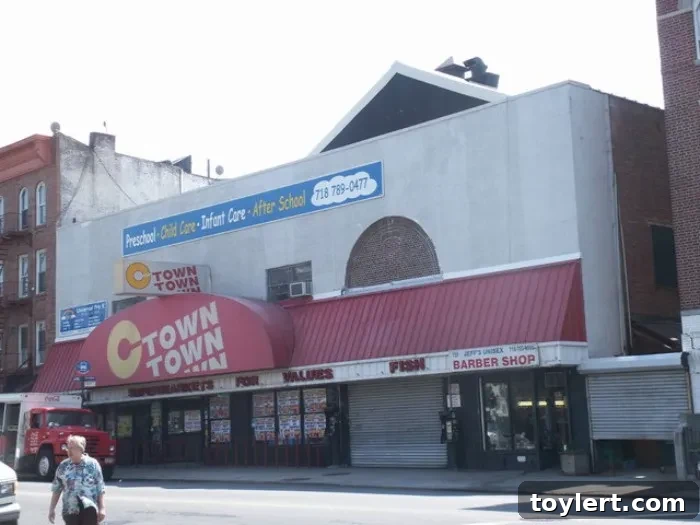
Unveiling 720 Washington Avenue: A Brooklyn Landmark
In the vibrant tapestry of Brooklyn’s architectural landscape, certain buildings stand as silent witnesses to the borough’s evolving history. One such structure is the notable edifice at 720 Washington Avenue, a site that once resonated with the laughter and tears of moviegoers as the grand National Theatre, and now serves the daily needs of the community as a bustling supermarket. This building encapsulates a compelling narrative of urban transformation, adaptive reuse, and the enduring spirit of Brooklyn. Its story is a microcosm of countless others across the city, where historic structures find new life, adapting to the changing rhythms of urban existence.
The former National Theatre, now a prominent supermarket, is more than just a commercial space; it’s a living artifact, blending its storied past with a functional present. Situated in a dynamic neighborhood, this building invites us to explore the layers of history embedded within its walls, from its days as a beacon of entertainment to its current role as a vital community hub. The journey of 720 Washington Avenue is a testament to the resilience and adaptability of Brooklyn’s built environment, highlighting how architectural heritage can be preserved and repurposed for modern demands.
The Golden Age of Cinema: The National Theatre’s Grand Opening
Stepping back in time to the early 20th century, Brooklyn was a burgeoning borough, and movie palaces were the epitome of urban glamour and entertainment. The National Theatre, originally established at 720 Washington Avenue, was conceived during this golden age, a period when cinema transcended mere entertainment to become a communal ritual. These theaters were often architectural marvels, designed to transport patrons to a world of fantasy even before the projector lights flickered to life. While specific construction dates for the National Theatre might vary, it undoubtedly opened its doors to an eager public during an era when Hollywood was finding its voice and motion pictures were a novel, captivating art form.
The National Theatre served as a focal point for social life in its respective Brooklyn neighborhood. It wasn’t just a place to watch films; it was where families gathered, where first dates unfolded, and where the community shared collective experiences. The grand lobbies, ornate decorations, and plush seating offered an escape from the everyday, creating an immersive experience that modern multiplexes often struggle to replicate. For decades, the National Theatre projected dreams onto its silver screen, becoming an indelible part of the cultural fabric of Washington Avenue and beyond. Its very presence spoke volumes about the aspirations and leisure activities of Brooklynites during a pivotal period of growth and cultural development.
Architectural Charm and Community Significance
While detailed architectural blueprints might be lost to time, most theaters of the National Theatre’s era shared common design principles. These buildings often showcased a blend of architectural styles, from Neoclassical grandeur to Art Deco flair, characterized by elaborate facades, towering marquees, and richly decorated interiors. The National Theatre at 720 Washington Avenue would have been no exception, designed not just for function but for spectacle. Its exterior would have commanded attention, inviting passersby to step into a world of cinematic magic. Inside, audiences would have marveled at the high ceilings, intricate plasterwork, and perhaps even a grand stage for vaudeville acts or live performances that often accompanied early film screenings.
The theater’s layout, typical of the period, likely included a large auditorium with sloped seating, a projection booth high above the audience, and perhaps a balcony for additional capacity. Such spaces were engineered for acoustics and visibility, ensuring every patron enjoyed the show. Beyond its physical attributes, the National Theatre held immense community significance. It provided employment, served as a gathering place, and contributed to the local economy. It was a place where generations shared experiences, creating lasting memories and reinforcing the social bonds of the neighborhood around Washington Avenue. Its very existence fostered a sense of place and identity for those who lived nearby, making its transformation all the more poignant.
The Curtain Falls: The Decline of Single-Screen Cinemas
As the mid-to-late 20th century progressed, the landscape of entertainment began to shift dramatically. The advent of television brought movies directly into people’s homes, reducing the necessity of a trip to the local cinema. Subsequently, the rise of multi-screen multiplexes offered more choices and modern amenities, further challenging the viability of large, single-screen theaters like the National Theatre. Operating costs, maintenance of aging infrastructure, and changing audience preferences became significant hurdles. Many grand movie palaces, once bustling with activity, slowly saw their attendance dwindle, their ornate interiors falling into disrepair.
The National Theatre at 720 Washington Avenue likely faced similar pressures. The magic of a single, monumental screen began to fade in the face of consumer demand for variety and convenience. For many historic theaters in Brooklyn and across the nation, this period marked the beginning of their obsolescence as cinemas. Some were demolished to make way for new developments, while others stood vacant, their future uncertain. The narrative of the National Theatre during this era is a common one: a beloved institution grappling with the unstoppable tide of progress and changing cultural habits. The closing of the National Theatre’s doors as a cinema was not just the end of an era for a building, but for a cherished community tradition.
From Silver Screen to Supermarket Aisles: A New Chapter
In a testament to Brooklyn’s pragmatism and ingenuity, many of its historic structures have found new purposes, a process known as adaptive reuse. The National Theatre’s journey from a cinematic temple to a modern supermarket at 720 Washington Avenue is a prime example of this sustainable approach to urban development. Instead of succumbing to demolition, the building was reimagined and restructured to meet contemporary needs. This transformation involved significant architectural and interior modifications. The sloped theater floor would have been leveled to accommodate flat aisles, refrigeration units, and checkout counters. The stage area might have been converted into storage, offices, or specialized departments.
The challenge in such conversions lies in preserving the essence of the original structure while ensuring it functions efficiently as a new entity. For the former National Theatre, this likely meant careful consideration of its facade and perhaps retaining some internal elements that hint at its past, even if subtly integrated into a grocery store environment. The building’s high ceilings, often a feature of grand theaters, would now offer an expansive, airy feel to shoppers, a distinct advantage over purpose-built, lower-ceilinged supermarkets. This new life as a supermarket ensures the building’s continued relevance and economic viability, securing its place within the community for decades to come, albeit in a vastly different capacity. The choice to become a supermarket reflects a deep understanding of local needs, transforming a once-entertainment venue into an essential service provider.
720 Washington Avenue Today: A Community Cornerstone
Today, the edifice at 720 Washington Avenue stands as a vibrant supermarket, serving the diverse residents of its Brooklyn neighborhood. Shoppers navigate aisles filled with fresh produce, groceries, and household essentials, often unaware of the building’s glamorous past. Yet, for those who know its history, there’s a unique charm in purchasing everyday items within walls that once showcased Hollywood blockbusters and silent film classics. This adaptive reuse has not only saved a historic building from potential decay or demolition but has also provided a much-needed service to the local community. The supermarket represents stability and continuity, reinforcing the neighborhood’s character.
The presence of a historic building repurposed for modern use also adds a layer of character and uniqueness to the shopping experience. It’s a daily reminder of Brooklyn’s rich heritage and its ability to evolve without erasing its past. The transformation of the National Theatre into a supermarket highlights the innovative spirit prevalent in Brooklyn’s urban planning and preservation efforts. It exemplifies how historical preservation can go hand-in-hand with meeting the contemporary demands of a growing city. The building, in its current form, continues its legacy as a central gathering place, transitioning from entertaining the masses to nourishing them, truly making it a cornerstone of the Washington Avenue community.
The Enduring Legacy of Adaptive Reuse in Brooklyn
The story of the former National Theatre at 720 Washington Avenue is a powerful illustration of adaptive reuse, a practice that is increasingly vital for sustainable urban development. By giving old buildings new functions, cities like Brooklyn can preserve their unique architectural heritage, reduce waste, and foster a stronger sense of place. This approach maintains the aesthetic and historical value of structures while ensuring they contribute meaningfully to the present-day urban fabric. The supermarket, housed within the former theater, is not just a place to buy groceries; it’s a symbol of transformation and resilience.
This building’s journey from a grand cinema to a practical supermarket reflects Brooklyn’s broader narrative of constant reinvention. It reminds us that buildings, like cities, are living entities that adapt, change, and endure. The history embedded within 720 Washington Avenue adds depth and character to the neighborhood, telling a silent story of entertainment, community, and continuous evolution. As Brooklyn continues to grow and change, the adaptive reuse of buildings like the National Theatre will remain crucial in balancing progress with the preservation of its distinctive soul and architectural legacy. It’s a celebration of memory and utility, intertwined in a single, remarkable structure.