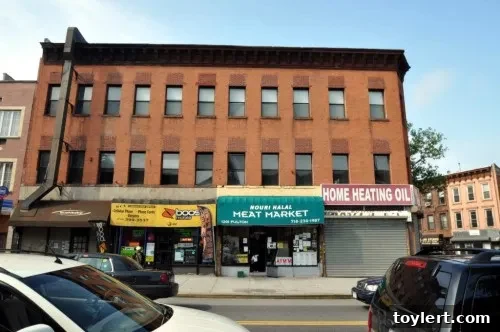
The Enduring Legacy of 1197 Fulton Street: A Brooklyn Landmark’s Transformation
Brooklyn, a borough renowned for its vibrant history, diverse communities, and stunning architectural tapestry, is a place where every building tells a story. Among the myriad structures that contribute to its unique urban landscape, 1197 Fulton Street stands out as a testament to endurance, adaptation, and the relentless march of time. Once a grand establishment known as Thayer’s Hall, this edifice has witnessed over a century of profound change, evolving from a focal point of community life into a bustling complex of modern stores and commercial entities. Its journey mirrors the very narrative of Brooklyn itself – a continuous blend of preservation, innovation, and unwavering spirit.
From Thayer’s Hall: A Beacon of Brooklyn’s Past
The story of 1197 Fulton Street begins with its original incarnation as Thayer’s Hall. While specific historical records about Thayer’s Hall can be elusive, its name suggests a purpose beyond simple commerce. In the late 19th and early 20th centuries, many such halls served as vital community centers, entertainment venues, or prominent retail establishments that often hosted public gatherings, cultural events, and social functions. Thayer’s Hall likely played a significant role in the daily lives of Brooklynites, offering a space for everything from local political meetings and fraternal organization events to grand balls, musical performances, and perhaps even early cinema showings. It would have been a place where the community converged, ideas were exchanged, and memories were forged.
Imagining Thayer’s Hall in its heyday, one might picture a bustling entrance, perhaps adorned with intricate architectural details, welcoming a steady stream of patrons. Inside, high ceilings, large windows, and an expansive floor plan would have accommodated diverse activities, reflecting the vibrant social and cultural fabric of the neighborhood. Such halls were often the heartbeat of their districts, providing essential services and fostering a sense of belonging in a rapidly growing metropolis.
Architectural Grandeur and Enduring Design
The architecture of 1197 Fulton Street, even in its current iteration, subtly hints at its original grandeur and purpose. Buildings from the late 19th and early 20th centuries in Brooklyn often exhibit a robust and ornate style, typically featuring sturdy brickwork, decorative cornices, and generously sized windows designed to flood interiors with natural light. While specific blueprints of Thayer’s Hall might be lost to time, the visible structure suggests a commercial or public building designed with a sense of permanence and civic pride. Elements like patterned brickwork, carved stone lintels, or elaborate window surrounds would have been common, signaling the building’s importance and the prosperity of its era.
The facade, likely constructed from durable materials such as red brick or brownstone, would have been an imposing presence on Fulton Street. Large storefront windows on the ground floor would have showcased merchandise or advertised upcoming events, drawing passersby into its welcoming embrace. Upper floors, with their symmetrical window arrangements and possibly decorative sills or corbels, would have housed offices, apartments, or the main hall itself. This timeless design, characterized by its solid construction and attention to detail, is precisely what has allowed 1197 Fulton Street to withstand the tests of time and adapt to various uses without losing its intrinsic architectural character.
Fulton Street: A Historic Artery of Brooklyn Commerce
The location of 1197 Fulton Street is as significant as its history. Fulton Street has long been one of Brooklyn’s most vital commercial corridors, stretching through numerous vibrant neighborhoods. For generations, it has served as a central artery for transportation, retail, and community life. From its origins as a bustling market street to its development into a major shopping destination, Fulton Street has always been a microcosm of Brooklyn’s economic and social evolution.
The specific stretch of Fulton Street where 1197 resides, often within or adjacent to the historic Bedford-Stuyvesant (Bed-Stuy) neighborhood, carries a particularly rich legacy. Bed-Stuy is celebrated for its stunning brownstone blocks, diverse population, and deep cultural roots. Buildings like 1197 Fulton Street are integral to this urban fabric, connecting the residential charm of the side streets with the commercial dynamism of the main thoroughfare. Proximity to public transit lines further cemented Fulton Street’s role as a convenient and accessible hub, drawing shoppers and residents from across the borough. The building’s strategic placement meant it was always at the nexus of activity, making it an ideal location for a community hall or a thriving commercial enterprise.
From Grand Hall to Modern Retail: The Building’s Evolution
As Brooklyn entered the mid-20th century and beyond, urban landscapes shifted, and the needs of communities changed. Many grand halls and single-purpose buildings faced obsolescence. Thayer’s Hall, like countless others, underwent a significant transformation, adapting from its original identity into the multi-tenant commercial space we see today. This adaptive reuse is a common and often celebrated phenomenon in historic urban areas, allowing old structures to find new life and relevance.
The transition involved subdividing the expansive interior spaces of Thayer’s Hall into smaller, more manageable units suitable for contemporary retail, services, and offices. This flexibility in design is a hallmark of well-built historic commercial properties. Today, 1197 Fulton Street houses various businesses, contributing to the daily hustle and bustle of the street. These entities might include local boutiques, convenience stores, professional services, or eateries, reflecting the diverse needs of the modern Brooklyn consumer. The ground floor, with its direct street access, is typically dedicated to retail, while upper floors may accommodate offices or other commercial ventures. This evolution ensures the building remains an active and economically viable part of the community, rather than falling into disuse.
The challenge of such transformations lies in balancing modernization with preservation. While interiors are often redesigned to suit new tenants, the exterior facade often retains much of its original character, a silent nod to its storied past. This careful balance allows the building to meet current commercial demands while maintaining its historical aesthetic, contributing significantly to the architectural continuity and charm of Fulton Street.
Preserving the Past, Shaping the Future of Brooklyn’s Commercial Landscape
The story of 1197 Fulton Street is a microcosm of the broader efforts to preserve Brooklyn’s architectural heritage while fostering its dynamic growth. Historic commercial buildings like this one are more than just old structures; they are tangible links to the past, embodying the craftsmanship, aspirations, and social patterns of previous generations. Their continued existence enriches the urban environment, offering a unique character that modern developments often struggle to replicate.
By transforming from Thayer’s Hall into a vibrant commercial hub, 1197 Fulton Street exemplifies successful urban regeneration. It demonstrates how historical assets can be repurposed to serve contemporary needs, injecting economic vitality into a neighborhood while maintaining a sense of identity and place. The building stands as a powerful reminder that “Brooklyn, one building at a time” is not just about isolated structures but about the interconnected narrative of a borough that constantly reinvents itself while holding dear to its roots.
Its presence on Fulton Street reinforces the idea that true urban development is not solely about demolition and new construction but also about thoughtful renovation and adaptive reuse. These practices breathe new life into existing infrastructure, minimize waste, and celebrate the rich layers of history that make places like Brooklyn so compelling. 1197 Fulton Street continues to be a contributing landmark, reflecting the enduring spirit of its builders and the vibrant community it serves.