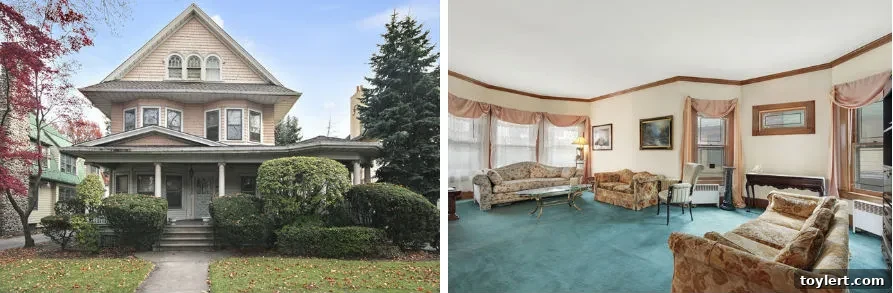
Discovering 459 East 19th Street: A Timeless Colonial Revival Gem in Ditmas Park
Nestled within the verdant, tree-lined streets of Ditmas Park, Brooklyn, stands 459 East 19th Street – a magnificent example of circa-1906 Colonial Revival architecture. This freestanding wood-frame house is more than just a residence; it’s a living piece of history, reflecting an era of elegant design and burgeoning community development in one of New York City’s most cherished neighborhoods. Much like its architectural contemporaries, this house evokes a sense of grandeur and timeless appeal, often drawing comparisons to other masterworks by the same esteemed architect, A. White Pierce. Its presence on the market offers a unique opportunity to acquire a landmarked home with significant historical value and immense potential for restoration, promising to blend classic charm with modern living once revitalized.
The distinctive character of 459 East 19th Street immediately captivates. Built with the meticulous craftsmanship characteristic of the early 20th century, its sturdy wood frame construction has withstood the test of time, proudly displaying the hallmarks of the Colonial Revival style. This specific property holds a special place in the architectural tapestry of Ditmas Park, a neighborhood celebrated for its remarkably preserved collection of large, single-family homes, many of which share a similar lineage and design philosophy. While it may require a thoughtful restoration to reclaim its full original splendor, the intrinsic beauty and historical significance of this address remain undeniable, presenting an exciting project for those passionate about preserving Brooklyn’s architectural heritage.
Ditmas Park: A Brooklyn Enclave of Architectural Grandeur
Ditmas Park is not merely a neighborhood; it’s a living museum of American domestic architecture, distinguishing itself with its extraordinary collection of large, detached Victorian and Colonial Revival homes. Unlike many other parts of Brooklyn characterized by brownstones or row houses, Ditmas Park stands out with its expansive properties, complete with generous front yards, driveways, and often lush gardens. This unique urban oasis was largely developed in the early 1900s, transforming what were once farmlands into picturesque suburban-like streets, appealing to a growing middle and upper-middle class seeking more space and tranquility away from the bustling city center.
The neighborhood’s designation as a historic district by the New York City Landmarks Preservation Commission underscores its irreplaceable value. This protection ensures that the unique architectural character that defines Ditmas Park will be preserved for future generations, maintaining its idyllic charm and sense of place. Homes here, including 459 East 19th Street, are celebrated for their intricate detailing, quality construction, and diverse architectural styles that blend harmoniously. From Queen Annes to Neo-Tudors and, prominently, Colonial Revivals, Ditmas Park offers a visual feast for architecture enthusiasts and a serene environment for its residents, marked by its strong community spirit, excellent schools, and vibrant local businesses.
The Vision of A. White Pierce: A Legacy in Wood and Style
The architectural landscape of Ditmas Park owes much of its distinctive charm to the prolific work of visionary architects like A. White Pierce. Credited with the design of 459 East 19th Street in 1906, Pierce was a master of the Colonial Revival style, among others, leaving an indelible mark on the neighborhood’s residential fabric. His designs are recognizable by their balanced proportions, classical elements, and an inherent grace that makes each home feel both grand and inviting. Pierce had a remarkable ability to imbue his creations with a sense of enduring elegance, often utilizing high-quality materials and thoughtful layouts that maximized both comfort and aesthetic appeal.
It’s fascinating to consider that 459 East 19th Street is “almost a twin” to another property designed by Pierce, illustrating his consistent stylistic approach and possibly his efficiency in adapting successful blueprints. This common thread among his works contributes to the cohesive yet diverse visual appeal of Ditmas Park. Pierce’s houses, including this one, frequently feature generous porches, stately columns, and meticulously crafted wood siding, all contributing to their iconic status. His legacy extends beyond individual structures; he helped shape the very identity of the neighborhood, ensuring that his architectural contributions remain celebrated pieces of Brooklyn’s heritage, inviting admiration and providing timeless homes for over a century.
Embracing Colonial Revival: Architectural Elegance Defined
The Colonial Revival style, popular in the United States from the late 19th century through the mid-20th century, represents a nostalgic tribute to the architectural forms of early American colonial houses. It emerged as a reaction against the perceived excesses of Victorian design, favoring instead a return to simplicity, symmetry, and classical proportions. Homes built in this style, such as 459 East 19th Street, are characterized by their formal and often stately appearance, drawing inspiration from Georgian and Federal styles prevalent during America’s colonial period.
Key features of Colonial Revival architecture typically include a symmetrical facade, often with a central front door flanked by an equal number of windows on either side. Large, inviting porches, supported by classical columns (Doric, Ionic, or Corinthian), are a common and beloved element, providing ample space for outdoor enjoyment. Other distinguishing characteristics often involve multi-pane double-hung windows, prominent gabled or hipped roofs, and decorative elements like cornices, pilasters, and often dormer windows. In wood-frame houses, like those found abundantly in Ditmas Park, this style translates into homes that exude a friendly, welcoming aura while retaining an undeniable sense of dignity and historical weight, making them highly sought after for their enduring beauty and architectural integrity.
A Closer Look at 459 East 19th Street: Exterior Charms
The exterior of 459 East 19th Street provides a compelling visual narrative of its Colonial Revival lineage. Its stately presence is immediately apparent from the street, with a symmetrical facade that speaks to classical balance and order. A quintessential feature, typical of architect A. White Pierce’s work and the style itself, would undoubtedly be a broad, welcoming front porch. This porch, likely supported by robust classical columns, would have served as a vital social space for generations, offering a shaded retreat on warm days and a charming vantage point to observe the neighborhood’s quiet rhythm.
The wood-frame construction, likely clapboard or shingles, is characteristic of Ditmas Park’s unique housing stock, providing a softer, more inviting aesthetic than brick or stone. The color palette, though possibly updated over the years, would have originally complemented the natural surroundings, allowing the architectural details to shine. The roofline, whether gabled or hipped, would contribute to the home’s overall silhouette, often punctuated by dormer windows that hint at usable attic space. Large, multi-pane windows would punctuate the walls, allowing natural light to flood the interior, while decorative trim and moldings would add layers of subtle sophistication. The freestanding nature of the house, set back from the street with its own plot of land, further enhances its appeal, offering privacy and a sense of spaciousness rarely found in urban environments. This separation from neighboring properties allows for ample natural light from all sides and provides valuable outdoor space, including potential for gardens and private relaxation areas.
Unveiling the Interior: A Canvas for Restoration
Stepping inside 459 East 19th Street, one would likely be transported back to an era where craftsmanship and elegance defined residential interiors. While the property is noted as “needing quite a bit of work and perhaps with not as many original details intact,” this presents a unique opportunity for a new owner to embark on a meticulous restoration. The common layout of such Colonial Revival homes typically features a grand foyer or entry hall that immediately establishes the home’s impressive scale. From here, traditional floor plans would branch out to formal living rooms, expansive dining rooms perfect for entertaining, and functional yet charming kitchens.
Original details, if present, might include exquisite hardwood floors, intricate crown molding and baseboards, built-in cabinetry, elegant fireplaces with decorative mantels, and perhaps even some stained-glass accents in key locations. The presence of these elements, even in a worn state, provides invaluable clues for an authentic restoration. The phrase “not as many original details intact” suggests that while some elements may have been altered or removed over the decades, the underlying bones and potential for faithful recreation remain. Restoring these features would not only enhance the aesthetic beauty of the home but also increase its historical value and desirability. Imagine restoring original pocket doors, refinishing staircases, or uncovering hidden architectural nuances – each step a testament to preserving a piece of Brooklyn’s rich past, while simultaneously creating a personalized, magnificent living space.
The Journey of Restoration: Preserving History, Crafting Future
Undertaking the restoration of a historic home like 459 East 19th Street is a journey filled with both challenges and immense rewards. It requires a delicate balance of historical sensitivity, skilled craftsmanship, and a vision for modern comfort. The primary challenge often lies in sourcing period-appropriate materials and finding artisans who specialize in techniques that respect the original construction methods. Navigating the process of updating infrastructure—such as plumbing, electrical, and heating systems—while preserving the home’s historic fabric also demands careful planning and execution.
However, the rewards far outweigh these challenges. Restoring a landmarked property means becoming a custodian of history, ensuring that the architectural legacy of A. White Pierce and the character of Ditmas Park endure. The satisfaction of peeling back layers of time to reveal original details, or painstakingly recreating them where lost, is unparalleled. A restored home marries the grandeur of the past with the conveniences of the present, offering unique spaces that possess character and warmth often lacking in new construction. It’s an investment not just in real estate, but in cultural heritage, culminating in a home that tells a story and offers an unparalleled living experience, reflecting a deep appreciation for enduring design and quality.
Why Ditmas Park Homes Endure: Investment and Lifestyle
The enduring appeal of homes in Ditmas Park, particularly those with the historical and architectural significance of 459 East 19th Street, stems from a unique combination of factors. Beyond their undeniable aesthetic charm, these properties represent a sound investment. Historic homes in protected landmark districts often hold and appreciate their value exceptionally well, insulated from some of the market fluctuations that affect less distinctive properties. The scarcity of such large, freestanding homes in an urban setting further enhances their long-term investment potential, making them highly desirable assets in the competitive New York City real estate market.
More than just an investment, owning a home in Ditmas Park offers a distinct lifestyle. The neighborhood boasts a vibrant, tight-knit community, where tree-lined streets invite leisurely strolls and neighbors often gather in local parks or at popular independent cafes and restaurants. Excellent public transportation connects residents seamlessly to Manhattan and other parts of Brooklyn, offering convenience without sacrificing the suburban-like tranquility. For families, the presence of highly-regarded schools and ample green spaces further contributes to Ditmas Park’s reputation as an ideal place to call home. This blend of historical beauty, community spirit, and urban accessibility ensures that homes like 459 East 19th Street remain not just attractive properties, but coveted foundations for a rich and fulfilling life.
Conclusion: A Piece of Brooklyn’s Past, A Home for Tomorrow
459 East 19th Street stands as a testament to the enduring allure of Ditmas Park and the timeless elegance of Colonial Revival architecture. Designed by A. White Pierce in 1906, this landmarked wood-frame house is a rare find, offering a compelling blend of historical significance, architectural beauty, and the promise of a magnificent future. While it awaits a thoughtful restoration to fully revive its former glory, its potential is undeniable, appealing to those with a passion for preservation and a vision for creating a truly unique home.
More than just bricks and mortar, this house represents an opportunity to own a tangible piece of Brooklyn’s rich past, to contribute to the legacy of a cherished historic district, and to establish roots in a community celebrated for its charm and character. 459 East 19th Street is not merely an address; it is a gateway to a distinctive lifestyle, offering an escape into a serene, tree-lined haven amidst the dynamism of New York City. For the discerning buyer, this Colonial Revival gem is poised to become a magnificent home for tomorrow, meticulously crafted and deeply cherished for generations to come.