By Gabriele Holtermann and Lloyd Mitchell, Brooklyn Paper
The Unrivaled Spectacle: Celebrating Caribbean Heritage at the West Indian American Day Parade
Every Labor Day, Eastern Parkway in Brooklyn transforms into a kaleidoscope of sound, color, and unparalleled energy. This iconic thoroughfare, stretching from Utica Avenue in Crown Heights to Grand Army Plaza in Prospect Heights, becomes the vibrant stage for one of New York City’s most anticipated cultural events: the Annual West Indian American Day Parade. Now in its 57th year, this spectacular celebration serves as a powerful testament to the rich, diverse, and resilient spirit of the Caribbean diaspora, drawing hundreds of thousands of revelers, participants, and spectators from across the globe.
The air on Labor Day is thick with anticipation and the infectious rhythms of the Caribbean. From dawn, the percussive throb of soca, the storytelling melodies of calypso, the lively beats of compas, and the soulful sway of reggae music boom through the streets, signaling the start of a day-long fete. This isn’t just a parade; it’s a profound cultural immersion, a joyous homecoming, and a dynamic expression of identity that pulses through the very heart of Brooklyn.
A Deep Dive into the Heart of the Celebration
Thousands line the extensive parade route, many waving flags representing their ancestral homelands – Jamaica, Trinidad and Tobago, Barbados, Haiti, Grenada, St. Lucia, Guyana, and countless other islands and territories. These flags are more than mere symbols; they are banners of pride, unity, and shared heritage, fluttering in unison against the New York City skyline. The atmosphere is electric, a communal embrace where every cheer, every dance step, and every shared smile reinforces the bonds of community.
The Artistry of Mas: Costumes and Floats
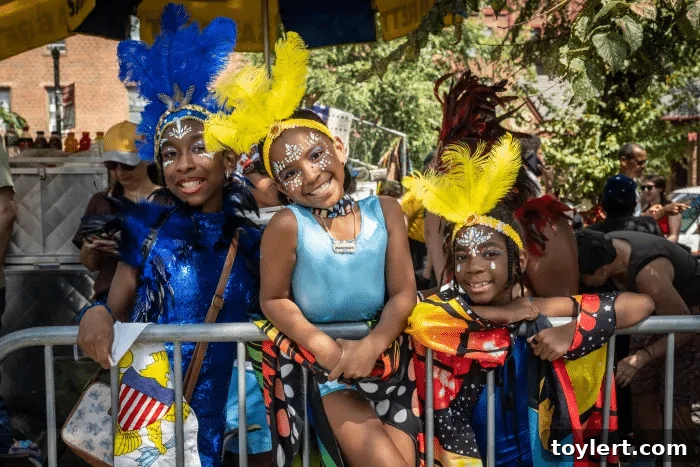
Central to the parade’s visual splendor are the elaborate and breathtaking costumes worn by the masqueraders. These aren’t just outfits; they are intricate works of art, meticulously crafted over months by dedicated designers and countless volunteers. Adorned with a dazzling array of feathers, sequins, beads, and vibrant fabrics, each costume tells a story, often drawing inspiration from Caribbean folklore, nature, history, and contemporary themes. The sheer scale and creativity are awe-inspiring, turning the Parkway into a moving museum of cultural expression. “Mas bands,” as they are known, move in unison, their choreographed movements adding another layer of spectacle to the already vibrant scene. The bright floats, often towering and equally embellished, serve as mobile stages for DJs, musicians, and costumed performers, amplifying the festive atmosphere.
The Soundtrack of the Caribbean
The musical foundation of the parade is truly what sets it apart. Soca, with its high-energy, dance-inducing beats, is the undisputed king of the carnival road, compelling even the most reserved spectators to move. Calypso, the more lyrical and often satirical predecessor, offers social commentary and historical narratives. Compas, a staple of Haitian music, brings its distinct Creole flavor, while reggae’s laid-back yet powerful rhythms provide a soulful counterpoint. Steelpan orchestras, another iconic Caribbean contribution, fill the air with their unique, melodic sounds, showcasing the incredible talent and innovation born from the islands. Each genre contributes to a rich, auditory tapestry that is both diverse and distinctly Caribbean.
Marching Bands and Political Engagement
Beyond the costumed revelers and music trucks, traditional marching bands add a disciplined yet equally spirited element to the procession. Their synchronized movements and powerful instrumentation provide a different kind of rhythm to the parade. Furthermore, the West Indian American Day Parade has long been a significant platform for political engagement. A slew of politicians, from local council members to state and federal representatives, including New York City’s Mayor and New York State’s Governor, routinely participate. Their presence underscores the parade’s importance not only as a cultural event but also as a powerful demonstration of the Caribbean American community’s civic and political influence in New York City and beyond. It’s an opportunity for leaders to connect directly with constituents, acknowledge their contributions, and often, to briefly join in the celebratory dance.
A Legacy of Pride and Resilience: The Parade’s History and Significance
The roots of the West Indian American Day Carnival stretch back much further than 57 years, evolving from smaller, informal gatherings in Harlem in the 1920s to what it is today. Organized by the West Indian American Day Carnival Association (WIADCA), the parade moved to Brooklyn in the late 1960s, finding a permanent and welcoming home in a borough that became a major hub for Caribbean immigrants. Over the decades, it has grown in scale, scope, and significance, becoming a cornerstone of Brooklyn’s cultural calendar and a beacon of Caribbean pride in the global diaspora.
The parade is more than just a party; it’s a vital expression of cultural continuity. For many Caribbean Americans, it’s a direct link to the traditions, values, and joys of their ancestral homes. It’s a space where generations come together – grandparents sharing stories, parents teaching dances, and children experiencing the vibrant heritage firsthand. It fosters a powerful sense of belonging and reinforces a collective identity in a new land.
The Economic and Social Footprint
The economic impact of the West Indian American Day Parade is substantial. Local businesses along the parade route and throughout Brooklyn experience a significant boost, from restaurants serving authentic Caribbean cuisine like jerk chicken, roti, and beef patties, to street vendors selling flags, merchandise, and tropical drinks. Costume designers and builders, musicians, and event staff are employed for months leading up to the event. The parade also draws tourists from around the world, contributing to the city’s economy and promoting cultural tourism.
Socially, the parade acts as a powerful educational tool. It offers New Yorkers and visitors alike a window into the diverse and rich cultures of the Caribbean islands, fostering greater understanding and appreciation. It’s a day when differences dissolve into shared joy, and the spirit of community shines brightest.
Experiencing the Magic
To truly understand the West Indian American Day Parade is to experience it. It’s the aroma of spiced street food mingling with the scent of tropical flowers. It’s the rumble of bass in your chest and the sight of thousands moving as one. It’s the feeling of solidarity and the overwhelming sense of joy that permeates every inch of Eastern Parkway. Revelers, fueled by this infectious energy, dance for hours, their faces alight with unadulterated happiness. It is a day of uninhibited expression, where the concerns of everyday life are momentarily forgotten, replaced by pure, celebratory bliss.
As the sun begins to set over Grand Army Plaza, the parade culminates, but the echoes of its vibrant spirit linger. The 57th Annual West Indian American Day Parade, like its predecessors, stands as a magnificent tribute to Caribbean heritage—a dynamic, living tradition that continues to flourish and unite generations in the heart of Brooklyn. It is a powerful reminder of the enduring beauty, strength, and vibrancy of a culture that enriches New York City and the world.