Historic Wood-Clad Home on Smith Street Faces Uncertain Future Amidst Development
Brooklyn, NY – The iconic wood-clad house on Smith Street, a beloved landmark for over a century, has begun its demo process, marking a poignant moment for a neighborhood grappling with rapid modernization. This development has ignited significant discussion and concern within the community, particularly regarding the preservation of one of the area’s last remaining structures of its unique kind.
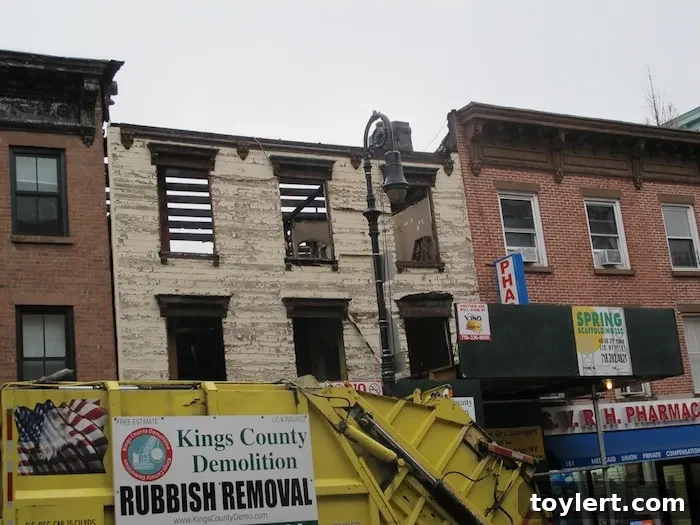
A Glimpse into Smith Street’s Past: The Enduring Charm of 159 Smith Street
For generations, the three-story mixed-use building at 159 Smith Street, ideally situated between the dynamic thoroughfares of Wyckoff and Bergen, served as a steadfast testament to the rich history of Boerum Hill. Its unique wood-clad facade, a notable departure from the more common brick and brownstone architecture prevalent in much of Brooklyn, offered a distinctive aesthetic and an tangible connection to the neighborhood’s architectural roots. This structure was more than just a building; it was a character in the urban narrative, having remarkably retained its ornate cornice and intricate detailing around the windows—features that eloquently spoke of the craftsmanship from over a hundred years ago.
In an era where many historic elements are regrettably lost to renovation or neglect, 159 Smith Street stood as a beacon of preserved charm. Its weathered timbers and classic lines resonated with a bygone era, providing a striking visual counterpoint to the contemporary, often sleek, developments rapidly emerging across the borough. For both long-term residents and new arrivals, it offered a visual anchor, a constant reminder of Smith Street’s evolution from a bustling commercial hub in the late 19th and early 20th centuries to its current status as a highly desirable residential and retail destination. Its singular appearance contributed significantly to the street’s identity and undeniable appeal, fostering a deep sense of continuity amidst change.
The home’s presence was a quiet declaration of the area’s layered past, a narrative often overlooked in the relentless march of progress. Its very existence served as an educational piece, illustrating varying architectural trends and materials used in Brooklyn’s development. This made its potential loss all the more impactful, as it signified not just the demolition of a physical structure, but the erosion of a historical chapter embedded in the streetscape.
The Unfolding Scenario: Permits, Additions, and the Shadow of Demolition
The initial signs of impending change began with the filing of permits for a two-story addition to the property, a development swiftly brought to public attention by the watchful neighborhood blog, Pardon Me For Asking. This vigilant blog, a trusted voice in observing local urban development trends, immediately voiced concerns that this seemingly modest addition could, in fact, prefigure a much more extensive transformation, potentially culminating in the complete removal of the building’s historic facade. Such apprehensions are a recurring theme in rapidly gentrifying urban areas, where property owners and developers often seek to maximize investment through significant expansions or comprehensive rebuilds.
While official permits for a two-story addition have been secured through the NYC Department of Buildings (view permit details here), it is vital to emphasize that no permits for a complete demolition of the entire building have been publicly recorded. This crucial distinction offers a glimmer of hope for preservation advocates. The absence of a full demolition permit often implies that certain core structural elements, such as the existing foundation or shared party walls with neighboring properties, might be mandated for preservation and integration into any new construction. This strategy, frequently adopted to manage construction costs, comply with zoning regulations, or expedite approvals, means that while the historic facade and much of the visible structure may be altered or removed, the building’s essential connection to the historical footprint of Smith Street could technically endure.
However, the concept of an “addition” within the complex realm of urban development can be remarkably nuanced. In practical terms, extensive additions or significant structural overhauls can often necessitate the dismantling of a substantial portion of the existing building, leaving behind only a skeleton or select foundational components. This process frequently culminates in a ‘new’ edifice that bears minimal resemblance to its predecessor, effectively erasing its historical character despite not being classified as a ‘complete demolition’ on paper. This regulatory grey area is a frequent source of community anxiety and powerfully illustrates the persistent tension between capitalizing on development opportunities and safeguarding invaluable architectural heritage. The nuances of these permits often dictate the ultimate fate of beloved structures, making community vigilance and understanding of municipal codes absolutely critical.
The Pulse of the Neighborhood: Community Voices and Preservation Concerns
The news of the demolition commencement on Friday spread rapidly through the vibrant Boerum Hill community, with dedicated local blogs like Pardon Me For Asking serving as indispensable platforms for channeling collective sentiment. The immediate and widespread reaction underscored a profound appreciation for the historic fabric of Smith Street and a collective apprehension regarding its evolving character. Residents consistently articulate a strong emotional and historical attachment to buildings that have long defined their neighborhood, viewing them not merely as static structures but as living repositories of shared memory, identity, and cultural continuity.
The potential loss or significant alteration of 159 Smith Street transcends the simple removal of an old building; it represents a tangible and often irreversible shift in the visual and cultural landscape of the street. Such fundamental changes invariably spark robust debates about the delicate yet critical balance between urban progress and the imperative of historic preservation. While urban environments are inherently dynamic, continually adapting to new societal needs and economic imperatives, there is a growing and undeniable awareness of the irreplaceable value inherent in historic architecture. These buildings imbue an urban setting with character, depth, and a unique sense of place—qualities that contemporary constructions, regardless of their innovative design or modern amenities, frequently struggle to replicate.
Community activism, whether manifested through dedicated blogging, local forums, or organized grassroots efforts, plays an instrumental role in influencing development narratives. It ensures that significant urban projects are not undertaken in isolation but are subjected to rigorous public scrutiny, open dialogue, and community-driven debate. For a significant segment of the population, preserving structures like the distinctive wood-clad house on Smith Street is not about staunchly resisting all change; rather, it is about advocating for thoughtful, sensitive development that thoughtfully respects the past while robustly building for the future. It calls for innovative solutions that can integrate new amenities and economic vitality without sacrificing the unique, irreplaceable charm that renders neighborhoods like Boerum Hill so exceptionally appealing and historically resonant.
Smith Street’s Evolving Identity: A Microcosm of Brooklyn’s Transformation
Smith Street itself stands as a compelling testament to Brooklyn’s ongoing, dynamic evolution. What was once a relatively quiet residential street, punctuated by a scattering of local, essential shops, has, over the decades, transformed into a bustling and highly sought-after destination. Today, it is celebrated for its eclectic mix of independent boutiques, world-class restaurants, charming cafes, and vibrant community spaces. This remarkable transformation has undoubtedly brought significant economic vitality and increased desirability to the area, yet it has concurrently placed immense pressure on existing properties and their historical integrity. Soaring property values have rendered older, often smaller, historic structures particularly attractive targets for developers aiming to construct larger, more contemporary residential complexes or expansive commercial venues.
The delicate equilibrium between maintaining the distinctive historic aesthetic that initially draws people to cherished neighborhoods like Boerum Hill and accommodating the inexorable demands of new growth presents a perpetual and multifaceted challenge. Each historic building that undergoes alteration or is replaced outright contributes to a subtle yet discernible homogenization of urban landscapes, gradually eroding the very unique character that initially defined and distinguished these areas. The ongoing discussion surrounding 159 Smith Street serves as a potent and timely reminder of this inherent tension, reflecting broader urban development trends observed across many of Brooklyn’s most treasured and historically rich neighborhoods. It encapsulates the ongoing struggle between preserving heritage and embracing modernization.
The architectural diversity of Smith Street—ranging from its stately, classic brownstones to its more utilitarian industrial-style buildings, and notably, its rare wood-clad structures—narrates a rich tapestry of varied historical periods and socio-economic layers. Each demolition or significant renovation alters a paragraph, or indeed, an entire chapter, in this compelling architectural narrative. The fundamental question that frequently emerges is not whether Smith Street will continue its inevitable evolution, but rather what guiding principles will inform and shape this evolution. The goal must be to ensure that its distinctive charm, profound historical resonance, and unique identity are not irrevocably overshadowed or completely erased by the relentless march of modernity, preserving the soul of the street for future generations.