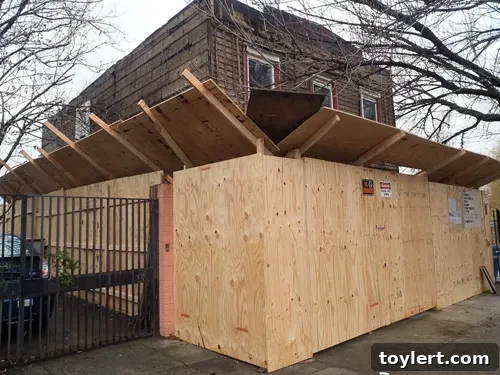
In a notable development for Brooklyn’s vibrant South Slope neighborhood, the visibly deteriorating building situated at 548 6th Avenue, specifically positioned between 15th and 16th streets, is slated for imminent demolition. This significant update, initially brought to our attention by diligent community observer Denton Taylor, signals a new phase for this prominent property. The tell-tale signs of impending change are clear: a robust sidewalk shed has been erected around the structure, and official demolition permits are prominently displayed, leaving no doubt about the building’s limited remaining lifespan. According to comprehensive city records, the property owner has ambitious plans to replace the aged edifice with a modern, thoughtfully designed four-family residence. This project is set to contribute to the ongoing architectural evolution and increasing residential density characteristic of the South Slope area.
548 6th Avenue: From Deterioration to Redevelopment in South Slope
The journey of 548 6th Avenue from a crumbling structure to a site ripe for new development has been a subject of local interest and concern. Months prior to the current demolition preparations, the vinyl siding that once covered the wood-frame house was systematically removed, peeling back layers of the building’s history and, perhaps, revealing the extent of its structural needs. This exposed the underlying conditions that contributed to its decline. The building’s increasingly dilapidated state had, in recent weeks, become a significant safety concern for residents. A concerned reader residing nearby reached out to express anxieties that the visibly crumbling building posed a potential hazard and might even be at risk of collapse. Such apprehensions highlight the critical role of community vigilance in urban environments and underscore the necessity for timely intervention when structures become unsafe. The current demolition initiative, therefore, not only paves the way for modern housing but also proactively addresses the safety and aesthetic concerns raised by the neighborhood.
The transformation of 548 6th Avenue is emblematic of the continuous renewal cycles within Brooklyn’s cherished neighborhoods. Properties that have reached the end of their functional lifespan or pose safety risks often undergo such transitions, making way for new constructions that meet contemporary standards and community needs. This specific demolition marks the conclusion of one chapter for this corner of South Slope and the commencement of another, promising a safer and more architecturally updated presence on the block. The careful process of obtaining permits, erecting protective measures like the sidewalk shed, and planning for reconstruction is a testament to the structured approach required for urban development projects in New York City.
The Evolving Character of Brooklyn’s South Slope Neighborhood
South Slope, nestled within the broader Park Slope area, is a Brooklyn gem known for its quintessential brownstones, vibrant community life, and leafy streets. Its appeal stems from a harmonious blend of historic charm and modern amenities, attracting a diverse demographic from young families to seasoned professionals. The neighborhood boasts excellent access to iconic green spaces like Prospect Park, a plethora of independent businesses, acclaimed restaurants, and a strong sense of local identity. However, like many sought-after Brooklyn enclaves, South Slope is perpetually in a state of subtle evolution, balancing preservation efforts with the pressing demands of urban growth and housing shortages.
The block of 6th Avenue between 15th and 16th streets, where 548 6th Avenue resides, illustrates this dynamic. Historically, the area featured a mix of architectural styles, from grand pre-war buildings to more humble wood-frame homes that often predate the widespread construction of brownstones. These older structures, while possessing historical significance, sometimes present challenges in terms of structural integrity and modern utility. The decision to redevelop a property like 548 6th Avenue reflects broader market forces and urban planning strategies aiming to maximize land use and improve the overall quality of housing stock. This ongoing metamorphosis ensures that South Slope remains a vibrant and desirable place to live, albeit one that continually adapts to new urban realities and changing residential needs. The balance between maintaining the neighborhood’s unique character and embracing necessary modernization is a constant dialogue within the community.
A Vision for the Future: The New Four-Family Residence
The proposed construction of a four-family residence at 548 6th Avenue represents a strategic and increasingly common development model in densely populated urban areas like South Slope. This choice of development is often preferred for several compelling reasons. Firstly, a multi-family structure allows for a higher density of housing units on a single lot, which is crucial in a city where land is at a premium and housing demand consistently outstrips supply. This approach efficiently utilizes valuable urban space without resorting to large-scale, potentially incongruous high-rise developments that could dramatically alter the existing streetscape.
Secondly, a four-family residence provides flexibility in terms of ownership and occupancy. It can be developed as condominium units, offering individual ownership opportunities for multiple families, or as rental units, contributing to the diverse rental market. These new constructions typically incorporate modern architectural designs, adhere to up-to-date building codes, and often feature energy-efficient systems and contemporary amenities highly sought after by today’s urban dwellers. This project, therefore, is not merely about replacing an old building; it’s about introducing high-quality, sustainable living spaces designed to meet the expectations of modern residents. It signifies an investment in the long-term vitality and attractiveness of 6th Avenue, promising to enhance the immediate street environment and contribute positively to the neighborhood’s overall appeal.
Moreover, such developments often lead to an uplift in surrounding property values and can catalyze further improvements on the block. The introduction of a new, well-designed building helps to eliminate an eyesore, improve safety, and demonstrate confidence in the neighborhood’s future. For families and individuals looking to establish roots in South Slope, the prospect of modern, well-built homes is a significant draw, ensuring a continuous influx of residents who contribute to the area’s thriving community and economic landscape. This forward-looking approach to property development is essential for the sustained growth and prosperity of Brooklyn’s most beloved neighborhoods.
Navigating the Demolition and Construction Process in NYC
The sight of a sidewalk shed and the official posting of demolition permits initiate a carefully orchestrated process governed by stringent New York City regulations. Demolition in a dense urban environment demands meticulous planning and execution, prioritizing public safety, environmental protection, and minimal disruption to the surrounding community. Before any heavy equipment can commence operations, the property owner and their contractors must secure a series of approvals from the NYC Department of Buildings (DOB), detailing everything from structural analysis to waste management plans. The sidewalk shed, a ubiquitous feature of construction sites across the five boroughs, serves a vital protective function, shielding pedestrians and adjacent properties from potential falling debris and maintaining safety on public thoroughfares.
Following the safe and complete removal of the old structure, the site transitions to the complex construction phase. This involves significant excavation for new foundations, the meticulous erection of a new structural framework, and the careful build-out of the four-family residence. This entire process, from the initial permit applications to the final certificate of occupancy, can extend over many months, sometimes exceeding a year, influenced by factors such as design complexity, unforeseen site conditions, and the efficiency of construction management. During this period, local residents may experience temporary inconveniences, including elevated noise levels, dust, and potential alterations to local traffic and pedestrian routes. However, these short-term disturbances are generally recognized as necessary steps towards realizing long-term neighborhood enhancements and modern infrastructure.
The detailed oversight by city agencies ensures that all stages of demolition and construction adhere to rigorous safety and environmental standards. This includes measures for asbestos abatement, proper disposal of construction and demolition waste, and adherence to noise ordinances. By managing these projects responsibly, New York City aims to facilitate urban renewal while safeguarding the well-being of its residents and preserving the quality of life in its diverse neighborhoods. The commitment to these protocols underscores the city’s dedication to sustainable development practices, ensuring that new constructions like the one planned for 548 6th Avenue are built to last and contribute positively to the urban fabric.
Community Concerns, Safety Standards, and Regulatory Oversight
The resident’s concern about the “dilapidated South Slope building” potentially being a hazard highlights a crucial aspect of urban living: the collective responsibility for public safety and the critical role of regulatory bodies. In New York City’s densely populated landscape, the structural integrity and safety of every building are paramount. The New York City Department of Buildings (DOB) stands as the primary agency responsible for enforcing the city’s extensive building codes, conducting regular inspections, and responding promptly to reports of unsafe conditions. The fact that official demolition permits were issued and acted upon signifies that the city’s regulatory framework has been engaged, assessing the property and determining the most appropriate course of action to mitigate risk.
It is vital for residents to understand the avenues available for reporting potential hazards, such as contacting 311 or directly notifying the DOB. Proactive community reporting, exemplified by the concerned neighbor in this instance, can significantly accelerate the assessment and resolution of dangerous properties. This ensures that necessary interventions—be it stabilization, extensive repairs, or, as in this case, complete demolition—are implemented without undue delay. The removal of the potentially hazardous structure at 548 6th Avenue therefore represents a positive outcome for public safety, eliminating a risk to the community and clearing the way for a new building that will meet all contemporary safety and quality standards, enhancing the overall well-being of the South Slope neighborhood. This collaborative effort between vigilant residents and responsive city agencies is foundational to maintaining a safe and secure urban environment.
The Broader Real Estate Impact in South Slope and Brooklyn
The redevelopment of 548 6th Avenue is more than just a localized construction project; it serves as a powerful indicator of the broader real estate dynamics currently shaping South Slope and Brooklyn at large. The sustained and robust demand for housing in Brooklyn, fueled by its cultural vibrancy, excellent amenities, and strategic location, continues to drive property values upwards. New construction projects, particularly multi-family residences that offer modern designs and amenities, are highly sought after and command premium prices in the competitive market. This particular development illustrates the ongoing evolution of South Slope from a historically residential enclave to a more diverse, modern, and densified urban community.
While some community members may express nostalgia for older structures and the history they represent, many others welcome the economic stimulus, increased housing options, and renewed vitality that new developments bring. The introduction of fresh, modern units contributes significantly to refreshing the housing stock, attracting new residents, and maintaining the neighborhood’s high desirability. Real estate professionals consistently identify South Slope as a resilient and high-performing market, where investments in properties like the forthcoming four-family residence at 548 6th Avenue are anticipated to yield substantial returns. This reinforces South Slope’s esteemed reputation as a prime location for both residential living and strategic real estate investment, reflecting a confident outlook on the neighborhood’s future growth and prosperity.
A Look Ahead: The Future of 6th Avenue in South Slope
As the demolition process at 548 6th Avenue moves forward, the community eagerly anticipates the next stage: the thoughtful construction of a new, contemporary building. This significant transformation on 6th Avenue will undoubtedly add another chapter to the ongoing narrative of South Slope’s dynamic evolution. The new four-family residence, upon its completion, will stand not only as a modern architectural contribution but also as a testament to the neighborhood’s resilience, its continuous ability to adapt, and its unwavering appeal as a cherished Brooklyn locale. It promises to provide much-needed modern living spaces, enhancing the aesthetic quality and safety of the block, and reinforcing the vibrant, welcoming character that defines South Slope.
The journey from a crumbling, potentially hazardous structure to a brand-new, modern residential building is a classic urban renewal story. It embodies the constant cycle of decay and rebirth that characterizes thriving metropolitan areas. For South Slope, this project symbolizes progress and a careful balancing act between honoring its rich historical past and embracing a future that is both vibrant, sustainable, and responsive to contemporary urban needs. Residents, both those currently living in the area and those who will eventually call the new development home, can look forward to a continued enhancement of the quality of life in this beloved Brooklyn neighborhood, with 548 6th Avenue playing a renewed and positive role in its intricate urban tapestry.
Dilapidated South Slope Building a Hazard? [Brownstoner]
GMAP
Underneath the Siding in the South Slope [Brownstoner]