Celebrating Design Excellence: Brooklyn’s Urban Innovations Honored by NYC Public Design Commission
The urban landscape of New York City is constantly evolving, shaped by visionary architects, thoughtful planners, and dedicated public servants. Recognizing these efforts, the NYC Public Design Commission (PDC) recently hosted its 30th Annual Awards for Excellence in Design, a prestigious event that celebrates outstanding public architecture, urban design, and landscape projects across the five boroughs. This year’s ceremony highlighted several transformative projects, with a particular focus on Brooklyn, underscoring the borough’s dynamic growth and commitment to innovative, community-focused development.
Among the distinguished honorees, two significant projects within Brooklyn’s Community Board Two (CB2) district garnered particular attention: the iconic Squibb Pedestrian Bridge and the expansive City Point retail facility, which at the time also encompassed the vibrant DeKalb Market. These selections reflect the PDC’s mandate to promote thoughtful design that enhances the public realm, improves urban functionality, and enriches the lives of New Yorkers. The awards serve not only as a recognition of current achievements but also as an inspiration for future endeavors in urban planning and design, ensuring that new constructions and renovations contribute positively to the city’s rich architectural tapestry.
Brooklyn’s Award-Winning Designs: A Closer Look
The Public Design Commission’s annual awards are a testament to the power of design in shaping the urban experience. For Brooklyn, the recognition of the Squibb Pedestrian Bridge and City Point retail facility marks a significant moment, showcasing how contemporary design can integrate seamlessly with the borough’s historic charm while pushing boundaries in functionality and aesthetics. These projects, along with the Flatbush Avenue Entrance and Terrace Café at Brooklyn Botanic Garden, exemplify a commitment to creating accessible, beautiful, and sustainable public spaces.
The Squibb Pedestrian Bridge: A Bouncing Path to Waterfront Access
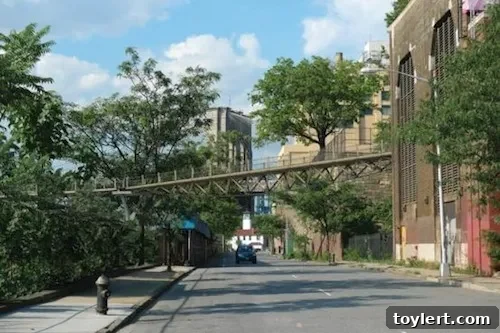
The Squibb Pedestrian Bridge, rendered in the image above, represents a masterful blend of engineering ingenuity and natural integration. Conceived as a vital link between Squibb Park in the historic Brooklyn Heights neighborhood and the expansive Brooklyn Bridge Park on the waterfront, this pedestrian pathway addresses a significant challenge: navigating a sharp elevational drop between these two beloved public spaces. Before its construction, accessing the park from the heights required a circuitous route, limiting spontaneous visits and connectivity. The bridge’s design brilliantly solves this, offering direct and scenic access.
PDC President Signe Nielsen aptly described the bridge’s “design vocabulary [as] equal parts bucolic and industrial.” This duality is evident in its material choices and structural form. The decking, crafted from resilient black locust timber, evokes a natural, rustic feel, allowing pedestrians to feel immersed in a green canopy as they traverse. In contrast, the galvanized handrails with inset linear lighting and X-tend mesh infill introduce a modern, industrial aesthetic, ensuring durability and safety while providing subtle illumination. The most distinctive feature is its underslung suspension design, which supports the entire structure from below the deck. This innovative engineering choice ensures that visitors enjoy completely unobstructed views of the Manhattan skyline, the East River, and the lush treetops of Brooklyn Bridge Park as they stroll, creating a truly immersive and breathtaking experience. Beyond its aesthetic appeal, the Squibb Pedestrian Bridge is a triumph of urban connectivity, fostering greater interaction with one of Brooklyn’s most prized waterfront parks and enhancing the quality of life for countless residents and visitors.
City Point Retail Facility and DeKalb Market: Catalysts for Downtown Brooklyn’s Revival
Another pivotal project recognized by the PDC was the City Point retail facility, coupled with the then-temporary DeKalb Market. This duo represented the initial phase of a monumental 1.8-million-square-foot mixed-use development, a true game-changer for Downtown Brooklyn. Strategically anchored on Albee Square along the bustling Fulton Mall, the retail facility was designed to be more than just a shopping destination; it was envisioned as a dynamic urban hub.
PDC President Signe Nielsen highlighted the retail facility’s “dynamic geometry [that] effectively engages the public plaza while deferring to the adjacent landmarked 1908 Dime Savings Bank.” This thoughtful design approach showcases a respect for historical context, allowing the contemporary structure to complement rather than overshadow its venerable neighbor. The building’s exterior, clad in white and pale grey terra-cotta, is particularly striking. Nielsen noted its “mercurial” quality, changing in appearance with the shifting light, creating a visually captivating presence. The expansive fenestration, with its large windows, not only allows natural light to flood the interiors but also “captures and reflects the neighborhood fabric,” integrating the building visually into its vibrant surroundings.
In its initial manifestation, the DeKalb Market played a crucial role in activating the site. Occupying the footprint of the future build-out, this temporary market transformed what would otherwise have been an empty construction lot into a lively community space. It established City Point as a retail destination even before the larger development was complete, fostering a sense of place and generating economic activity. This innovative approach to interim use demonstrated foresight in urban planning, laying the groundwork for the successful integration of the future DeKalb Market Hall, which has since become a culinary destination, further solidifying City Point’s role as a major anchor in Downtown Brooklyn’s ongoing revitalization. The entire City Point development, with its blend of retail, residential, and office spaces, continues to redefine the urban experience in one of Brooklyn’s fastest-growing neighborhoods.
Flatbush Avenue Entrance and Terrace Café at Brooklyn Botanic Garden: Enhancing a Green Oasis
Beyond the bustling urban developments, the Public Design Commission also recognized the exquisite reconstruction of the Flatbush Avenue Entrance and Terrace Café at the Brooklyn Botanic Garden. This project highlights the importance of enhancing cultural institutions and ensuring accessibility to vital green spaces. The Brooklyn Botanic Garden, a cherished sanctuary in the heart of the city, serves millions of visitors annually, and its entrances are crucial gateways to its natural beauty.
The redesign of the Flatbush Avenue Entrance focused on creating a more welcoming, efficient, and aesthetically pleasing entry point. This involved not only improving the functionality for visitor flow and ticketing but also integrating the entrance architecturally with the garden’s serene environment. The addition of the Terrace Café provided a much-needed amenity, offering visitors a place to relax, refresh, and enjoy the garden’s views, thereby extending their experience. Such thoughtful interventions ensure that historic institutions like the Brooklyn Botanic Garden remain vibrant and accessible, capable of serving future generations while preserving their unique character and ecological significance. The project underscores the PDC’s commitment to landscape architecture and the careful stewardship of public green spaces.
Legacy of Design: Past Brooklyn Honorees
The Public Design Commission’s recognition of design excellence in Brooklyn is not a new phenomenon. Over the years, numerous borough projects have been celebrated, showcasing a continuous dedication to enhancing the urban environment. Past Brooklyn honorees have included the ambitious design for the Sands Street Gate, a critical component of the Brooklyn Bridge Park’s ongoing development, aimed at improving pedestrian and vehicular access and enhancing the park’s interface with the surrounding neighborhood. Additionally, the renovation of the Strand Theater, a local cinematic landmark, was also recognized for its efforts to modernize and preserve a cherished cultural venue, though both projects were still under construction at the time of their respective awards.
These past recognitions, much like the current awards, illustrate the PDC’s consistent focus on projects that contribute significantly to the borough’s infrastructure, cultural landscape, and overall public good. They demonstrate a long-term vision for Brooklyn as a leader in urban innovation, where historical preservation and contemporary design coexist to create a vibrant and functional cityscape.
The Impact of Design Excellence on Urban Living
The 30th Annual Awards for Excellence in Design underscore a fundamental truth: thoughtful design is not merely about aesthetics; it profoundly impacts the quality of urban life. Projects like the Squibb Pedestrian Bridge, the City Point development, and the Brooklyn Botanic Garden entrance exemplify how strategic design can foster connectivity, stimulate economic growth, provide essential public amenities, and preserve cherished cultural and natural assets.
The NYC Public Design Commission plays a crucial role in advocating for and recognizing the highest standards in urban planning and public architecture. By honoring these exemplary projects, the PDC not only celebrates the talent and vision behind them but also sets a benchmark for future developments. Brooklyn, with its rich tapestry of history, diverse communities, and forward-thinking vision, continues to be a fertile ground for such innovative projects. As the borough evolves, its commitment to design excellence ensures that its urban fabric remains vibrant, sustainable, and truly reflective of the dynamic spirit of New York City.