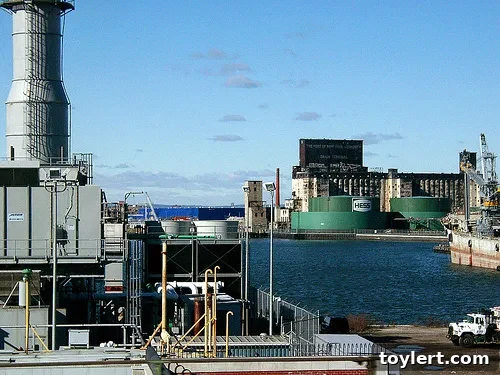
Innovative Proposal: Gowanus Canal Sludge for Red Hook Terminal Expansion Sparks Debate
A surprising and ambitious proposal has emerged from Brooklyn’s industrial landscape, igniting discussions about urban redevelopment, environmental remediation, and economic opportunity. John Quadrozzi, a prominent concrete magnate with deep roots in the borough, has put forth an unconventional plan: to utilize the highly toxic dredged material from the infamous Gowanus Canal as landfill. This material, once stabilized, would serve a dual purpose – helping to dispose of hazardous waste while simultaneously expanding the shipping terminal he owns in Gowanus Bay, Red Hook. The vision is clear: a larger, more modern terminal capable of accommodating bigger vessels, thereby boosting maritime commerce in the region and creating a more robust transportation hub for Brooklyn.
The audacious nature of Quadrozzi’s proposal lies in its direct approach to one of New York City’s most formidable environmental challenges: the cleanup of the Gowanus Canal. Designated a Superfund site by the Environmental Protection Agency (EPA) due to decades of industrial pollution, the canal is a repository of contaminants including coal tar, heavy metals, and PCBs. The traditional method of remediation involves dredging this toxic “black mayonnaise” and transporting it off-site for disposal, a process that is both immensely costly and logistically complex. Quadrozzi’s idea offers a localized, potentially cost-saving alternative, suggesting that the lowest-level contaminants could be mixed with a specially formulated concrete-like stabilizing material, rendering it safe for use as structural fill. This innovative approach aims to transform a severe environmental liability into a foundational asset for local economic growth.
The Gowanus Canal: A Century of Pollution and the Path to Remediation
To fully grasp the significance and controversy surrounding Quadrozzi’s plan, one must understand the historical context of the Gowanus Canal. Once a bustling industrial waterway crucial to Brooklyn’s development, it became a notorious symbol of severe environmental degradation. For over 150 years, the canal served as an open sewer and an unregulated industrial dumping ground, accumulating a toxic layer of sediment at its bottom. This noxious mixture, often referred to as “black mayonnaise,” consists of creosote (a wood preservative), polycyclic aromatic hydrocarbons (PAHs), polychlorinated biphenyls (PCBs), heavy metals like mercury and lead, and various pathogens. These contaminants have long posed a severe threat to public health for nearby residents and have devastated the local ecosystem.
The EPA’s Superfund designation in 2010 marked a critical turning point, initiating a monumental cleanup effort projected to cost well over a billion dollars and span decades. The core of this remediation plan involves extensive dredging of the contaminated sediments, followed by capping with layers of clean material to prevent further release of toxins. The sheer volume of hazardous material requiring removal and safe disposal is staggering; experts estimate hundreds of thousands of cubic yards of sediment need to be excavated. Finding suitable, secure, and environmentally sound disposal sites, often far from urban centers, adds significantly to the project’s overall expense and environmental footprint. It is against this backdrop of immense challenge, logistical complexity, and substantial cost that John Quadrozzi’s proposal emerges, seeking to transform a colossal environmental liability into a productive local asset.
John Quadrozzi’s Vision: From Toxic Waste to Maritime Hub
John Quadrozzi, through his company Quadrozzi Concrete, has long been an integral part of Brooklyn’s industrial sector, operating the Gowanus Bay Terminal in Red Hook, a vital shipping and transportation hub. His proposal for the “beneficial reuse” of Gowanus Canal sludge represents a paradigm shift in environmental remediation thinking. Instead of the costly and energy-intensive process of transporting toxic material off-site, Quadrozzi proposes to process it locally and integrate it into a productive local infrastructure project. He envisions that the treated sludge, transformed into a stable, inert material, could literally become the foundation for a larger, more efficient shipping terminal.
This proposed expansion would significantly enhance the operational capacity of his facility, enabling it to handle larger cargo ships and a greater volume of goods. Such an upgrade would improve the logistical capabilities of the port, potentially creating new jobs in the maritime industry, and reinforcing Red Hook’s role as a crucial nexus for regional and international trade. Quadrozzi’s plan is not merely about disposal; it is about leveraging a necessary cleanup to catalyze economic development and enhance local infrastructure.
A critical aspect of the proposal is the technical feasibility of stabilizing toxic sludge with concrete-like materials. Such Stabilization/Solidification (S/S) technologies are well-established in various environmental remediation projects globally. These methods aim to encapsulate hazardous waste within a solid matrix, thereby reducing its leachability and preventing the release of contaminants into the environment. The challenge, however, lies in applying these proven methods to the specific, complex cocktail of pollutants found in the Gowanus Canal and ensuring their long-term stability and safety within a dynamic marine environment. Quadrozzi’s plan suggests utilizing a robust, proprietary mixture designed to achieve precisely this, making the landfill material non-leaching, structurally sound, and environmentally benign for decades to come.
Navigating the Regulatory Labyrinth and Environmental Safeguards
Despite the potential economic benefits and the innovative approach to waste management, Quadrozzi’s proposal naturally raises a multitude of complex questions and legitimate concerns. Foremost among these are the long-term environmental implications. Skeptics and environmental advocates express deep concerns about the permanent integrity of the stabilized material. Could there be any risk of toxins leaching into Gowanus Bay or the broader New York Harbor over time, especially with potential seismic activity or erosive forces? What would be the immediate and long-term impact on marine life and water quality during and after the construction phase? These questions are paramount, requiring rigorous scientific assessment, independent verification, and robust monitoring protocols.
The legal and regulatory landscape governing such a project is equally intricate. The Gowanus Canal’s Superfund designation grants the EPA broad, sweeping powers to oversee and implement cleanup operations. This authority could potentially allow the EPA not only to approve such an unconventional plan but also to provide funding and operational oversight, effectively partnering with Quadrozzi. Such a partnership would be unprecedented in the context of the Gowanus cleanup, highlighting the EPA’s potential flexibility in finding creative solutions to reduce cleanup costs and accelerate timelines. However, other critical agencies, including the New York State Department of Environmental Conservation (DEC) and the U.S. Army Corps of Engineers, would also have significant roles in reviewing permits, conducting their own environmental impact assessments, and ensuring compliance with stringent state and federal environmental laws. The comprehensive permitting process alone could be lengthy, arduous, and subject to intense public scrutiny and legal challenges.
Transparency and robust, independent monitoring would be absolutely essential if such a project were to move forward. The EPA, along with other regulatory bodies, would need to establish stringent standards for the stabilization process, conduct extensive material testing, and implement ongoing environmental monitoring programs to ensure that the expanded terminal poses no future threat to human health, the delicate ecosystem of the bay, or the quality of the surrounding waters. Building and maintaining public trust will hinge entirely on the thoroughness, independence, and accountability of these evaluations and oversight mechanisms.
Community Reaction and Stakeholder Engagement
Proposals of this magnitude invariably spark strong and varied reactions from local communities and diverse stakeholders. Residents of Red Hook and Gowanus, who have long lived with the shadow of the polluted canal and the ongoing cleanup efforts, are likely to be wary. Concerns about potential health impacts from handling toxic materials, increased truck traffic during construction impacting local streets, and the overall industrialization of their precious waterfront are valid and must be addressed comprehensively. Environmental advocacy groups, which have historically played a crucial role in advocating for the canal’s cleanup and safeguarding local ecosystems, would undoubtedly scrutinize every detail of the plan, demanding the highest standards of environmental protection and transparency.
Conversely, some business interests, labor unions, and proponents of economic development might see the proposal as a pragmatic solution that offers both environmental cleanup and significant job creation. The expansion of a vital shipping terminal could revitalize a portion of the Red Hook waterfront, contributing substantially to the local economy and providing much-needed employment opportunities. Quadrozzi has also sought to sweeten his proposal by suggesting the creation of a maritime museum at a ship permanently docked at the terminal. This cultural amenity could serve as a unique community benefit, potentially offsetting some of the concerns about industrial expansion and providing valuable educational opportunities related to Brooklyn’s rich maritime history and its industrial legacy. Such community benefit initiatives are often crucial in gaining widespread community buy-in and support for large-scale urban infrastructure projects.
Economic Incentives and the Path Forward
The financial aspect of the Gowanus Canal cleanup is monumental, with projected costs stretching into the billions. Any proposal that can genuinely reduce the overall cost for taxpayers while maintaining or enhancing environmental safety and efficacy warrants serious consideration. If Quadrozzi’s plan proves technically sound, environmentally safe, and economically viable, it could represent a significant cost-saving measure for the EPA, potentially freeing up critical resources for other vital remediation efforts across the nation. Furthermore, the economic stimulus from a modernized, expanded shipping terminal – including direct job creation during construction and long-term operational jobs, as well as indirect economic benefits to related industries – presents a compelling argument for its consideration.
Currently, the specific details surrounding the projected cost savings, the precise environmental safeguards and long-term monitoring strategies, and the definitive legal frameworks for expanding the terminal remain somewhat “murky,” as noted by early reports. This initial lack of clarity is typical in the nascent stages of such complex and groundbreaking projects. A comprehensive feasibility study, a robust environmental impact assessment (EIA) conducted by independent experts, and extensive public hearings would be absolutely necessary to fully flesh out these details and provide the transparency and accountability required for both public and regulatory acceptance.
The proposal by John Quadrozzi represents a fascinating and challenging intersection of urban planning, cutting-edge environmental science, and economic development. It challenges conventional thinking about toxic waste disposal and offers a bold, ambitious vision for transforming a long-standing environmental burden into a catalyst for local economic growth and improved infrastructure. While significant hurdles, particularly regarding stringent environmental assurance and complex regulatory approval, remain, the sheer scale and cost of the Gowanus Canal’s cleanup demand innovative, out-of-the-box solutions. Whether this ambitious plan ultimately receives the green light will depend on its ability to satisfy rigorous scientific scrutiny, navigate complex regulatory frameworks, and ultimately gain the trust and support of the communities it directly impacts. It stands as a testament to the ongoing quest for sustainable, integrated solutions in one of the nation’s most challenging and historically significant Superfund sites.