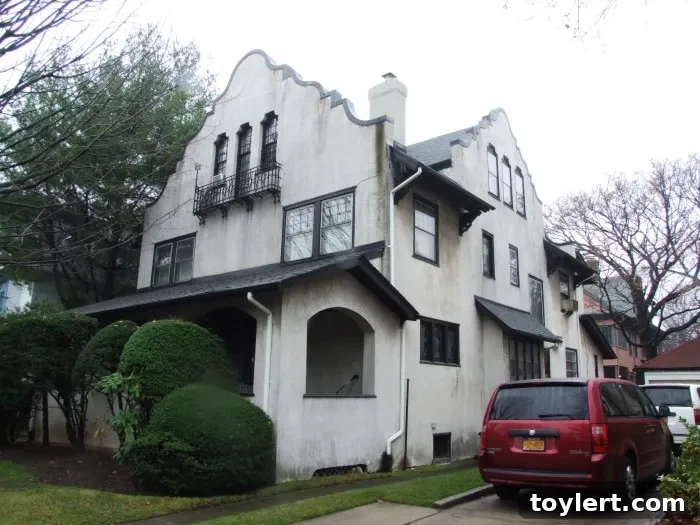
The Timeless Charm of Brooklyn: Unveiling the Morris L. Holman House, a Spanish Colonial Revival Gem
Brooklyn, one building at a time, tells a story. Each structure contributes to the borough’s rich tapestry of history, culture, and architectural innovation. Among its many treasures, the Morris L. Holman House stands out as a remarkable example of Spanish Colonial Revival architecture, nestled within one of Brooklyn’s most picturesque and historically significant neighborhoods. This building is not merely a residence; it is a tangible link to an era when craftsmanship and distinctive design were paramount, offering a captivating glimpse into Brooklyn’s past and its enduring allure.
A Glimpse into Brooklyn’s Architectural Tapestry
Brooklyn is renowned for its incredible diversity, not just in its vibrant communities and cultures, but also in its architectural landscape. From the stately brownstones of Park Slope to the intricate Queen Anne Victorians of Ditmas Park, the borough offers an architectural journey through time. The early 20th century saw a surge in residential development, particularly in areas like Flatbush, where developers and architects embraced a variety of styles to create unique suburban enclaves within the bustling city. It was during this period of innovation and expansion that the Spanish Colonial Revival style found its footing, bringing a touch of Mediterranean romance and old-world charm to the streets of Brooklyn.
The Morris L. Holman House: An Enduring Legacy on Rugby Road
The Morris L. Holman House, located at 94 Rugby Road, is a prominent fixture in this architectural narrative. Constructed during an era of lavish home-building, it embodies the sophisticated tastes and aspirations of its time. Rugby Road itself is part of a larger district celebrated for its eclectic and well-preserved residential architecture, making the Holman House a key piece of this collective heritage. Its presence serves as a testament to the diverse architectural preferences that shaped Brooklyn, standing proudly as an architectural landmark that continues to captivate residents and visitors alike. This house exemplifies how Brooklyn’s residential fabric is woven with threads of distinct styles, each adding character and depth to its urban identity. The choice of the Spanish Colonial Revival style for such a prominent home speaks volumes about the original owner’s desire for a residence that was both elegant and uniquely expressive, setting it apart from its neighbors while still complementing the overall aesthetic of the street.
Embracing Spanish Colonial Revival: A Style Defined
The Spanish Colonial Revival architectural style emerged in the United States in the early 20th century, drawing inspiration from the Spanish Colonial architecture of the American Southwest and Florida, as well as the mission architecture of California. It quickly gained popularity for its romantic and picturesque qualities, offering a stark contrast to the more rigid Victorian and neoclassical styles that had dominated earlier periods. Key characteristics of this captivating style include:
- Stucco Exteriors: Often rendered in soft, warm tones like white, cream, or earthy ochre, stucco provides a smooth, tactile surface that reflects light beautifully and evokes the sun-drenched landscapes of its Spanish origins.
- Red Tile Roofs: Distinctive barrel or S-shaped clay tiles are perhaps the most iconic feature, adding a vibrant splash of color and a characteristic undulating texture to the roofline. These tiles are not only aesthetically pleasing but also durable and weather-resistant.
- Arches and Arcades: Arched doorways, windows, and loggias are fundamental elements, creating a sense of grandeur and inviting fluidity between interior and exterior spaces.
- Wrought Iron Details: Intricately forged ironwork adorns balconies, window grilles, gates, and light fixtures, providing delicate yet robust accents that enhance the style’s inherent elegance.
- Decorative Tiles: Hand-painted ceramic tiles, often in vibrant blues, yellows, and greens, are frequently used for decorative accents around doorways, stair risers, and fountains, adding bursts of color and intricate patterns.
- Courtyards and Patios: Emphasizing outdoor living, many Spanish Colonial Revival homes feature secluded courtyards or expansive patios, often centered around a fountain or lush landscaping, providing private retreats.
- Low-Pitched or Flat Roofs with Parapets: While red tile roofs are common, some variations incorporate flat roofs with decorative parapet walls, reminiscent of traditional adobe architecture.
- Decorative Chimneys: Chimneys are often treated as architectural features, with elaborate detailing or tile work.
This architectural language, with its roots deeply embedded in Mediterranean traditions, brought a sense of exoticism and elegance to American residential design, and the Morris L. Holman House is a prime example of its successful translation to an urban Brooklyn setting.
Architectural Details of 94 Rugby Road: A Masterpiece Unveiled
The Morris L. Holman House at 94 Rugby Road exemplifies the Spanish Colonial Revival style with exceptional grace and attention to detail. Its facade immediately commands attention, presenting a striking visual narrative that transports observers to another place and time. The exterior is clad in a pristine, light-colored stucco, which glows softly under the Brooklyn sun, creating a welcoming and sophisticated presence on the tree-lined street. The stucco’s smooth finish is punctuated by architectural details that speak to the style’s intricate craftsmanship.
Dominating the roofline are the quintessential red barrel tiles, laid with precision, creating a rhythmic pattern that not only enhances the building’s aesthetic appeal but also provides excellent durability against the elements. These tiles project slightly beyond the walls, casting soft shadows that highlight the roof’s elegant curve. Below, a series of thoughtfully placed arched windows grace the upper and lower stories. These arches are often framed with simple, yet effective, decorative molding that adds depth without overwhelming the facade. Many windows feature dark-finished casements or multi-pane grids, which offer a beautiful contrast to the light stucco and provide a sense of historical accuracy.
The main entrance is a focal point, typically set back slightly under a recessed archway or within a modest portico. Heavy, dark wood doors, possibly adorned with intricate carving or a decorative peephole, invite entry. Surrounding the doorway, one might find a delicate array of hand-painted ceramic tiles, forming a vibrant border or a small panel of historical artistry, adding a splash of color and cultural richness. Above the entrance, or perhaps framing key windows, slender wrought iron balconies with graceful curves extend outward, providing charming perches that enhance the building’s romantic appeal.
Other wrought iron elements are strategically placed throughout the exterior, from the delicate grilles protecting lower-level windows to the elegant railings that guide visitors up a short flight of steps. These iron accents are not merely functional; they are artistic statements, adding a layer of intricate detail that is characteristic of the Spanish Colonial Revival style. The house sits on a well-manicured plot, possibly featuring mature trees, carefully sculpted shrubbery, and perhaps even a small, enclosed courtyard or patio area that evokes the private outdoor spaces common in Mediterranean design. This landscaping beautifully complements the architecture, creating a harmonious overall presentation that makes 94 Rugby Road a true architectural jewel.
The Visionaries Behind the Splendor: Architects and Developers of Early 20th Century Brooklyn
The flourishing of distinct architectural styles like Spanish Colonial Revival in Brooklyn was largely due to the vision of pioneering developers and talented architects. During the early 20th century, as Brooklyn expanded rapidly, areas like Flatbush, Ditmas Park, and Prospect Park South were transformed from farmland into desirable suburban neighborhoods. Speculative builders, often working with innovative architects, seized the opportunity to create entire blocks of uniquely designed homes that catered to the burgeoning middle and upper classes. These developers were not just building houses; they were crafting communities, envisioning neighborhoods where residents could enjoy spacious homes, verdant surroundings, and a sense of individuality.
The architects commissioned for these projects were often highly skilled professionals who were adept at interpreting and adapting popular European and historical styles to American tastes and construction methods. They would meticulously incorporate elements from architectural pattern books, travel experiences, and existing examples to create residences that felt both grand and inviting. For a house like the Morris L. Holman House, the architect likely blended traditional Spanish Colonial motifs with practical considerations for urban living, resulting in a design that was both authentic in spirit and functional for a Brooklyn family. These early 20th-century visionaries laid the groundwork for Brooklyn’s enduring architectural legacy, ensuring that its residential streets would offer a captivating array of styles, each with its own story and charm.
A Beacon of Preservation: Maintaining Brooklyn’s Architectural Heritage
The existence and pristine condition of homes like the Morris L. Holman House underscore the vital importance of architectural preservation. Historic homes are more than just old buildings; they are irreplaceable artifacts that tell the story of a city’s growth, its cultural influences, and the lives of its inhabitants. Maintaining these structures is a complex endeavor that requires dedication, expertise, and often significant investment. Owners of Spanish Colonial Revival homes, like those in Rugby Road, often face unique challenges, such as sourcing authentic materials for stucco repair, matching historic tile patterns, or preserving original wrought ironwork.
However, the rewards of preservation are immense. These homes offer a unique living experience, characterized by spacious interiors, distinctive architectural details, and a connection to history that modern constructions simply cannot replicate. They contribute significantly to the character and appeal of their neighborhoods, enhancing property values and fostering a strong sense of community pride. Organizations dedicated to historic preservation, along with local landmark commissions, play a crucial role in safeguarding these treasures, providing guidance and support to homeowners. The enduring appeal of homes like the Morris L. Holman House ensures that Brooklyn’s architectural heritage will continue to inspire and charm future generations, serving as a reminder of the craftsmanship and design principles of a bygone era.
The Enduring Allure of Spanish Colonial Revival Homes
Even today, decades after their initial construction, Spanish Colonial Revival homes continue to hold a profound allure for many. Their romantic aesthetics, robust construction, and unique character stand in stark contrast to the often homogeneous designs of contemporary architecture. For those seeking a home with a soul, a story, and a distinctive presence, these properties are exceptionally desirable. The blend of Mediterranean warmth with American suburban sensibilities creates a living environment that is both elegant and comfortable. Owning a Spanish Colonial Revival home in Brooklyn is not just about acquiring property; it is about becoming a steward of history, embracing a lifestyle rich in architectural beauty, and contributing to the preservation of a unique urban landscape. The Morris L. Holman House beautifully embodies this enduring charm, standing as a proud testament to an architectural style that continues to captivate and inspire.
Conclusion: More Than Just a House, A Story Told in Stucco and Tile
The Morris L. Holman House at 94 Rugby Road is far more than a mere residential structure; it is a vivid chapter in Brooklyn’s rich architectural narrative. As a prime example of Spanish Colonial Revival design, it speaks volumes about the historical trends, aesthetic preferences, and skilled craftsmanship that shaped the borough in the early 20th century. Its distinctive stucco exterior, vibrant red tile roof, and intricate wrought iron details stand as a testament to a period of architectural romance and creativity. Through its enduring presence, the Holman House contributes significantly to the unique charm and historical depth of its neighborhood, inviting us to appreciate the beauty and stories embedded in Brooklyn’s diverse building stock. It reminds us that every building has a story, and together, they weave the incredible tapestry that is Brooklyn.