Read Part 1 and Part 3 of this story.
The Visionary Architect Behind Troy’s Prospect Park: A Legacy of Urban Green Spaces (Part Two)
In the vibrant tapestry of America’s urban development, the late 19th and early 20th centuries marked a golden age for public parks. Following the monumental successes of New York City’s green masterpieces, such as Manhattan’s iconic Central and Riverside Parks, and Brooklyn’s beloved Prospect and Fort Greene Parks, an undeniable wave of civic envy swept across the nation. These grand urban oases transformed cityscapes, proving that thoughtfully designed public spaces were not just luxuries but essential components of a thriving metropolis.
Cities, then as now, were often judged by the quality of their public buildings and, crucially, their public spaces. The burgeoning industrial era brought with it crowded tenements and a desperate need for fresh air, natural beauty, and tranquil retreats from the ceaseless urban grind. By the turn of the 20th century, almost every municipality and its forward-thinking civic leaders aspired to possess exemplary parks. These green havens served as democratic spaces where every citizen, regardless of social standing, could partake in the rejuvenating embrace of nature, breathe clean air, and find ample room to relax and recreate.
The Enduring Influence of New York City’s Park Legacy
The pioneering efforts of landscape architects like Frederick Law Olmsted and Calvert Vaux in designing New York City’s parks set an unprecedented standard. Their vision for Central Park, completed in 1873, revolutionized urban planning by demonstrating how a large, integrated green space could serve as the “lungs” of a city, providing ecological benefits, recreational opportunities, and aesthetic pleasure. Similarly, Brooklyn’s Prospect Park, also a collaboration between Olmsted and Vaux, further refined these principles, offering sweeping pastoral landscapes, serene water features, and distinct zones for various activities, all meticulously planned to create a seamless, naturalistic experience.
These parks were more than just aesthetically pleasing; they were social experiments designed to foster public health, civic pride, and social cohesion. They incorporated innovative features like separated pathways for pedestrians, equestrians, and carriages, ensuring safety and minimizing conflicts. The success of these projects resonated deeply, inspiring countless cities to embark on their own park development initiatives, seeking to replicate the blend of natural beauty, thoughtful design, and community utility that defined New York’s green jewels.
Troy’s Ambition: Cultivating Its Own Urban Oasis
Among the cities eager to emulate New York’s park success was Troy, New York. A thriving industrial hub nestled on the Hudson River, Troy was a city of considerable wealth and civic ambition during the late 19th century. Its leaders understood the profound impact a well-designed park could have on the quality of life for its residents and its overall prestige. The vision for Troy’s Prospect Park was born from this desire – to create a sanctuary of natural beauty and recreation that would serve as a focal point for the community, reflecting the city’s prosperity and progressive spirit.
While often overshadowed by its larger Brooklyn namesake, Troy’s Prospect Park stands as a testament to the era’s widespread commitment to urban greening. It represents a local response to a national movement, demonstrating how the grand ideas pioneered in metropolitan centers could be adapted and realized in smaller, yet equally ambitious, cities. The challenge for Troy was to find an architect who could translate this vision into a tangible reality, one that respected the city’s unique topography and served its specific community needs.
William Pauling: The Architect Behind Troy’s Prospect Park
The individual entrusted with shaping Troy’s premier urban park was the accomplished landscape architect William Pauling. Though perhaps less universally celebrated than Olmsted or Vaux, Pauling was a figure of considerable talent and influence in his region. He possessed a keen understanding of both natural landscapes and the emerging principles of park design that prioritized harmony with nature while providing structured recreational opportunities. Pauling’s approach, much like his more famous predecessors, emphasized creating a picturesque environment that felt both wild and cultivated, a place where citizens could escape the rigidity of urban grid planning and immerse themselves in flowing forms and verdant vistas.
Pauling’s engagement with Troy’s Prospect Park was a significant undertaking. The site itself presented both opportunities and challenges, featuring varied topography that Pauling skillfully integrated into his design. He envisioned a park that would not merely be a collection of trees and paths but a cohesive landscape experience, designed to evoke tranquility, inspire contemplation, and facilitate active recreation. His work on Prospect Park cemented his legacy as a crucial figure in the development of public green spaces in upstate New York, translating grand architectural visions into practical, beloved community assets.
Design Principles and Distinctive Features of Troy’s Gem
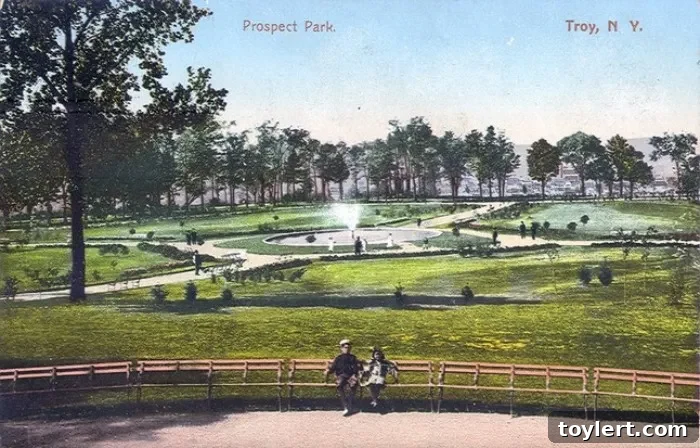
William Pauling’s design for Troy’s Prospect Park masterfully combined aesthetic beauty with functional utility, drawing inspiration from the pastoral ideals exemplified by the NYC parks while imbuing it with its own unique character. The park was meticulously planned to exploit its natural elevation, offering breathtaking panoramic views of the city of Troy, the majestic Hudson River, and the distant mountains. This strategic placement of viewpoints became a signature feature, inviting visitors to pause and appreciate the scenic grandeur that surrounded them.
Pauling’s design incorporated a network of winding paths and carriage drives, carefully graded to provide gentle ascents and descents, making the park accessible and enjoyable for leisurely strolls or carriage rides. These pathways were flanked by thoughtfully arranged plantings – a mix of native trees, shrubs, and flowering plants – designed to create varied textures, colors, and seasonal interest. The naturalistic planting schemes aimed to enhance the illusion of a wild landscape, even within an urban setting. Open lawns provided expansive spaces for picnicking, games, and informal gatherings, while more secluded groves offered quiet spots for reflection.
Beyond its aesthetic appeal, Troy’s Prospect Park was also conceived as a hub for community life. Early plans and developments for the park included facilities for diverse recreational activities, from bandstands for musical performances to playgrounds for children. These amenities underscored the park’s role as a democratic space, catering to a wide array of public interests and ensuring that it remained a vibrant, active heart for the city. While it may not have boasted the sprawling scale of its Brooklyn counterpart, Troy’s Prospect Park achieved a remarkable balance of intimacy and grandeur, tailored perfectly to its urban context.
Community Impact and Enduring Relevance
From its inception, Troy’s Prospect Park quickly became an indispensable part of the city’s fabric. It offered a vital escape from the stresses of urban life, providing residents with opportunities for healthy recreation, social interaction, and spiritual rejuvenation. Families flocked to its lawns on weekends, couples strolled its picturesque paths, and children reveled in its open spaces. The park served as a powerful symbol of civic achievement and a source of collective pride for the people of Troy.
Over the decades, the park has continuously adapted to the evolving needs of its community while retaining its fundamental charm and purpose. Its continued existence and careful preservation stand as a testament to William Pauling’s foresight and the enduring value of well-designed public green spaces. In an increasingly dense and rapidly changing world, the principles that guided the creation of parks like Troy’s Prospect Park remain profoundly relevant. They remind us of the importance of balancing urban development with the preservation of nature, ensuring that every citizen has access to beauty, tranquility, and a place to connect with their environment and each other.
Troy’s Prospect Park, meticulously crafted by William Pauling, is far more than just a local landmark; it is a vital chapter in the broader narrative of American landscape architecture and urban planning. It illustrates how the ambition for a healthier, more beautiful urban life, sparked by the grand parks of New York City, spread its roots into communities across the nation, fostering a legacy of green spaces that continue to enrich countless lives. The visionary work of architects like Pauling ensures that these urban oases remain cherished civic jewels, testaments to the power of design to shape and improve the human experience.