Downtown Brooklyn’s Parking Reform: Paving the Way for a Greener, More Affordable Future
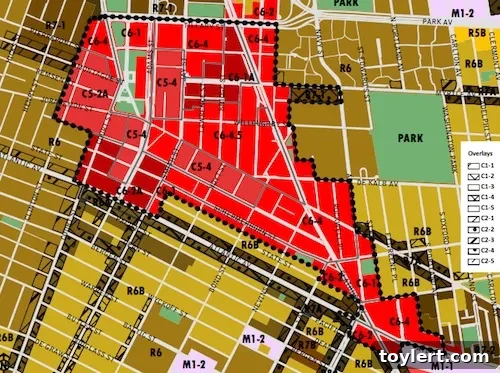
Downtown Brooklyn, a vibrant and rapidly evolving urban center, stands on the cusp of a significant transformation in its approach to urban development and mobility. The New York City Department of City Planning (DCP) has unveiled a groundbreaking proposal aimed at redefining the landscape of off-street parking requirements for new developments. This initiative, recently presented at a Community Board 2 Land Use Meeting, seeks to align zoning regulations with contemporary urban planning principles, promoting sustainability, affordability, and a more pedestrian-friendly environment in one of Brooklyn’s most dynamic neighborhoods.
For decades, mandatory parking minimums have shaped urban development across the nation, often leading to an oversupply of parking spaces that contribute to urban sprawl, increased traffic congestion, and inflated construction costs. Downtown Brooklyn, with its excellent public transit infrastructure and a growing population of car-free residents, presents an ideal case study for a more progressive approach. The DCP’s comprehensive proposal addresses these challenges head-on, offering a forward-thinking framework designed to unlock the area’s full potential for sustainable urban development.
Key Pillars of the Transformative Parking Proposal
The DCP’s ambitious plan centers on three core adjustments, each poised to have a profound impact on Downtown Brooklyn’s future development. These detailed suggestions, accessible on the official DCP website, represent a strategic shift towards more flexible and efficient land use, crucial for the area’s ongoing economic development and housing affordability:
- Significant Reduction in Required Parking Spaces: The proposal advocates for cutting the mandatory number of off-street parking spaces from 40 percent of building units to a more realistic 20 percent. This substantial reduction acknowledges the high rate of public transit usage and lower car ownership among Downtown Brooklyn residents, freeing up valuable urban land for more essential uses.
- Elimination of Parking Requirements for Affordable Housing Units: Recognizing the critical need for accessible housing, the plan proposes to entirely eliminate parking mandates for affordable housing projects. This measure is designed to significantly reduce development costs for these crucial projects, making them more financially viable and enabling the creation of more affordable homes in a high-demand area, directly combating the housing crisis.
- Enhanced Flexibility and Options for Public Parking: Beyond simply reducing minimums, the proposal seeks to optimize parking resources. It aims to increase options for public parking throughout Downtown Brooklyn, offering greater flexibility to developers to locate required accessory parking off-site, encouraging the creation of smaller underground public garages, and allowing accessory parking facilities to serve a broader public – including residents, workers, and visitors. This ensures that parking remains available where truly needed, without imposing unnecessary burdens on every new development, fostering a more efficient transportation policy.
Data-Driven Justification for Parking Reform
The foundation of the DCP’s proposal rests on robust data and a keen understanding of Downtown Brooklyn’s unique demographic and transportation patterns. Research conducted by the department revealed compelling statistics that underscore the inefficiency of current parking mandates. A key finding indicated that only 22 percent of Downtown Brooklyn residents actually own cars. This low car ownership rate, coupled with the neighborhood’s unparalleled access to subway lines, bus routes, and regional rail, highlights a significant disconnect between existing zoning requirements and actual resident behavior. This data strongly supports the shift towards transit-oriented development.
To further illustrate this point, the DCP cited the Avalon building, a prominent residential development in the area. An analysis showed that even on a typical weekday evening, only 88 out of 252 available parking spots were utilized. Under the proposed new guidelines, the required number of spaces for such a development would be reduced to 126, still comfortably exceeding actual demand and demonstrating the potential for significant space optimization. This stark contrast between mandated supply and actual usage points to a substantial waste of urban real estate and financial resources under the current regime, hindering the potential for mixed-use development.
Conversely, the data also highlighted the effectiveness and high utilization of existing public parking facilities, which operate at approximately 80 percent capacity per day. This suggests that while there is a demand for parking, it is often from visitors, workers, or residents with occasional car needs, rather than a universal requirement for every residential unit to have its own dedicated space. The DCP’s vision, therefore, is to create a more integrated and adaptive parking strategy:
“More flexibility to locate required accessory parking off-site, to build small underground public garages in Downtown Brooklyn and to allow accessory parking garages to be available to all residents, workers and visitors in Downtown Brooklyn.”
This approach moves away from a one-size-fits-all model, fostering a more dynamic and responsive urban environment that better serves the community and promotes a pedestrian-friendly Brooklyn.
The Unanimous Call from Developers: A Catalyst for Growth
The public hearing surrounding the Downtown Brooklyn parking reform proposal saw a strong and unified endorsement from a wide array of prominent developers and stakeholders in the region. Leading entities such as The Dermot Company, the Downtown Brooklyn Partnership, Forest City Ratner, Two Trees Management, and representatives from major projects like The Hub and 388 Bridge, collectively urged not only the implementation of these parking minimum cuts but also their retroactive application to developments already built or in progress. This unanimous call underscores the significant economic and operational burdens imposed by current regulations on real estate investment.
Drew Spitler of The Dermot Company articulated the practical challenges faced by developers, recounting the immense effort and financial investment required at 29 Flatbush to accommodate 135 mandated parking spaces. These spaces, sprawling across basement levels, the ground floor, and even the second and third stories, represent prime real estate that could otherwise be dedicated to more productive uses. Such a struggle is a common narrative among developers striving to meet outdated requirements in dense urban cores, impacting overall development costs.
Echoing these sentiments, Tom Conoscenti of the Downtown Brooklyn Partnership emphasized the far-reaching benefits of the proposed reforms. He highlighted how these changes would “lower costs of development, incentivize affordable housing, and encourage new retail.” By reducing the need to excavate multiple subterranean levels or dedicate valuable above-ground space to parking, developers can significantly cut construction expenses. These savings, in turn, can be passed on to consumers in the form of more affordable housing units or reinvested into community-enhancing amenities, stimulating local economic development.
Furthermore, the notion of applying these cuts retroactively gained considerable traction. Developers argued that if current minimums were relaxed for existing projects, valuable space currently allocated to underutilized parking could be repurposed. This could unlock new opportunities for diverse uses, transforming parking garages into vibrant retail storefronts, much-needed additional housing units, or innovative creative office spaces, thereby enriching the urban fabric and fostering economic vitality. This ability to adapt existing structures would be a powerful tool for enhancing Downtown Brooklyn’s mixed-use character and its appeal as a destination for living, working, and leisure.
Wider Implications: Sustainability, Affordability, and Urban Vitality
The proposed parking reforms in Downtown Brooklyn extend far beyond merely adjusting numbers; they represent a fundamental shift towards a more sustainable and equitable urban future. By de-emphasizing car ownership as a prerequisite for city living, the proposal actively encourages reliance on public transportation, cycling, and walking. This, in turn, leads to reduced greenhouse gas emissions, improved air quality, and less traffic congestion – critical goals for any modern metropolis striving for environmental responsibility and better urban planning.
From an affordability standpoint, the impact is undeniable. Building parking is notoriously expensive, with costs often ranging from $40,000 to $70,000 per underground space in New York City. These costs are invariably passed on to residents through higher rents or purchase prices, making housing less accessible. By eliminating or significantly reducing these mandates, especially for affordable housing, the city can directly address its housing crisis, creating more inclusive communities. This strategic move aligns with a broader trend in progressive urban planning, where cities recognize that excessive parking requirements can be a barrier to both housing affordability and sustainable development.
Moreover, freeing up space from underutilized parking garages opens up unprecedented opportunities for urban vitality. Imagine former parking levels transformed into bustling retail environments that activate street life, community facilities that serve residents, or flexible office spaces that support a growing innovation economy. This reallocation of space not only enhances the neighborhood’s aesthetic appeal but also fosters a more diverse and resilient local economy, making Downtown Brooklyn an even more attractive place to live, work, and visit, solidifying its status as a vibrant urban hub.
The Path Forward: A Multi-Stage Public Review Process
The journey for this significant urban policy change involves a rigorous and transparent multi-stage public review process, ensuring that all voices are heard and thoroughly considered. Following the initial presentation to Community Board 2, the Department of City Planning will continue to accept public comments on the matter until August. This period allows residents, businesses, community groups, and other interested parties to submit their feedback, concerns, and suggestions, playing a crucial role in shaping the final proposal.
Upon the conclusion of the public comment period, the proposal will then advance to the New York City Planning Commission. This influential body will conduct its own comprehensive review, which will include another public hearing, providing a further opportunity for public discourse and expert analysis. The Commission’s role is to evaluate the proposal’s alignment with the city’s overall planning objectives and to recommend any necessary modifications, ensuring it supports broader urban planning goals for Downtown Brooklyn.
Finally, if approved by the City Planning Commission, the proposal will proceed to the City Council. The City Council, as the city’s legislative body, will undertake the ultimate review, which will involve yet another public hearing. This final stage of scrutiny is essential for ensuring that the proposed parking reforms reflect the broader interests and needs of all New Yorkers and are consistent with the city’s legislative framework. The multi-layered public hearing process underscores the democratic nature of urban planning in NYC, ensuring that such impactful changes are thoroughly vetted before implementation.
This comprehensive review process reflects the city’s commitment to thoughtful, inclusive planning. The outcome of these discussions will undoubtedly shape Downtown Brooklyn’s trajectory for decades to come, setting a precedent for how a dense, transit-rich urban core can adapt its infrastructure to meet the demands of a modern, sustainable, and equitable future, further enhancing its appeal for residents and investors alike.
For more detailed information on the proposed changes, please refer to the official resources:
- Downtown Brooklyn Parking Text Amendment [NYC DCP]
- Parking Minimums May Be Cut in Downtown Brooklyn [Brownstoner]
Photo via [PDF]